In the high-stakes world of digital marketing, the traditional "launch and pray" approach is rapidly becoming a relic of the past. For decades, marketing teams have spent weeks—sometimes months—crafting massive campaigns, only to cross their fingers and hope for a positive reception. When results fall short, the post-mortem analysis often leads to a cycle of blame or a complete, expensive overhaul.
However, a more sophisticated methodology is gaining traction among top-tier growth firms and SaaS leaders: Iterative Testing. Rather than treating an A/B test as a one-time "pass or fail" exam, practitioners of iterative testing view marketing as a continuous, cyclical journey of small, evidence-based refinements. By focusing on granular improvements rather than revolutionary changes, marketers can reduce wasted ad spend, adapt to volatile consumer behaviors, and achieve compounding growth.
The Core Philosophy: What is Iterative Testing?
At its simplest, iterative testing is a process of repeatedly testing, measuring, and refining marketing assets based on the immediate feedback loop of each experiment. Borrowed from agile product development—where software is built in "sprints"—this approach forces marketers to stop betting the farm on single, unproven ideas.
Most marketing failures aren’t catastrophic explosions; they are "slow leaks"—minor friction points that drain budgets and suppress conversion rates over time. Iterative testing acts as the sealant for these leaks. It allows a brand to pivot based on real-world data rather than the HiPPO (Highest Paid Person’s Opinion) approach that has long stifled creative performance.
A Chronology of the Modern Testing Cycle
To successfully implement this, teams must move away from ad-hoc experimentation toward a structured workflow. The lifecycle of an iterative test typically follows this progression:

- Observation and Hypothesis: Everything begins with a question. Instead of asking "How can we make this page better?", a focused iterative team asks, "Does changing the headline to highlight a specific pain point increase sign-ups for mobile users?"
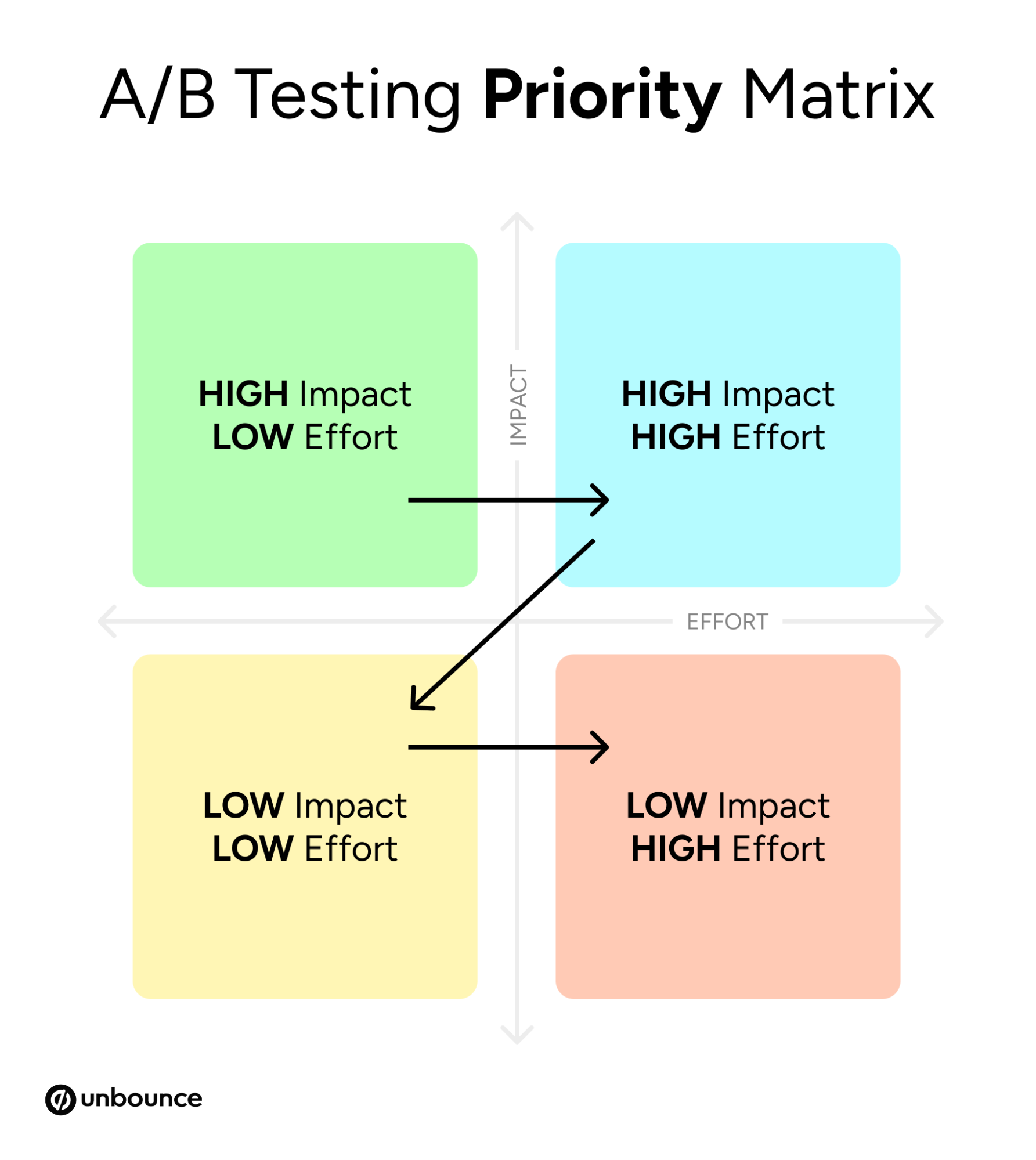
- Prioritization: Utilizing a "Value vs. Effort" matrix, teams rank their hypotheses. The goal is to identify "low-hanging fruit"—changes that are easy to implement but promise high potential impact.
- Minimal Variant Creation: Teams deploy a "minimum viable test." This is a version of the asset that changes only the variable in question.
- Data Collection and Statistical Significance: The experiment runs until a statistically significant result is achieved. This ensures that the findings are not a fluke, but a reliable trend.
- Synthesis and Action: The results are analyzed to extract broader insights that go beyond the single page or ad.
- The Next Iteration: The learning from step five directly informs the hypothesis for step one of the next cycle.
Supporting Data: The Case for Small Changes
The efficacy of iterative testing is supported by industry benchmarks that highlight the nuances of user behavior. For instance, data from the 2024 Conversion Benchmark Report reveals that landing pages written at a 5th-7th grade reading level convert at 11.1%—more than double the rate of those using professional or academic-level jargon.
Furthermore, the data suggests that user experience is not uniform. While 83% of landing page traffic now occurs on mobile devices, desktop traffic continues to convert at a rate 8% higher on average. A team relying on traditional, non-iterative testing might simply see the mobile traffic and conclude, "Mobile is broken." An iterative team, however, will test specific mobile-first layouts, simplified forms, and accelerated load times to bridge that 8% gap.
Additionally, research indicates a -24.3% correlation between high word complexity and conversion rates. Iterative testing allows a brand to test this finding against their specific niche; perhaps a technical SaaS audience prefers complex language, while a B2C audience demands simplicity. Only through iterative, small-scale testing can a business find its specific "truth."
Official Perspectives: The Role of Tooling and Culture
Industry experts, including Josh Gallant of Backstage SEO, emphasize that the barrier to entry for iterative testing has never been lower, provided the culture is aligned. "The best test is the one you actually run," Gallant notes.
In the modern landscape, the reliance on manual data crunching is being replaced by AI-driven tools. Platforms like Unbounce have integrated "Smart Traffic" features, which allow for automated optimization after as few as 50 visits. This capability democratizes the process, allowing small businesses to run the same level of sophisticated testing that was previously reserved for enterprise organizations with massive traffic volumes.

The institutional implication is clear: the "marketing department" can no longer be a silo. When support teams share data about common customer questions, and product teams provide insights on feature adoption, the testing backlog becomes a treasure trove of high-impact opportunities.
Implications for Future Growth
The shift toward iterative testing has profound implications for the future of digital marketing:
1. From "Home Runs" to "Compound Interest"
Marketing teams that swing for the fences usually strike out more often than they connect. Iterative testing champions the "base hit" philosophy. A 5% increase in conversion rate might seem small in isolation, but when compounded over 12 months through consistent iteration, it results in massive, scalable growth that far outperforms any single "viral" campaign.
2. Accelerated Market Responsiveness
Trends change, competitors pivot, and economic conditions fluctuate. Traditional quarterly marketing planning is too slow to catch these shifts. By shortening feedback loops from months to days, iterative teams are consistently "in the room" with their customers, learning what works in real-time.
3. Reduced Financial Risk
Every marketing dollar spent on an unproven hypothesis is a gamble. Iterative testing minimizes risk by allowing for small-scale experiments. If a hypothesis fails, the budget loss is negligible. If it succeeds, the team can scale the winning variant with confidence, knowing the data supports the spend.
4. Organizational Learning
The most valuable output of iterative testing is not just a higher conversion rate—it is the institutional knowledge gained. When a test fails, the team learns what doesn’t resonate with their audience. This prevents the repetition of mistakes and builds a internal "knowledge base" that makes future campaigns smarter and more efficient.
Avoiding Common Pitfalls
Even with the right mindset, teams often stumble. Common pitfalls include:
- Premature Termination: Cutting a test short because of an early "positive" trend often leads to false positives. Patience is a prerequisite for statistical validity.
- Over-Complication: Testing five variables at once makes it impossible to know which change drove the result. Keep it simple: one test, one variable.
- Ignoring Negative Results: A "failed" test is a success if it provides clear data. Marketers must move past the ego-driven need to always have a "winning" test.
Conclusion: The Path Forward
Iterative testing is not a strategy; it is a discipline. It requires the humility to admit we don’t know what the user wants, the patience to let data speak, and the rigor to act on that data immediately.
As the digital landscape becomes increasingly crowded and expensive, the winners will not necessarily be those with the biggest budgets, but those who learn the fastest. By adopting a culture of continuous, small-scale experimentation, marketers can stop guessing and start growing, one iteration at a time. The tools are available, the data is clear, and the path to better performance is laid out in the results of your next test. Start small, iterate often, and watch the compound impact transform your marketing outcomes.