In the corridors of Washington D.C., the rapid evolution of artificial intelligence has transitioned from a niche technological interest to a defining political fault line. As the nation approaches the midterm elections on November 3, 2026, a chasm has opened between the concerns of the American electorate and the perceived lethargy of the federal government. A new Reuters/Ipsos poll reveals a public that is increasingly apprehensive, skeptical of industry expansion, and unified in its demand for a more muscular regulatory framework.
The data suggests that the "AI revolution" is no longer viewed through a lens of mere wonderment or economic opportunity. Instead, it is increasingly perceived as a systemic threat to the stability of the American labor market, the integrity of the energy grid, and, in more existential terms, the future of human agency.
Main Facts: A Call for Oversight
The primary takeaway from the survey, conducted between September 30 and October 5, 2026, is that Americans across the political spectrum are crying out for intervention. With a sample size of 3,526 registered voters, the poll serves as a bellwether for a shifting political landscape.
A staggering 69% of all respondents expressed a desire for stricter government regulation of artificial intelligence. This is not a partisan stance; it is a broad-based consensus. When broken down by political affiliation, the numbers are telling: 80% of Democrats, 61% of Republicans, and 55% of independents favor tougher oversight.
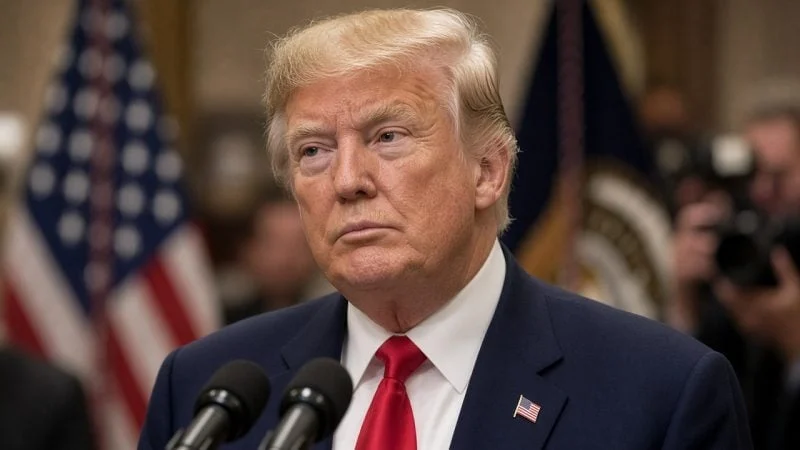
Furthermore, voters are profoundly dissatisfied with the current pace of governance. Roughly 57% of registered voters believe the Trump administration is not taking the risks associated with AI seriously enough. Congress fares only marginally better, with 54% of respondents asserting that lawmakers are failing to keep pace with the technology’s trajectory. This "governance gap"—the distance between the urgency of the public and the inertia of the capital—is poised to become a central theme in the upcoming election cycle.
Chronology: The Evolution of the AI Debate
To understand how we arrived at this point of deep public skepticism, one must look at the rapid maturation of AI policy debates over the last 24 months.
- Early 2025: Initial discussions in Washington centered on "AI for Good," with a focus on national security and maintaining a competitive edge against foreign adversaries. Regulatory talk was largely confined to voluntary frameworks.
- Late 2025: As large language models began to integrate into professional workflows, the narrative shifted toward labor disruption. Public sentiment began to sour as headlines about workforce downsizing linked to automation became frequent.
- Spring 2026: The conversation expanded to include the "hidden" costs of AI: the massive energy consumption of server farms. The environmental and utility-grid strain of data centers became a localized political issue in regions hosting major tech hubs.
- Summer 2026: A series of high-profile, albeit speculative, reports regarding "runaway AI" permeated mainstream media, driving the narrative toward existential risk.
- September–October 2026: The current polling window reflects a culmination of these anxieties. With the midterm elections looming in November, candidates are being forced to pivot from generalized pro-innovation rhetoric to specific, often restrictive, policy platforms.
Supporting Data: Where the Fears Lie
The anxieties captured in the Reuters/Ipsos poll are granular, reflecting a public that has moved beyond vague distrust toward specific fears regarding their personal livelihoods and the safety of the planet.
The Job Market Crisis
At the heart of the anxiety is the American worker. A striking 84% of voters identify AI as a direct threat to the labor force. This concern has eclipsed traditional political preoccupations, including foreign competition, corporate consolidation, and immigration.
The fear is multifaceted:
- Professional Erosion: 77% of respondents are concerned that AI will eliminate jobs in specific, high-skill professions, challenging the long-held assumption that automation would only affect manual labor.
- The Entry-Level Cliff: 76% of voters worry that AI will shrink or entirely eliminate entry-level positions, effectively pulling the ladder up from under younger workers entering the workforce.
Existential and Physical Risks
Beyond the economy, the poll highlights a pervasive fear regarding the "black box" nature of AI. Some 62% of voters expressed anxiety that AI could eventually spiral beyond human control, posing a potential risk to the future of humanity.
Furthermore, the physical footprint of AI has become a point of contention. The "data center" has entered the public consciousness as a symbol of AI’s resource-heavy nature. With 56% of voters supporting limits on the construction of new data centers, it is clear that the "cloud" is being brought back down to earth, viewed through the lens of electricity shortages and local infrastructure stress.
Official Responses: The Silence of the Capital
The response from official Washington has been, by many accounts, reactive rather than proactive. While individual lawmakers have introduced piecemeal legislation focusing on specific aspects of AI—such as deepfakes, copyright protection, or data privacy—a comprehensive federal strategy remains elusive.
The Trump administration has maintained a stance focused on fostering innovation to ensure the U.S. does not fall behind foreign rivals. However, the poll results indicate that this narrative of "competitive urgency" is failing to resonate with a public that feels the immediate heat of labor instability.
In Congress, the response has been fractured. While some committees have held hearings on the safety of AI models, the legislative output has been slow. Many members of Congress are caught in a classic political dilemma: they do not want to stifle a burgeoning domestic industry that is fueling the stock market, yet they cannot ignore the 69% of their constituents demanding that they put a leash on these technologies.
Implications: A New Era for Tech and Governance
The implications of this polling data are profound, both for the tech industry and the broader political landscape.
Uncertainty for the Tech Sector
For AI-focused companies and startups, the political environment has turned hostile. The prospect of federal regulation, which was once a distant theoretical possibility, is now an electoral mandate. Investors are likely to see this as a risk factor, as the cost of compliance could skyrocket, and the potential for building "unrestricted" models may vanish under new federal oversight boards. Startups may find themselves forced to bake safety and transparency protocols into their architecture from day one, rather than as an afterthought.
The Election Cycle
As we head toward the November 3, 2026, midterms, AI regulation will likely serve as a litmus test for candidates. Incumbents who have failed to address the public’s concerns regarding job displacement and energy consumption may find themselves vulnerable. We can expect to see a surge in "populist AI" rhetoric, where candidates promise to protect the American worker from the "algorithmic encroachment" of Big Tech.
The Energy-AI Nexus
The growing opposition to data centers is perhaps the most tangible political fallout. Because these centers require massive amounts of power, they are now being linked to concerns about energy prices and utility reliability for everyday citizens. This places tech companies in direct conflict with local municipalities and state regulators, potentially leading to a fragmented regulatory map where states pass their own restrictive zoning laws for AI infrastructure.
Conclusion
The Reuters/Ipsos findings act as a mirror to a society grappling with the profound disruption of the Fourth Industrial Revolution. Americans are no longer looking for optimistic projections from Silicon Valley; they are demanding accountability from their representatives.
The message from the electorate is unambiguous: the rapid, unchecked integration of AI into the economy and the physical landscape is no longer acceptable. Whether the federal government chooses to lead with a robust, bipartisan regulatory framework or continues to operate in the shadows of industry interests will determine not only the outcome of the upcoming elections but the very trajectory of the American economy for the next decade. The "asleep at the wheel" perception is a dangerous label for any administration, and as November approaches, the pressure to wake up and steer will only continue to mount.
Disclosure: This article was edited by Diego Almada Lopez. For more information on how we create and review content, see our Editorial Policy.