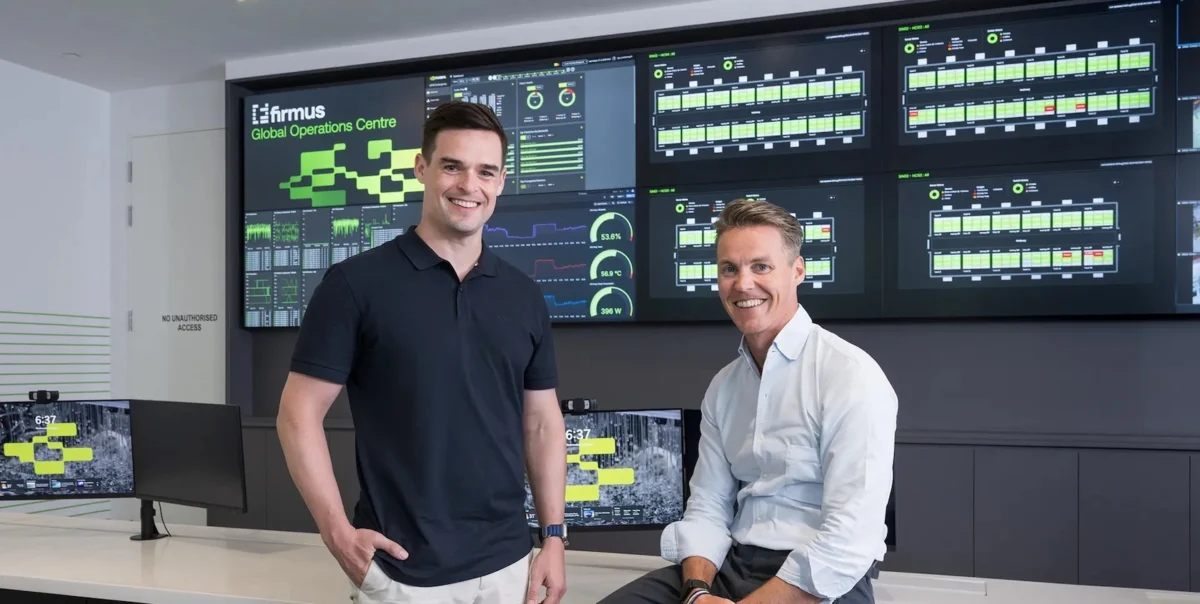
In a move that has sent shockwaves through the Australian financial sector, Firmus Technologies has officially set the price for its ASX initial public offering (IPO) at $11 per share. The move, which seeks to raise $7.1 billion, represents more than just a capital injection; it is a definitive litmus test for the global artificial intelligence boom. With an eye-watering equity valuation of US$30.6 billion (approximately A$44 billion), Firmus is asking investors to validate a valuation that has ballooned by a staggering 44x in just twelve months.
As institutional bidding opens from October 6 to October 9, the market is bracing for what is poised to be the second-largest IPO in Australian history—trailing only the historic 1997 privatisation of telecommunications giant Telstra.
Chronology: From Bitcoin Roots to AI Dominance
The meteoric rise of Firmus Technologies is a masterclass in strategic pivoting. Founded in 2019, the company initially cut its teeth in the volatile world of cryptocurrency mining. Under the leadership of co-founders Tim Rosenfield and Oliver Curtis, the firm leveraged high-density computing power to secure the Bitcoin network.
However, as the global appetite for generative AI models began to surge, the founders recognized that their infrastructure—specifically, their high-performance data centers—was uniquely suited for a far more lucrative purpose.
- 2019–2021: The formative years. Firmus establishes its foundation as a high-density compute provider focused on crypto-mining assets.
- 2022: Early signs of the shift. The company begins retrofitting its infrastructure to support machine learning workloads.
- 2023: The "AI Factory" pivot. Firmus formally moves away from crypto, rebranding its facilities as "AI factories"—optimized, liquid-cooled, and high-density environments designed specifically for GPU clusters like Nvidia’s H100 and Blackwell series.
- 2024: Hyper-growth. The company secures key contracts with hyperscalers, leading to a valuation surge from $1 billion to over $40 billion in just one year.
- October 2026: The IPO announcement. Firmus prices shares at $11, with trading scheduled to commence on the ASX on October 23.
The "AI Factory" Thesis: Why the Valuation?
To understand the 44x valuation, one must look at the physical architecture of the modern AI economy. AI models—the engines powering everything from ChatGPT to autonomous logistics—require immense computational density. Traditional data centers, built for cloud storage and general enterprise hosting, often struggle to dissipate the massive heat loads generated by modern AI chips.
Firmus’s "AI factories" are designed to solve the "thermal bottleneck." By employing advanced liquid cooling and optimized power distribution, the company offers a turn-key solution for tech giants and research institutions that need to deploy tens of thousands of GPUs in weeks, not years.
Financial analysts argue that Firmus is not a real estate play, but a hardware infrastructure play. By owning the physical environment where the "brains" of the next industrial revolution reside, Firmus has positioned itself as the "utility company" of the 21st century. Whether the AI boom sustains its current trajectory or corrects, the infrastructure—the factories—remains the essential bottleneck.
Supporting Data and Market Sentiment
The scale of this IPO is unprecedented in the current Australian economic climate. According to a term sheet obtained by Reuters, indicative orders for the shares have already exceeded the total offer size. This high demand suggests that institutional investors—pension funds, sovereign wealth funds, and private equity giants—are eager to gain exposure to the AI supply chain.
Key Financial Metrics
- Offer Price: $11.00 per share.
- Capital Raised: $7.1 billion.
- Market Capitalisation: ~A$44 billion.
- Growth Factor: 44x valuation increase year-over-year.
- Timeline: Institutional bidding (Oct 6–9); ASX Listing (Oct 23).
Despite the overwhelming institutional interest, retail investors remain cautious. A 44x valuation increase in twelve months is historically associated with speculative bubbles. The central question for the market is whether Firmus’s revenue growth can keep pace with its ballooning equity value. Critics point to the cyclical nature of hardware manufacturing and the potential for a "compute glut" if AI development slows down.
Official Responses and Corporate Silence
In the face of intense public scrutiny, Firmus Technologies has maintained a surprisingly guarded posture. When reached for comment regarding the valuation and the potential for oversubscription, representatives for the company declined to provide specific guidance, adhering to the strict regulatory "blackout" period mandated for pre-IPO firms.
However, the co-founders, Rosenfield and Curtis, have previously described the company’s mission as "building the nervous system of the digital future." In internal briefings leaked to the press, the duo emphasized that the capital raised from the IPO is earmarked for the rapid expansion of three new "mega-factory" sites across the Asia-Pacific region, which are already in the planning stages.
The lack of public commentary from the leadership team has, if anything, fueled the market’s curiosity. In the absence of direct guidance, the market is reading between the lines of the term sheet, viewing the high indicative demand as a tacit endorsement of the founders’ vision.
Implications: The ASX and the Global AI Race
The Firmus IPO represents a watershed moment for the Australian Securities Exchange. For years, the ASX has been criticized for being "heavy" on legacy industries—mining, banking, and retail—and "light" on high-growth technology. The entry of a $44 billion AI infrastructure company fundamentally alters the composition of the exchange.
1. The "Tech Pivot" for the ASX
If Firmus succeeds, it will likely serve as a catalyst for other Australian tech firms to list locally rather than migrating to the NASDAQ. It proves that the Australian capital market is capable of supporting multi-billion dollar tech valuations.
2. The Global GPU Arms Race
Firmus is a critical node in the global GPU arms race. By securing the physical infrastructure necessary for training Large Language Models (LLMs), Firmus effectively becomes a geopolitical asset. As countries and corporations fight for compute sovereignty, the ability of a firm like Firmus to provide secure, high-density environments becomes a matter of national interest.
3. Investor Risk and Reward
For the retail investor, the Firmus IPO is a high-stakes gamble. The company is essentially betting that the demand for AI compute will grow exponentially for the next decade. If the AI sector hits a "trough of disillusionment," companies with massive capital expenditures—like Firmus—could face significant headwinds. Conversely, if AI becomes as ubiquitous as electricity, Firmus could well become the next foundational utility, justifying its massive valuation.
The Path to October 23
As the calendar ticks toward October 23, the focus will shift from the term sheet to the secondary market. The "Firmus effect" will be felt across the ASX, with investors likely rotating capital out of traditional sectors to capture a piece of the AI pie.
For Tim Rosenfield and Oliver Curtis, the journey from Bitcoin miners to the architects of a $44 billion AI powerhouse is nearly complete. But in many ways, the real work begins once the ticker symbol goes live. The market is not just buying into what Firmus has achieved in the last year; it is betting on what the company will be in the next ten.
Whether Firmus Technologies becomes the titan that defines the Australian tech sector or a cautionary tale of valuation excess remains to be seen. But one thing is certain: on October 23, all eyes will be on the ASX as the "AI factory" era officially opens for business.