In the volatile climate of the 2024 freight market, the divide between major industry players has never been more pronounced. While the broader logistics sector grapples with what many analysts describe as a "lukewarm" demand environment, the financial performance of industry titans suggests that success is no longer dictated solely by macro-economic conditions. Instead, it is increasingly being shaped by internal corporate culture, operational agility, and the strategic willingness to abandon legacy models in favor of opportunistic, data-driven decision-making.
A recent deep-dive discussion on FreightWaves Today, featuring FreightWaves CEO Craig Fuller and industry veteran Paul Tonsager, highlighted a striking contrast between the aggressive, "ruthless" efficiency of Knight-Swift and the more traditional, customer-centric approach of J.B. Hunt. As the industry navigates a period of significant pricing tension, this divergence offers a masterclass in how institutional DNA determines resilience during a cyclical downturn.
The Tale of Two Strategies: Knight-Swift vs. J.B. Hunt
The current earnings cycle has provided a clear view into the divergent paths chosen by the industry’s largest players. Knight-Swift, born from a culture that prioritizes operational discipline and a willingness to cull unprofitable freight, has emerged as a standout performer. By aggressively leaning into spot market opportunities and one-way traffic, the carrier has successfully navigated the margin compression that has plagued many of its peers.
In contrast, industry stalwart J.B. Hunt, alongside Werner Enterprises, has reported more conservative, cautious results. This is not necessarily a reflection of operational incompetence, but rather a strategic preference for stability. J.B. Hunt’s heavy reliance on dedicated and contract-based business provides a buffer against the extreme volatility of the spot market, but it also leaves the carrier vulnerable when market conditions shift rapidly.
The "Ruthless" Advantage
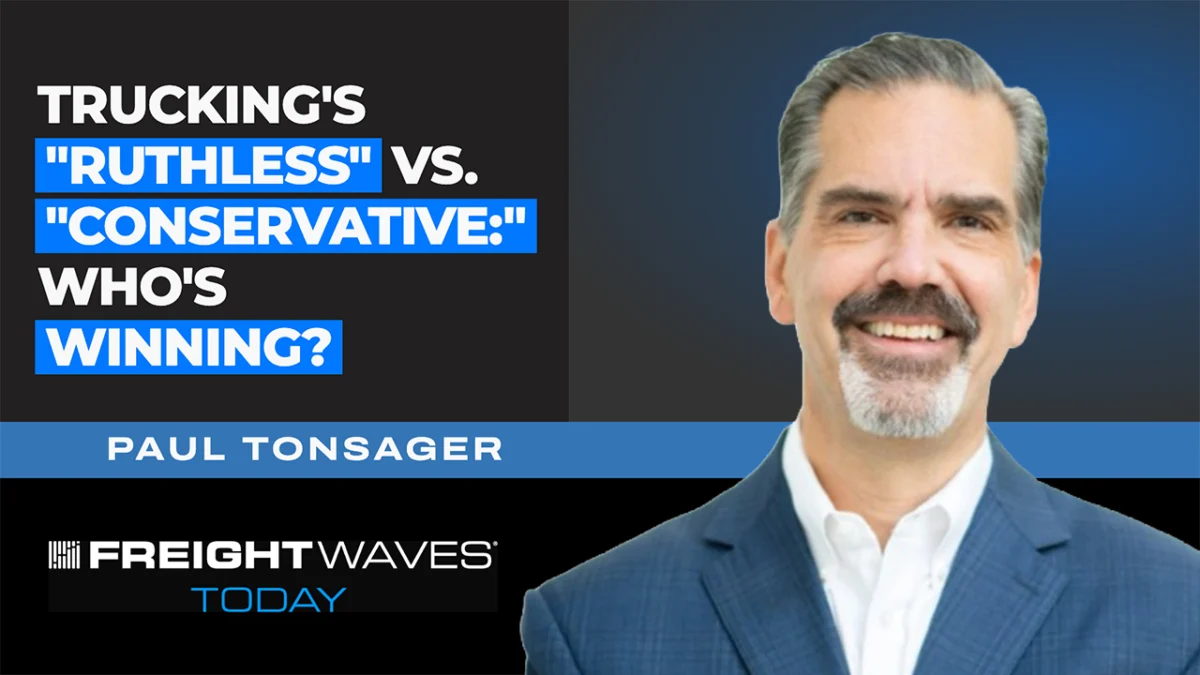
Paul Tonsager, CEO and founder of Integrated Multimodal Solutions and a former railroad executive, noted that Knight-Swift’s ability to pivot is rooted in its entrepreneurial heritage. "The entrepreneurs will win in this market because they can move quickly to capture whatever gain they can get on price," Tonsager remarked.
Knight-Swift’s reported 89 operating ratio—a metric that measures the efficiency of a carrier’s operations—has sent shockwaves through the industry. Even within the rail sector, where margins are traditionally guarded, such a figure is considered highly impressive. By maintaining the flexibility to walk away from low-margin freight, Knight-Swift has effectively immunized itself against the "lukewarm" demand that has throttled its competitors.
Chronology of a Shift: From Expansion to Optimization
To understand the current state of play, one must look at the historical trajectory of these firms. For years, the industry was defined by a race for scale. Mergers and acquisitions, most notably the massive union of Knight and Swift, were aimed at creating "mega-carriers" capable of dominating every corner of the North American supply chain.
However, the post-pandemic reality shifted the goalposts. As demand cooled in 2023 and 2024, the focus shifted from pure volume to margin preservation.
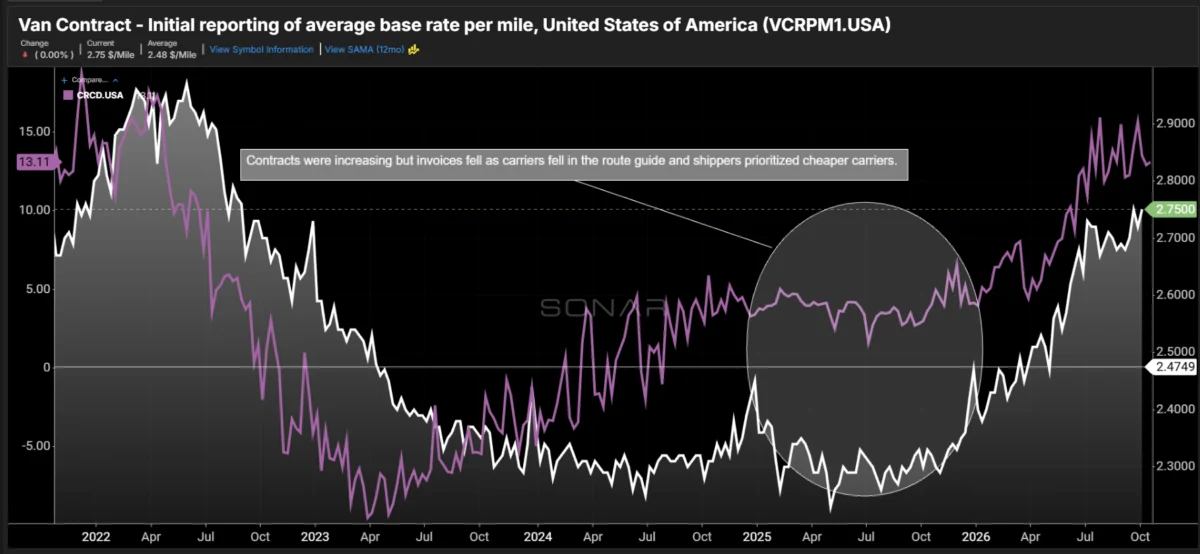
- Q1-Q2 2024: Truckload and contract intermodal rates began to diverge significantly. A 34% spread emerged between the two, creating intense pressure on carriers to choose between the reliability of long-term contracts and the potential for higher returns in the spot market.
- The "Bid Cycle" Trap: J.B. Hunt’s reliance on dedicated services means they are inherently tied to formal bid cycles. While this creates long-term security, it prevents the carrier from passing on sudden inflationary pressures—such as rising driver wages—to their customers until the next contract renewal period.
- The Current Moment: Knight-Swift’s willingness to operate in the spot market allows them to reprice their services on a near-real-time basis, enabling them to capture gains that dedicated carriers are effectively locked out of.
Data and Market Dynamics
The financial data underlying these performances reveals the depth of the challenge. The 34% pricing spread between truckload and contract intermodal rates is not just a statistic; it is a signal of fundamental structural tension.
Railroads, which have historically relied on intermodal as a key revenue driver, are finding these margins increasingly difficult to defend. Tonsager, drawing on his deep experience in the rail industry, noted that railroads are protective of their carload business precisely because they cannot easily compete with the agility of motor carriers like Knight-Swift. When a carrier is willing to shed undesirable freight to optimize its network, it creates a "lean" operation that is vastly more profitable than a bloated, "all-things-to-all-people" network.
Despite the current quarter’s softness, analysts warn against dismissing J.B. Hunt. The company maintains what many consider the "best mix, best balance, and best consistent operations" among large trucking operators. A single quarter of underperformance in a volatile cycle is not a indictment of their strategy, but rather a demonstration of the inherent rigidity of a contract-heavy business model.
The Regulatory Shadow: The UP-NS Merger
While trucking companies battle for market share, the rail industry is embroiled in a potential regulatory paradigm shift: the proposed Union Pacific (UP) and Norfolk Southern (NS) merger. This $80 billion potential deal has been the subject of intense speculation and anxiety.
Tonsager estimates the probability of Surface Transportation Board (STB) approval at roughly 55-45. The market seems to lean toward completion, with Norfolk Southern shares trading at a premium—often between $330 and $332—above the offer price of $320, suggesting that investors expect the deal to clear regulatory hurdles.
The Cost of Uncertainty
The risks associated with this merger are profound:
- Regulatory Paralysis: More than 18 months have passed since the merger was announced, yet the STB has not held a single hearing. This prolonged limbo acts as a tax on efficiency, distracting employees and preventing long-term capital investment.
- Breakup Fees: The presence of an approximately $2 billion breakup fee provides Norfolk Southern with significant downside protection, similar to the T-Mobile/AT&T collapse scenario. This financial safety net ensures that even if the deal fails, the company remains financially viable.
- Political Volatility: With the political landscape shifting and the possibility of Democratic gains in the House, the regulatory environment is increasingly unpredictable. With only four commissioners overseeing such a massive consolidation, any decision will have generational implications for rail infrastructure.
Tonsager warned that if this administration rejects the merger, it could effectively freeze any similar attempts at railroad consolidation for a generation. The outcome will set the tone for competition, service levels, and intermodal pricing for decades to come.
Implications for the Broader Supply Chain
What does this mean for shippers, brokers, and the average consumer?
First, the "ruthless" efficiency of carriers like Knight-Swift suggests a future where shippers will face less "cushion" in their supply chains. As carriers become more selective, low-margin, or difficult-to-service freight will likely face steep rate hikes or outright rejection. The era of the "all-encompassing service" is giving way to a more transactional, data-driven reality.
Second, the divergence in strategies highlights a growing divide in the industry between "asset-heavy" stability and "asset-agile" performance. Shippers looking for long-term price certainty will likely gravitate toward the J.B. Hunt model, accepting that they will pay a premium for the stability of dedicated capacity. Those looking for spot-market advantages or seasonal flexibility will increasingly turn to the more aggressive, entrepreneurial carriers.
Finally, the looming consolidation of the rail sector suggests that intermodal transport—the backbone of long-haul freight—may become more expensive or more centralized in the coming years. If the UP-NS merger succeeds, it will consolidate power into a smaller number of hands, potentially reducing the competitive pressure that keeps rail rates in check.
As 2024 progresses, the lesson for logistics leaders is clear: market conditions are only half the story. The true winners in this cycle will be those who can match their operational culture to the demands of a volatile, shifting, and increasingly ruthless freight market. Whether through the surgical efficiency of truckload giants or the massive, long-term plays of the rail industry, the future belongs to those who can master the art of strategic adaptation.