By Nathan Owens | Manufacturing Dive
Published October 8, 2026
In a move that marks one of the most significant industrial investments in modern American history, the Trump administration announced this week that Mesabi Metallics is set to break ground on a $15 billion steel facility. The project, which promises to be the largest steel mill ever constructed in the United States, represents a cornerstone of the administration’s aggressive "America First" manufacturing agenda.
With plans to produce 10 million tons of steel annually and create 1,750 permanent, high-skilled jobs—supplemented by an additional 6,000 construction roles—the project is a massive gamble on domestic self-sufficiency. As geopolitical tensions rise, particularly in the shadow of the ongoing conflict with Iran, the White House is positioning this facility as a vital pillar of national security.
The Core of the Investment: A New Giant in Iowa
The proposed facility, to be located in Iowa, will leverage cutting-edge electric arc furnace (EAF) technology. Unlike traditional blast furnaces, EAFs allow for a more flexible and environmentally conscious production process, utilizing recycled scrap metal alongside direct-reduced iron (DRI) sourced from the company’s own mining operations in Nashwauk, Minnesota.
Mesabi Metallics has committed to an additional $3 billion investment to finalize its Minnesota mining site, where the company aims to produce its signature "Patriot Pellets." The synergy between the Minnesota raw material supply chain and the Iowa production hub is intended to create a vertically integrated industrial powerhouse.
"This is a major moment for U.S.-made steel," said Joe Broking, CEO of Mesabi Metallics, in a statement accompanying the announcement. The company, which is entering the steel-making arena for the first time with this ambitious project, views the Iowa facility as the future of American manufacturing, capable of meeting domestic demand while insulating the supply chain from global volatility.
Chronology of a Manufacturing Pivot
The path to this announcement has been paved by a series of aggressive trade policies and domestic economic maneuvering over the past two years:
- Summer 2026: The administration doubles the Section 232 tariff rate on metal imports to 50%, effectively shutting out cheaper foreign steel and forcing domestic manufacturers to rethink their procurement strategies.
- September 4, 2026: Hyundai Steel breaks ground on its own $5.8 billion facility in Louisiana, signaling the start of a wave of foreign and domestic investment spurred by the new tariff regime.
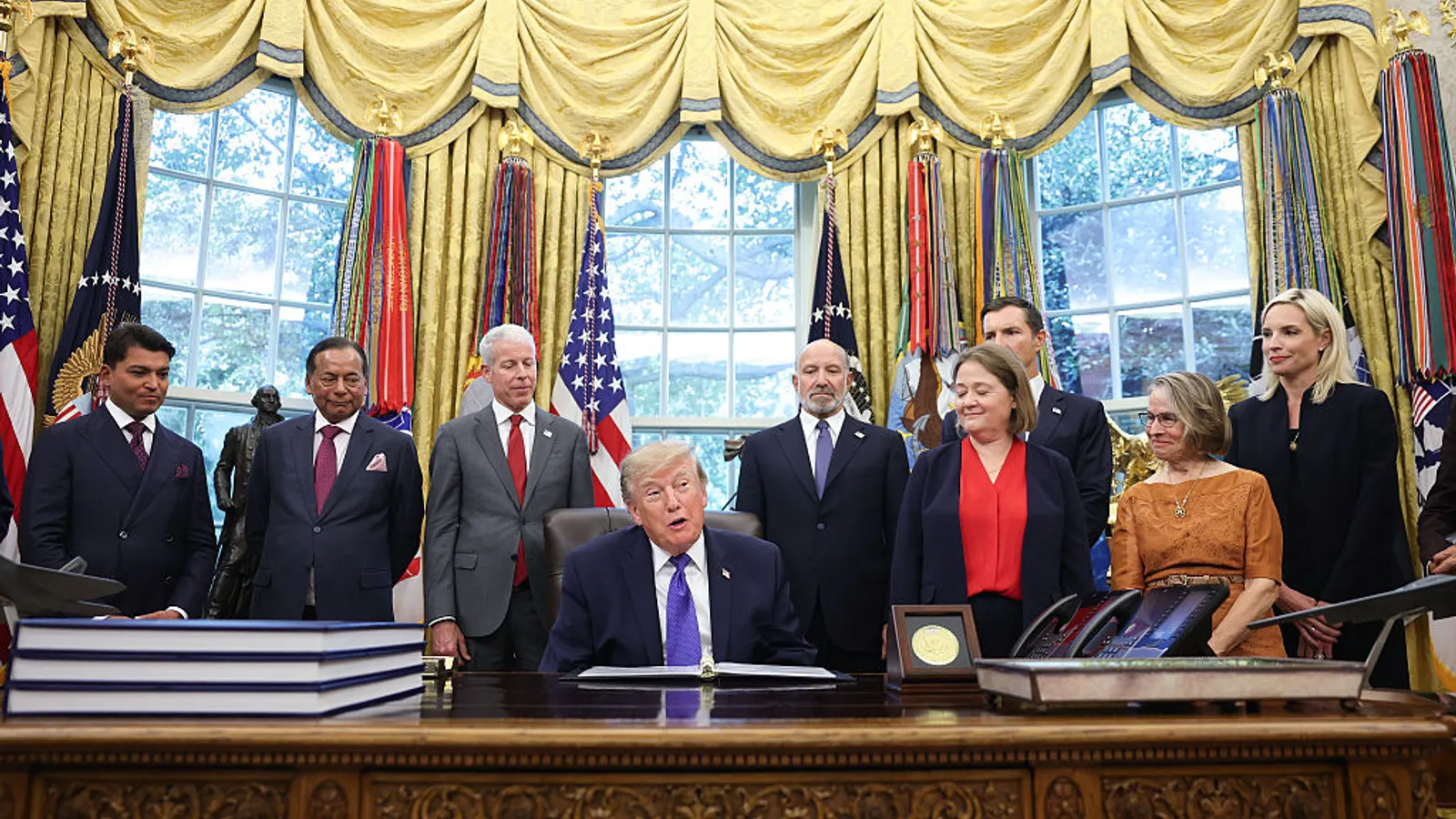
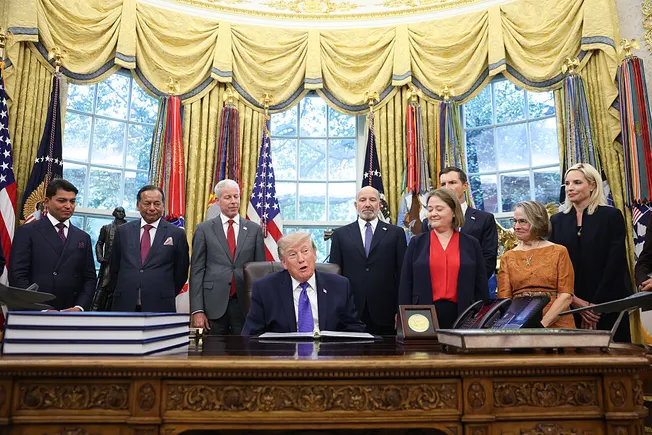
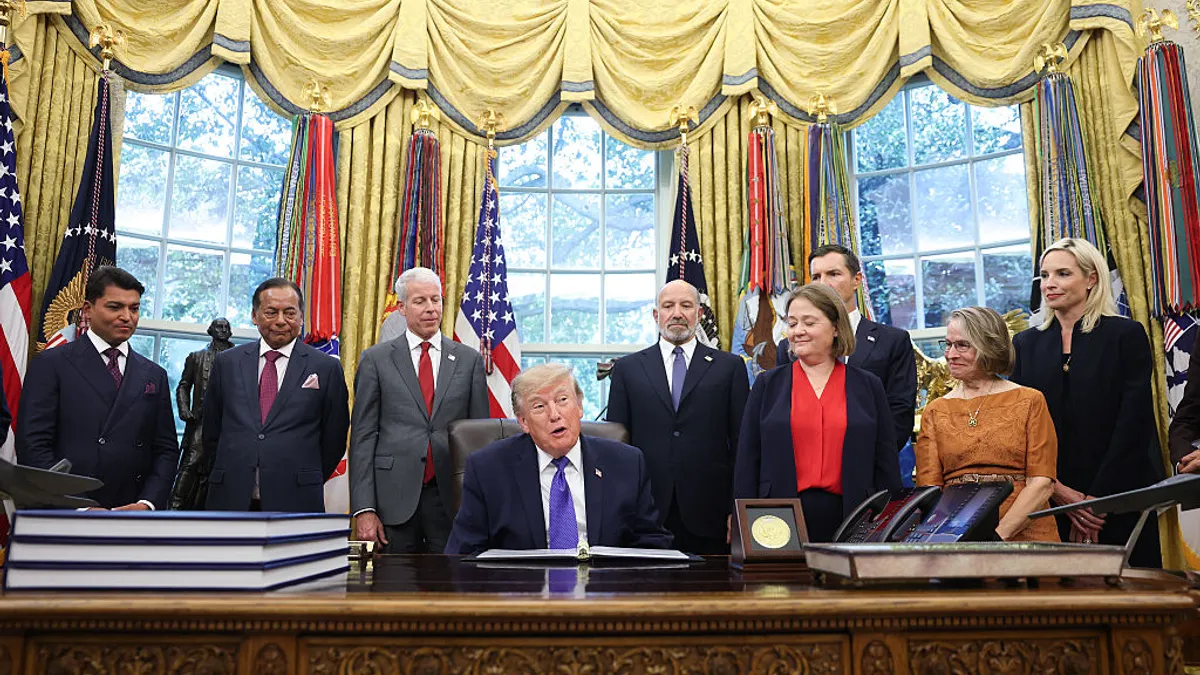
- September 28, 2026: President Trump formally unveils the Mesabi Metallics plan at the White House, emphasizing that the project is the result of private sector confidence in the U.S. regulatory environment.
- October 8, 2026: Full project specifications are confirmed, with construction timelines set to commence in the coming months.
Supporting Data: The Impact of Section 232
The rationale for the administration’s steel policy is rooted in the performance of the sector under the current tariff regime. By restricting foreign imports, the U.S. has seen a dramatic resurgence in domestic production capacity. Data from the last fiscal year confirms that the United States surpassed Japan as a top-tier crude steel producer for the first time since 1999.

However, this growth comes at a cost. The "roaring" steel industry has benefited from protectionism, but the downstream effects have been complex. Manufacturers that rely on steel as a raw material have faced significantly higher input costs. While the administration argues these are "growing pains" necessary for long-term security, economists point to the rising prices passed on to consumers as a potential inflationary risk.
"Everyone’s building their plant here because they don’t want to pay tariffs," President Trump stated during his announcement. The logic is clear: by making the "cost of entry" for foreign steel prohibitively high, the administration is forcing global and domestic firms to move production inside American borders.
Official Responses and the "Private Money" Doctrine
A point of contention during the White House press briefing was the role of public funding. Critics have frequently questioned whether such massive industrial projects rely on federal subsidies or state-level incentives that could distort market competition.
President Trump was quick to dismiss these concerns, asserting that "we’re doing very little" from the public sector side. Commerce Secretary Howard Lutnick reinforced this, stating clearly that the "$15 billion deal is done" and is entirely funded by private capital. While the administration claims the project is a triumph of market-driven investment, observers remain curious about potential state-level tax abatements or infrastructure subsidies that often accompany projects of this scale.

Broader Implications: A New Era for American Metals?
The Mesabi Metallics facility is not an isolated incident; it is part of a broader, government-backed push to re-industrialize the American heartland. The administration is currently championing a $4 billion aluminum smelter in Oklahoma, a project spearheaded by Emirates Global Aluminum and Century Aluminum.
The Environmental and Community Hurdle
Despite the enthusiasm from the White House, these projects are not without their detractors. The Oklahoma smelter has faced significant delays, with the town of Inola voting to impose a moratorium on the project over environmental and quality-of-life concerns. The project is currently stalled until April 2027, highlighting a growing tension between national industrial policy and local community interests.
The Mesabi Metallics project will likely face similar scrutiny. As the U.S. transitions toward a higher-output, more concentrated industrial footprint, environmental impact assessments and community engagement will be the next major hurdles. The developers of the Oklahoma site have already begun releasing "economic impact studies" to counteract public opposition, a strategy Mesabi Metallics may need to adopt as it moves into the construction phase.
National Security vs. Economic Cost
The primary driver remains national security. The ongoing conflict with Iran has underscored the dangers of relying on global shipping lanes for critical materials like steel and aluminum. In the eyes of the current administration, the price of domestic steel—however high—is a premium worth paying to ensure that the U.S. military and critical infrastructure sectors are never held hostage by foreign supply chain disruptions.
Conclusion: The Road Ahead
The scale of the Mesabi Metallics project is staggering. It is a bold, high-stakes bet that the American manufacturing sector can reclaim its dominance through sheer force of investment and the shelter of protectionist trade policy.
If successful, the Iowa facility will serve as the engine room for a new generation of American infrastructure. If it falters—whether due to high costs, environmental pushback, or shifting political winds—it could become a cautionary tale about the limits of government-led industrial intervention. For now, however, the message from the White House is one of unbridled optimism: the steel mills are back, and they are here to stay.
As the project moves from the drawing board to the shovel, the eyes of the global economy will be on the American Midwest. The success of this facility will not only determine the future of Mesabi Metallics but will likely define the legacy of the current administration’s industrial strategy for decades to come.