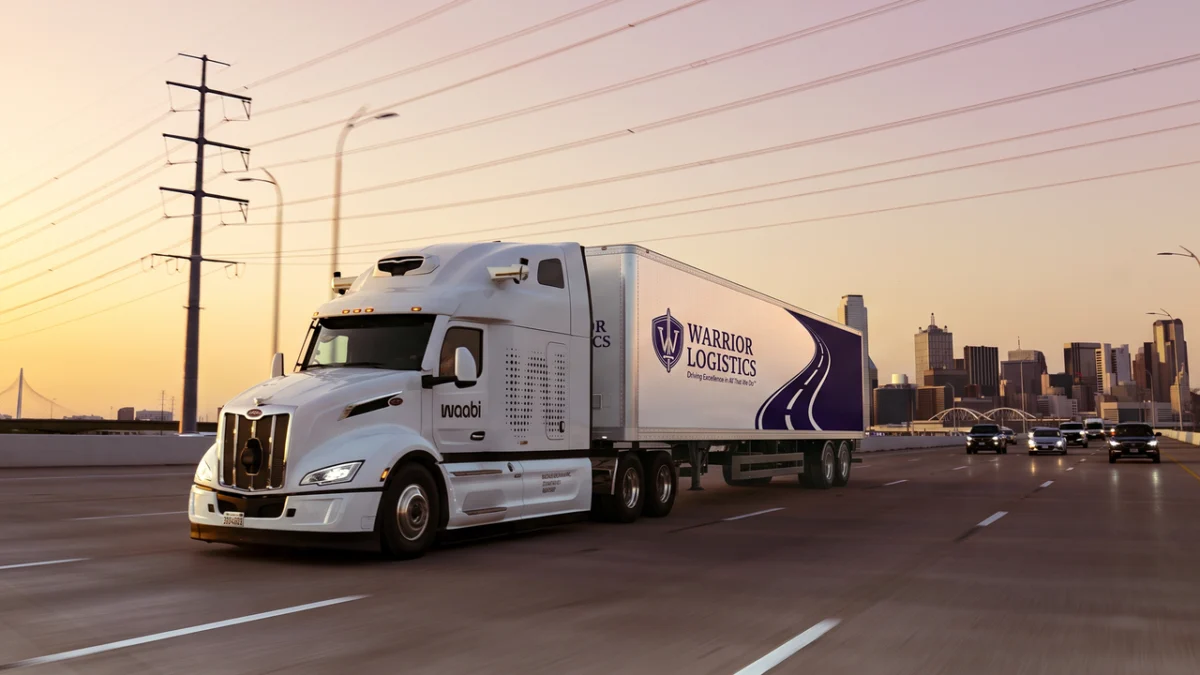
The landscape of American freight logistics is undergoing a fundamental transformation. In a significant move toward the normalization of autonomous freight, Waabi—a leader in AI-driven trucking technology—and Warrior Logistics, an asset-based carrier headquartered in Coppell, Texas, have officially announced a commercial partnership. This collaboration is designed to integrate Waabi’s sophisticated "Waabi Driver" technology into the daily operations of Warrior Logistics, specifically targeting the high-demand corridor between Dallas and Houston.
This partnership is not merely a pilot project; it is a tactical expansion of commercial freight operations that have been quietly operating since early this year. By blending autonomous capabilities with traditional, human-led logistics, the two companies are positioning themselves to solve some of the industry’s most persistent bottlenecks: capacity constraints, driver labor shortages on undesirable routes, and the constant pressure for operational efficiency.
The Strategic Partnership: A New Blueprint for Logistics
The collaboration between Waabi and Warrior Logistics represents a symbiotic relationship between an innovative technology provider and a veteran logistics operator. Founded in 2015, Warrior Logistics manages a fleet of over 200 trucks. By integrating Waabi’s autonomous systems, the company is not looking to replace its human workforce, but rather to augment it.
Scott McFarlane, CEO of Warrior Logistics, describes the initiative as a way to "build density" on key power lanes. The strategy is to utilize autonomous trucks for recurring shipments in sectors such as food and beverage, consumer packaged goods, and general retail. By shifting autonomous vehicles onto these predictable, repetitive routes, Warrior Logistics can effectively increase its total capacity while allowing its professional human drivers to focus on more complex, short-haul, or high-touch logistics tasks that require human judgment and intervention.
The operational results thus far have been promising. According to official reports from Waabi, the autonomous fleet has maintained a 100% on-time delivery record since the commencement of operations earlier this year, all while achieving a perfect safety record with zero incidents. While the specific number of vehicles deployed remains proprietary, the scale of the commitment is significant enough to be classified as a core component of Warrior’s growth strategy.
A Chronology of Progress: From Concept to Corridor
The timeline of Waabi’s ascent in the autonomous trucking space has been marked by rapid development and strategic alliances.
- September 2023: Waabi officially began moving its first revenue-generating loads on the critical I-45 corridor between Dallas and Houston. This launch was anchored by a landmark 10-year partnership agreement with Uber Freight, which provided the necessary freight volume to stress-test the system in real-world conditions.
- Early 2026: Waabi and Warrior Logistics commenced their commercial partnership. This phase focused on integrating the AI-powered trucks into existing customer freight networks.
- July 2026: In a major milestone for AI generalizability, Waabi demonstrated that its software, which had been trained on Peterbilt 579 hardware, could successfully operate a Volvo VNL Autonomous truck without the need for extensive fine-tuning or new data sets. This proved that the "Waabi Driver" platform was hardware-agnostic and highly scalable.
- October 2026: Waabi and Volvo Autonomous Solutions announced the commencement of freight operations for Warp, utilizing the Volvo VNL Autonomous platform. This further solidified the I-45 corridor as the primary testing and deployment ground for autonomous logistics in the United States.
Looking ahead, the roadmap is clear. Waabi has confirmed that it is "fully on track" to achieve truly driverless operations by 2027, with Volvo serving as the primary OEM platform for this next-generation deployment.
Data-Driven Performance: The Efficiency Argument
The impetus for this partnership is rooted in cold, hard data. Commercial load volume on Waabi’s Dallas-Houston route has surged by more than 80% over the course of 2026. This growth is indicative of both the robustness of the technology and the growing trust from shippers who are increasingly willing to place their cargo on autonomous platforms.
The "Waabi Driver" is built on a foundation of generative AI and simulation, an approach that allows the system to learn from rare "edge cases" without needing to drive millions of physical miles to encounter them. This simulation-first approach is what allowed the company to transition its software between different truck manufacturers with minimal friction.
For a carrier like Warrior Logistics, the value proposition is measured in utilization. As McFarlane noted, customers are demanding more consistent capacity. Autonomous trucks offer a solution that is not bound by the federal Hours of Service (HOS) regulations that dictate rest periods for human drivers. By running autonomous vehicles in a continuous loop, Warrior can significantly increase the "truck-day" utilization, effectively doing more with the same amount of capital equipment.
Official Responses: The Philosophy of Collaboration
The collaboration is viewed by both parties as a masterclass in co-development. Unlike some technology providers that offer a "black box" solution, Waabi has worked closely with Warrior Logistics to iterate on the software’s performance based on the specific operational realities of the carrier.
"Warrior has helped shape our technology over the course of our partnership," said Lior Ron, COO of Waabi. "The impact we are seeing across their operations shows how we can help carriers take on more freight, serve more customers, and grow their business."
This sentiment is echoed by the leadership at Warrior. McFarlane cites three primary drivers for the partnership: a leadership team at Waabi that the carrier trusts, technology that is genuinely innovative, and a collaborative spirit that allowed Warrior to see the performance of the AI in a transparent, real-world setting before expanding the fleet.
"Our partnership with Waabi gives us the flexibility to deliver consistency," McFarlane said. "Waabi Driver-powered trucks complement our professional drivers, build density on our power lanes, and add capacity on the routes that are less desirable for our drivers."
Implications for the Freight Industry
The implications of the Waabi-Warrior partnership are profound for the broader logistics industry.
1. The "Human-Plus" Model
The industry is moving toward a hybrid model. Rather than the binary "human vs. robot" narrative, the reality is becoming a "human-plus" model. Autonomous trucks handle the long-haul, repetitive highway segments—the routes that are often the hardest to staff due to the lifestyle demands of long-distance trucking—while human drivers handle the "first and last mile," complex urban navigation, and customer-facing interactions.
2. OEM Integration
The success of Waabi’s software in operating Volvo trucks is a bellwether for the industry. By decoupling the "brain" (the AI software) from the "body" (the truck), Waabi is proving that the future of trucking lies in standardized autonomous stacks that can be deployed across various vehicle platforms. This lowers the barrier to entry for carriers who already have existing relationships with major OEMs.
3. Safety and Regulatory Compliance
With a perfect safety record to date, the Waabi-Warrior partnership serves as a powerful counter-argument to skeptics of autonomous vehicles. As the industry moves toward driverless operations in 2027, the focus will shift from "Can it drive?" to "Can it navigate complex, high-traffic corridors safely without a human safety driver?" The data generated by this partnership will likely form the basis of the safety case presented to regulators as the industry pushes for widespread, unmonitored deployment.
4. Economic Impact on Shippers
For the shippers—the food, beverage, and consumer goods companies—this is a boon. The ability to guarantee consistent capacity on a major corridor like Dallas-Houston reduces the need for expensive spot-market interventions and provides a hedge against the cyclical nature of freight rates. As Waabi and Warrior continue to develop new lanes, the regional economy of Texas is poised to become the most efficient logistics hub in the nation.
Conclusion: The Path to 2027
As we move into the final quarter of 2026, the partnership between Waabi and Warrior Logistics stands as a testament to the maturation of autonomous trucking. It is no longer a question of "if" this technology will be deployed, but "how" it will be integrated into the existing supply chain.
The industry will be watching closely as these companies continue to scale their operations. With the promise of driverless operations on the horizon, the next twelve months will be critical. If the current trend of growth and safety continues, the Waabi-Warrior model may well become the standard-bearer for how modern, technology-enabled carriers operate in the 21st century. By prioritizing collaboration, safety, and operational density, these two companies are not just moving freight—they are moving the entire industry forward.