By FreightWaves Staff
For shippers navigating the current logistics landscape, the message from the data is clear: the era of cheap, static contract pricing is effectively over. As of late October 2026, the cost of securing reliable truckload capacity has reached an inflection point, with new contract rates clocking in at approximately 13% higher than the legacy agreements they are replacing.
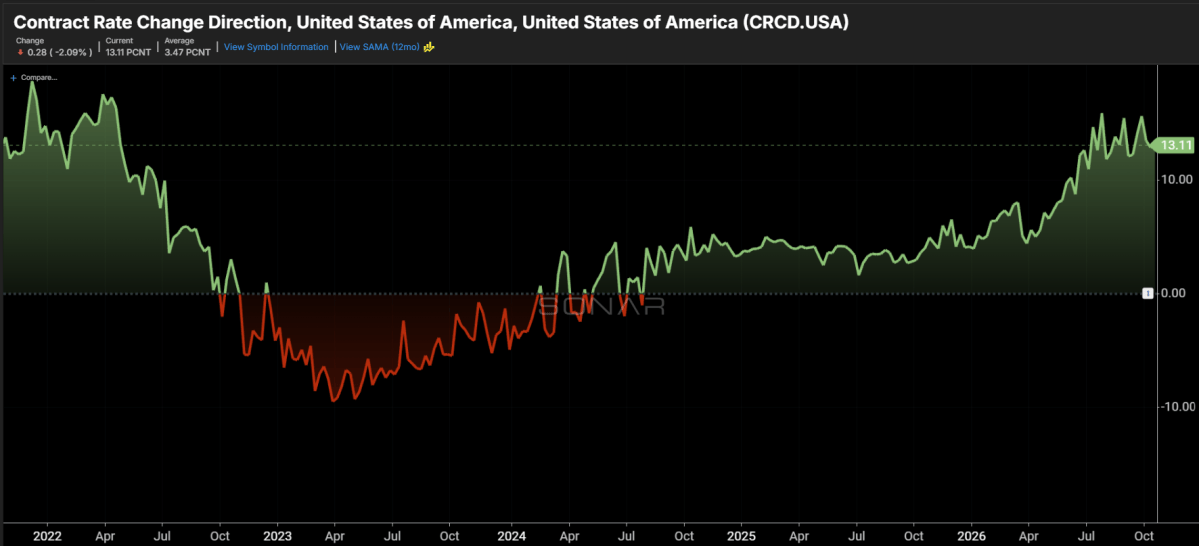
This dramatic shift is captured by the newly unveiled Contract Rate Change Direction (CRCD.USA) index from SONAR, which provides a high-fidelity look at the repricing cycle within the U.S. freight market. While inflation in the broader economy has fluctuated, the cost of moving goods by road is experiencing a concentrated surge that reflects a fundamental imbalance between supply and demand.
Understanding the CRCD.USA: A New Lens on Freight Pricing
To understand why shippers are feeling the sting of double-digit rate hikes, one must first understand what the CRCD index actually measures. Unlike broad spot-market averages or blended invoice data, which can be obscured by temporary volatility, the CRCD is designed to isolate the "true" price of contract renegotiations.
The index measures the percentage difference between a new contract base rate and the one it replaces, specifically within established shipper-carrier relationships. To ensure the data reflects structural market changes rather than fleeting anomalies, the index only tracks contracts where the previous rate had remained steady for more than 90 days. This filtering process removes "noise"—such as short-term fuel surcharges or spot-market overflows—and focuses on the deliberate, strategic repricing that defines the modern bid cycle.
By providing a seven-day rolling average updated daily, the CRCD offers an early warning system. It strips away the effects of route guide waterfalling and contract-plus pricing, providing stakeholders with a clearer view of the durable, sustained costs they will face in the coming fiscal quarters.

The Chronology of a Market Turnaround
The trajectory of this rate surge did not happen overnight. To understand the current 13.11% reading—a massive jump from the 3.53% seen a year earlier—we must look at the progression of the market over the last 24 months.
The 2025 Prelude
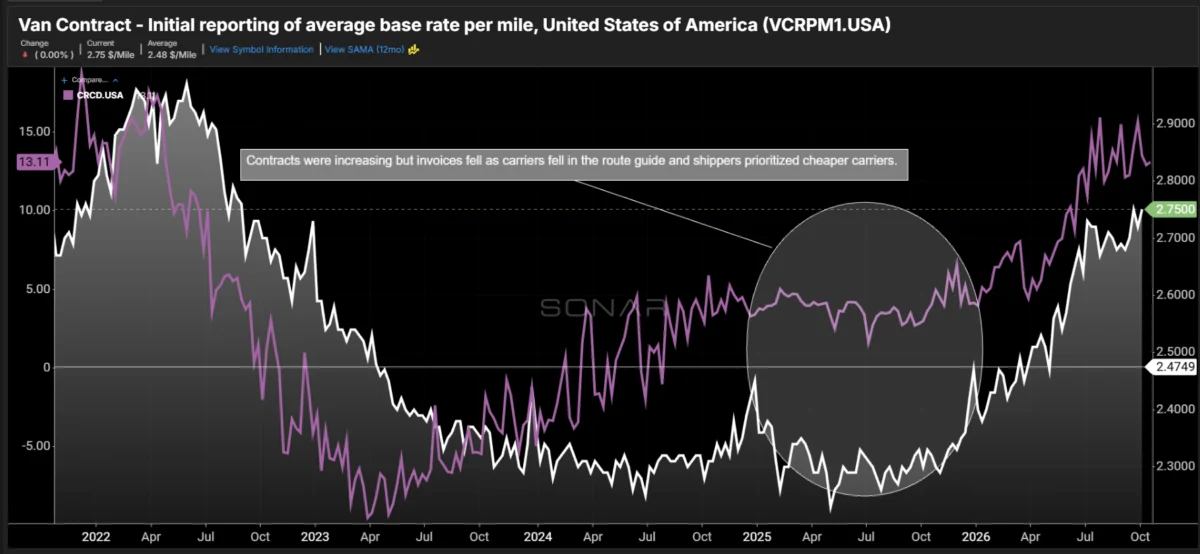
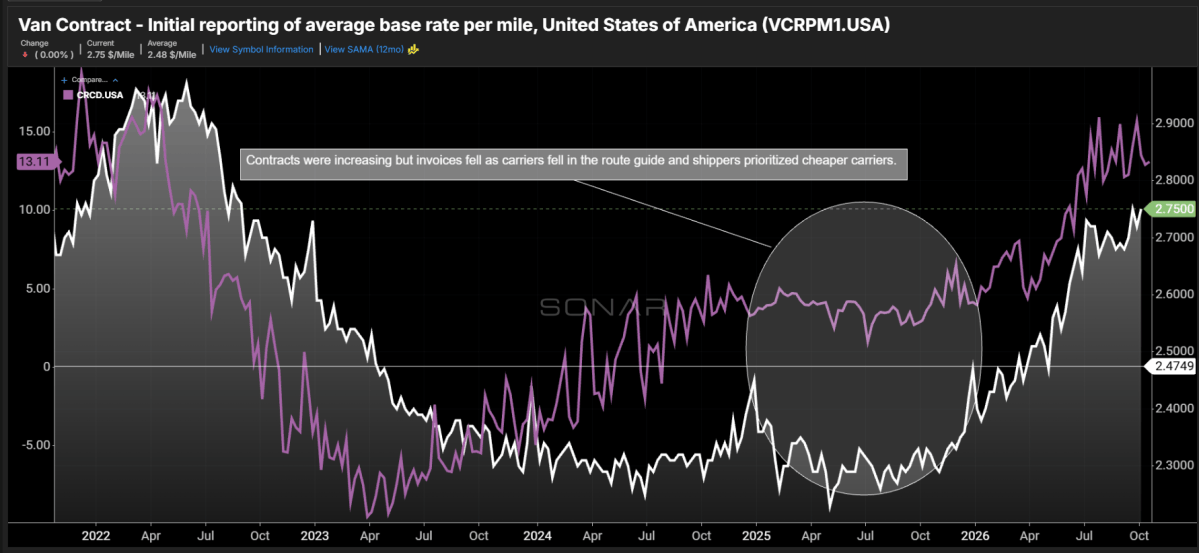
Throughout 2025, the freight market existed in a state of deceptive calm. Contract resets were occurring in the 3% to 4% range, suggesting a modest upward adjustment that many shippers believed they could absorb. However, beneath this surface-level stability, the average contract rate index (VCRPM1) was showing flat to slightly lower invoiced rates. This created a divergence: carriers were pushing for higher rates, but the market was not yet fully "sticking" those increases.
The 2026 Acceleration
By early 2026, the macroeconomic environment began to shift. As tender rejection rates—the percentage of shipments carriers decline to haul—began to climb steadily above the 9% mark, the leverage shifted decisively toward the carrier base. The lag between tender rejections and contract rate adjustments is a well-documented phenomenon in logistics; carriers must endure a sustained period of rejection before they gain the confidence to bake those higher costs into long-term contracts.
By the third quarter of 2026, the "lag effect" concluded. With rejection rates averaging near 13% over the past few months, the industry has seen contract increases consistently holding above the 10% threshold.
Supporting Data: Why Capacity Stagnation Drives Inflation
A recurring question among industry analysts is why, in an environment of elevated rates, capacity has not flooded back into the market. Traditionally, high freight rates attract new entrants, which eventually increases supply and drives prices back down. However, 2026 has defied this historical precedent.
Data from both the Federal Motor Carrier Safety Administration (FMCSA) and proprietary tender metrics suggest that capacity has not grown meaningfully over the last 12 months. This stagnation can be attributed to several factors:
- The "High-Bar" Barrier to Entry: Rising insurance costs, stricter regulatory requirements, and the high price of capital have made it increasingly difficult for small carriers to enter the market or for existing fleets to expand.
- Asset Utilization vs. Fleet Growth: Carriers are currently prioritizing profitability and utilization over fleet expansion. Many are "trimming the fat," dropping low-margin lanes rather than buying new trucks.
- The Persistence of Rejections: The fact that tender rejection rates remain elevated is the ultimate smoking gun. It proves that despite the rate hikes, the capacity simply isn’t there to handle the volume at lower price points.
The CRCD index is not an annualized rate; rather, it represents the average change at the moment of implementation. This means that as more contracts come up for renewal at these elevated levels, the "stickiness" of these rates is becoming a permanent fixture of the operating environment for shippers.
Implications for Shippers: Navigating the "New Normal"
For logistics managers and procurement officers, the current data offers a sobering takeaway: the window for negotiating low-cost contracts has closed.
The Risk of Waiting
The CRCD index acts as a leading indicator for invoice data. Shippers who hope that these rate increases will be temporary are likely misinterpreting the market structure. Because the index measures contracts that have moved, it confirms that carriers are successfully securing these higher rates and, according to the VCRPM1 index, those increases are effectively being invoiced and paid.
Strategic Planning
Shippers should prepare for a period of sustained inflation in their freight budgets. As carriers move onto more "financially healthy" contracts—those that better reflect the current operating costs of fuel, labor, and maintenance—the pace of increases may moderate, but a return to the low-rate environment of 2024 is unlikely in the near term.
The most successful shippers in this environment are those moving beyond pure price negotiation. They are focusing on becoming "Shippers of Choice," optimizing loading times, improving warehouse efficiency, and providing better visibility to carriers. In a market where capacity is finite, the ability to secure space is becoming just as important as the ability to negotiate a base rate.
Industry Outlook: A Look Toward the Future
As the industry prepares for the upcoming Future of Freight Festival (F3) in Chattanooga, these trends will undoubtedly be the focal point of discussions. With experts gathering to analyze everything from brokerage compliance to the latest in FreightTech, the overarching theme remains the same: the market is undergoing a structural realignment.
The data provided by the CRCD.USA index serves as a reminder that the freight market is a living, breathing ecosystem. When capacity is tight and operational costs rise, the mechanism of contract repricing is the ultimate arbiter of market health.
For now, the 13% increase represents a market that is finally catching up to the realities of its own supply-demand imbalance. Whether this curve will flatten in 2027 depends entirely on whether capacity can finally find its footing, or if the current constraints in the labor and equipment markets remain as stubborn as the current price data suggests.
Summary of Key Metrics
- CRCD.USA Current Reading: 13.11%
- Year-Over-Year Change: +9.58 percentage points
- Primary Driver: Sustained tender rejection rates above 13%
- Market Status: Contracting cycle favoring carriers; rate increases are successfully sticking.
For those interested in exploring these trends in real-time, the FreightWaves SONAR platform continues to aggregate data from hundreds of sources, providing the transparency required to navigate these volatile times. Industry professionals looking to stay ahead of the curve are encouraged to request a demo to access these proprietary datasets.