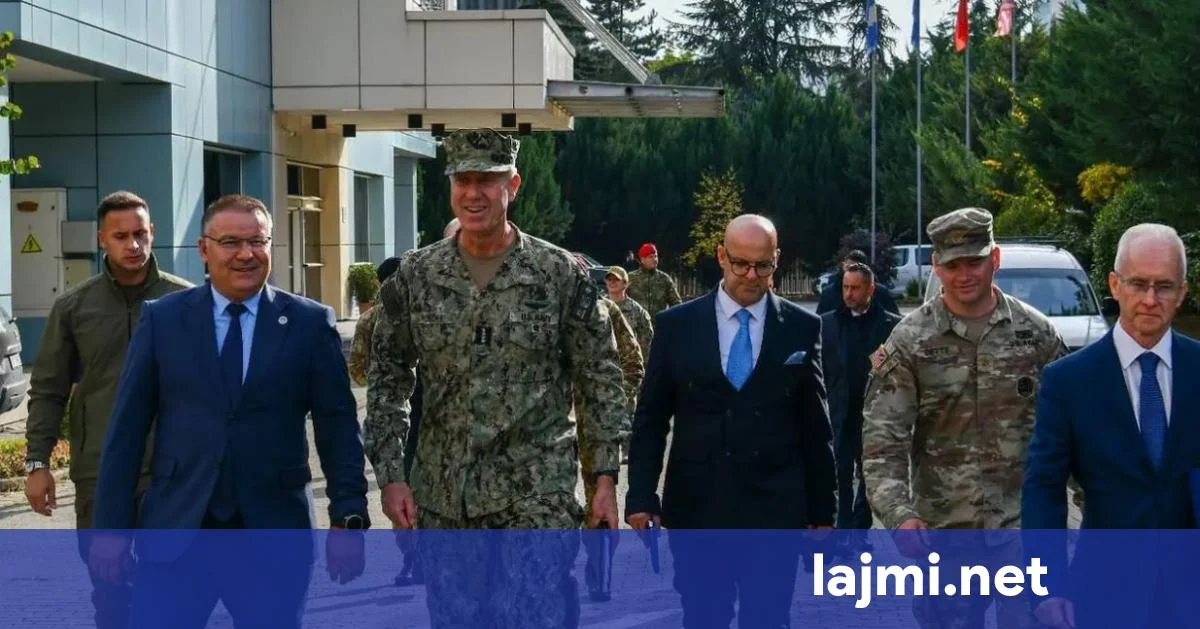
Pristina, Kosovo – In a significant reaffirmation of international commitment to regional stability, the General Director of the Kosovo Police, Gazmend Hoxha, hosted a pivotal meeting on Wednesday with Admiral George M. Wikoff, Commander of Allied Joint Force Command Naples (JFC Naples), and the newly appointed Commander of the NATO-led Kosovo Force (KFOR) mission, Major General Roberto Vergori. This high-level gathering underscored the unwavering dedication of both local and international security apparatuses to maintaining peace, fostering cooperation, and addressing the complex security challenges facing Kosovo and the wider Western Balkans region.
The discussions, which took place in Pristina, centered on a comprehensive review of the current security landscape in Kosovo and explored avenues for deepening the already robust collaboration between the Kosovo Police and KFOR. The meeting served as a crucial platform for exchanging perspectives, strategizing future joint initiatives, and ensuring a seamless transition of leadership within the KFOR mission, thereby reinforcing the operational effectiveness and strategic alignment of all parties involved in safeguarding Kosovo’s stability.
Main Facts: A Convergence of Security Leadership
The Wednesday meeting brought together key figures responsible for security in Kosovo, marking a concerted effort to strengthen strategic partnerships and ensure a coordinated approach to regional stability. General Director Gazmend Hoxha, at the helm of Kosovo’s primary law enforcement agency, welcomed Admiral George M. Wikoff, a senior NATO commander whose purview includes oversight of KFOR, and Major General Roberto Vergori, who recently assumed command of the multinational KFOR mission.
The core agenda revolved around a thorough assessment of the prevailing security situation across Kosovo. Discussions delved into various facets of law enforcement, border security, the fight against organized crime, and the maintenance of public order. A primary objective was to reinforce the synergy between the Kosovo Police and KFOR, two entities with distinct yet complementary mandates crucial for ensuring a safe and secure environment for all communities in Kosovo.
According to a statement released by the Kosovo Police, the meeting specifically addressed "the security situation in the country and cooperation between the Kosovo Police and the KFOR mission." This highlights the practical and operational focus of the dialogue, aiming to translate strategic intent into tangible improvements on the ground. General Director Hoxha seized the opportunity to apprise his international counterparts of the latest developments and progress made by the Kosovo Police, emphasizing the institution’s commitment to professionalization and adherence to international best practices.
Furthermore, the talks extended beyond immediate operational concerns to explore "possibilities of deepening cooperation with international security structures." This forward-looking approach signals a mutual desire to evolve existing partnerships, potentially through enhanced intelligence sharing, joint training exercises, and collaborative initiatives designed to tackle emerging threats more effectively. The presence of Admiral Wikoff from JFC Naples, the overarching command for KFOR, underscored the strategic importance of this engagement, ensuring that local efforts are aligned with broader NATO objectives for regional stability. Major General Vergori’s participation, shortly after taking command of KFOR, was particularly significant as it provided an early opportunity for him to engage directly with Kosovo’s police leadership and establish a foundation for his tenure.
Chronology: A Day of Diplomatic and Strategic Engagement
The high-level meeting on Wednesday commenced with formal greetings and introductions, setting a tone of mutual respect and professional collaboration. General Director Gazmend Hoxha, representing the host nation’s primary security institution, extended a warm welcome to Admiral George M. Wikoff and Major General Roberto Vergori, acknowledging the significance of their visit and their respective roles in Kosovo’s security architecture.
The core of the meeting quickly transitioned to substantive discussions on the security situation in Kosovo. General Director Hoxha provided a detailed overview of the current state of affairs, drawing upon the Kosovo Police’s extensive operational experience and intelligence gathering capabilities. He highlighted the various challenges and successes encountered by the Kosovo Police in maintaining law and order, combating crime, and ensuring the safety of all citizens, irrespective of ethnicity or background. This briefing was crucial for providing Admiral Wikoff and Major General Vergori with an up-to-date and localized perspective, essential for informing their strategic decisions and operational planning.
A significant portion of the dialogue was dedicated to reviewing the existing framework of cooperation between the Kosovo Police and KFOR. This included an assessment of joint patrols, information exchange protocols, and coordinated responses to potential security incidents. Both sides acknowledged the long-standing and productive nature of their partnership, which has been instrumental in de-escalating tensions and preventing larger conflicts in various parts of Kosovo. The discussions aimed not just to reaffirm this cooperation but to identify areas where it could be further optimized and expanded.
The arrival of Major General Roberto Vergori as the new KFOR Commander added a particular dynamic to the meeting. His engagement with General Director Hoxha represented a crucial initial step in establishing a direct working relationship between the two leaders. This early interaction is vital for ensuring continuity in KFOR’s mission and for fostering trust and understanding between the international peacekeeping force and local security institutions. Major General Vergori had the opportunity to articulate his vision for KFOR’s role under his command, emphasizing collaboration and responsiveness.
Admiral Wikoff, in his capacity as Commander of JFC Naples, provided the broader strategic context, linking KFOR’s mission in Kosovo to NATO’s wider objectives for peace and stability in the Western Balkans. His presence underscored the high level of importance NATO places on its mission in Kosovo and its commitment to supporting Kosovo’s security institutions. The conversation also touched upon the potential for enhancing cooperation with JFC Naples directly, particularly in areas of strategic planning, crisis management, and capacity building for the Kosovo Police.
As the meeting progressed, discussions broadened to include "other topics of interest in the field of security" and the "further advancement of cooperation," as stated in the Kosovo Police announcement. This indicates a comprehensive agenda that went beyond immediate operational concerns to encompass long-term strategic planning and the evolution of security partnerships. The day concluded with a mutual commitment to continued dialogue, regular consultation, and a shared resolve to work hand-in-hand to address present and future security challenges in Kosovo and the region.
Supporting Data: The Pillars of Kosovo’s Security
The collaborative spirit evident in the meeting between the Kosovo Police, KFOR, and JFC Naples is built upon years of structured cooperation and a shared understanding of the critical roles each entity plays in maintaining security and stability in Kosovo. Understanding the mandates and historical context of these organizations provides crucial supporting data for appreciating the significance of this high-level dialogue.
KFOR: NATO’s Enduring Presence
KFOR, the NATO-led international peacekeeping force, has been present in Kosovo since June 1999, following the end of the Kosovo War. Its initial mandate, derived from UN Security Council Resolution 1244, was to establish and maintain a secure environment and ensure public safety and order. Over the decades, KFOR’s role has evolved, but its core mission remains steadfast: to contribute to a safe and secure environment and freedom of movement for all people in Kosovo.
KFOR is a multinational force, comprising troops from NATO member and partner countries, symbolizing a broad international commitment to Kosovo’s future. Its presence serves as a deterrent against renewed conflict and a guarantor of stability, particularly in sensitive areas and along administrative boundary lines. KFOR’s activities include maintaining situational awareness, conducting patrols, providing security for specific sites (such as the Decan Monastery), and supporting the development of local security institutions. The transition of KFOR command, as marked by Major General Vergori’s recent appointment, is a routine process that ensures continuity and fresh leadership perspectives, always under the strategic guidance of JFC Naples.
Kosovo Police: A Modern Law Enforcement Agency
The Kosovo Police (KP) has undergone a remarkable transformation since its inception in the aftermath of the conflict. From a nascent force, it has developed into a professional, multi-ethnic, and democratic law enforcement agency, capable of upholding the rule of law across the entire territory of Kosovo. Its mandate encompasses all aspects of policing, from combating organized crime and corruption to managing borders and responding to emergencies.
The KP operates under democratic oversight and adheres to international policing standards. Its members are drawn from all communities in Kosovo, reflecting the diverse fabric of the society it serves. The professionalization of the KP has been a cornerstone of Kosovo’s institution-building efforts, enabling it to gradually assume greater responsibility for security from international actors. The KP’s increasing capabilities and operational independence are testaments to the investment in training, equipment, and institutional development, often supported by international partners like KFOR and other EU and UN missions. Its role as the first responder and primary security provider is paramount for Kosovo’s sovereignty and stability.
Allied Joint Force Command Naples (JFC Naples): Strategic Oversight
Allied Joint Force Command Naples (JFC Naples) is one of NATO’s three operational-level commands, responsible for planning, preparing, and conducting military operations in its area of responsibility, which includes the Balkans, the Black Sea region, and parts of the Mediterranean. Admiral George M. Wikoff, as its commander, plays a crucial role in overseeing NATO’s missions in these regions, including KFOR.
JFC Naples provides strategic direction and operational command to KFOR, ensuring that the mission’s objectives align with NATO’s broader security interests. This strategic oversight is vital for coordinating multinational efforts, allocating resources, and adapting the mission to evolving geopolitical realities. The engagement of Admiral Wikoff in the Pristina meeting underscores the direct link between KFOR’s day-to-day operations and NATO’s highest operational command, signaling a consistent and integrated approach to security challenges in the region.
The Regional Security Context: Complexities and Interdependencies
The Western Balkans remains a region with complex security dynamics, influenced by historical legacies, unresolved political issues, and geopolitical competition. Challenges such as cross-border organized crime, illicit trafficking, radicalization, and inter-ethnic tensions necessitate robust and coordinated security responses. The presence of international security actors like KFOR, alongside strong local institutions like the Kosovo Police, is crucial for mitigating these risks and fostering an environment conducive to peace and development.
The cooperation between the Kosovo Police and KFOR is not merely a bilateral arrangement; it is an integral part of a wider network of security cooperation that includes other international missions (like EULEX), regional initiatives, and bilateral agreements. This multi-layered approach ensures comprehensive coverage of security threats and promotes a shared responsibility for regional stability. The meeting in Pristina therefore serves as a vital checkpoint in this ongoing collaborative effort, adapting strategies to current realities and strengthening the bonds that underpin regional security.
Official Responses: Voices of Commitment and Collaboration
The official statements and implied positions from the participants of the high-level meeting reflect a unified message of commitment to security, stability, and enhanced cooperation in Kosovo. While the Kosovo Police announcement provided concise direct quotes, the context of such a meeting allows for an elaboration of the likely sentiments and policy positions articulated by each principal.
General Director Gazmend Hoxha: Progress and Partnership
General Director Gazmend Hoxha, representing the Kosovo Police, would have undoubtedly used the meeting to highlight the significant strides made by his institution. As stated in the police announcement, "During this meeting, Colonel [General Director] Hoxha informed them about the security situation in Kosovo, as well as about mutual cooperation with the KFOR mission in Kosovo." This statement, though brief, implies a comprehensive briefing that would have covered:
- Operational successes: Details on recent operations against organized crime, corruption, and illicit trafficking, demonstrating the KP’s effectiveness and professionalism.
- Capacity building: Updates on the ongoing professionalization, training, and equipment acquisition efforts, showcasing the KP’s continuous development.
- Community policing: Emphasis on the KP’s multi-ethnic composition and its commitment to serving all communities, building trust and fostering a sense of security across Kosovo.
- Commitment to cooperation: A strong reaffirmation of the Kosovo Police’s readiness to collaborate closely with KFOR and other international partners, recognizing the indispensable role of such partnerships in achieving shared security objectives.
- Regional stability: Hoxha would have also likely underscored Kosovo’s proactive role in contributing to regional security, emphasizing that a stable Kosovo is a cornerstone of a stable Western Balkans.
His engagement would have been geared towards showcasing the Kosovo Police as a reliable, capable, and indispensable partner in maintaining peace and order.
Admiral George M. Wikoff: NATO’s Enduring Resolve
Admiral George M. Wikoff, as the Commander of Allied Joint Force Command Naples, would have conveyed NATO’s unwavering commitment to its KFOR mission and to the overall stability of Kosovo and the Western Balkans. While direct quotes from Admiral Wikoff were not provided in the Kosovo Police announcement, his presence and role signify several key messages:
- Strategic importance of KFOR: Reiteration of KFOR’s vital role as a guarantor of security, ensuring a safe and secure environment and freedom of movement for all communities.
- Continuity and adaptation: Emphasizing NATO’s ability to adapt its missions to evolving security landscapes while maintaining its core objectives. The seamless transition of KFOR command under JFC Naples’ oversight would have been highlighted as an example of this continuity.
- Partnership with local institutions: Stressing the critical importance of strong, professional local security institutions like the Kosovo Police, and NATO’s commitment to supporting their development and capabilities.
- Regional stability: Placing KFOR’s mission within the broader context of NATO’s efforts to promote peace and stability across the Western Balkans, acknowledging the interconnectedness of security challenges in the region.
- Deterrence and reassurance: Reinforcing NATO’s commitment to deterring aggression and reassuring allies and partners of its collective defense capabilities.
Admiral Wikoff’s participation served to underscore the high-level strategic attention NATO dedicates to Kosovo.
Major General Roberto Vergori: A New Chapter of Collaboration
As the newly appointed Commander of KFOR, Major General Roberto Vergori’s engagement in this meeting was particularly significant for setting the tone for his tenure. His remarks, while not directly quoted, would have focused on:
- Continuity of mission: A clear statement of intent to continue KFOR’s mandate with the same dedication and professionalism as his predecessors.
- Strengthening partnerships: Expressing a strong desire to build upon the existing excellent relationship with the Kosovo Police and other local security institutions.
- Open communication: Emphasizing the importance of open and transparent communication channels to ensure effective coordination and rapid response to any security challenges.
- Adaptability: Acknowledging the dynamic nature of the security environment and KFOR’s readiness to adapt its operations to best serve its mandate.
- Commitment to all communities: Reaffirming KFOR’s impartial role in ensuring security and freedom of movement for all communities in Kosovo, consistent with its UN mandate.
The Kosovo Police announcement concisely captured the outcome: "Other topics of interest in the field of security, as well as the further advancement of cooperation, were also discussed." This phrase encapsulates the forward-looking nature of the dialogue, indicating a shared vision for deepening security ties and evolving strategic partnerships to meet future challenges. The collective responses reflect a robust and well-coordinated approach to safeguarding Kosovo’s hard-won stability.
Implications: Charting the Future of Security in Kosovo
The high-level meeting between the Kosovo Police Director, the Commander of JFC Naples, and the new KFOR Commander carries significant implications for the future of security in Kosovo and the broader Western Balkans. It underscores a persistent commitment from international partners and a growing capability from local institutions, setting the stage for evolving dynamics in regional security.
Enhanced Operational Synergy
One of the most immediate implications is the potential for enhanced operational synergy between the Kosovo Police and KFOR. Discussions on "deepening cooperation" and "mutual cooperation" are likely to translate into more frequent joint patrols, improved intelligence sharing mechanisms, and better coordinated responses to critical incidents, particularly in sensitive areas or along administrative boundary lines. This could lead to a more effective response to cross-border crime, illicit trade, and potential security threats, thereby strengthening law enforcement across the territory. The presence of Major General Vergori ensures that these discussions will directly inform KFOR’s operational planning under his new command.
NATO’s Enduring Commitment to Regional Stability
Admiral Wikoff’s participation from JFC Naples reinforces NATO’s unwavering strategic commitment to Kosovo’s security and, by extension, to the stability of the entire Western Balkans. It signals that despite global geopolitical shifts, NATO considers the stability of this region a critical priority. This high-level engagement ensures that KFOR’s mission remains strategically aligned with NATO’s broader objectives, providing a robust framework for international support and deterrence against any destabilizing forces. It also sends a clear message to all actors in the region about NATO’s resolve to uphold its mandate.
Strengthening Kosovo’s Sovereignty and International Standing
The continued and deepened partnership with KFOR and JFC Naples bolsters Kosovo’s efforts to consolidate its sovereignty and enhance its international standing. By demonstrating its capacity to work effectively with international security partners, the Kosovo Police reinforces the credibility of Kosovo’s institutions on the global stage. This collaboration is a vital component of Kosovo’s Euro-Atlantic aspirations, showcasing its commitment to shared security values and principles. It provides a narrative of a responsible and capable security actor, actively contributing to regional peace.
Addressing Evolving Security Challenges
The discussions on "other topics of interest in the field of security" suggest a forward-looking approach to emerging threats. This could include collaborative efforts to counter cyber threats, tackle radicalization, manage complex migration flows, or address the implications of climate change on security. By engaging in such strategic dialogues, both the Kosovo Police and KFOR can better anticipate and prepare for future challenges, ensuring that security responses remain agile and effective in an increasingly complex global environment. The exchange of information on "developments in the field of security" is crucial for this adaptive strategy.
Fostering Trust and Inter-Ethnic Harmony
Effective cooperation between the Kosovo Police and KFOR inherently contributes to fostering trust among all communities in Kosovo. A visible, coordinated, and impartial security presence helps reassure citizens that their safety is a priority. This is particularly important in ethnically mixed areas where historical tensions can sometimes resurface. The professionalism and collaborative spirit demonstrated by both forces are instrumental in building confidence in the rule of law and promoting inter-ethnic harmony, which is fundamental for long-term stability.
Challenges and Opportunities Ahead
While the meeting underscored significant progress and strong partnerships, it also implicitly acknowledged that challenges remain. These could include unresolved political issues, potential for renewed tensions, and the ongoing fight against organized crime and corruption. However, the unified approach demonstrated by this high-level meeting transforms these challenges into opportunities for further collaboration and institutional strengthening. The commitment to "further advancement of cooperation" signifies a shared understanding that vigilance and continuous adaptation are key to navigating the complex security landscape.
In conclusion, the strategic dialogue in Pristina marks a vital step in reinforcing the collaborative security framework that underpins peace and stability in Kosovo. By bringing together key leadership from local and international security bodies, the meeting has set a clear trajectory for enhanced cooperation, adaptive strategies, and a sustained commitment to a secure and prosperous future for Kosovo and the wider region.