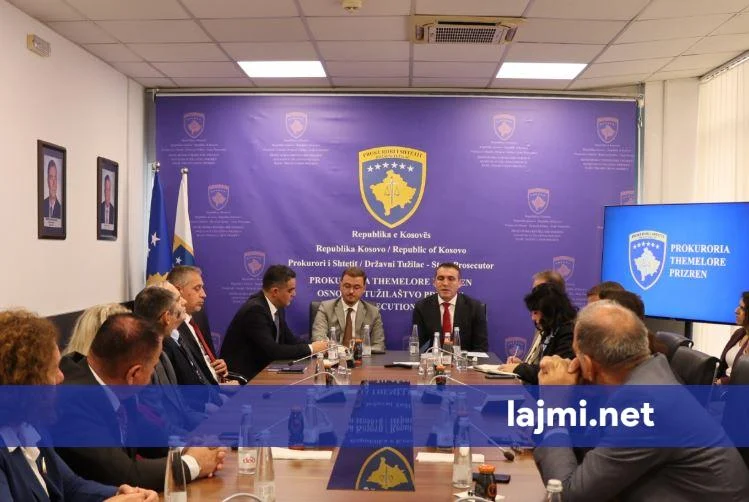
Pristina, Kosovo – In a significant move to assess and invigorate Kosovo’s judicial landscape, the State Chief Prosecutor, Zejnulla Gashi, embarked on a crucial series of visits to the Basic Prosecutions in Prizren and Gjakova on Thursday. These engagements served as a direct interface with local prosecutors, aimed at dissecting the current state of affairs, evaluating work performance, confronting the persistent challenge of case backlogs, and identifying the systemic impediments that compromise the efficiency of criminal case handling across the region. Gashi’s proactive outreach underscores a renewed commitment from the highest echelons of the prosecutorial system to address long-standing issues that have hampered justice delivery and eroded public trust.
The visits were not merely ceremonial but structured dialogues, signaling a serious intent to understand the ground realities faced by prosecutors daily. Accompanied by key figures within the judicial apparatus – Deputy State Chief Prosecutor Bahri Hyseni and Sami Istrefi, the Director General of the Secretariat of the Kosovo Prosecutorial Council (KPC) – Gashi’s delegation emphasized a unified approach to reform. Their presence highlighted the institutional backing for the initiatives discussed, reinforcing the message that the challenges confronting individual prosecution offices are recognized as systemic issues requiring comprehensive, coordinated solutions. The discussions delved deep into the operational efficacy of the local offices, seeking to unearth both the successes and the formidable obstacles preventing swift and equitable justice.
Main Facts: A Candid Assessment of Justice Delivery
Chief Prosecutor Gashi’s visits to Prizren and Gjakova represent a critical diagnostic mission for Kosovo’s justice system. The core objective was to conduct a candid assessment of the prosecutorial offices’ performance, focusing on their capacity to process criminal cases efficiently and justly. The dialogue centered on three primary pillars of concern: the volume of work and case backlogs, the chronic shortage of prosecutorial staff, and the pervasive delays in obtaining crucial forensic expertise.
Upon his recent appointment, Chief Prosecutor Gashi has prioritized the enhancement of the quality of work within the State Prosecutor’s Office and the safeguarding of the integrity and dignity of prosecutors. These visits were a direct manifestation of that commitment, providing a platform for Gashi to articulate his vision for a more robust and independent prosecutorial body. He informed the local prosecutors about the initial steps and strategic actions undertaken since assuming his role, all geared towards fostering an environment where prosecutors can execute their duties without undue pressure and with the full backing of the institution.
The discussions brought to the fore the detrimental impact of insufficient human resources on the ability of prosecutors to manage their heavy caseloads. This shortage, coupled with the ever-increasing volume of new criminal reports, creates a bottleneck that inevitably leads to significant delays in investigations and trials. Furthermore, a particularly acute challenge highlighted was the protracted waiting times for expert reports from the Institute of Forensic Medicine (IML) and the Kosovo Agency for Forensics (KAF). These delays are not mere bureaucratic inconveniences; they directly impede the progress of criminal proceedings, often prolonging detentions, delaying justice for victims, and at times, even jeopardizing the admissibility of evidence. Gashi acknowledged the severity of these issues, signaling his intent to seek inter-institutional remedies to what are clearly complex, multifaceted problems.
Chronology of the Visits: Engaging with the Frontline of Justice
The itinerary for Thursday’s visits was meticulously planned to maximize engagement and ensure a thorough understanding of the operational realities in Prizren and Gjakova. The delegation, led by Chief Prosecutor Gashi, arrived first at the Basic Prosecution in Prizren, a region with a diverse demographic and a significant caseload reflecting its urban and cross-border dynamics. The meeting commenced with an introductory address from Chief Prosecutor Gashi, where he outlined his strategic priorities for the State Prosecutor’s Office. He underscored the importance of professional ethics, accountability, and the relentless pursuit of justice as cornerstones of a functioning rule of law.
Following his initial remarks, the floor was opened for the Chief Prosecutor of Prizren, as well as individual prosecutors, to present their work results, share insights into their daily challenges, and articulate specific needs. The discussions were characterized by a frank exchange of views, with prosecutors detailing the practical implications of understaffing – such as managing an unmanageable number of cases simultaneously – and the frustration associated with forensic delays that can halt complex investigations for months, if not years. There was a palpable sense of urgency regarding the need for additional personnel and enhanced logistical support.
Later in the day, the delegation proceeded to the Basic Prosecution in Gjakova. While the core issues discussed mirrored those in Prizren, the Gjakova office presented its own unique set of circumstances and challenges, often related to specific regional crime trends or resource allocations. Gashi reiterated his commitment to systemic improvements, emphasizing that the concerns raised were not isolated incidents but rather symptomatic of broader structural deficiencies within the justice system. In both locations, the Chief Prosecutor sought to convey a message of solidarity and support, assuring prosecutors that their contributions are valued and that their challenges are being actively acknowledged and addressed at the highest institutional levels. The visits concluded with Gashi offering concrete assurances of professional and institutional backing, coupled with a clear expectation for heightened professionalism and measurable outcomes in the pursuit of criminal justice.
Supporting Data and Context: The Deep-Rooted Challenges
The issues identified during Chief Prosecutor Gashi’s visits are not new; they represent long-standing structural weaknesses within Kosovo’s justice system that have been highlighted by numerous domestic and international reports. Understanding the depth of these challenges requires a closer look at the data and the broader context.
Insufficient Number of Prosecutors: Kosovo faces a persistent challenge in maintaining an adequate number of prosecutors relative to its population and crime rate. While precise figures fluctuate, the overall ratio often falls below European standards, placing immense pressure on the existing workforce. This shortage is exacerbated by a complex recruitment process, brain drain, and sometimes, a lack of competitive remuneration that discourages new legal talent from entering the prosecutorial service. The impact is profound:
- Overburdened Staff: Each prosecutor is assigned an exceptionally high number of cases, leading to inevitable delays, superficial reviews, and a higher risk of errors.
- Specialization Deficit: The lack of sufficient personnel limits the ability to specialize in complex areas like organized crime, corruption, cybercrime, or economic offenses, where dedicated expertise is crucial for effective prosecution.
- Burnout and Low Morale: The relentless workload and perceived lack of institutional support contribute to prosecutor burnout, affecting morale and potentially leading to a decline in the quality of work.
- Justice Denied: Ultimately, the shortage prolongs the legal process, denying timely justice to victims and allowing accused individuals to remain in legal limbo for extended periods.
Case Backlog (Ngarkesa me lëndë): The accumulation of unresolved cases is a critical indicator of systemic inefficiency. Thousands of criminal cases often remain pending, with many languishing for years. This backlog stems directly from the prosecutor shortage but is also influenced by other factors:
- Complexity of Cases: An increasing number of cases involve complex financial investigations, international cooperation, or sophisticated criminal networks, which naturally require more time and resources.
- Procedural Delays: The Kosovo legal framework, while modernizing, can still be prone to procedural delays, appeals, and adjournments that extend case durations.
- Resource Constraints: Beyond personnel, a lack of adequate IT infrastructure, investigative tools, and training further contributes to the slow pace of case resolution.
- Erosion of Public Trust: A perception that justice is slow or inaccessible significantly erodes public confidence in state institutions and the rule of law. It can also embolden criminal elements who believe they can evade timely prosecution.
Delays in Forensic Expertise (IML & AKF): The reliance on scientific evidence in modern criminal justice makes the efficiency of forensic institutions paramount. Both the Institute of Forensic Medicine (IML) and the Kosovo Agency for Forensics (KAF) are vital, but their services are frequently subject to significant delays.
- Critical Role of Forensics: Forensic reports (autopsies, DNA analysis, ballistics, toxicology, digital forensics) are often the linchpin of criminal investigations, providing objective evidence to corroborate or refute witness testimonies and build strong cases.
- Impact on Investigations: Delays mean investigations cannot proceed to the indictment phase, leading to prolonged pre-trial detention periods or, conversely, the release of suspects due to insufficient evidence within legal timeframes.
- Underfunding and Understaffing: Like the prosecutorial offices, IML and KAF often struggle with insufficient funding for equipment upgrades, specialized training, and attracting and retaining highly skilled forensic scientists.
- High Demand: The increasing sophistication of crime and the growing emphasis on evidence-based prosecution place a high demand on these limited forensic resources.
- Inter-Agency Coordination: While Gashi’s outreach to the relevant ministries is a positive step, effective solutions require seamless coordination and resource allocation across multiple government bodies.
Protecting Integrity and Dignity: Chief Prosecutor Gashi’s emphasis on protecting the integrity and dignity of prosecutors is crucial for fostering an independent and resilient justice system. Prosecutors in Kosovo often face immense pressure, including:
- Political Influence: The risk of political interference in high-profile cases can undermine prosecutorial independence.
- Threats and Intimidation: Prosecutors, especially those handling organized crime and corruption cases, can be targets of threats and intimidation.
- Public Scrutiny: Intense public and media scrutiny, while necessary for accountability, can also create an environment of undue pressure.
- Low Public Confidence: A general lack of public confidence in the justice system can demoralize prosecutors who feel their efforts are not adequately recognized or supported.
- Gashi’s commitment aims to create a supportive institutional framework that shields prosecutors from undue external pressures and internal misconduct, ensuring they can perform their duties impartially and without fear.
Official Responses and Proposed Solutions: A Path Towards Reform
Recognizing the gravity of these systemic issues, Chief Prosecutor Zejnulla Gashi has not merely identified the problems but has actively initiated steps towards finding comprehensive, institutional solutions. His approach highlights a commitment to inter-agency collaboration and internal reform.
Addressing Ministries: Gashi’s proactive engagement with the Ministry of Justice (MoJ) and the Ministry of Internal Affairs (MoIA) is a critical step.
- Ministry of Justice (MoJ): The MoJ plays a pivotal role in judicial reform, budget allocation for the justice sector, and legislative initiatives. Gashi’s discussions with the MoJ would likely focus on:
- Increased Budget for Staffing: Advocating for a significant increase in the budget to allow for the recruitment of more prosecutors and support staff, addressing the chronic understaffing issue.
- Legislative Amendments: Proposing changes to existing laws or introducing new legislation that could streamline prosecutorial procedures, improve case management, or enhance the protection mechanisms for prosecutors.
- Infrastructure Development: Seeking investment in modernizing prosecutorial office infrastructure, including digital case management systems, secure data storage, and better working conditions.
- Forensic Resource Allocation: Discussing the allocation of funds and resources to strengthen the Institute of Forensic Medicine (IML), enabling it to expand its capacity, acquire advanced equipment, and hire more specialized personnel.
- Ministry of Internal Affairs (MoIA): The MoIA oversees the Kosovo Agency for Forensics (KAF) and the police force, both integral to criminal investigations. Gashi’s interaction with the MoIA would likely center on:
- Strengthening KAF: Advocating for increased funding and personnel for KAF to reduce turnaround times for forensic reports, ensuring investigators and prosecutors receive crucial evidence more promptly. This would involve investing in new technologies and specialized training for forensic experts.
- Police-Prosecutor Cooperation: Enhancing the operational coordination between the police and prosecutors to ensure more efficient investigations, better evidence collection, and smoother handovers of cases. This could involve joint training programs and standardized protocols.
- Investigative Capacity: Discussing ways to bolster the investigative capacities of the police, which directly impacts the quality of cases brought before prosecutors.
The Role of the Kosovo Prosecutorial Council (KPC): The presence of Sami Istrefi, Director General of the KPC Secretariat, alongside Chief Prosecutor Gashi, underscores the KPC’s central role in these reform efforts. The KPC is the independent body responsible for the recruitment, promotion, transfer, and disciplinary oversight of prosecutors. Its mandate is crucial for ensuring the professionalism and independence of the prosecutorial system. The KPC would be instrumental in:
- Strategic Planning: Developing and implementing a long-term strategy for staffing, training, and performance evaluation within the prosecutorial system.
- Recruitment Drives: Initiating robust recruitment campaigns to attract qualified legal professionals to the prosecutorial service, potentially revising selection criteria to streamline the process while maintaining high standards.
- Training and Professional Development: Organizing continuous professional development programs for prosecutors to enhance their skills in areas such as financial crime, cybercrime, human rights, and effective case management.
- Performance Monitoring: Establishing transparent and objective performance evaluation systems to ensure accountability and efficiency across all prosecution offices.
Internal Reforms: Beyond external engagement, Chief Prosecutor Gashi has also signaled his intent for internal reforms within the State Prosecutor’s Office. These might include:
- Improved Case Management Systems: Implementing advanced digital case management systems to track progress, identify bottlenecks, and ensure better allocation of resources.
- Enhanced Oversight: Strengthening internal oversight mechanisms to ensure adherence to ethical standards, procedural rules, and timely case processing.
- Mentorship and Support Programs: Establishing programs to support junior prosecutors and provide them with the guidance and resources needed to handle complex cases.
By pledging professional and institutional support, Gashi aims to empower prosecutors, ensuring they have the tools, resources, and backing necessary to effectively fulfill their mandate. This holistic approach, combining external advocacy with internal structural adjustments, is essential for addressing the deeply entrenched challenges within Kosovo’s justice system.
Implications and Future Outlook: Strengthening the Rule of Law
The challenges highlighted by Chief Prosecutor Gashi’s visits and his subsequent commitment to reform carry profound implications for Kosovo’s overall development and its aspirations for European integration. A robust and efficient justice system is not merely a matter of legal technicality; it is a fundamental pillar of democratic governance, economic stability, and social cohesion.
Impact on Rule of Law: The current inefficiencies directly undermine the principle of the rule of law. When justice is delayed, it is often denied. This creates an environment where impunity can flourish, particularly for organized crime and corruption, which are significant concerns for Kosovo. Strengthening the prosecutorial system is paramount to effectively combating these phenomena and demonstrating the state’s capacity to uphold legal order.
Public Trust: Public confidence in the justice system is a cornerstone of a healthy democracy. Prolonged trials, case backlogs, and perceived inefficiencies erode this trust, leading to cynicism and a diminished belief in the state’s ability to protect its citizens and deliver justice. Gashi’s reform efforts, if successful, can begin to rebuild this essential trust, showing that the system is responsive and accountable.
European Integration: Kosovo’s path towards full integration into European structures is inextricably linked to its progress in strengthening the rule of law. The European Union consistently emphasizes the need for an independent, efficient, and impartial judiciary as a key benchmark for accession. Addressing issues like judicial backlogs, prosecutorial independence, and the fight against corruption are crucial steps that will be closely scrutinized by Brussels. Gashi’s initiatives can significantly contribute to meeting these critical benchmarks.
Economic Development: A predictable and fair legal environment is vital for attracting foreign investment and fostering domestic economic growth. Investors require assurance that contracts will be enforced, property rights protected, and disputes resolved efficiently. An inefficient justice system acts as a deterrent, stifling economic potential. Improving the prosecutorial system, therefore, has direct positive implications for Kosovo’s economic future.
Call for Professionalism and Measurable Results: Chief Prosecutor Gashi’s ultimate message to prosecutors – a demand for professionalism and measurable results – is a call to action. It sets a clear expectation for accountability and performance, emphasizing that the institutional support being pledged comes with a reciprocal obligation for diligence and effectiveness. Measurable results would include reduced case backlogs, higher conviction rates in significant cases, and a quicker turnaround for investigations.
Path Forward: The road to comprehensive reform will be long and arduous, requiring sustained commitment from all stakeholders. It will necessitate consistent budgetary allocations, legislative reforms, continuous training, and unwavering political will. The next steps will likely involve concrete action plans developed in coordination with the Ministry of Justice and the Ministry of Internal Affairs, followed by regular monitoring and evaluation of progress.
Chief Prosecutor Zejnulla Gashi stands at a critical juncture, tasked with revitalizing a core institution of the state. His visits to Prizren and Gjakova represent a determined first step in what promises to be a challenging but essential journey towards a more efficient, credible, and just prosecutorial system for all of Kosovo. The success of these reforms will not only define his tenure but also significantly shape the future trajectory of the country’s rule of law.