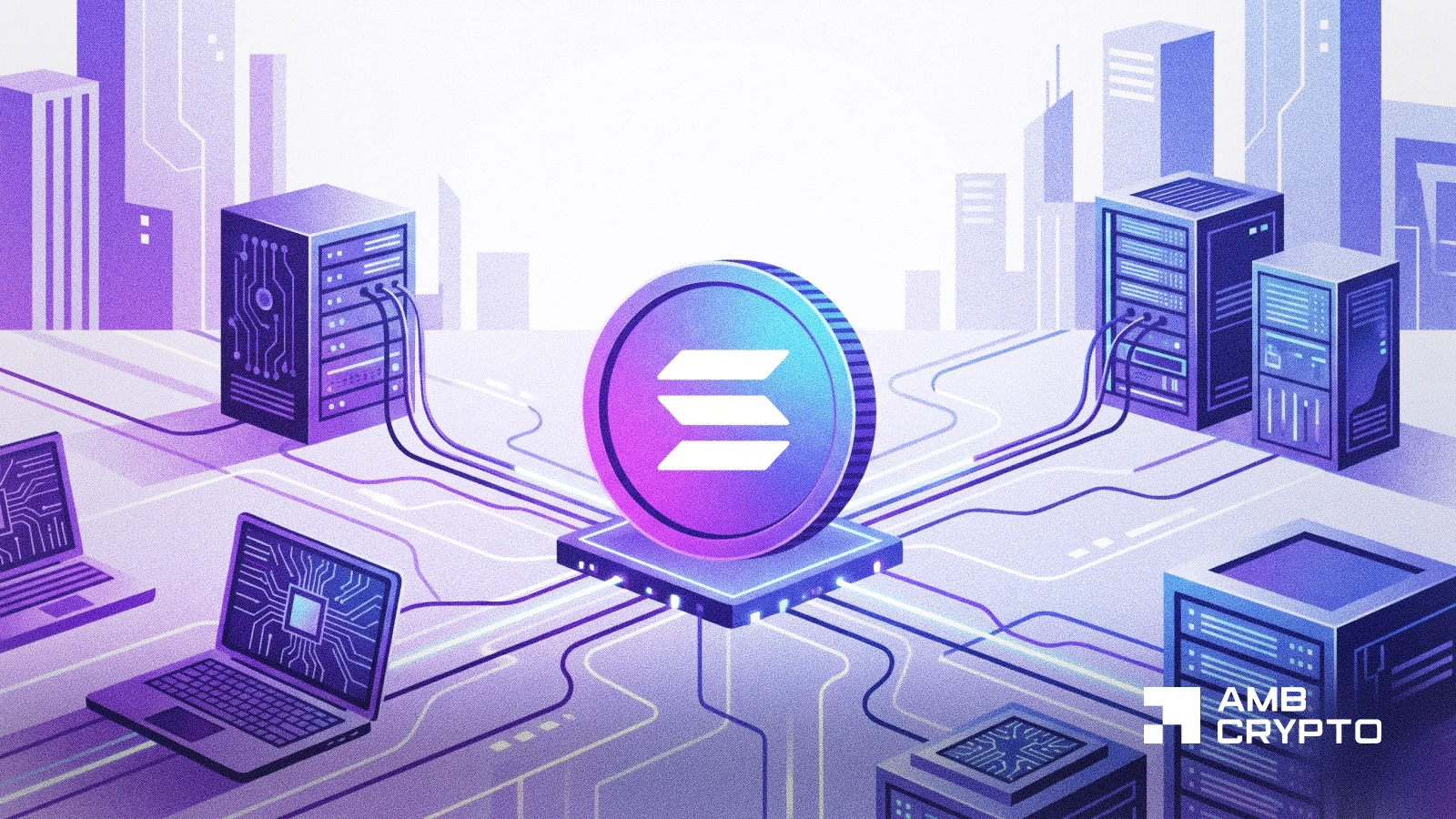
In an era defined by rapid technological acceleration, the intersection of artificial intelligence and quantum computing presents an existential challenge to the foundational security of the digital asset ecosystem. On October 22, 2026, Solana [SOL], in collaboration with infrastructure developer Anza, unveiled a visionary roadmap titled "Quantumglow." This initiative aims to fortify the high-speed blockchain against the looming threat of quantum-based cyberattacks, marking a significant evolution in its security architecture shortly after the successful implementation of the Alpenglow upgrade.
The Core Objective: Transitioning to Quantum-Resistant Cryptography
The fundamental challenge facing modern blockchains, including Solana, is that their security is built upon elliptic curve cryptography—a mathematical standard that quantum computers are theoretically capable of cracking.
Currently, Solana utilizes two primary signature schemes: the heavy, compute-intensive Boneh-Lynn-Shacham (BLS) signatures for consensus layer operations, and the high-speed ED25519 signatures for user-level transactions, such as wallet transfers and token swaps. Both methods, while highly efficient for traditional computing, are considered vulnerable in a post-quantum landscape.
The Quantumglow proposal introduces a proactive paradigm shift. By replacing these classical signature schemes with quantum-proof alternatives, specifically hash-based signatures for validators and Falcon signing for user transactions, Solana intends to render its network immune to future quantum decryption capabilities. Most importantly, the developers claim that this transition will not sacrifice the network’s signature performance, maintaining its industry-leading 0.15-second transaction finality.
Chronology: From Alpenglow to Quantumglow
The journey toward a quantum-ready Solana is a multi-phased endeavor that builds upon recent architectural victories.
- September 2026 (The Alpenglow Benchmark): Solana successfully launched the Alpenglow upgrade, which achieved an 85x improvement in transaction finality. This set the stage for further infrastructure optimization, proving that the network could handle massive throughput increases.
- October 22, 2026 (The Quantumglow Proposal): Solana and Anza formally proposed the adaptation of the Alpenglow framework to incorporate post-quantum cryptography. This announcement highlighted the necessity of upgrading signature schemes before quantum computational power reaches a critical threshold.
- Ongoing (The Development Phase): While the proposal has been socialized, Solana has not yet provided a rigid timeline for the implementation of Quantumglow. Unlike other projects that are operating under strict internal deadlines, the Solana development team is prioritizing a seamless, non-disruptive integration over a rapid, potentially flawed deployment.
The Security Landscape: Why the Industry is on High Alert
The urgency behind Quantumglow is not merely speculative. As quantum breakthroughs continue to emerge, the entire $2.7 trillion cryptocurrency market remains exposed to existential risks. According to industry data, approximately 99.7% of the total crypto market cap relies on classical cryptographic standards that lack post-quantum defenses.
The "Migration Fail" Reality
The severity of the situation is underscored by platforms like Migration Fail, which currently assigns Solana an "F" rating regarding quantum readiness. This grading reflects the fact that the entire stack—spanning P2P transfers, consensus validation, and transaction signing—remains reliant on vulnerable classical math. Solana’s leadership acknowledges this rating not as a failure, but as a roadmap for the work ahead.
The Global Arms Race
Solana is not acting in a vacuum. The global tech community is racing toward a 2029 deadline—a date often cited by Google as a significant milestone for quantum maturity.
- Advanced Adopters: Networks such as Tron and Starknet are in the advanced stages of implementing quantum-resistant protocols.
- The "Ready" Tier: Projects like Tezos, Algorand, and the Quantum Resistant Ledger (QRL) have already integrated or prepared for post-quantum security measures.
- The Laggards: Conversely, legacy giants like Bitcoin and Ethereum remain in a state of debate, struggling to reach a consensus on which post-quantum signature standards to adopt, largely due to the challenges of updating immutable or highly decentralized systems.
Official Responses and Strategic Vision
The leadership at Solana and Anza has expressed firm confidence in the Quantumglow initiative, emphasizing that the network’s architecture is uniquely suited to absorb these changes without compromising the user experience.
Vibhu Norby, Chief Product Officer at Solana, addressed the community with a clear message: "Solana is ready for quantum & whatever comes next with AI. Anza’s cryptography team is world-class." This statement reflects a broader sentiment within the Solana ecosystem that the network’s high performance is not a trade-off for security, but rather a robust foundation upon which security upgrades can be built.
Jacob Creech, another prominent voice in the Solana development ecosystem, echoed this sentiment, praising the plan for its elegant simplicity. "It’s simple and has no loss in speed," Creech noted, addressing the common industry concern that quantum-resistant signatures (which are often larger and more data-heavy) might slow down the blockchain. By utilizing Falcon signatures, which offer a balance of security and efficiency, the Quantumglow plan aims to sidestep the performance bottlenecks that plague other Layer-1 networks.
Implications: The Future of Blockchain Integrity
The implications of the Quantumglow proposal extend far beyond the Solana ecosystem. By tackling the quantum threat head-on, Solana is setting a standard for how high-performance blockchains must evolve.
1. The Survival of Decentralized Finance (DeFi)
The risks of a "quantum winter" for crypto are not just theoretical; they threaten the entirety of crypto custody and bridge systems. If a quantum computer were to break the classical signatures securing a major bridge or cold storage wallet, the potential for asset theft would be unprecedented. Quantum-resistant signatures are therefore the only viable path forward for institutional-grade adoption.
2. Maintaining Competitive Advantage
Solana’s commitment to retaining its 0.15-second finality while integrating post-quantum signatures is a critical competitive differentiator. In a world where speed is synonymous with utility, the ability to be both "quantum-safe" and "instant" could draw significant liquidity away from slower or less prepared chains.
3. Setting the Standard for AI Integration
As the article highlights, AI models are becoming increasingly sophisticated at identifying and exploiting cryptographic weaknesses. By upgrading to post-quantum signatures, Solana is also indirectly hardening itself against AI-driven brute-force attacks. This dual-layer defense—protecting against both current AI threats and future quantum threats—positions Solana as a future-proof infrastructure provider.
Conclusion: A Measured Path Forward
While the lack of a specific deadline for the Quantumglow upgrade may concern some investors, it reflects a disciplined approach to engineering. Solana’s strategy is clearly to "do it right" rather than "do it fast," acknowledging that the transition of a live, high-traffic network to a new cryptographic standard is a surgical operation that allows for zero downtime or security vulnerabilities.
As the industry watches to see how Bitcoin and Ethereum navigate their own quantum dilemmas, Solana’s proactive, transparent, and performance-oriented approach provides a blueprint for the future. The transition to a post-quantum world will be the defining challenge of the 2020s for the blockchain sector. With Quantumglow, Solana is ensuring that when the quantum era finally arrives, it will be prepared to maintain its position as a fast, secure, and resilient backbone for the decentralized internet.
For now, the project remains in the planning and development phase. However, for those observing the long-term viability of the Solana network, the Quantumglow proposal confirms that the team is thinking not just about the next market cycle, but about the next decade of digital security.