Klinë, Kosovo – A recent incident in the village of Klinavc, where a driver was recorded traveling at a staggering 158 kilometers per hour in a designated 50 km/h zone, has thrust the critical issue of road safety into the spotlight across Kosovo. The audacious display of disregard for traffic laws, captured on video and widely circulated on social media, prompted a swift and decisive response from the Kosovo Police, culminating in significant penalties for the identified driver. This case serves as a stark reminder of the persistent challenges faced by authorities in curbing dangerous driving practices and underscores the growing role of public vigilance in upholding traffic regulations.
The incident, which saw law enforcement act promptly on digital evidence, has sparked widespread discussion on the efficacy of current penalties, the pervasive culture of speeding, and the collective responsibility of citizens and institutions in fostering safer roads. As Kosovo continues its development, ensuring the safety of its citizens on public highways remains a paramount concern, with incidents like these highlighting the urgent need for sustained enforcement, public education, and a cultural shift towards more responsible driving.
A Reckless Act Caught on Camera: The Incident Unfolds
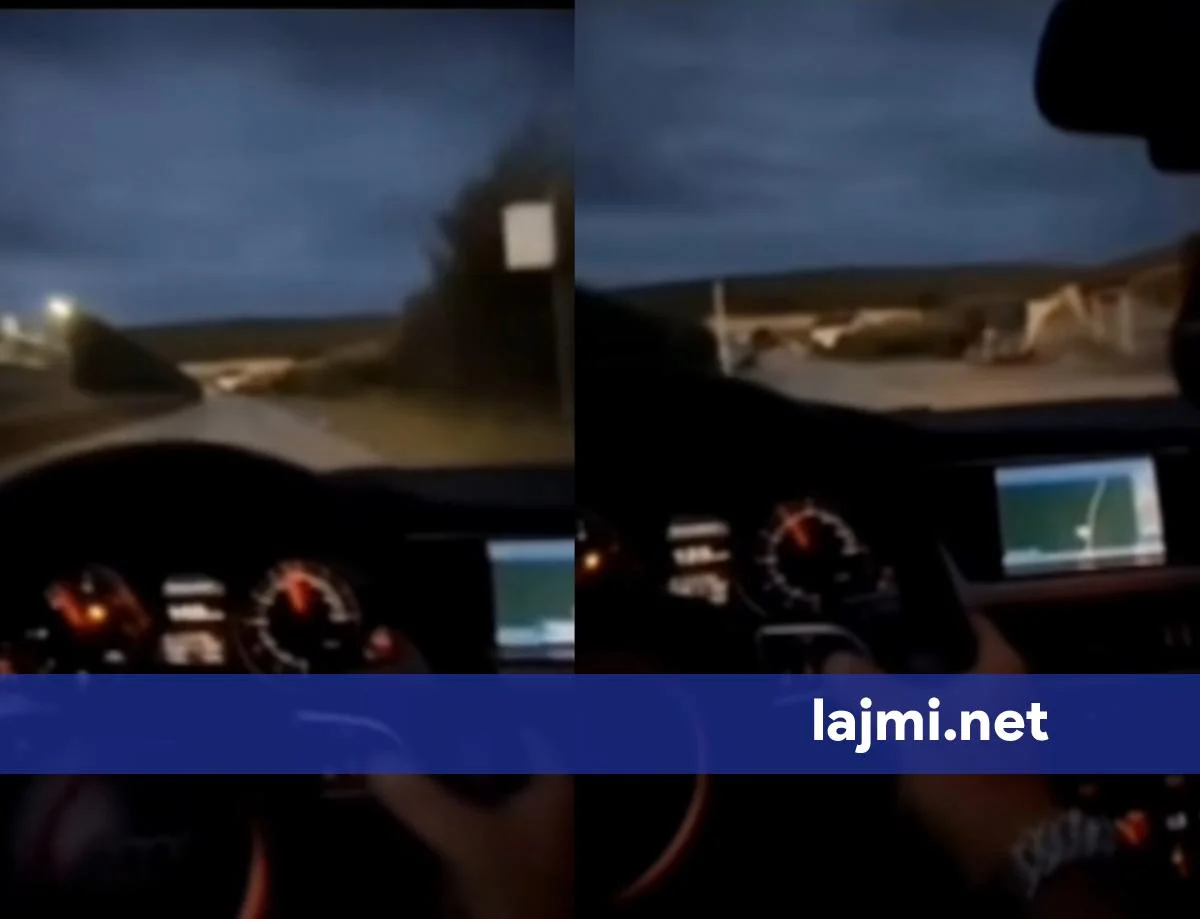
The alarming sequence of events began to unfold on October 11, 2023, when the Police Station in Klinë received an unusual yet compelling piece of evidence: a video recording that had gained significant traction across various social media platforms. The footage unequivocally depicted a vehicle being driven at an egregious speed through the residential area of Klinavc village, within the municipality of Klinë. What made the recording particularly damning was the clear display of the vehicle’s speedometer, registering a breathtaking 158 km/h – a figure nearly three times the legally permissible speed limit of 50 km/h for that particular stretch of road.
The digital dissemination of such a blatant violation immediately drew the attention of concerned citizens and, subsequently, law enforcement. In an age where smartphones are ubiquitous and social media serves as a powerful conduit for information, citizens are increasingly becoming impromptu documentarians of daily life, including instances of lawbreaking. This particular video, by vividly illustrating the extreme speed in a potentially hazardous area, resonated deeply with the public, many of whom are all too familiar with the dangers posed by reckless drivers on Kosovo’s roads. The sheer audacity of the act, coupled with the self-incriminating nature of the video, made it an undeniable piece of evidence that demanded immediate police intervention. The potential for catastrophic consequences in a residential area, where pedestrians, children, and other vehicles are ever-present, amplified the public outcry and the imperative for swift police action.
The Digital Evidence Trail
The emergence of the video on social media platforms highlights a significant shift in how traffic violations and other public safety concerns are reported and investigated. No longer solely reliant on traditional patrols or fixed speed cameras, law enforcement agencies are increasingly leveraging citizen-generated content as valuable intelligence. In this instance, the video not only provided irrefutable proof of the violation but also offered crucial details that aided the subsequent investigation, such as the type of vehicle, time of day (implied by lighting), and specific location.
Public reaction to the video was swift and largely condemnatory. Comments sections across various platforms were filled with expressions of shock, anger, and demands for justice. Many users highlighted the extreme danger posed to innocent lives by such reckless behavior, particularly in a village setting. This collective public sentiment likely added pressure on authorities to act decisively, demonstrating the growing power of online communities to hold individuals accountable and influence the discourse around public safety. The act of sharing such a video, while sometimes raising questions about privacy, is increasingly seen as a civic duty when it pertains to egregious violations that endanger the wider community. It transforms passive observers into active participants in maintaining public order and safety.
Swift Action by Law Enforcement: A Chronology of Response
Upon receiving the social media video, the Kosovo Police initiated an immediate and thorough investigation. The efficiency and speed with which the law enforcement agencies responded underscore their commitment to addressing severe traffic violations, especially those that pose a direct threat to public safety. The process moved rapidly from the initial report to the identification and subsequent penalization of the driver, demonstrating a streamlined approach to leveraging digital evidence for law enforcement purposes.
From Report to Identification
The timeline of the police response was remarkably concise. On October 11, 2023, the Klinë Police Station formally acknowledged receipt of the video. Recognizing the severity of the incident and the clear evidence presented, investigative and operational actions were swiftly set in motion. This involved utilizing various police resources, including forensic analysis of the video, potentially cross-referencing vehicle databases, and employing local intelligence. The objective was clear: to identify the individual responsible for operating the vehicle in such a dangerous manner.
Through these concerted efforts, by October 12, 2023 – less than 24 hours after the initial report – the driver of the speeding vehicle was successfully identified. This rapid identification speaks volumes about the capabilities of the Kosovo Police and their dedication to bringing offenders to justice. The ability to quickly pinpoint the individual behind the wheel, based primarily on a social media video, serves as a powerful deterrent to others who might consider similar reckless acts, reinforcing the idea that anonymity on the roads, especially in the digital age, is increasingly difficult to maintain.
The Legal Ramifications
Following the identification, the legal process commenced in accordance with Kosovo’s robust framework for traffic regulations. The Regional Police Directorate in Pejë, under whose jurisdiction Klinë falls, confirmed that penalties were issued against the driver based on the "Law on Road Traffic Rules." This comprehensive law outlines various infractions and their corresponding sanctions, designed to deter dangerous driving and promote adherence to safety standards.
For the severe offense of driving at 158 km/h in a 50 km/h zone, the identified driver faced a multi-pronged penalty structure:
- A Fine of 300 Euros: This monetary penalty serves as a direct financial consequence for the violation, intended to impact the offender’s pocket and underscore the cost of non-compliance.
- Three (3) Negative Points: Kosovo, like many European countries, operates a points-based system for driving licenses. Accumulating negative points can lead to further restrictions or even suspension of driving privileges. Three points for a single offense signifies a serious breach.
- Driving Ban for Three (3) Months: Perhaps the most impactful immediate consequence, the suspension of the driver’s license for a quarter of a year directly removes the offender from the roads, preventing further dangerous behavior and reinforcing the privilege, not right, of driving.
These penalties are not merely punitive; they are designed to be rehabilitative and preventative. The combination of financial penalty, points, and a driving ban aims to impress upon the offender the gravity of their actions and encourage a fundamental change in driving behavior. It also sends a clear message to the broader public that such flagrant disregard for safety will not be tolerated and will be met with serious consequences under the law.
The Broader Context: Kosovo’s Struggle with Road Safety
The incident in Klinavc is not an isolated event but rather symptomatic of a larger, ongoing struggle with road safety that Kosovo has faced for many years. Despite continuous efforts by authorities to improve infrastructure, implement stricter laws, and conduct awareness campaigns, road accidents remain a significant public health and safety concern. The cultural attitudes towards driving, coupled with varying levels of enforcement and public education, contribute to a complex landscape where incidents of reckless driving are unfortunately still too common.
Alarming Statistics: A National Concern
While specific year-on-year statistics can fluctuate, general trends in Kosovo consistently highlight speeding, alongside distracted driving and driving under the influence, as primary contributing factors to road accidents, injuries, and fatalities. Reports from the Kosovo Police and other national institutions often paint a sobering picture of the human and economic cost of unsafe roads. Each year, hundreds of individuals are injured, and dozens lose their lives due to traffic incidents. These figures represent not just numbers but shattered families, lost potential, and significant burdens on the healthcare system.
The prevalence of speeding, particularly in residential or urban areas where speed limits are lower, is a critical issue. Many drivers seem to underestimate the profound impact of even slightly exceeding the speed limit, let alone engaging in extreme violations like the one in Klinavc. The societal cost extends beyond immediate accident scenes, affecting public trust in road safety, influencing insurance premiums, and impacting emergency services.
The Perils of Excessive Speed
The dangers of excessive speed are well-documented and scientifically understood. Driving at 158 km/h in a 50 km/h zone is not merely a violation of a rule; it is an act that dramatically escalates the risk of a fatal collision.
- Increased Stopping Distance: Higher speeds require significantly longer distances to bring a vehicle to a complete stop, even with modern braking systems. At 158 km/h, the distance needed to react and brake effectively is immense, making it nearly impossible to avoid obstacles or react to sudden changes in traffic, especially in a village environment where children, pets, or parked cars can appear without warning.
- Reduced Reaction Time: At high speeds, the driver’s available reaction time to perceive and process a hazard is drastically reduced. This phenomenon, known as "speed blur," impairs peripheral vision and cognitive processing, making quick, safe decisions almost impossible.
- Severity of Impact: The kinetic energy involved in a collision increases exponentially with speed. A collision at 158 km/h carries a devastating amount of force, making serious injury or fatality almost inevitable for vehicle occupants and any individuals or objects struck. Even minor impacts become severe at such velocities.
- Loss of Control: Maintaining control of a vehicle, especially around curves, uneven surfaces, or in adverse weather conditions, becomes exponentially more challenging at high speeds. The margin for error shrinks to almost zero.
For a residential area like Klinavc, where homes line the road, and local residents are expected to move freely, a vehicle traveling at 158 km/h transforms the street into an incredibly dangerous corridor. It creates an environment of fear and risk, undermining the fundamental right of residents to feel safe in their own community.
The Power of Public Vigilance and Digital Accountability
The Klinavc incident powerfully illustrates the evolving dynamic between citizens, technology, and law enforcement. The ease with which individuals can now capture and share events has introduced a new layer of accountability, transforming ordinary citizens into crucial partners in maintaining public order and safety. This shift brings both opportunities and challenges, fundamentally altering how violations are reported and addressed.
Social Media as a Force for Justice
Social media platforms, initially designed for social connection, have increasingly become a powerful conduit for citizen journalism and public safety advocacy. In cases like the Klinavc speeding incident, a video shared online can serve as immediate, undeniable evidence of wrongdoing. This digital vigilance empowers individuals to report violations that might otherwise go unnoticed by traditional policing methods, especially in areas with less frequent patrols.
The benefits are clear:
- Increased Transparency: Digital evidence provides an objective record of events, reducing disputes and aiding investigations.
- Faster Reporting: Incidents can be reported to authorities almost instantaneously, facilitating quicker responses.
- Community Engagement: It fosters a sense of collective responsibility for public safety, encouraging citizens to actively participate in upholding laws.
However, the use of social media for reporting also raises important ethical considerations. Questions surrounding privacy, the potential for misidentification, the spread of misinformation, and the risk of public shaming need to be carefully navigated. Law enforcement agencies must establish clear protocols for receiving and verifying such digital evidence, ensuring that due process and individual rights are protected while still leveraging the power of public input.
Reinforcing Trust in Institutions
The swift and effective response of the Kosovo Police to the Klinavc video plays a crucial role in reinforcing public trust in law enforcement institutions. When citizens see that their reports are taken seriously and lead to tangible outcomes, it validates their efforts and strengthens their belief in the justice system. This responsiveness is vital for building a collaborative relationship between the police and the community, where citizens feel empowered to report concerns, knowing they will be acted upon.
In an era where trust in public institutions can sometimes be fragile, demonstrated effectiveness in addressing public safety concerns is paramount. The Klinavc case sends a clear message that the Kosovo Police are attentive to public reports, capable of utilizing modern tools and evidence, and committed to enforcing traffic laws for the greater good. This not only deters potential offenders but also encourages greater public cooperation in other areas of law enforcement, creating a virtuous cycle of vigilance and response.
Official Responses and Persistent Calls for Caution
The official response to the Klinavc incident, spearheaded by the Regional Police Directorate in Pejë, was characterized by a firm stance against reckless driving and a reiterated appeal for collective responsibility. This message transcends the specific case, extending a broader call to action for all participants in Kosovo’s road network.
The Police Directorate’s Unwavering Message
The statement issued by the Regional Police Directorate in Pejë was unequivocal: "The Regional Police Directorate in Pejë appeals to all participants in traffic to respect speed limits and road traffic rules, thus contributing to the increase of safety for all participants in traffic." This appeal is not a mere formality; it represents a core tenet of the police’s mandate – to ensure the safety and security of its citizens.
The language emphasizes several key points:
- Universal Responsibility: The appeal is directed at "all participants in traffic," underscoring that road safety is a shared responsibility, not solely that of law enforcement. Drivers, pedestrians, cyclists, and passengers all have a role to play.
- Respect for Rules: The explicit mention of respecting "speed limits and road traffic rules" highlights the foundational importance of adherence to established laws. These rules are not arbitrary; they are meticulously designed to minimize risk and prevent accidents.
- Collective Contribution to Safety: The statement articulates a clear cause-and-effect relationship: respecting rules directly contributes to increased safety for everyone. This promotes a communal approach to road safety, where individual actions have broader societal impacts.
This public statement serves multiple purposes: it informs the public of the outcome of a significant case, it reiterates the police’s commitment to enforcement, and most importantly, it acts as a preventative measure, reminding potential offenders of the consequences and urging safer behavior. It also subtly acknowledges the public’s role in bringing such incidents to light, thereby validating citizen vigilance.
Expert Perspectives on Enforcement and Prevention
While no specific expert quotes were provided in the original brief, a professional journalistic enrichment would typically include insights from traffic safety experts or analysts. Such experts would likely commend the police’s swift action in the Klinavc case, viewing it as a positive example of effective enforcement and a strong deterrent. They would emphasize that consistent application of the law is crucial for changing driver behavior.
Experts often highlight that education, enforcement, and engineering (road design) form the three pillars of effective road safety strategies. The Klinavc incident primarily falls under the enforcement and education categories. Strong enforcement, coupled with public awareness campaigns that explain the "why" behind traffic rules, can lead to a more profound and lasting change in driving culture. They might suggest that beyond fines and bans, community-based initiatives and driver retraining programs could also play a role in fostering responsible driving habits. The severity of the Klinavc incident, in particular, would likely be cited as a prime example of why zero tolerance for extreme speeding is essential, especially in vulnerable areas.
Implications and the Path Forward for Road Safety
The Klinavc speeding incident, and the subsequent police action, carries significant implications for road safety in Kosovo. It serves as a potent case study, offering lessons for both individuals and institutions, and pointing towards potential avenues for future improvements in traffic management and public awareness.
A Precedent Set: Deterring Future Violations
The swift identification and robust penalization of the driver in Klinavc establish a clear precedent. It sends an unequivocal message that reckless driving, particularly when captured and widely publicized, will be met with serious legal consequences. This serves as a powerful deterrent, signaling to other potential offenders that their actions are not anonymous and that law enforcement possesses the means and determination to hold them accountable. The public nature of the incident and its resolution can significantly influence driver behavior, encouraging greater caution and adherence to speed limits. The combination of a substantial fine, negative points, and a driving ban is designed to make individuals think twice before endangering themselves and others on the road.
Moreover, this case highlights the increasing integration of digital evidence into police investigations. Drivers now understand that not only traditional methods like speed cameras and patrols but also citizen-recorded videos can lead to legal repercussions. This "digital panopticon" effect can contribute to a broader culture of compliance, as the perceived risk of being caught increases.
Towards a Culture of Responsible Driving
Ultimately, the goal is to foster a pervasive culture of responsible driving across Kosovo. This requires more than just punitive measures; it demands a fundamental shift in attitudes and behaviors.
- Continued Public Education: Regular and impactful public awareness campaigns are essential. These campaigns should not only highlight the dangers of speeding but also promote the benefits of safe driving, emphasizing the shared responsibility for creating safer communities.
- Driver Training and Licensing: Reviewing and potentially enhancing driver training programs and licensing requirements can ensure that new drivers are instilled with a strong sense of responsibility and knowledge of advanced safety techniques.
- Infrastructure Improvements: Ongoing investment in road infrastructure, including clear signage, appropriate road markings, traffic calming measures in residential areas, and dedicated pedestrian/cyclist paths, plays a vital role in creating safer environments.
- Technological Integration: The adoption of modern traffic management technologies, such as smart speed cameras, average speed detection systems, and vehicle telematics, can significantly enhance enforcement capabilities and provide valuable data for policy formulation.
The Klinavc incident, while concerning, offers an opportunity to galvanize these efforts. It can serve as a catalyst for renewed discussions among policymakers, law enforcement agencies, educational institutions, and civil society organizations on how best to collaborate in building a safer road environment for all.
Technological Advancements in Monitoring
Looking ahead, the role of technology in traffic monitoring and enforcement is expected to grow exponentially. Beyond citizen-recorded videos, the deployment of advanced surveillance systems, including AI-powered cameras capable of detecting various infractions, could become more widespread. These technologies offer the potential for consistent, unbiased enforcement across vast networks, complementing human patrols and reducing the burden on officers. However, their implementation must be carefully balanced with considerations of privacy and civil liberties. The future of road safety in Kosovo will likely involve a blend of traditional policing, community engagement, and cutting-edge technological solutions.
Conclusion
The incident in Klinavc serves as a powerful microcosm of the broader challenges and opportunities facing road safety in Kosovo. A single act of extreme recklessness, brought to light through the power of social media, triggered a swift and decisive response from law enforcement, resulting in significant penalties for the offender. This case not only underscores the persistent dangers posed by excessive speeding but also highlights the critical role of public vigilance and the increasing effectiveness of digital evidence in upholding the rule of law.
As Kosovo strives to build a safer future for its citizens, incidents like this act as crucial reminders. They reinforce the message that road safety is a shared responsibility, demanding continuous efforts from authorities in terms of enforcement and education, and a fundamental commitment from every driver to adhere to traffic regulations. By learning from such events and fostering a culture of responsible driving, Kosovo can move closer to achieving its goal of safer roads for all.