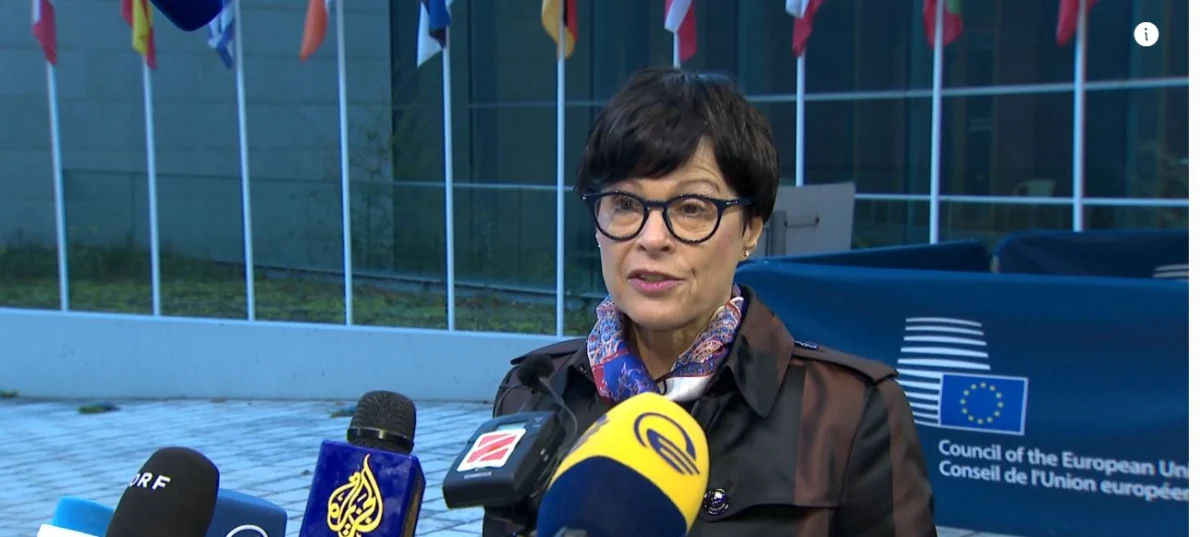
TIRANA, October 12, 2026 – The European Union’s enlargement process is witnessing a significant surge, with four candidate countries – Albania, Montenegro, Moldova, and Ukraine – on the cusp of crucial intergovernmental conferences (IGCs) in the coming days. The announcement, made by EU Enlargement Commissioner Marta Kos, underscores a renewed commitment from Brussels to integrate its Eastern and Western Balkan partners, signaling a clear acceleration in what has often been a protracted and demanding journey.
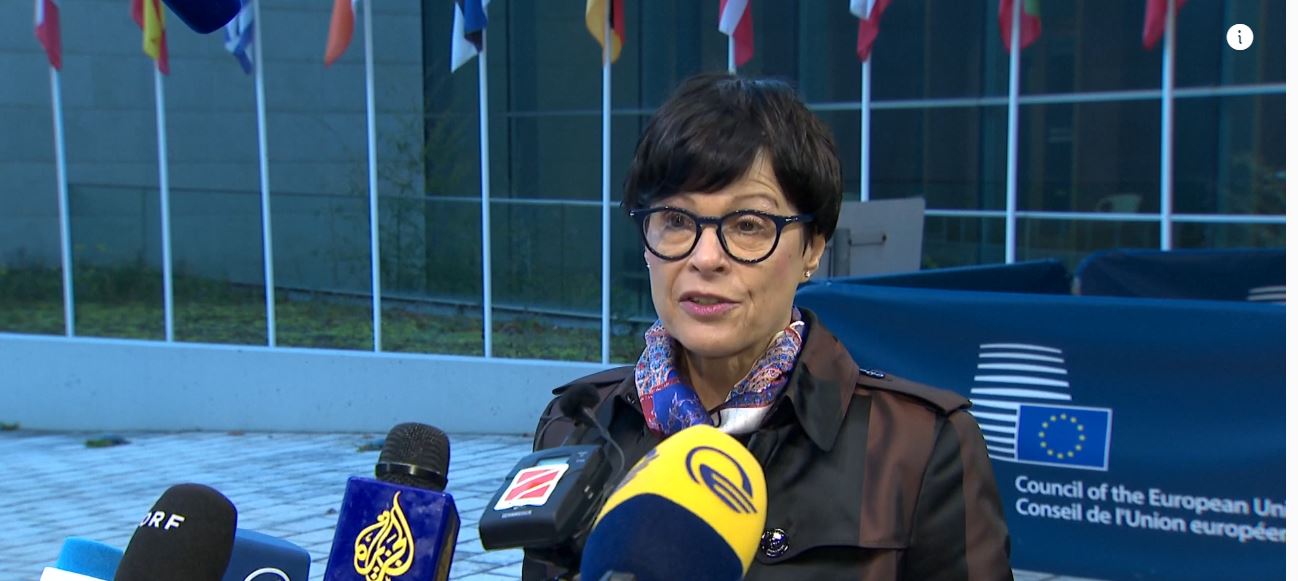
Commissioner Kos highlighted the momentous nature of these upcoming meetings, emphasizing the strategic importance of each nation to the future security and geopolitical standing of the European bloc. Her remarks, delivered from Tirana, resonate across the continent as the EU navigates a complex international landscape, where stability and strategic alignment are increasingly paramount.
"Following yesterday’s decision by the member states, we now have the opportunity to hold four intergovernmental conferences in the coming days, with Montenegro, Albania, Moldova, and Ukraine," stated Commissioner Kos. "This will be the third time since June that we will hold four intergovernmental conferences simultaneously. This is clearly a sign that the enlargement process is moving forward. The countries that are at the forefront of this process are delivering results, and we are delivering our results as well."
This development marks a pivotal moment for these four nations, reflecting both their sustained reform efforts and a recalibration of the EU’s enlargement strategy in response to evolving geopolitical realities. The Commissioner further stressed that security and strategic convergence with EU policies would be non-negotiable conditions for future membership. "We cannot afford to accept new member states that will not contribute to strengthening our security. Only those candidate countries that are strategically aligned with us will be able to become part of the European Union," she asserted, drawing a clear line in the sand for prospective members.
Main Facts: A Quadruple Leap Forward
The core of Commissioner Kos’s announcement is the impending series of Intergovernmental Conferences (IGCs) with Albania, Montenegro, Moldova, and Ukraine. An IGC serves as a formal high-level meeting between the EU member states and a candidate country, marking significant milestones in the accession process. These conferences are typically used to formally open or close negotiation chapters, which are thematic policy areas a candidate country must align with EU law and standards.
The fact that four such conferences are scheduled concurrently for the third time since June 2026 speaks volumes about the renewed impetus behind the enlargement agenda. For years, the Western Balkan countries, particularly Albania and Montenegro, have faced a slow-moving process, often marred by internal EU hesitations and the demanding nature of reforms. Moldova and Ukraine, on the other hand, received their candidate status in 2022, a rapid response to Russia’s full-scale invasion of Ukraine, accelerating their path in an unprecedented manner.
Commissioner Kos’s statement, "The countries that are at the forefront of this process are delivering results, and we are delivering our results as well," indicates a reciprocal commitment. Candidate countries are being acknowledged for their progress in implementing difficult reforms related to rule of law, anti-corruption, economic governance, and public administration. Simultaneously, the EU is demonstrating its commitment by providing the necessary political will and institutional bandwidth to move the process forward, a stark contrast to periods of "enlargement fatigue" seen in previous decades.
The emphasis on security and strategic alignment is not new, but its explicit reiteration and heightened importance reflect the current geopolitical climate. With ongoing conflicts and geopolitical rivalries challenging the European order, the EU seeks to ensure that new members are not only economically and institutionally compatible but also robust partners in safeguarding collective security and upholding shared values on the international stage. This implies a deep alignment in foreign and security policy, active participation in EU common defense initiatives, and resilience against external malign influences.
Chronology of an Evolving Enlargement Landscape
The path to these upcoming IGCs has been long and winding for some, and remarkably swift for others, reflecting a dynamic and often reactive evolution of EU enlargement policy.
Montenegro, a frontrunner in the Western Balkans, applied for EU membership in 2008 and gained candidate status in 2010. Accession negotiations officially opened in 2012, and since then, all 33 negotiation chapters have been opened, with three provisionally closed. However, progress slowed considerably in recent years, primarily due to challenges in implementing rule of law reforms, particularly in chapters 23 (Judiciary and Fundamental Rights) and 24 (Justice, Freedom, and Security). The upcoming IGC is expected to acknowledge progress in these critical areas and potentially provisionally close additional chapters, reinvigorating its long-stalled bid.
Albania submitted its application in 2009 and received candidate status in 2014. After years of delays, formal accession negotiations finally opened in July 2022, alongside North Macedonia. This breakthrough followed significant judicial reforms and efforts to combat organized crime and corruption. The upcoming IGC is expected to move Albania further into the substantive phase of negotiations, focusing on opening specific clusters of chapters, such as those related to fundamentals (rule of law, public administration, economic criteria). This signals the EU’s recognition of Albania’s consistent, albeit challenging, reform trajectory.
The cases of Moldova and Ukraine represent a paradigm shift in EU enlargement. Both countries applied for membership shortly after Russia’s full-scale invasion of Ukraine in February 2022. Their candidate status was granted in June 2022, a remarkably swift decision driven by geopolitical urgency and a recognition of their profound European aspirations and the existential threats they face. This accelerated timeline bypassed many traditional stages of the application process, underscoring the EU’s determination to anchor these nations firmly within the European sphere of influence. Since then, both countries have embarked on ambitious reform agendas, often under wartime conditions, focusing on judicial independence, anti-corruption measures, de-oligarchization, and aligning their legislation with the EU acquis. The upcoming IGCs for Moldova and Ukraine are expected to formally open accession negotiations, a monumental step that will set the stage for detailed, chapter-by-chapter discussions, even as Ukraine continues to defend its sovereignty.
The "third time since June" remark by Commissioner Kos implies a previous two rounds of simultaneous IGCs earlier in 2026. This indicates a consistent and deliberate strategy by the EU to group countries and accelerate their paths, perhaps reflecting a new methodology or an increased political momentum within the Union itself. This consistent scheduling suggests a structural change in how the EU manages its enlargement portfolio, moving away from ad-hoc decisions to a more programmatic approach.
Supporting Data: Reforms and Resilience
The progress of these four nations is not merely based on political will but on tangible reforms and strategic resilience.
For Montenegro, key areas of focus have been the judiciary and the fight against organized crime. Data from the European Commission’s annual reports consistently highlight the need for further institutional strengthening and a track record of convictions in high-level corruption cases. However, recent legislative changes and appointments within the judiciary, coupled with enhanced cooperation with EUROPOL, are likely to be the "results" that Commissioner Kos referred to. Economically, Montenegro remains heavily reliant on tourism and foreign direct investment, with its economy increasingly integrated with the Eurozone.
Albania’s reform efforts have been particularly concentrated on its comprehensive justice reform, which involved the vetting of judges and prosecutors, and the establishment of new anti-corruption bodies like the Special Structure Against Corruption and Organized Crime (SPAK). While challenging and often controversial, these reforms have been praised by the EU and Venice Commission for their ambition and potential to root out systemic corruption. Albania’s economic growth, driven by remittances, tourism, and energy projects, also demonstrates increasing convergence with EU standards, albeit from a lower base.

The cases of Moldova and Ukraine present unique challenges and opportunities. Despite the ongoing war, Ukraine has pushed through an extraordinary number of reforms, demonstrating remarkable resilience and commitment. These include significant anti-corruption measures, judicial reforms, and efforts to strengthen democratic institutions, often under immense pressure. Data from the World Bank and IMF show Ukraine’s commitment to macroeconomic stability even amidst conflict. Moldova, facing its own significant security and economic challenges, has also implemented crucial reforms in its judiciary and public administration, aligning its energy sector and financial systems more closely with EU norms. The European Bank for Reconstruction and Development (EBRD) and other international financial institutions have been instrumental in supporting these reforms, providing both technical assistance and financial aid. Their foreign policy alignment with the EU has been near-perfect, particularly in condemning Russian aggression and implementing sanctions, fulfilling a key "strategic alignment" criterion.
Collectively, these countries represent different stages of development and different geopolitical contexts, yet their shared pursuit of EU membership reflects a fundamental belief in the Union’s values and its promise of peace, prosperity, and stability. The EU’s own data, compiled in its annual enlargement packages, will provide the detailed substantiation for the progress acknowledged by Commissioner Kos, outlining specific legislative changes, institutional improvements, and measurable outcomes in various policy areas.
Official Responses: Echoes of Hope and Resolve
While Commissioner Kos’s statement from Tirana provided the primary official voice, the anticipated IGCs are expected to elicit a chorus of responses from various stakeholders.
From Tirana and Podgorica, the news will undoubtedly be met with a mixture of cautious optimism and renewed determination. Leaders in both capitals have consistently reiterated their unwavering commitment to the EU path, often lamenting the slow pace of progress. Albanian Prime Minister Edi Rama and Montenegrin President Jakov Milatović are likely to welcome the acceleration as a validation of their countries’ reform efforts and a much-needed morale boost for their populations. Their statements will likely emphasize the irreversible nature of their European orientation and the deepening of democratic reforms.
In Chisinau and Kyiv, the news will carry an even deeper resonance, intertwined with their ongoing struggles for sovereignty and security. Moldovan President Maia Sandu and Ukrainian President Volodymyr Zelenskyy will likely hail the opening of accession negotiations as a historic achievement, a testament to their nations’ resilience and a powerful signal of support from the EU. For Ukraine, in particular, this step is not just about economic integration but about securing its very future as a democratic, European state, distinct from Russian influence. Their responses will likely highlight the sacrifices made and the determination to continue reforms even in the most challenging circumstances.
Within Brussels, the announcement reflects a growing consensus among member states that enlargement is no longer just a technical process but a strategic imperative. While some "older" member states might still express concerns about the EU’s absorption capacity or the robustness of reforms, the current geopolitical climate has largely shifted the debate towards the necessity of anchoring these countries firmly within the European family. The European Parliament is also expected to issue resolutions supporting the acceleration, emphasizing the democratic mandate for enlargement. Voices from "newer" member states, particularly those in Central and Eastern Europe, who themselves underwent the accession process, are likely to be strong advocates for faster integration, understanding the transformative power of the process and the strategic benefits of a larger, more secure EU.
Crucially, the explicit condition of "security and strategic alignment" will likely be met with broad approval across the EU. This reflects a post-2022 understanding that a fragmented or non-aligned foreign policy among member states weakens the Union’s collective security posture. Candidate countries will be expected to demonstrate full adherence to the EU’s Common Foreign and Security Policy (CFSP), including sanctions regimes and positions on international conflicts.
Implications: A Transformed Europe on the Horizon
The acceleration of the enlargement process, particularly for these four nations, carries profound implications for the future of the European Union and the wider geopolitical landscape.
For the European Union, this renewed commitment signifies a departure from past hesitations and a embrace of a "geopolitical EU" vision. A larger Union, extending its borders to the east and south-east, would enhance its strategic depth, economic power, and demographic weight. However, it also necessitates internal reforms within the EU itself. Discussions on institutional changes, such as voting procedures, budget allocations, and the composition of EU institutions, will intensify to ensure that a larger Union can function effectively without being paralyzed by internal disagreements. The EU’s absorption capacity – its ability to integrate new members without compromising its own coherence and effectiveness – will be a central theme in these internal debates.
For the Western Balkans, the progress of Albania and Montenegro provides a much-needed impetus for other aspiring members like Serbia, North Macedonia, Bosnia and Herzegovina, and Kosovo. It reinforces the credibility of the EU perspective and demonstrates that sustained reform efforts can indeed lead to tangible progress. This could help counter narratives of stagnation and disengagement, encouraging further regional cooperation and reform. However, it also places pressure on those countries that might be lagging, highlighting the need for accelerated efforts in rule of law and democratic governance.
For Eastern Europe, particularly Moldova and Ukraine, the acceleration of their EU paths is nothing short of historic. For Ukraine, it offers a beacon of hope and a clear strategic direction in its struggle against aggression, reinforcing its identity as a European nation. EU membership would provide an unparalleled framework for post-war reconstruction, economic recovery, and long-term security guarantees. For Moldova, it offers a shield against external pressures and a pathway to consolidate its democratic institutions and economic prosperity, distancing itself from the volatile influences in its neighborhood. Their integration would shift the EU’s eastern frontier significantly, requiring new approaches to border management, security, and regional development.
The explicit emphasis on security and strategic alignment will redefine the accession criteria. Future member states will be expected to be net contributors to EU security, not just beneficiaries. This means robust defense capabilities, full alignment with EU foreign policy, and resilience against hybrid threats. This criterion will likely shape the nature of reforms in candidate countries, pushing them towards greater military cooperation, intelligence sharing, and cyber security preparedness with EU member states.
In conclusion, the announcements from Commissioner Marta Kos on October 12, 2026, mark a significant inflection point in the European Union’s history. The upcoming intergovernmental conferences for Albania, Montenegro, Moldova, and Ukraine are not merely procedural steps; they represent a powerful reaffirmation of the EU’s transformative power and its strategic vision for a more stable, secure, and integrated European continent. The journey ahead remains challenging, requiring unwavering commitment from both the candidate countries and the EU, but the momentum is undeniable, pointing towards a significantly expanded and strategically fortified Union in the years to come.