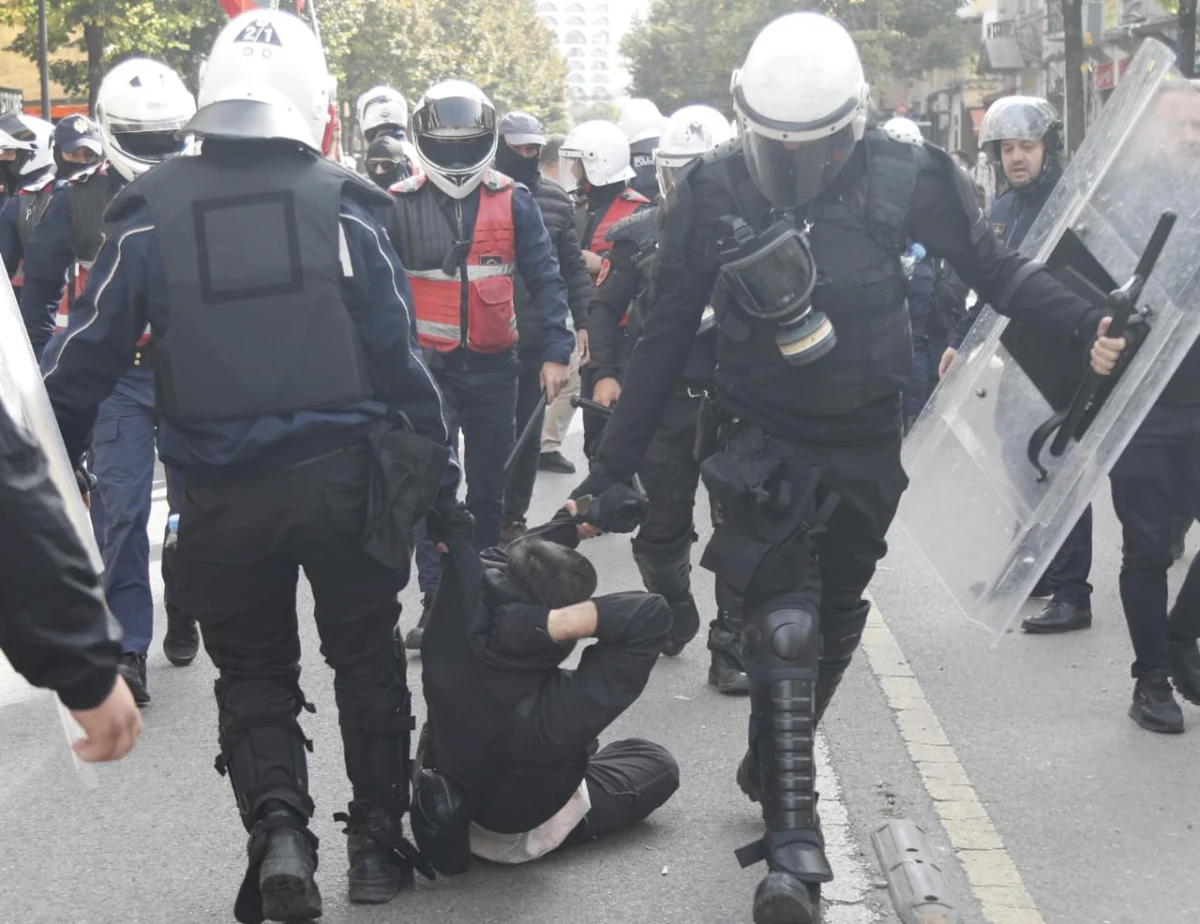
Tirana, Albania – October 15, 2026 – A wave of protests that has swept through Albania in recent weeks has brought to the forefront deeply concerning allegations of police overreach and the potential erosion of citizens’ fundamental rights. While Prime Minister Edi Rama publicly pledged in late September to bolster legal protections for private life, citing mobile phones as "an archive of a person’s life," recent events suggest a starkly different reality on the ground. Reports from individuals detained during demonstrations indicate that law enforcement officers have allegedly demanded access to their personal mobile devices without court orders, raising serious questions about the legality and legitimacy of these actions.
These disturbing revelations, amplified by statements from the People’s Advocate and civil society representatives, expose a significant chasm between the government’s pronouncements on privacy and the methods employed by authorities during public gatherings. Critics argue that while new legislation may be presented as a shield for high-ranking officials under investigation, the everyday citizen appears to be subjected to intrusive surveillance and arbitrary data access, particularly during moments of dissent.
The images and testimonies emerging from the recent protests in Tirana paint a troubling picture. Footage circulating on social media depicts police officers confiscating mobile phones from detained individuals, prompting widespread concern about the legal basis for such actions and the boundaries of police authority. These incidents occur amidst broader criticisms of the police’s alleged disproportionate use of force against protesters, including minors, and the manner in which detentions are being conducted.
The core of the controversy lies in the reported demands for protesters to unlock their mobile devices without clear legal authorization. This has ignited a critical debate about whether the police are operating within the defined scope of their legal powers.
The People’s Advocate Weighs In: A Violation of Fundamental Rights?
During a briefing on Tuesday regarding the respect for human rights by the police during protests, the People’s Advocate highlighted that one of the alleged violations specifically involved attempts by the police to access the mobile phones of detained protesters.
"Several minors and adults reported being asked to unlock their mobile phones and allow the inspection of their personal data, without a court order, and even when no charges had been filed by the prosecution," stated Ahmet Prençi, Commissioner and Head of the National Mechanism for the Prevention of Torture.
The People’s Advocate’s office underscored that the right to private life and correspondence is protected by Article 8 of the European Convention on Human Rights. Any interference with this right, they emphasized, must have a legal basis, be necessary, and be proportionate.
Furthermore, criminal procedure laws in Albania outline specific conditions for the search and seizure of electronic data, setting clear limitations on how authorities can access the content of personal devices. The legality of such actions hinges on the specific circumstances, the competencies of the investigating body, and the authorizations required by law. When these conditions are not met, the search can constitute an unlawful intrusion into private life.
Chronology of Concerns: From Promises to Allegations
The timeline of events reveals a growing disconnect between official rhetoric and on-the-ground practices.
- Late September 2026: Prime Minister Edi Rama makes a public statement, emphasizing the need to protect citizens’ private lives from arbitrary intrusion. He characterizes mobile phones as a "personal archive" and pledges enhanced legal guarantees against unwarranted state access. This statement is widely interpreted as a commitment to strengthening data privacy laws.
- Early October 2026: Protests begin to escalate across Albania, primarily in response to various government policies and perceived socio-economic grievances.
- Mid-October 2026 (Protests Intensify): Reports begin to surface from individuals detained during these demonstrations. These accounts consistently allege that police officers demanded the unlocking of their mobile phones and access to personal data.
- October 15, 2026: The People’s Advocate’s office publicly addresses the human rights situation during protests, specifically citing the alleged instances of police demanding access to protesters’ phones without court orders as a significant concern. This brings the issue into the public domain and garners media attention.
Supporting Data and Legal Frameworks: The Right to Privacy Under Scrutiny
The alleged actions of the police directly challenge established legal principles designed to safeguard individual privacy. Civil society representatives have voiced strong warnings that the inspection of protesters’ mobile phones without the necessary legal authorization could constitute an illegal intrusion into privacy and a violation of criminal procedure.
Gent Serjani, head of the Center for Social Justice, articulated this concern, emphasizing that the legality of such actions is contingent on the legal basis and adherence to established procedures. "The seizure of a mobile phone and the inspection of photos, videos, or other private content found on it, without the relevant legal authorization and without respecting the procedures stipulated by the current legislation, can constitute an illegal intrusion into private life," he stated in an interview with BIRN.
Serjani further elaborated that the legality of these actions must be assessed based on concrete circumstances, the legal competencies of the investigating bodies, and the authorizations required by law. He stressed that the right to respect for private life and the protection of personal data is guaranteed by both Albanian legislation and international human rights instruments.
"For this reason, any intrusion by public authorities into this right must have a legal basis, pursue a lawful aim, and be in accordance with the principle of proportionality," he asserted.
Official Responses: A Promise of Protection vs. Allegations of Abuse
The government’s stated commitment to enhancing privacy protections stands in stark contrast to the allegations leveled against law enforcement. Prime Minister Rama’s earlier remarks about mobile phones as personal archives and promises of new legal guarantees were intended to reassure the public. However, the reported actions of the police during recent protests have cast a long shadow over these assurances.
The People’s Advocate’s office, through its reporting, has provided a crucial independent assessment of the situation. Their findings, detailing the alleged requests for phone unlocking without court orders, serve as a critical piece of evidence in the unfolding debate. The Commissioner’s statement directly references the European Convention on Human Rights and the necessity of legal basis, necessity, and proportionality for any interference with the right to private life.
While no direct official response from the Ministry of Interior or the General Police Directorate addressing these specific allegations of illegal phone access has been prominently reported in the provided text, the People’s Advocate’s intervention implies that the issue has been brought to their attention. The legal framework cited by both the People’s Advocate and legal experts clearly delineates the conditions under which such searches can be conducted, suggesting that the reported actions may indeed fall outside these boundaries.
Implications: The Erosion of Trust and the Future of Dissent
The allegations of police illegally accessing protesters’ mobile phones carry profound implications for the state of democracy and civil liberties in Albania.
Firstly, it raises serious concerns about the erosion of public trust in law enforcement. When citizens, particularly those exercising their right to peaceful protest, feel that their fundamental rights are being violated by the very institutions meant to protect them, it can lead to widespread disillusionment and a chilling effect on future dissent.
Secondly, it highlights a potential disconnect between the legislative intent and the operational practices of state institutions. While the government may articulate a commitment to privacy, the actions of police officers on the ground suggest a different approach, one that may prioritize intelligence gathering or control over individual liberties.
Rigels Xhemollari from the Civil Society Center views these actions as a clear overreach of police powers, demanding investigation by the prosecution and accountability for the actions taken. "Violation of the criminal procedure, and there must be a chain investigation by the prosecution as the police may have exceeded its powers without a court order," he stated.
Xhemollari concluded with a stark warning: "The police have stepped outside the bounds of the law, are functioning on political orders and only with judicial decisions, and examples of misconduct could return the state to the rule of law."
The ongoing situation underscores the critical need for transparency, accountability, and strict adherence to legal procedures in all interactions between law enforcement and citizens. The integrity of Albania’s democratic future hinges on ensuring that the right to privacy, as enshrined in national and international law, is not merely a theoretical concept but a tangible reality for all its citizens, especially when they choose to voice their grievances through protest. The coming weeks will likely see increased scrutiny of the police’s conduct and potential calls for legislative reform or stricter enforcement of existing privacy laws.