By Mark Segal
October 22, 2026
In a significant development for the global energy transition, California-based energy storage startup Peak Energy has successfully closed a $108 million Series B funding round. The investment, led by General Motors Ventures, marks a pivotal moment for the two-year-old company as it pivots to address one of the most pressing challenges of the modern digital economy: the skyrocketing energy demands of the data center industry.
By utilizing proprietary, passively cooled sodium-ion battery technology, Peak Energy aims to displace traditional lithium-ion and lead-acid storage systems, offering a more sustainable, cost-effective, and inherently safer alternative for the mission-critical infrastructure that powers the internet, cloud computing, and artificial intelligence.
The Core Objective: Solving the Data Center Power Crisis
The rapid expansion of artificial intelligence and high-performance computing has placed unprecedented strain on global power grids. Data center operators are currently facing a "trilemma": they need massive, uninterrupted power; they are under pressure to decarbonize their operations; and they must mitigate the fire and safety risks associated with high-density battery arrays.
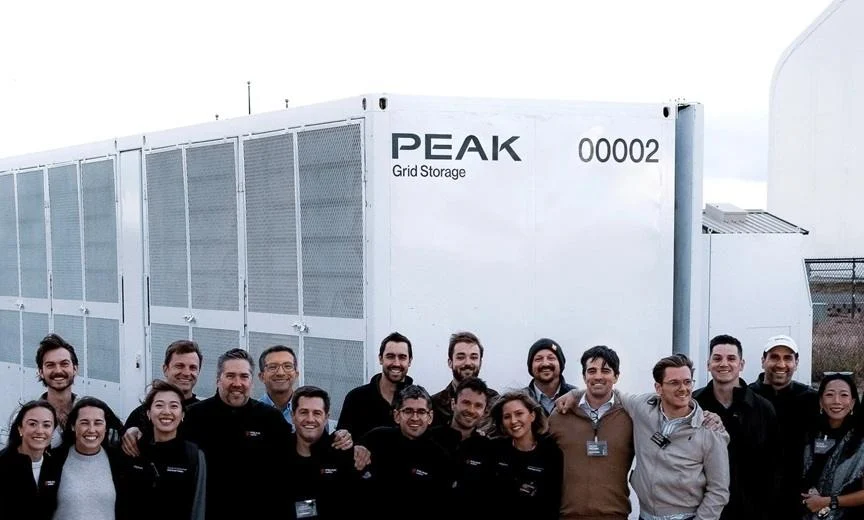
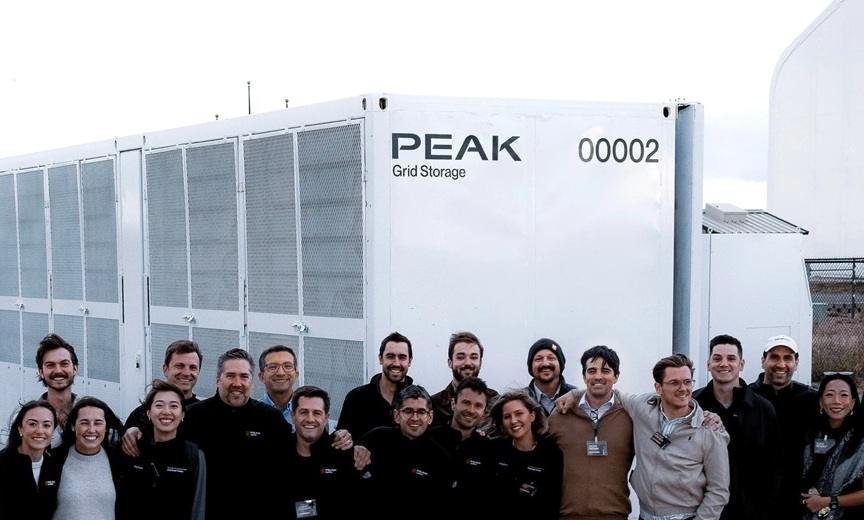
Peak Energy’s latest infusion of capital is explicitly earmarked to scale its grid-scale platform specifically for this market. Unlike conventional lithium-ion batteries, which often require complex, energy-intensive liquid cooling systems and carry inherent thermal runaway risks, Peak Energy’s sodium-ion architecture is designed to be "passively cooled."
By eliminating the need for active cooling, the company reduces the parasitic load of the energy storage system itself, significantly increasing overall efficiency. Furthermore, because the technology operates with minimal noise, requires no water for cooling, and utilizes abundant, non-conflict raw materials, it offers a compelling ESG (Environmental, Social, and Governance) profile for technology giants looking to green their infrastructure.
A Strategic Partnership: The GM Connection
The lead investor in this round, GM Ventures, is not merely a financial stakeholder but a strategic industrial partner. This latest funding builds upon a foundational partnership established in June 2026, when Peak Energy and General Motors first announced a collaborative effort to develop next-generation sodium-ion battery cells.
General Motors is leveraging its deep expertise in U.S.-based battery cell industrialization to help Peak Energy bridge the gap from laboratory concept to mass-market manufacturing. This partnership is designed to ensure that the supply chain for these new batteries remains domestic, insulating the company from the volatility of international critical mineral markets.
Kevin McCabe, President of GM Ventures, underscored the strategic rationale behind the investment:
"GM Ventures is investing to help Peak Energy continue to scale this innovative technology because we believe it has significant potential in the energy storage market as a safe, cost-effective solution using abundant, domestically sourced materials."
Chronology of Progress: From Inception to Scale
Peak Energy’s trajectory has been characterized by aggressive milestones since its founding in 2023.
- 2023: Peak Energy is founded in California with a mission to simplify energy storage architecture and improve grid reliability.
- June 2026: The company enters a strategic partnership with General Motors to co-develop sodium-ion cells, signaling a move toward large-scale industrial production.
- July 2026: Peak Energy announces plans for a massive 4 GWh manufacturing facility in Sacramento, California. The plant is currently on track to commence operations in the first quarter of 2027.
- October 2026: The company closes its $108 million Series B funding round, led by GM Ventures, with participation from a robust cohort of venture capital firms including Maverick Silicon, Infinite Capital, Eclipse, Xora Innovation, and LG Technology Ventures.
The rapid succession of these events highlights the urgency with which the industry is seeking alternatives to lithium-based storage, which remains susceptible to price fluctuations and supply chain constraints.

Technical Superiority: Why Sodium-Ion?
The technical promise of Peak Energy’s solution rests on its simplified architecture. By moving away from the complex chemistry and thermal management required by traditional batteries, Peak Energy claims it can lower energy storage costs by up to 20% compared to conventional systems.
Key performance indicators of their system include:
- Safety: Sodium-ion batteries are inherently less prone to the catastrophic thermal runaway events that can plague lithium-ion systems, making them safer for deployment in dense urban environments or sensitive data centers.
- Lifetime Ownership Costs: With a design that requires no planned maintenance and features a longer operating life, the total cost of ownership (TCO) is significantly lower over a 10-to-20-year horizon.
- Sustainability: Sodium is one of the most abundant elements on Earth, found in common salt. This stands in stark contrast to the environmental and human rights concerns surrounding the extraction of lithium, cobalt, and nickel.
- Operational Efficiency: The passive cooling design eliminates the energy waste associated with running pumps, fans, and chillers to keep battery banks at safe temperatures.
Implications for the Energy Transition
The implications of this funding round extend well beyond the balance sheet of Peak Energy. By targeting the data center sector, the company is positioning itself at the nexus of two of the most critical trends of the decade: the digitalization of the global economy and the decarbonization of the power grid.
1. Grid Resiliency
As data centers become "prosumers"—entities that both consume massive amounts of power and generate it via on-site renewables—they require sophisticated storage to balance intermittent loads. Peak Energy’s systems are designed to provide the necessary stability to keep these centers online during grid disruptions, a capability that is increasingly vital as extreme weather events threaten utility reliability.
2. Manufacturing Renaissance
The commitment to a 4 GWh facility in Sacramento serves as a testament to the "reshoring" movement in American manufacturing. By focusing on domestic sourcing, Peak Energy is creating high-skilled jobs in California and contributing to a resilient, localized supply chain for the energy transition.
3. Scaling to Meet Demand
With over $1 billion in existing customer orders already on the books, the $108 million in new capital is not just for R&D; it is for execution. The company is under immense pressure to ramp up manufacturing at the Sacramento site to meet the backlog of demand.

Landon Mossburg, Co-Founder and CEO of Peak Energy, summarized the company’s outlook:
"The investment we announce today will supercharge Peak’s ability to scale and deliver as the world increasingly turns to passively cooled sodium-ion storage to solve our energy needs."
Market Landscape and Future Outlook
The energy storage market is currently experiencing a period of intense competition. While lithium-ion remains the dominant technology, the entry of sodium-ion into the data center space represents a technological pivot that could disrupt incumbent battery manufacturers.
The participation of diverse investors—from automotive giants like GM to specialized venture firms like Eclipse and LG Technology Ventures—suggests that there is widespread confidence in the scalability of Peak Energy’s specific approach.
As the company moves toward the Q1 2027 production start date for its Sacramento facility, all eyes will be on its ability to execute. If Peak Energy can successfully bridge the gap between a promising prototype and industrial-scale deployment, they will likely become a primary supplier for data center operators globally.
In conclusion, the $108 million raise provides more than just liquidity; it provides the industrial mandate to transform how we store energy. For an industry as power-hungry as the data center sector, the transition to safer, cheaper, and more sustainable storage is not just an ESG goal—it is a business imperative. With the backing of GM and a clear path to manufacturing, Peak Energy is uniquely positioned to lead this transformation, proving that the future of power may well be found in the simplicity of sodium-ion technology.