Switzerland – In the heart of Europe, a vibrant tapestry of Albanian culture thrives, woven by the threads of generations who have built new lives while steadfastly holding onto their roots. From the bustling streets of Lausanne to the historic landscapes of Sicily, and the cultural hubs of Zurich and Bern, the Albanian diaspora in Switzerland demonstrates an enduring commitment to preserving their language, traditions, and collective memory. This article delves into the multifaceted experiences of Albanians in Switzerland, highlighting their contributions to their adopted homeland and their unwavering dedication to their ancestral heritage.
The Enduring Connection: Lives Straddling Three Worlds
The story of Valbona Mulliqi, a resident of Lausanne for decades, encapsulates the complex reality of many Albanians in Switzerland. Her life is a delicate balance, gracefully navigating between Switzerland, where she works and lives with her family; Albania, her birthplace; and Kosovo, where she spent a significant part of her formative years. Born in Durrës, Albania, and raised partly in Gjakova, Kosovo, Mulliqi is part of a thriving community of over 190,000 Albanians in Switzerland, many of whom trace their origins to Kosovo and North Macedonia.
"I’ve always loved to learn," Mulliqi shares, reminiscing about her school days at "Gjergj Kastrioti" secondary school in Durrës. This inherent drive fuels her current pursuits. Alongside her friends, Eneo and Dea, she manages a café near Lausanne’s city center. This establishment serves not only as a workplace but also as a hub for Albanian employees and individuals from other communities to share daily tasks and, crucially, their efforts to teach the Albanian language. Known affectionately as Bona, Mulliqi is also pursuing accounting studies in Geneva, an hour’s journey from Lausanne, demonstrating her ambition and dedication to personal and professional growth.
Despite decades spent in Switzerland, Mulliqi’s connection to Durrës and Gjakova remains profound. Her upcoming plans include a trip to Kosovo to tend to the damaged roof of her parents’ home, a testament to her familial responsibilities. Before that, however, a stop in Durrës is necessary to settle utility payments for her apartment there. Her narrative mirrors the experiences of countless Albanians in Switzerland who have successfully built new lives abroad without severing the vital familial, economic, and cultural ties to their homelands.
Preserving Memory: The War’s Echoes and Rebuilt Heritage
The challenges and triumphs of the Albanian diaspora are often intertwined with the historical narratives of their homelands. A poignant evening in Lausanne saw Mulliqi hosting fellow expatriates from Kosovo. The conversation inevitably turned to 1999, a year etched in collective memory, when war forced thousands of Kosovar families to flee their homes and seek refuge in Albania.

Among them was Xhevat Sejdiaj, who recalls finding shelter in Qerret, Durrës, an area that has long been home to Kosovar families. Sejdiaj’s personal journey, however, also encompasses a remarkable endeavor to reconstruct a traditional stone tower in his native village in Kosovo.
"The tower had been ruined before I was born, and initially, everyone was against it, even my wife," he recounts, referring to his spouse. After retiring, Sejdiaj returned to his village and personally oversaw the reconstruction of the 9.7-meter-tall tower. This ambitious project, meticulously documented with photographs on his mobile phone, was driven by a deep sense of duty. "I had to build it in respect for my father and the poverty that raised and educated us," he explains. For Sejdiaj, the reconstruction was more than just an investment in family property; it was a powerful act of preserving his father’s memory and his family’s history.
From Switzerland to Sicily: Safeguarding Arbëreshë Heritage
The diaspora’s commitment to cultural preservation extends beyond national borders. A journey to Neuchâtel brought us into contact with Veli Berisha, a 43-year-old engineer born in Switzerland to a Kosovar family. While Berisha has worked for years in an industrial company in Bern, he dedicates a significant portion of his free time to promoting Albanian cultural heritage.
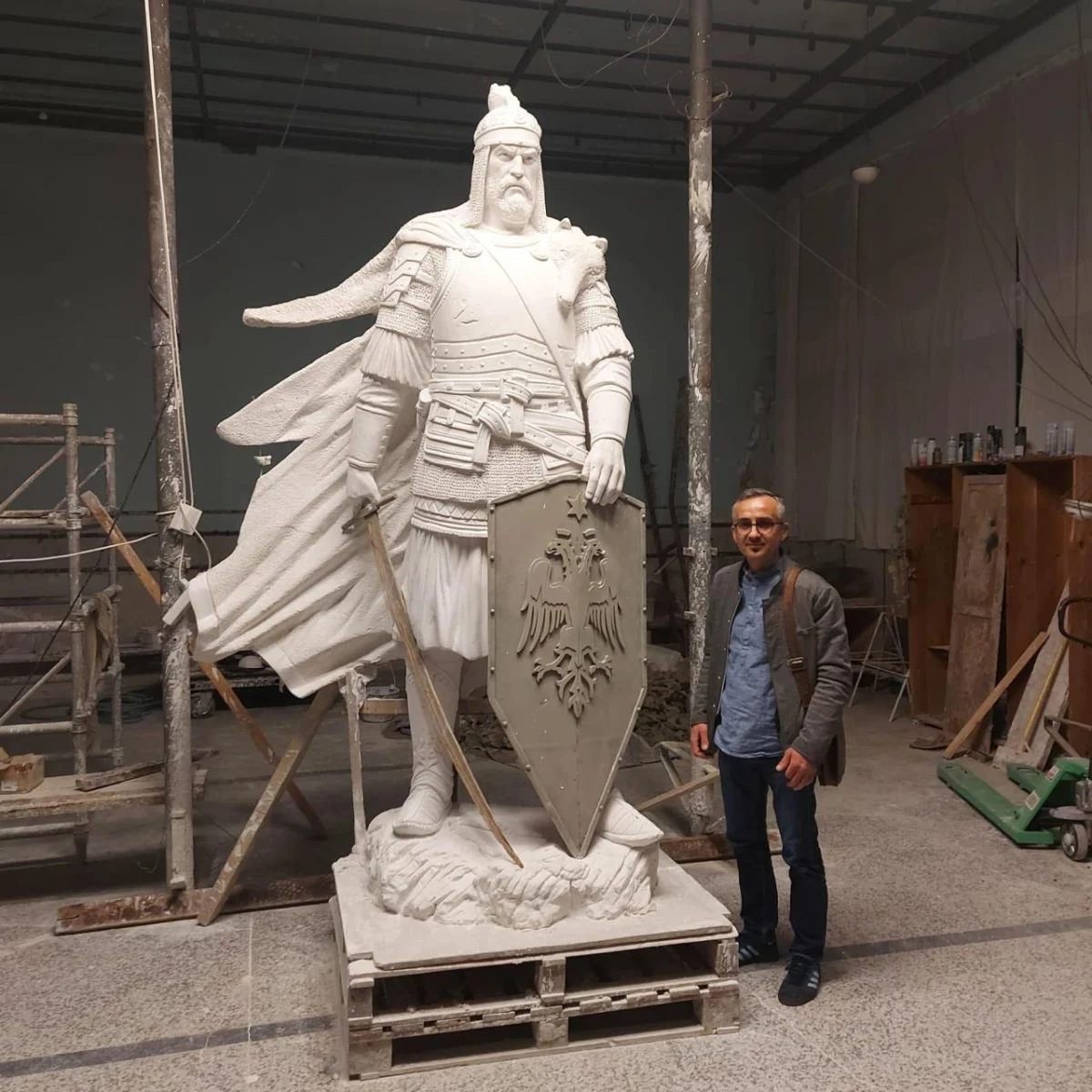
The car reverberates with Arbëreshë music, a testament to a deep-seated connection to this ancient Albanian community in Italy. Berisha’s wife, Aisha, shares that their interest in the Arbëreshë community has evolved into a family commitment, culminating in the erection of a Skanderbeg statue in Piana degli Albanesi, Sicily.
"My father-in-law often spoke of the Arbëreshë, especially the victims of COVID-19 in Italy. That’s how the idea of creating a monument to our national hero in the Arbëreshë town emerged," explains Aisha, a mother of four. Veli recalls the warm reception from the Arbëreshë community towards Albanians visiting from Switzerland and their collaboration with representatives of the "Hora e Arbëreshëvet," the local name for Piana degli Albanesi.

Their collaborative efforts aim to transcend mere monument building, focusing on engaging younger generations and preserving the Albanian language. "We intend to involve our children in our plans, as well as in the efforts for mass learning of the Albanian language," Berisha states. In Neuchâtel, an exhibition featuring historical objects, photographs, and Albanian newspapers from the late 19th and early 20th centuries offers another compelling example of the diaspora’s dedication to safeguarding its heritage. The exhibition’s organizer, Ilir Xheladini, is also fundraising for the publication of "Après la liberté" by Swiss television journalist Alain Maillard.
Albanian Theater in Zurich: A Stage for Cultural Continuity
The Albanian diaspora’s cultural endeavors extend to the performing arts. In Zurich, actress Liri Lushi, a familiar face to the Albanian public from the "Aleksandër Moisiu" theater in Durrës, has been a key figure in maintaining the Albanian theatrical presence in Switzerland.
"We know Liri best as Shote Galica; we saw her performance on television a long time ago," remarks Valbona Mulliqi, recalling Lushi’s iconic roles. While Lushi is currently immersed in preparations for her daughter’s wedding, a significant event expected to draw many compatriots from the Albanian community, her dedication to her craft remains unwavering.
Lushi was instrumental in efforts to keep Albanian-language theater alive in Switzerland. Years ago, she directed an Albanian acting studio in Zurich, bringing together professional and amateur artists from Albania, Kosovo, and various Swiss cities. "The performances were very well received in different cities, and even outside Switzerland," Lushi recalls. For the Albanian community, such activities have served as crucial meeting points and a vital means of preserving their language and culture in a multilingual environment.
The Albanian presence in Switzerland has been shaped by successive waves of migration, initially from former Yugoslavia and later from Albania. According to Xhevat Sejdiaj, education and professional training have played a significant role in the integration of Albanian emigrants into the Swiss labor market. "Albanians arrived prepared and educated, and this facilitated their settlement in work, according to their professions," he noted. Since the 2000s, the number of citizens from Albania has increased significantly, though Kosovars still constitute the majority of the Albanian diaspora in Switzerland.

Official Responses and Implications
The narrative of the Albanian diaspora in Switzerland is one of resilience, adaptation, and a profound commitment to cultural preservation. While this article focuses on individual stories and community initiatives, it’s important to acknowledge the broader implications of their presence.
Supporting Data: The presence of over 190,000 Albanians in Switzerland represents a significant demographic contribution. This diaspora is not only economically active, contributing to the Swiss economy through their labor and entrepreneurship, but also culturally enriching the nation. The initiatives highlighted – language schools, cultural exhibitions, theatrical productions, and community gatherings – demonstrate a proactive approach to maintaining a strong sense of identity and belonging.
Official Responses: While specific official responses to the Albanian diaspora’s cultural preservation efforts are not detailed in the provided text, the general integration policies of Switzerland often support cultural diversity. Government programs and funding mechanisms may exist to support cultural associations and initiatives that promote heritage preservation. Furthermore, the educational system in Switzerland, while demanding, generally provides opportunities for individuals from diverse backgrounds to pursue higher education and professional development, as exemplified by Valbona Mulliqi’s accounting studies. The success of Albanians in various professional fields underscores the effectiveness of integration policies that value education and merit.
Implications: The experiences of the Albanian diaspora in Switzerland offer valuable lessons for both immigrant communities and host countries.
- For Immigrant Communities: The stories of Mulliqi, Sejdiaj, Berisha, and Lushi demonstrate the power of maintaining strong cultural ties, even while building new lives. The emphasis on language transmission to younger generations is critical for long-term cultural continuity. Furthermore, the success in professional fields highlights the importance of education and skills development.
- For Host Countries: Switzerland’s ability to integrate a large immigrant population while fostering an environment where cultural heritage can be maintained is a testament to its inclusive policies. The economic contributions of the diaspora, coupled with their cultural enrichment, represent a significant asset. The continued engagement of immigrant communities in preserving their heritage can lead to a more vibrant and diverse society, fostering mutual understanding and respect.
The Albanian diaspora in Switzerland is a dynamic force, continually evolving while remaining deeply connected to its origins. Their stories are not just about building new lives, but about actively shaping a future where their rich cultural heritage continues to thrive, echoing across continents and generations.