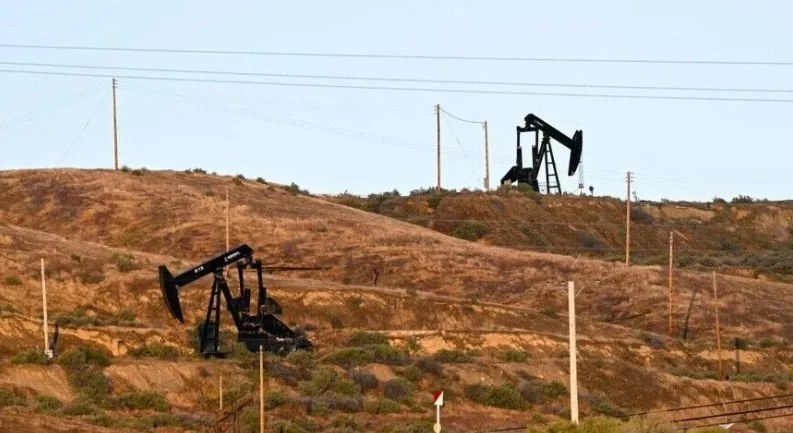
LONDON/NEW YORK – October 26, 2023 – Global crude oil benchmarks, Brent and West Texas Intermediate (WTI), surged by over 2% on Thursday, reversing earlier losses, as persistent uncertainty surrounding ongoing negotiations between the United States and Iran cast a long shadow over the prospects for stable energy supplies from the Middle East. The delicate diplomatic dance, centered on the potential revival of a nuclear accord, has injected a significant risk premium into an already taut global energy market, underscoring the profound interconnectedness of geopolitics and commodity prices.
Investors meticulously weighed nascent signs of improved regional crude deliveries against mounting concerns that any sustained recovery in supply could falter without a durable agreement to de-escalate tensions and potentially bring Iranian crude back onto the international market. The strategic Strait of Hormuz, a critical maritime chokepoint for global oil shipments, remains firmly at the heart of these high-stakes negotiations and the broader outlook for regional energy flows.
At 08:30 GMT, international Brent crude futures climbed 2.4% to $100.35 per barrel, surpassing the psychologically significant $100 mark. Concurrently, the American benchmark, West Texas Intermediate (WTI), saw an even sharper increase, rising 2.45% to $92.62 per barrel. The sudden upward trajectory reflects a nervous market’s reaction to the latest diplomatic overtures and the enduring fragility of Middle Eastern stability.
The Diplomatic Labyrinth: A Chronology of Engagement and Impasse
The current surge in oil prices is intrinsically linked to the protracted and often fraught efforts to restore the Joint Comprehensive Plan of Action (JCPOA), commonly known as the Iran nuclear deal. This accord, originally signed in 2015 between Iran and the P5+1 powers (China, France, Germany, Russia, the United Kingdom, and the United States), aimed to curtail Iran’s nuclear program in exchange for sanctions relief. Its unraveling began in 2018 when the Trump administration unilaterally withdrew the U.S. and reimposed stringent sanctions, significantly curbing Iran’s oil exports and exacerbating regional tensions.
A Tumultuous Timeline:
- 2015: JCPOA is signed, leading to a temporary return of Iranian oil to global markets.
- 2018: U.S. withdraws from JCPOA, reimposes sanctions, and Iran gradually begins to exceed the deal’s enrichment limits.
- 2021 (April onwards): Indirect talks to revive the JCPOA commence in Vienna, mediated by the European Union. Several rounds of negotiations yield incremental progress but are frequently stalled by fundamental disagreements.
- Early 2022: Talks reach a critical juncture, with both sides presenting drafts and counter-proposals. However, external factors, including the Russia-Ukraine conflict and internal political shifts in Iran and the U.S., complicate progress.
- Mid-2022: Qatar emerges as a key mediator, facilitating indirect communications between Washington and Tehran, aiming to bridge the remaining gaps. Oman has also played a crucial role in these back-channel discussions.
- August/September 2022: A flurry of diplomatic activity, including the exchange of proposals and responses, suggests a potential breakthrough, only for hopes to be dashed by renewed impasses over specific guarantees and conditions.
- October 25, 2023: Iranian government spokesperson Fatemeh Mohajerani publicly confirms that Tehran has received Washington’s response to a new proposal, relayed via Qatari mediation. This statement, while signaling continued engagement, also underscores the ongoing complexity and the absence of a definitive resolution. The "new proposal" itself and the specifics of Washington’s response remain undisclosed, fueling market speculation.
Tehran’s frequently stated conditions for a renewed agreement are comprehensive and extend beyond mere nuclear concessions. These demands typically include the cessation of what Iran perceives as hostile actions on all fronts, including proxy conflicts and regional rivalries, specifically citing Lebanon. Furthermore, Iran has consistently called for the lifting of the U.S. naval blockade – a reference to broader economic and maritime restrictions – and, crucially, the unfreezing and release of its substantial assets held abroad, which have been severely impacted by international sanctions. The breadth of these demands highlights that the negotiations are not solely about nuclear enrichment levels but encompass a wider geopolitical reconciliation, making a swift resolution inherently challenging.
Supporting Data: The Geopolitical Grid and Market Dynamics
The immediate volatility in oil prices is a direct reflection of the geopolitical sensitivities inherent in the Middle East. The region, home to the world’s largest proven oil reserves, is a perennial source of supply risk, and any disruption or even the threat of disruption can send ripple effects across global markets.
The Strategic Significance of the Strait of Hormuz:
Central to the ongoing discussions and the market’s anxiety is the Strait of Hormuz. This narrow waterway, connecting the Persian Gulf with the Arabian Sea and beyond, is arguably the world’s most critical oil chokepoint. Approximately one-fifth of global oil consumption, or about 21 million barrels per day (bpd) of crude oil and other petroleum liquids, passes through this strait. Major oil producers like Saudi Arabia, Iran, Iraq, Kuwait, Qatar, and the UAE rely on it for their exports. Any threat to navigation or closure of the Strait – a scenario Iran has occasionally threatened in times of heightened tension – would have catastrophic consequences for global energy supplies, triggering an unprecedented oil price spike and potentially plunging the world economy into recession. The mere prospect of instability in this vital corridor is enough to keep market participants on edge.
OPEC+ and the Supply-Side Equation:
Adding another layer of complexity to the supply picture is the policy stance of OPEC+ – the Organization of the Petroleum Exporting Countries and its allies, including Russia. This powerful cartel influences over 40% of global crude supply. Recent decisions by seven key OPEC+ producers to maintain their October production targets at September levels underscore the group’s cautious approach to market management. While these cuts were initially implemented to stabilize prices amid concerns of a global economic slowdown, they also highlight the group’s reluctance to unilaterally increase supply, even in the face of tight markets. This conservative supply policy, combined with the geopolitical uncertainties surrounding Iran, creates a tight market environment where any potential supply disruption, or even the delayed return of significant Iranian barrels, can have an outsized impact on prices. The group’s current strategy focuses on balancing supply with demand, often prioritizing price stability over market share, a dynamic that interacts significantly with diplomatic developments.
Global Supply-Demand Balance:
The current global oil market is characterized by a delicate equilibrium. While fears of a global economic slowdown, exacerbated by high inflation and rising interest rates, have tempered demand forecasts, actual supply remains constrained. Strategic Petroleum Reserves (SPR) releases by nations like the U.S. have provided temporary relief but are not a sustainable long-term solution. Inventories in major consuming nations are often below historical averages, indicating a lack of significant buffer against shocks. The potential return of Iranian oil, estimated at anywhere from 500,000 bpd to over 1 million bpd if sanctions are fully lifted, could significantly alter this balance, injecting much-needed supply into the market and potentially alleviating upward price pressure. Conversely, continued stalemate or escalation would only tighten the market further.
Official Responses: A Symphony of Statements and Strategic Silence
The public statements from key players, while often guarded, offer crucial insights into the diplomatic landscape.
Iran’s Position:
Fatemeh Mohajerani’s statement on receiving Washington’s response, while brief, signifies that channels of communication remain open. Iranian officials have consistently maintained that they are ready for a "good, strong, and lasting agreement" but will not compromise on their "red lines." These red lines typically involve guarantees that the U.S. will not again unilaterally withdraw from the deal, full sanctions relief, and resolution of outstanding issues related to IAEA inspections. The emphasis on "cessation of hostilities on all fronts, including Lebanon," signals Iran’s desire for a broader regional de-escalation that addresses its security concerns, particularly regarding Israeli actions and U.S. military presence in the region. The demand for the release of frozen assets, estimated to be tens of billions of dollars, is critical for Iran’s struggling economy.
United States’ Stance:
U.S. officials, while confirming receipt of Iranian responses in the past, have largely maintained a cautious and often non-committal tone in public. The Biden administration has reiterated its commitment to diplomacy as the preferred path but has also emphasized that it will not accept a "bad deal" and will continue to hold Iran accountable for its nuclear advancements and regional destabilization activities. The U.S. has consistently called for Iran to fully cooperate with the International Atomic Energy Agency (IAEA) regarding undeclared nuclear sites and to cease support for proxy groups in the Middle East. Washington’s approach is a delicate balancing act: seeking to prevent Iran from developing nuclear weapons while avoiding a direct military confrontation.
The Role of Qatar and the European Union:
Qatar has emerged as an indispensable, neutral broker in these indirect negotiations. Its consistent engagement and ability to facilitate dialogue between Washington and Tehran highlight its growing diplomatic clout in the region. Qatari officials have publicly expressed optimism about the prospects for a deal while acknowledging the significant challenges. The European Union, particularly its foreign policy chief, has acted as the official coordinator of the JCPOA talks, often drafting proposals and shuttling between the parties. The EU’s primary interest lies in preventing nuclear proliferation and restoring regional stability, given its reliance on Middle Eastern energy and its strategic relationship with both the U.S. and Iran.
IAEA’s Monitoring Role:
The International Atomic Energy Agency (IAEA) plays a critical technical role, monitoring Iran’s nuclear activities. Recent IAEA reports have indicated that Iran’s uranium enrichment levels are nearing weapons-grade purity, significantly shortening its "breakout time" – the time it would theoretically take to produce enough fissile material for a nuclear weapon. These reports frequently add urgency to the diplomatic efforts and serve as a stark reminder of the stakes involved. Iran’s cooperation, or lack thereof, with IAEA inspectors is a recurring sticking point in the broader negotiations.
Implications: A Crossroads for Global Energy and Diplomacy
The outcome of the U.S.-Iran negotiations will have profound and far-reaching implications, not just for the parties involved but for global energy markets, geopolitical stability, and the world economy.
Scenario 1: Successful Deal and JCPOA Revival:
Should a comprehensive agreement be reached and the JCPOA revived, the most immediate impact would be the potential return of significant volumes of Iranian crude oil to the global market. Analysts estimate that Iran could swiftly ramp up its exports by 500,000 to 1 million barrels per day within months of sanctions relief. This influx of supply would likely exert downward pressure on oil prices, providing some relief to consumers and mitigating inflationary pressures. A successful deal could also usher in a period of reduced regional tensions, potentially de-risking the Strait of Hormuz and fostering greater stability in the Persian Gulf. For Iran, it would mean economic revitalization, access to frozen assets, and reintegration into the global financial system, potentially strengthening its moderate political factions.
Scenario 2: Stalemate, Failure, or Escalation:
Conversely, a failure of negotiations or a complete breakdown in diplomatic channels would likely send oil prices significantly higher, potentially pushing Brent well above $100 and closer to historical highs. Continued sanctions and the absence of Iranian crude would keep the market tight, while the increased geopolitical risk premium would persist. The failure to revive the deal would also carry severe non-economic consequences. Iran could accelerate its nuclear program further, potentially reaching a point where its nuclear capabilities become irreversible, raising the specter of a regional arms race. The risk of military confrontation, either direct or through proxy conflicts, would escalate significantly, threatening broader regional stability and global trade routes. This scenario would fuel global inflation, dampen economic growth prospects, and create significant uncertainty for businesses and consumers worldwide.
Broader Geopolitical Ramifications:
The U.S.-Iran dynamic is also interwoven with other major geopolitical events. The ongoing conflict in Ukraine has reshaped global energy flows, with Europe seeking alternatives to Russian gas and oil. A stable Iran, integrated into global markets, could offer an alternative supply source, albeit a politically charged one. The outcome will also influence the strategic calculus of U.S. allies in the Gulf, such as Saudi Arabia and the UAE, who have their own complex relationships with both Washington and Tehran. The energy transition debate also plays a role, as short-term energy security concerns often override long-term climate goals in times of crisis.
In conclusion, the current surge in oil prices is a stark reminder of the fragile balance that governs global energy markets. As the diplomatic efforts to revive the Iran nuclear deal continue, fraught with historical mistrust and complex demands, the world watches with bated breath. The outcome of these high-stakes negotiations will not only determine the trajectory of oil prices but will also profoundly shape the geopolitical landscape of the Middle East and cast a long shadow over the stability of the global economy for years to come.