In the complex ecosystem of North American freight, the mandate for shippers has shifted from a "nice-to-have" to an absolute operational requirement: intermodal conversion. Driven by the lingering trauma of past supply chain volatility and the relentless pressure of fluctuating fuel costs, the logistics landscape is undergoing a profound structural transformation. At the center of this movement stands J.B. Hunt Transport Services, whose recent strategic maneuvers are providing a masterclass in how major carriers navigate market headwinds while positioning for long-term growth.
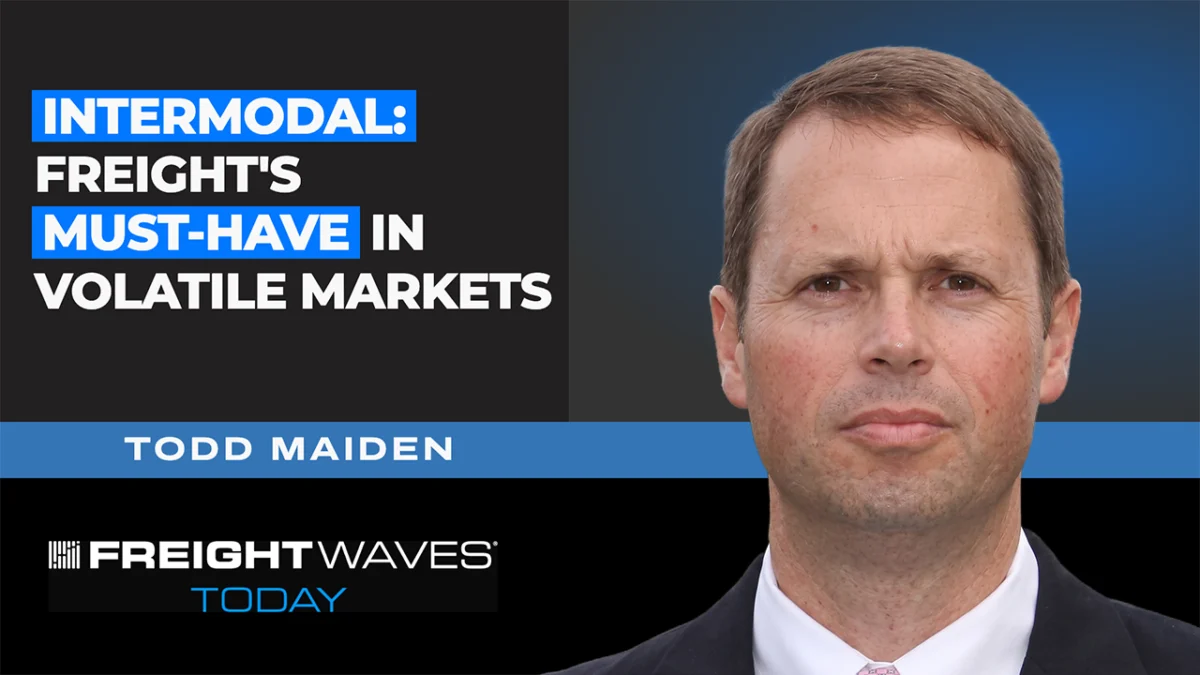
As FreightWaves Finance Editor Todd Maiden highlights, the current market is not merely about surviving a cycle; it is about strategically positioning assets to capitalize on the next wave of industrial expansion. For J.B. Hunt, this involves a sophisticated balancing act between cost-reduction initiatives, aggressive technology adoption, and a disciplined approach to capital expenditure.
Main Facts: The State of the Carrier Turnaround
J.B. Hunt recently signaled to investors that it expects a 5% to 10% sequential decline in third-quarter earnings per share (EPS) compared to the second quarter. While this puts the company’s performance roughly flat on a year-over-year basis, the market’s initial reaction—a degree of skepticism—may be misplaced.
Analysts tracking the sector suggest that the market has fundamentally misread the narrative. While the broader universe of truckload and intermodal carriers is only just beginning to see the first signs of an earnings recovery, J.B. Hunt effectively initiated its turnaround in the third quarter of 2025. This current period marks its fourth consecutive quarter of year-over-year improvement, a metric that distinguishes the firm from its peers who are still struggling to find their footing.
The company has successfully launched a $100 million cost-reduction initiative, a program that has since expanded to $130 million as of the last quarter. Notably, the firm has prioritized lean management over mass layoffs, utilizing natural attrition and AI-driven efficiency gains to optimize its workforce. For the broader industry, analysts are tracking approximately 20% average earnings growth this quarter, following a robust 25% year-over-year expansion across the sector in the second quarter.
Chronology: A Trajectory of Resilience
The recent performance of the logistics sector can be mapped through a timeline of strategic adjustments, shifting industrial demands, and macroeconomic pressures.
- 2023–2024: The industry navigated a period of "softness" characterized by sluggish demand and a flat rate environment. Carriers like J.B. Hunt used this time to refine their operating ratios and invest in technological infrastructure.
- January 2025: The ISM manufacturing PMI turned positive, signaling a potential shift in industrial activity. This served as a catalyst for the LTL (less-than-truckload) sector, which began to see tonnage inflect positively by March.
- Q2 2025: A period of significant growth across the freight space, with companies reporting a 25% year-over-year earnings increase.
- Q3 2025–Present: J.B. Hunt continued its trajectory of improvement. Despite headwinds from rising diesel costs—nine out of 13 weeks in the third quarter saw sequential price hikes—the carrier maintained its strategic course. The focus shifted toward long-term capacity prefunding, particularly within the dedicated segment, rather than short-term cost-cutting at the expense of future capabilities.
Supporting Data: Efficiency and Market Dynamics
The metrics surrounding J.B. Hunt’s operational efficiency reveal a company in the midst of a steady optimization process.
The Intermodal Operating Ratio
J.B. Hunt’s intermodal operating ratio has improved from a cyclical trough of 93.6 to approximately 91. While this is an impressive feat, it is important to note that the company’s long-term target remains in the 88 to 90 range. Crucially, this progress has been achieved without the benefit of significant price increases, as major customers like Walmart, Amazon, and Home Depot prioritize cycle-based, incremental rate negotiations over the volatility of spot-market pricing.
The LTL Capacity Slack
The LTL sector presents a unique case study in fixed-cost management. Carriers like Old Dominion, XPO, and Saia maintained strong pricing power throughout 3.5 years of industrial stagnation. As tonnage has increased, these companies are beginning to absorb the 30% excess door capacity that has defined the sector. Because LTL operations are highly capital-intensive with significant fixed-cost structures, the utilization of this excess capacity is expected to drive outsized margin expansion in the coming quarters.
Official Perspectives: The Necessity of Conversion
"Modal conversion is no longer something we’ll contemplate," industry leaders have noted. "It’s really a necessity. But I think there’s some scars there from what it was in the past."
This sentiment underscores the tension between the efficiency of intermodal transport and the reliability concerns that lingered after the supply chain chaos of recent years. The current bid season, which kicked off on October 1, is perhaps the most critical catalyst for the remainder of the year. Intermodal volumes have already climbed in the mid-single digits this quarter, though the growth is currently capped by a shortage of drayage drivers—a common bottleneck in the modern supply chain.
Regarding the entry of non-traditional players, such as Amazon, into the LTL space, analysts remain skeptical. While the LTL market represents a $60 billion total addressable market (TAM), it pales in comparison to the global parcel market, which exceeds $1 trillion. Amazon’s current infrastructure—configured primarily for inbound freight—lacks the sophisticated cross-docking and linehaul capabilities required for a truly national, high-service LTL network. Meanwhile, established national carriers are sitting on significant excess capacity, positioning them to absorb volume as the industrial economy continues its recovery.
Implications: The Road Ahead
As the industry looks toward the close of 2026, the implications for shippers and investors are clear:
- The Shift to Intermodal: Shippers are increasingly moving away from over-the-road (OTR) solutions in favor of intermodal options to hedge against fuel volatility and capacity constraints. This shift is not a temporary trend but a long-term recalibration of supply chain strategy.
- Industrial Activity as a Bellwether: The sustained growth in the ISM manufacturing PMI is the engine driving the current freight recovery. As long as manufacturing remains in expansion territory, the LTL sector is poised for margin expansion, particularly for those carriers with existing terminal networks and the capacity to absorb volume.
- Capital Discipline vs. Growth: J.B. Hunt’s approach of "prefunding" capacity in the dedicated segment suggests a belief that the current market environment is the "new normal." Companies that manage their headcount through attrition rather than sudden layoffs are better positioned to scale when the next surge in demand arrives.
- Technological Integration: The use of AI-driven lean initiatives is no longer optional. As carriers face ongoing pressure on operating ratios, technology that optimizes routing, driver management, and terminal efficiency will be the primary driver of competitive advantage.
Conclusion
The freight industry is in the midst of a structural transition. For carriers like J.B. Hunt, the strategy is clear: focus on operational discipline, leverage the inherent efficiency of intermodal networks, and maintain a long-term view on capacity. While short-term macroeconomic factors like fuel costs and seasonal earnings fluctuations will always be present, the underlying trend points toward a more consolidated, efficient, and technology-driven landscape. For shippers, the lesson is equally clear—securing reliable, long-term capacity through cycle-based negotiations is the best defense against the uncertainty of the modern global supply chain.
As we approach the end of the year, all eyes will be on the conclusion of the current bid season, which will serve as the final indicator of whether the industry can successfully translate volume growth into sustained, long-term profitability.