In an era where 51% of content professionals now leverage artificial intelligence to accelerate production, the digital landscape has become exponentially noisier. For brands, standing out is no longer just about creativity—it is about strategic precision. As marketing leaders face mounting pressure to justify digital expenditures—with social advertising now commanding 12.2% of total marketing budgets—the ability to benchmark performance against competitors has transitioned from a "nice-to-have" to a business-critical requirement.

A comprehensive social media competitor analysis is more than a collection of engagement metrics; it is the bridge between raw social data and measurable business outcomes. By understanding how your rivals navigate algorithmic shifts and content saturation, you can transform your social strategy from a reactive exercise into a proactive, data-driven engine for growth.

The Strategic Importance of Competitive Benchmarking
In the current market, content volume is at an all-time high, making differentiation increasingly difficult. When algorithms prioritize relevance over frequency, simply "out-posting" a competitor is rarely a winning strategy. Instead, brands must identify which specific formats and narratives resonate with their shared audience.
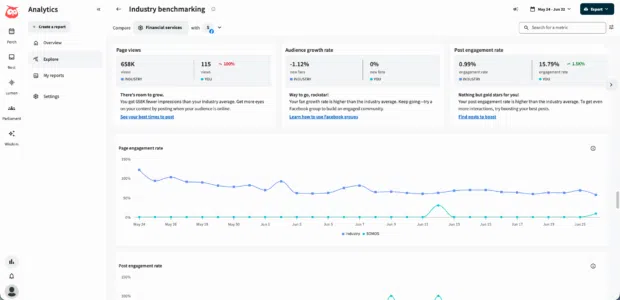
Without competitive context, a 2% engagement rate is merely a statistic. With context, it serves as a litmus test: are you leading your category, or are you drifting behind the industry standard? Competitive benchmarking allows teams to shorten their reaction times. If a competitor pivots their messaging, launches a disruptive product, or suffers a PR crisis, a robust analysis system ensures you are aware of these shifts before they evolve into market-wide trends.

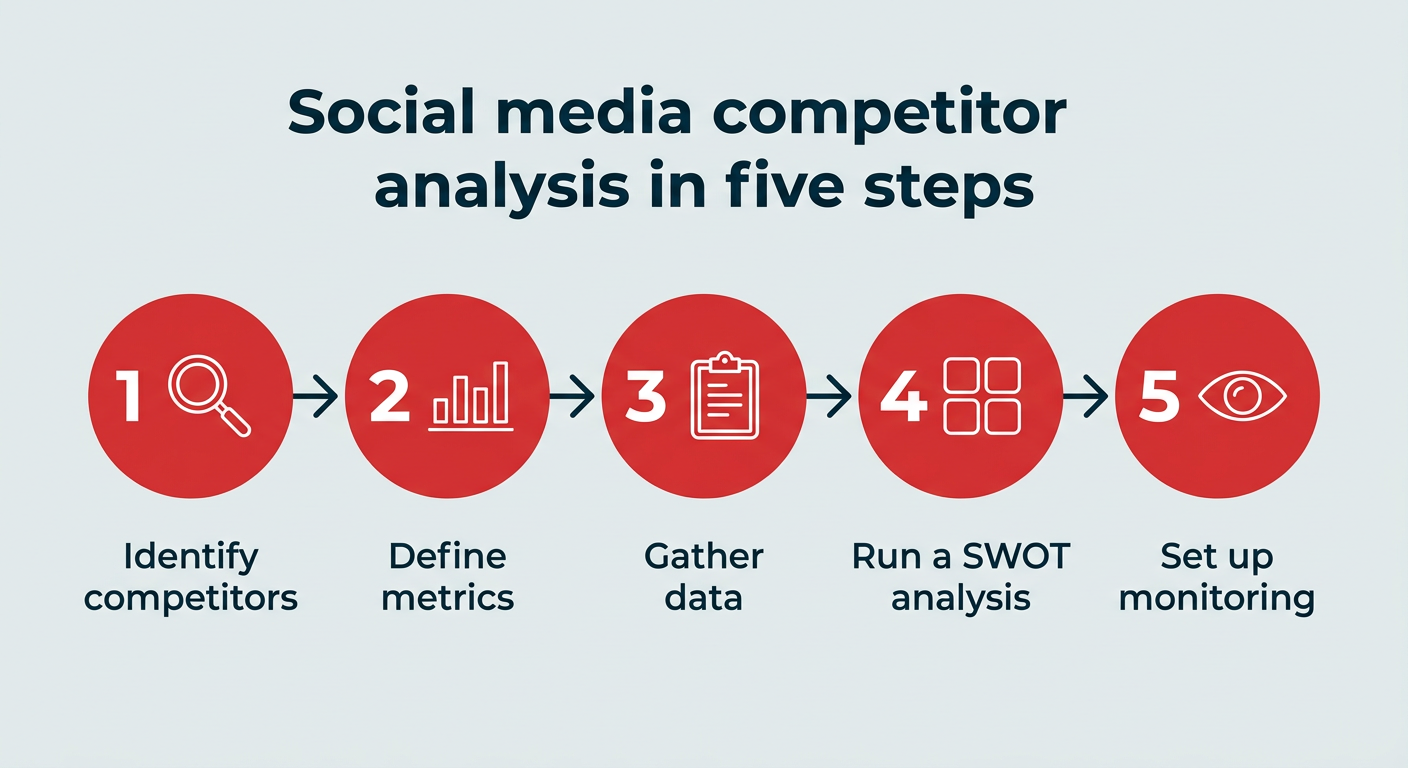
A Four-Step Framework for Competitive Success
To move beyond vanity metrics, teams should adopt a structured, iterative approach to analysis. By following these four steps, you can turn your social data into a reliable decision-making tool.

1. Identifying and Refining Your Competitive Set
True competition is rarely limited to those selling the exact same product. It encompasses any entity vying for the same "share of voice" and audience attention.

- Keyword Mapping: Use tools like Google Search Console and Keyword Planner to identify the terms your brand intends to own. Analyze who is currently ranking for these terms on Google and social platforms.
- Social Search Audits: Platforms like TikTok and Instagram now function as primary search engines for younger demographics. Run your target keywords directly within these apps to identify the brands that dominate the "For You" or "Explore" pages.
- Audience Overlap: Use Meta Business Suite and platform-native analytics to identify which brands your existing followers also engage with. This often reveals "hidden" competitors that are successfully capturing your target demographic.
2. Defining Measurable KPIs
The most effective analyses track a consistent set of metrics across both your own and your competitors’ profiles. Choose five to seven metrics that align with your specific business goals:
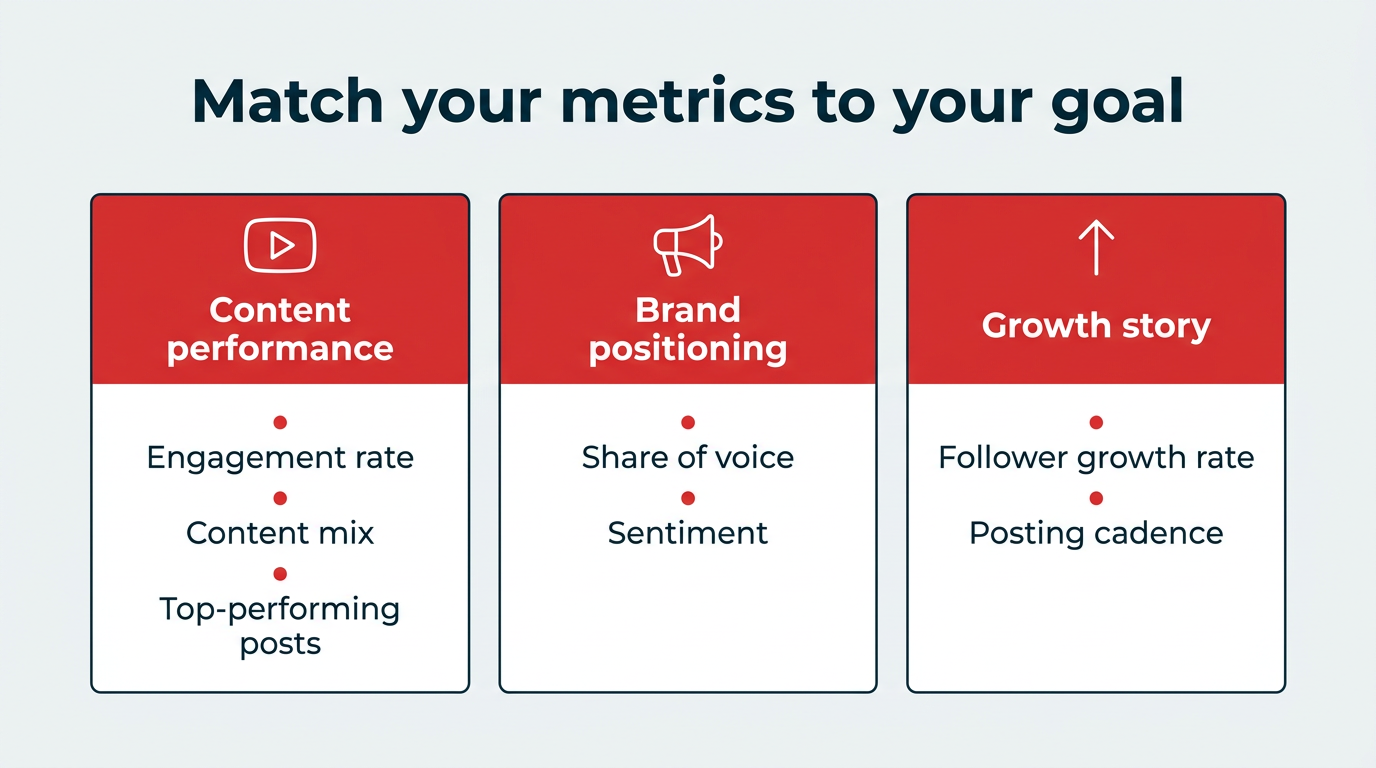
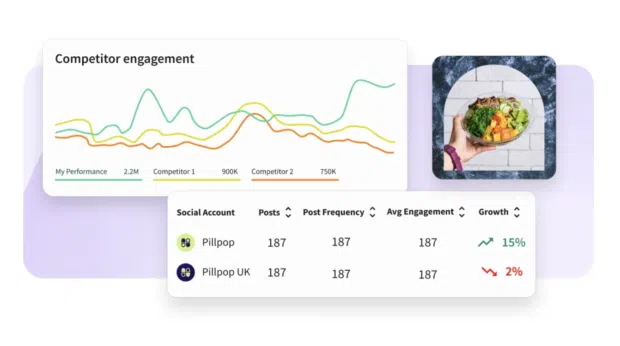
- Engagement Rate: Essential for normalizing performance regardless of audience size.
- Follower Growth Rate: Provides a long-term view of whether a competitor is gaining or losing momentum.
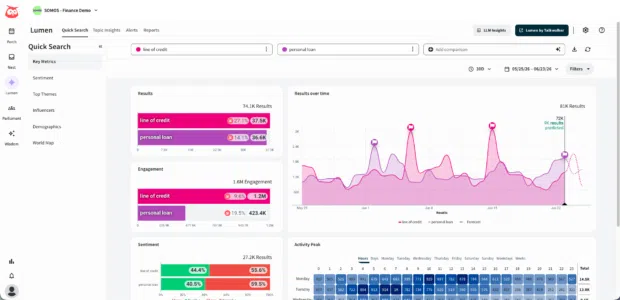
- Share of Voice: Measures how much of the category conversation your brand owns.
- Sentiment Analysis: Identifies whether the tone surrounding a brand is positive, negative, or neutral—often revealing significant market openings.
3. Data Gathering and Qualitative Assessment
Data collection should be systematic. Beyond the numbers, analyze the "why" behind the performance.

- Content Mix: Evaluate the ratio of video, carousel, and static posts. Identify the recurring themes that trigger the highest engagement.
- Paid vs. Organic: Watch for unusual engagement spikes that do not align with a competitor’s typical baseline. This often indicates a boosted post or a paid influencer campaign.
- Engagement Quality: Do not just count likes. Review the comment sections to see if the audience is asking buying questions, seeking support, or engaging in meaningful dialogue.
4. Executing the SWOT Analysis
Once the data is gathered, translate it into a SWOT (Strengths, Weaknesses, Opportunities, Threats) framework. This is the stage where research becomes actionable.
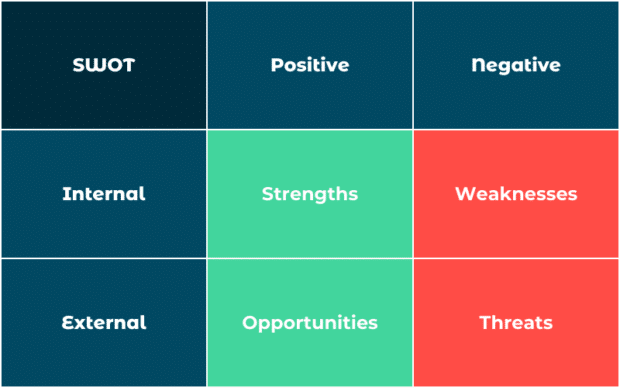
- Strengths: Where do your metrics consistently outperform the competition?
- Weaknesses: Which areas—perhaps a specific platform or content format—are dragging your performance down?
- Opportunities: Where are your competitors falling short? Are they failing to address a specific customer pain point?
- Threats: What external factors, such as a new market entrant or a shift in platform algorithm, could jeopardize your current position?
Supporting Data and Market Realities
The importance of this work is underscored by the sheer scale of the industry. With global social ad spend estimated to reach $276 billion by 2025, the margin for error in campaign strategy is razor-thin.
| Metric | Purpose | Tools |
|---|---|---|
| Engagement Rate | Measures resonance | Perch, Native Analytics |
| Share of Voice | Measures market presence | Lumen, Social Listening |
| Sentiment | Measures brand health | Lumen, Mentionlytics |
| Growth Rate | Measures momentum | Platform Analytics |
For enterprise brands, the "Seven Layers of Social Media Analytics"—a framework established by Gohar F. Khan—offers a deeper, more sophisticated view. By analyzing data across text, networks, actions, mobile, hyperlinks, location, and search, brands can gain a holistic understanding that far exceeds basic engagement metrics.
Implications for Future Strategy
The ultimate goal of a competitor analysis is to change the way you plan. An analysis that does not result in a changed content calendar or a refined budget allocation is merely a report, not a strategy.
Turning Insights into Action
- Pivot Content Pillars: If your analysis shows that competitors’ long-form video is failing while short-form content drives the majority of their engagement, shift your production priorities accordingly.
- Fill the Gap: If your SWOT analysis reveals that no one in your industry is addressing a specific customer demographic, create a campaign that directly speaks to that underserved segment.
- Refine Posting Cadence: Use data to determine the "sweet spot" for frequency. Avoid the mistake of increasing output without a corresponding increase in quality; platforms often penalize brands that prioritize quantity over relevance.
Common Pitfalls to Avoid
As you institutionalize this practice, be wary of these common errors:

- The "Snapshot" Trap: Viewing the analysis as a one-time project. Competitive landscapes move in real-time; your analysis should be a living, breathing part of your workflow.
- Over-Indexing on Vanity Metrics: Focusing on follower counts while ignoring actual conversion-driving engagement.
- Ignoring the "Why": Analyzing what a competitor posted without considering the underlying intent or the paid media strategy supporting that post.
Conclusion: Building a Sustainable Competitive Advantage
A social media competitor analysis is not just a tactical exercise; it is a strategic requirement for any brand looking to maintain relevance in a competitive, AI-driven market. By integrating benchmarking, social listening, and consistent SWOT reporting into your quarterly operations, you ensure that your team is not just keeping up with the competition—you are anticipating their next move.

Whether you utilize a sophisticated suite like Hootsuite, which integrates listening and benchmarking into a single ecosystem, or a more manual approach, the key is consistency. By tracking the right metrics and interpreting them through the lens of your brand’s unique goals, you turn your social media presence from a megaphone into a precision instrument for business growth.

For those ready to formalize their process, free, customizable SWOT and competitive analysis templates are available to help you begin your journey toward a more data-driven social strategy.