In a strategic move to solidify its position as the premier platform for substantive online conversation, Threads has officially unveiled "Gems"—a new in-app rewards system designed to recognize and highlight posts and replies that generate meaningful engagement. By leveraging automated detection to identify content that sparks constructive dialogue, Meta aims to transform the user experience from a chaotic newsfeed into a curated space of value-driven interaction.
As the social media landscape continues to fracture and evolve, the introduction of Gems represents a significant pivot for Threads. It is no longer enough to simply host conversations; the platform now seeks to actively curate them.
The Core Mechanics of Gems: How It Works
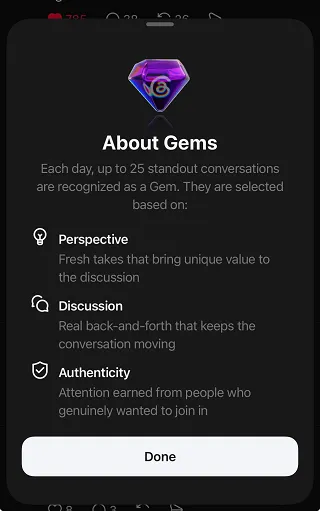
At its most fundamental level, the "Threads Gem" is a digital accolade awarded to original posts and direct replies that demonstrate a high capacity for driving community interaction. When a post is flagged as a "Gem" by Meta’s proprietary algorithms, the creator is notified via an in-app prompt. This notification provides the user with the option to broadcast the achievement to their followers, effectively allowing them to "pin" the recognition of their contribution to their profile.
Automated Detection vs. Human Curation
Unlike legacy social platforms that often rely on manual moderation or community voting (such as Reddit’s Upvote system), Meta has opted for a fully automated, algorithmic approach. The system scans for specific engagement markers—such as the depth of threaded replies, the diversity of contributors, and the overall sentiment of the surrounding discourse—to determine whether a post qualifies for the status.
Crucially, this system is currently restricted to public posts. Furthermore, the "Gem" designation is limited to direct replies to an original post; secondary replies (replies to replies) are excluded from the eligibility pool. This limitation is likely intended to prevent the gamification of "spammy" or low-effort back-and-forth arguments, focusing instead on primary content threads.
A Chronology of Development: From Concept to Rollout
The road to the public release of Gems has been marked by careful experimentation and subtle testing.
- August 2024: Initial Discovery: Eagle-eyed app researchers, most notably Alessandro Paluzzi, first identified code fragments and mock-ups suggesting that Threads was working on an "awards" system. Early screenshots depicted a sleek, minimalist notification screen signaling that a post had been recognized for its "meaningful contribution."
- Late 2024: Refinement: Throughout the autumn months, Meta’s internal teams reportedly refined the criteria for the algorithm. The focus shifted from mere "popularity" (likes and shares) to "value-driven" metrics, suggesting that the company wanted to avoid rewarding "rage-bait" or viral controversy.
- Early 2025: Soft Launch: Threads initiated limited, regional tests to ensure that the algorithm could distinguish between toxic viral content and genuinely productive debate.
- Official Launch: Threads officially announced the rollout of Gems, initially limiting the feature to users based in the United States, with plans to expand based on performance data and community feedback.
The Competitive Landscape: Learning from the "Banger" Lessons
Threads is not the first platform to attempt to gamify high-quality content. In 2025, X (formerly Twitter) experimented with a "Bangers" promotion, which featured an official account dedicated to celebrating the most engaging posts of the month.
However, the X experiment was widely criticized for its lack of consistency. The "Bangers" account eventually went dormant, leaving users feeling that the reward was fleeting and lackadaisical. Meta appears to be learning from this by integrating Gems directly into the platform’s infrastructure. By making it an automated, persistent feature rather than a temporary marketing stunt, Meta hopes to build a reliable ecosystem where users are consistently incentivized to post thoughtful content.

Implications: Can Algorithms Truly Detect "Meaning"?
The introduction of Gems raises profound questions about the role of Artificial Intelligence in social moderation. While the goal is to reward high-value discourse, the reliance on an automated system carries inherent risks.
The Risk of Rewarding Controversy
The primary concern among industry analysts is that algorithms—even those designed to seek "meaningful conversation"—often struggle to distinguish between a productive intellectual debate and a high-engagement argument. A controversial, aggressive, or inflammatory post often garners more replies than a nuanced, agreeable one. If the algorithm conflates "a lot of comments" with "meaningful conversation," there is a genuine risk that the platform might inadvertently badge and promote toxic rhetoric as a "Gem."
Human Oversight and Vetting
To mitigate these risks, industry experts speculate that Meta must be employing a secondary layer of "human-in-the-loop" vetting. While the detection is automated, the "Gem" label represents an official endorsement from the platform. Meta’s brand safety team likely has safeguards in place to ensure that posts containing hate speech, harassment, or misinformation are filtered out, even if those posts happen to trigger the engagement metrics the algorithm looks for.
What This Means for Creators and Brands
For the average user, the introduction of Gems provides a clear roadmap for success on the platform. To earn a Gem, creators must shift their focus from high-volume, low-effort posting to content that encourages others to contribute.
- For Creators: The incentive is clear—long-form, thoughtful, and inviting content is now more valuable than ever. By responding to comments and maintaining a civil tone, creators can optimize their chances of receiving an automated nod from the algorithm.
- For Brands: Gems offer a new metric for success. In the past, brands measured success via impressions and clicks. Now, a "Gem" status acts as a third-party, platform-verified seal of quality. A brand that consistently earns Gems for their social media presence can leverage that status to build trust with their audience, positioning themselves as a "thought leader" rather than just a product advertiser.
Future Outlook: Expansion and Evolution
As the U.S. rollout continues, the data gathered will dictate the global trajectory of the feature. Meta has remained tight-lipped regarding the specific weightings of its algorithm, likely to prevent "gaming the system" by bad actors. However, as the feature matures, we can expect to see:
- Expanded Eligibility: Once the algorithm is tuned to handle the nuances of different languages and cultural contexts, Gems will likely roll out to international markets.
- User Preferences: There is a possibility that Meta will allow users to opt-out of the "Gem" system entirely, or conversely, allow users to filter their feeds to only show posts that have been awarded a Gem.
- Monetization Potential: While currently just a badge, it is not difficult to envision a future where "Gem-earning" creators receive additional platform perks, such as increased reach in the "For You" feed or even direct monetization opportunities.
A Turning Point for Threads
Threads entered the market with the goal of being a "kinder" alternative to X. By prioritizing and rewarding "meaningful conversations," the company is doubling down on this identity. Whether the algorithm can successfully separate the wheat from the chaff remains the ultimate test.
If Meta succeeds, Gems could become the gold standard for social media engagement, proving that platforms can successfully steer human discourse toward the positive. If they fail, they risk turning the app into a space where users chase digital badges rather than genuine connection. For now, the focus remains on the U.S. market, where the experiment is currently in full swing, waiting to see if these digital "Gems" truly shine or simply clutter the feed.