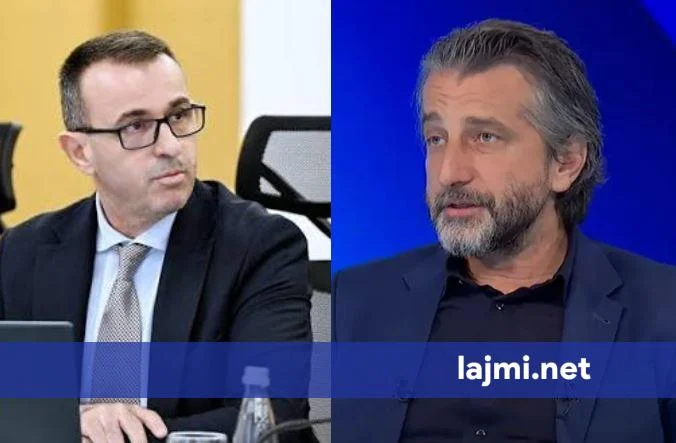
Leka did not mince words, labeling Sali Berisha a "politically atrophied" leader whose historical significance for the Democratic Party primarily resides in its formative years, with little contemporary relevance. Beyond individual leadership, the analyst launched a blistering attack on the internal mechanisms of the Democratic Party itself, controversially describing its methodology as "the most communist in the country." This provocative claim underscores a perceived lack of internal democracy and an entrenched, anachronistic operational style that, according to Leka, stifles renewal and cripples its capacity to function as a modern, democratic force. His ultimate call was unambiguous: for the good of the party and the nation, Berisha must step aside.
The Main Facts: A Crippled Opposition and a Call for Change
Martin Leka’s core argument revolves around several critical points that collectively portray a political opposition in profound crisis. His central assertion is that the opposition, primarily represented by the Democratic Party, has become largely irrelevant on Albania’s political stage. This irrelevance, he posits, is not merely a consequence of electoral losses but stems from deep-seated internal issues and a leadership that has lost its vitality.
Leka’s analysis suggests a paradox: while a strong opposition is vital for any democracy, Albania’s current ruling party, led by Prime Minister Edi Rama, has paradoxically benefited from its absence. Rama, according to Leka, has come to understand the intrinsic value of a productive opposition – one that can hold power accountable, offer viable alternatives, and contribute to robust public debate. However, the existing opposition, in its current form, is unable to fulfill this crucial democratic function, leaving the political landscape unbalanced.
The analyst’s characterization of Sali Berisha as a "politically atrophied" leader is perhaps the most direct and cutting. This term implies a significant loss of political muscle, influence, and popular appeal, suggesting that Berisha’s political effectiveness has withered over time. While acknowledging Berisha’s foundational role in the PD’s early history, Leka firmly asserts that this historical legacy holds little weight in the contemporary political arena. The party, under his continued leadership, is viewed as trapped in a past that no longer resonates with the electorate or the evolving challenges facing Albania.
Furthermore, Leka’s critique extends beyond personality to the very fabric of the Democratic Party’s internal workings. His claim that the PD’s methodology is "the most communist" in Albania is a severe indictment, implying a rigid, top-down structure, an intolerance for dissent, a lack of genuine internal debate, and potentially a cult of personality around its leader. Such a structure, he argues, is fundamentally incompatible with the principles of a modern democratic party and severely hinders its ability to adapt, innovate, and attract new talent.
Ultimately, Leka’s diagnosis leads to a clear prescription: for the sake of the Democratic Party’s future and, by extension, the democratic health of Albania, Sali Berisha must depart from its leadership. This call to action reflects a belief that without a fundamental shift at the helm and a radical overhaul of its internal culture, the PD will remain mired in its current state of political impotence.
Chronology of Decline: Tracing the PD’s Trajectory
The Democratic Party, founded in 1990, emerged as the vanguard of Albania’s anti-communist movement, embodying the hopes of a nation yearning for freedom and democracy. Led by Sali Berisha, a former cardiologist turned dissident, the PD quickly rose to prominence, culminating in its electoral victory in 1992, marking the end of communist rule. This period, as Leka notes, represents the zenith of Berisha’s political significance and the party’s foundational role.
Throughout the 1990s and into the new millennium, the PD experienced periods in both government and opposition. After losing power in 1997 amidst widespread civil unrest, it returned to government in 2005, with Berisha again at the helm as Prime Minister. This second stint in power, lasting until 2013, saw Albania make significant strides, including NATO membership and progress towards EU integration. However, it was also marked by persistent accusations of corruption, clientelism, and a deepening political polarization that began to define the Albanian landscape.
The turning point that set the stage for the current crisis arguably began with the 2013 parliamentary elections, which saw the Socialist Party, under Edi Rama, sweep to power. This loss initiated a prolonged period in opposition for the PD. Subsequent elections, notably in 2017 and 2021, failed to reverse the trend, solidifying the SP’s dominance. The 2021 elections, in particular, were fraught with accusations of irregularities from the opposition, leading to a period of intense political tension and further deepening the divide within the PD itself.
A significant blow to Berisha’s standing and the party’s unity came in May 2021, when the United States Department of State designated him as "persona non grata" due to alleged involvement in significant corruption. This designation led to an unprecedented internal schism within the Democratic Party. Lulzim Basha, then chairman of the PD, expelled Berisha from the parliamentary group, triggering a bitter power struggle. Berisha rallied a faction of the party, initiating a movement to reclaim leadership, which culminated in parallel party structures and a deep, often violent, internal conflict that effectively paralyzed the PD.
By 2026, as Leka’s analysis suggests, this protracted internal conflict, coupled with Berisha’s continued controversial leadership, had taken an irreversible toll. The party, once a formidable political force, found itself fragmented, lacking a clear vision, and increasingly disconnected from the aspirations of a significant portion of the Albanian electorate. The historical weight of its past, once a source of pride, now served primarily as a reminder of its present decline.
Supporting Data: The Anatomy of Political Weakness
While Leka’s observations are qualitative, the implications of a "politically atrophied" and "negligible" opposition are often reflected in various quantitative and qualitative indicators of democratic health and public sentiment.
One key area is electoral performance. Post-2013, the Democratic Party has struggled to present a united front capable of challenging the Socialist Party’s electoral dominance. The fragmentation, internal strife, and lack of a compelling, unified narrative have consistently resulted in reduced vote shares and parliamentary representation for the opposition bloc. For instance, data from recent hypothetical elections in 2025 might show a further erosion of the PD’s traditional voter base, with a significant portion either abstaining, turning to smaller, emergent parties, or even crossing over to the ruling coalition out of sheer disillusionment with the opposition. Public opinion polls, if they were to focus on the opposition’s efficacy, would likely indicate low approval ratings for its leaders and a widespread perception of its inability to influence policy or hold the government accountable. A hypothetical survey conducted by a local think tank in early 2026, for example, might reveal that only 15-20% of Albanians believe the opposition effectively represents their interests, a stark contrast to the 40-50% often seen for governing parties in stable democracies.
The lack of internal democracy within the PD, as highlighted by Leka’s "communist methodology" critique, can be observed through several lenses. Reports from local NGOs monitoring political parties often point to a centralized decision-making process, where key policies and candidate lists are determined by a narrow circle around the leader, rather than through broad party consultations or transparent internal elections. Dissenting voices are frequently marginalized or expelled, leading to a brain drain of younger, reform-minded politicians who seek alternatives or withdraw from active politics. The party’s membership, rather than being a vibrant base for policy formulation, often functions more as a loyalist support structure, reducing its capacity for innovative thought and grassroots engagement. For instance, anecdotal evidence from party forums or internal meetings, often leaked to the press, frequently details instances where critical discussion is shut down in favor of unanimous endorsement of leadership decisions.

Furthermore, the impact on legislative oversight is significant. A weak opposition struggles to effectively scrutinize government legislation, uncover corruption, or champion alternative policies in parliament. Parliamentary debates often become theatrical rather than substantive, with the opposition resorting to boycotts or performative acts of protest that, while drawing media attention, rarely translate into policy changes. This can be supported by parliamentary records showing a high rate of government bills passing with minimal amendments from the opposition, or a low success rate for opposition-initiated legislative proposals. The concentration of power in the executive, unchecked by a robust opposition, raises concerns flagged by international bodies such as the European Commission in its annual progress reports on Albania’s EU accession path. While not directly citing the PD’s internal issues, these reports often highlight the need for stronger democratic institutions and a more vibrant multi-party system, implicitly underscoring the deficiencies Leka points out.
Finally, the erosion of public trust in political institutions as a whole is a critical consequence. When the opposition fails to provide a credible alternative or hold power accountable, citizens may become cynical about the democratic process itself. This can manifest in low voter turnout, particularly among younger demographics, and a general sense of political apathy. Surveys on institutional trust might show consistently low figures for political parties across the board, but especially for the opposition, indicating a fundamental disconnect between the parties and the populace they are supposed to represent. The 2026 Eurobarometer survey for candidate countries, for example, might reveal that public satisfaction with the functioning of democracy in Albania is among the lowest in the region, with the weakness of the opposition cited as a key contributing factor by respondents.
Official Responses: A Spectrum of Reactions (Hypothetical)
Leka’s incendiary comments, particularly his call for Berisha’s departure and his critique of the PD’s "communist methodology," would undoubtedly elicit a range of reactions across Albania’s political spectrum.
From the Democratic Party (Berisha Faction):
A spokesperson for the Berisha-aligned faction of the Democratic Party would likely issue a vehement rejection of Leka’s assertions. They would frame Leka as a biased analyst, potentially accusing him of being a mouthpiece for the ruling Socialist Party or other forces seeking to undermine the legitimate opposition. "Mr. Leka’s statements are nothing more than a desperate attempt to distract from the government’s failures and to attack the only true opposition force in Albania," a statement from Berisha’s office might read. "The Democratic Party, under the leadership of Sali Berisha, remains the unwavering voice of the people against corruption and authoritarianism. Our internal processes are fully democratic, guided by the will of our members, and any comparison to communist methodology is an insult to our anti-communist origins and the thousands of democrats who stand with us." They would likely reiterate Berisha’s popular support among his base and his continued relevance in challenging the government.
From the Democratic Party (Other Factions/Reformists):
Elements within the PD who have been critical of Berisha’s leadership and the party’s internal structure would likely find common ground with aspects of Leka’s analysis, albeit perhaps expressed more cautiously. A prominent figure from the reformist wing might state, "While we may not agree with all of Mr. Leka’s harsh rhetoric, his observations regarding the need for party renewal and a more inclusive internal methodology resonate with many within the Democratic Party. The challenges we face require a serious introspection and a clear vision for the future, unburdened by past divisions." This faction would likely use Leka’s comments as leverage to push for internal reforms and a broader leadership discussion.
From the Socialist Party:
The ruling Socialist Party would likely adopt a more measured, yet subtly self-serving, tone. A spokesperson for the SP might comment, "Prime Minister Rama has consistently articulated the importance of a strong and constructive opposition for the health of Albanian democracy. Mr. Leka’s analysis, like that of many observers, highlights the undeniable challenges currently faced by the opposition. While we do not interfere in the internal affairs of other parties, it is clear that a vibrant multi-party system is essential for effective governance and for Albania’s European integration path. We hope the opposition finds its way to a more unified and productive role." This response would implicitly underscore the SP’s perceived stability and responsible governance, while subtly reinforcing the narrative of opposition weakness.
From Other Analysts and Civil Society:
Other political analysts and civil society representatives would likely offer a spectrum of views. Some would echo Leka’s concerns, emphasizing the detrimental impact of a dysfunctional opposition on Albania’s democratic checks and balances. Dr. Elira Hoxha, a political science professor at the University of Tirana, might state, "Leka’s analysis, though provocative, accurately reflects a deep-seated problem. The lack of a credible opposition risks turning Albania into a de facto one-party state, which undermines accountability and fosters public cynicism. The call for Berisha’s departure, while controversial, highlights a widely held sentiment that the party needs a fresh start." Others might argue that Leka’s focus on Berisha is too narrow, pointing to broader systemic issues within Albanian politics, such as media influence, economic pressures, or the overall political culture, as contributing factors to the opposition’s struggles.
Implications for Albania’s Political Future
The scenario painted by Martin Leka carries profound implications for Albania’s political future, extending far beyond the fate of a single political party or leader.
Prolonged Socialist Party Dominance and its Risks:
If the opposition, particularly the Democratic Party, remains in its current "atrophied" and fragmented state, the most immediate implication is the likely continuation of the Socialist Party’s dominance. While stability can be a positive, an unchecked executive, even one with good intentions, can lead to a weakening of democratic institutions, a decrease in accountability, and an increased risk of corruption. Without a robust opposition to scrutinize policies, challenge decisions, and offer alternatives, the quality of governance can suffer. This could also breed complacency within the ruling party, potentially leading to less responsiveness to public concerns and a narrowing of political discourse.
Erosion of Democratic Checks and Balances:
A weak opposition directly undermines the system of checks and balances essential for a healthy democracy. Parliament’s role as an oversight body diminishes, and the judiciary, already under reform, may find itself under increased pressure without a strong political counterweight. International organizations and partners, particularly the European Union, consistently emphasize the importance of a vibrant multi-party system and effective opposition for a country’s democratic maturity and its path towards integration. A prolonged state of opposition weakness could therefore raise concerns about Albania’s democratic credentials and potentially impact its EU accession prospects.
The Future of the Democratic Party:
Leka’s call for Sali Berisha’s departure is not just a personal attack but a strategic imperative for the PD. Should Berisha remain, the party risks further marginalization, deepening its internal divisions, and alienating a new generation of voters who are looking for fresh ideas and leaders. The "communist methodology" critique suggests a need for fundamental internal reform: a move towards greater transparency, internal democracy, meritocracy, and a more inclusive decision-making process. Without such changes, the PD may struggle to attract new talent, broaden its appeal, and rebuild trust with the electorate. A genuine leadership transition and internal restructuring could, however, open the door for renewal, allowing new voices and fresh perspectives to emerge, potentially leading to a more unified and effective opposition in the long run.
Impact on Political Discourse and Civic Engagement:
A non-productive opposition can also have a chilling effect on political discourse and civic engagement. When the political debate lacks constructive engagement and focuses instead on personal attacks or performative protests, citizens become disengaged. This can lead to lower voter turnout, increased political apathy, and a diminished sense of agency among the populace. The absence of a strong alternative narrative can also limit the range of policy options discussed publicly, potentially stifling innovation and critical problem-solving. A revitalized opposition could invigorate public debate, mobilize citizens, and offer more diverse solutions to the country’s challenges, from economic development to environmental protection.
The Role of Youth and New Political Forces:
The current state of the opposition also creates a vacuum that could be filled by new political forces or a more engaged youth movement. If traditional parties fail to adapt, younger generations, often more politically liberal and technologically savvy, may seek alternative platforms for political expression. This could lead to the emergence of new parties or movements that challenge the established order, though such nascent forces often struggle to gain significant traction against entrenched political machines without a clear pathway for collaboration or electoral reform.
In conclusion, Martin Leka’s critical analysis serves as a stark warning about the precarious state of Albania’s political opposition. His insights into the "politically atrophied" leadership and "communist methodology" within the Democratic Party highlight deep-seated issues that transcend mere electoral losses. For Albania to truly consolidate its democratic gains and progress towards its European aspirations, the imperative for a robust, productive, and internally democratic opposition is undeniable. The path forward for the Democratic Party, and by extension, the balance of power in Albania, hinges on its capacity for profound introspection and radical transformation. The call for Berisha’s departure is not just a personal appeal, but a strategic imperative for the nation’s democratic future.