PRISTINA, Kosovo – August 6, 2026 – Kosovo’s nascent democratic institutions faced a profound challenge today as the constitutive session of its new Assembly was abruptly suspended, throwing the nation into an acute political crisis. The session, intended to formally establish the legislative body and initiate the process of forming a new government, ground to a halt following a request from Albin Kurti, leader of the Vetëvendosje Movement (Self-Determination), for additional time to forge a political agreement on a candidate for president. This development has triggered widespread concern and ignited fears of a return to the polls, a prospect that looms large over a nation striving for stability and progress.
The interruption, announced shortly after the session commenced at 17:19, underscores deep-seated divisions among Kosovo’s political elite, particularly concerning the pivotal role of the presidency. While the immediate goal was to verify mandates and elect a Speaker, the underlying tension over the head of state’s position proved insurmountable, signaling a potentially protracted period of political uncertainty.
Main Facts
The constitutive session of the Assembly of Kosovo, convened on August 6, 2026, was prematurely adjourned after Albin Kurti, the influential leader of the largest parliamentary bloc, the Vetëvendosje Movement, requested a postponement. Kurti’s stated reason was the imperative to secure a broader political consensus on the individual who would assume the ceremonial yet constitutionally significant role of President of Kosovo. This demand effectively stalled the foundational proceedings of the new legislature, including the election of its leadership, and has cast a long shadow over the formation of a functional government.
The deadlock centers on the inability of political parties to agree on a name for the presidency, an office that requires a two-thirds majority vote in the Assembly in the first two rounds, or a simple majority in the third. Without a consensus candidate, the parliamentary arithmetic becomes a formidable barrier, trapping the political system in an impasse. The current situation suggests that the deep ideological and strategic rifts between Vetëvendosje and the opposition parties are far from resolved, even after the recent general elections.
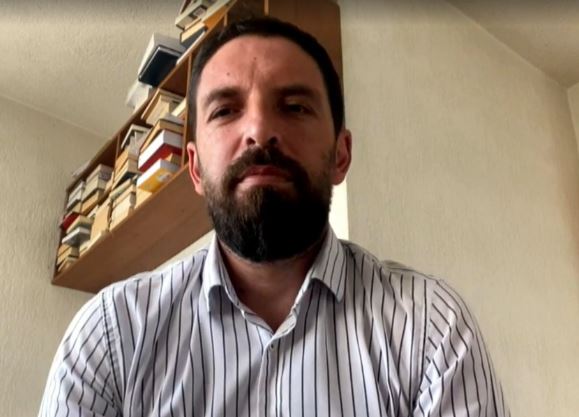
Political analyst Azdren Shala, speaking on "Ballkan Update" for ABC News, articulated a grim assessment, suggesting that Kurti’s actions reflect a deliberate lack of will to establish new institutions, potentially aiming to force fresh elections. Shala’s critique labels Kurti’s approach as autocratic, claiming it undermines democratic processes and risks pushing Kosovo back into an electoral cycle, an outcome that could further exhaust the electorate and defer critical reforms. The analyst’s comments highlight a prevailing sentiment among some observers that the current crisis is less about genuine negotiation and more about strategic maneuvering for a stronger mandate or an advantageous political position.
Chronology of Events Leading to the Impasse
The current political gridlock is the culmination of a complex series of events following Kosovo’s latest parliamentary elections, which concluded just weeks prior to this constitutive session.
Pre-Election Landscape and Campaign Promises: The elections, held earlier in 2026, were characterized by intense campaigning focused on issues such as economic development, the fight against corruption, and the ongoing dialogue with Serbia. The Vetëvendosje Movement, led by Albin Kurti, emerged as the dominant force, securing a significant plurality of votes, though falling short of an absolute majority required to govern unilaterally. This outcome necessitated coalition building or, at the very least, a broad consensus on key institutional appointments. Other major parties, including the Democratic League of Kosovo (LDK), the Democratic Party of Kosovo (PDK), and the Alliance for the Future of Kosovo (AAK), garnered substantial support, positioning them as critical players in any post-election arrangement.
Post-Election Negotiations and Initial Challenges: Following the election results, a period of intensive, albeit largely unproductive, negotiations ensued. While Vetëvendosje engaged in bilateral and multilateral discussions with various parties, a firm governing coalition proved elusive. The presidential position quickly emerged as a significant sticking point. Historically, the presidency in Kosovo has often been a point of contention, with parties seeking to install their preferred candidates or to secure a "consensus" figure who aligns with their broader political objectives. The semi-presidential system in Kosovo, where the president holds a largely ceremonial but symbolically powerful role, and also acts as commander-in-chief and representative of the country abroad, makes this position strategically important for any ruling coalition.
The Constitutive Session – August 6, 2026: The Assembly session commenced with expectations of verifying the mandates of newly elected members and initiating the process for electing a Speaker and Deputy Speakers. These steps are fundamental prerequisites for the Assembly to become functional and for the subsequent formation of a government. However, early into the proceedings, Albin Kurti formally requested a suspension, citing the need for more time to reach an agreement on the presidential candidate. This unexpected move immediately halted the session, preventing any further progress on establishing the legislative body. The announcement was met with visible frustration from opposition benches and a palpable sense of apprehension regarding the path forward.
Historical Precedents of Deadlock: Kosovo is no stranger to political deadlocks. Its post-independence history is replete with instances where government formation or institutional appointments have been protracted, often lasting for months. These past crises have frequently stemmed from fierce competition for power, deeply entrenched ideological differences, and a sometimes-uncompromising political culture. In 2010-2011, Kosovo faced a prolonged institutional crisis following the Constitutional Court’s decision to annul the election of then-President Behgjet Pacolli, leading to snap elections. Similarly, government formations in 2014 and 2019-2020 were characterized by lengthy negotiations and shifting alliances. These historical patterns highlight the fragility of political consensus in Kosovo and underscore the gravity of the current situation. The 2026 crisis, however, appears to be particularly acute given the clear electoral mandate received by Vetëvendosje and the immediate demand for a presidential agreement as a prerequisite for even constituting the Assembly.
Supporting Data and Expert Analysis
The current political paralysis in Kosovo, triggered by the unresolved presidential election, has drawn sharp criticism from political analysts who warn of dire consequences for the young democracy. Azdren Shala’s assessment that there is "no will from Kurti to establish new institutions" resonates with a segment of observers who interpret the Vetëvendosje leader’s actions as a calculated gamble rather than a genuine attempt at consensus-building.
The "Lack of Will" Argument: Shala’s assertion that Kurti lacks the will to form institutions is rooted in the belief that Vetëvendosje, despite its electoral victory, may be seeking to consolidate even greater power or a stronger mandate. One theory suggests that Kurti might be leveraging the presidential election to extract concessions from opposition parties, not just on the presidency itself, but on other key government positions or policy agendas. Another interpretation posits that Kurti, confident in his party’s popularity, might deliberately push for new elections, hoping to secure an absolute majority that would allow Vetëvendosje to govern without the need for complex coalition negotiations or compromises on key appointments like the president. This strategy, while potentially beneficial for Vetëvendosje in the long run, carries significant risks for the country’s stability.

Accusations of Autocratic Governance: Shala’s characterization of Kurti as an "autocrat" is a severe accusation that reflects concerns about the concentration of power and a perceived unwillingness to compromise. Critics of Kurti often point to his uncompromising stance on certain issues, his direct communication style, and his party’s strong internal discipline as evidence of a more centralized, top-down approach to politics. While supporters argue this reflects strong leadership and adherence to principles, detractors view it as an obstacle to inclusive governance and democratic dialogue. The current demand for a presidential agreement before even constituting the Assembly is seen by some as an example of Vetëvendosje dictating terms rather than engaging in genuine power-sharing.
The Threat of New Elections: The risk of new elections is a central theme in Shala’s analysis. If the Assembly fails to elect a president within the constitutionally prescribed timeframe (usually 60 days from its constitutive session), or if no government can be formed, the country is legally obliged to hold snap elections. Such an outcome would be highly problematic for Kosovo. Electoral fatigue among the populace, coupled with the significant financial cost of another election cycle, could further erode public trust in political institutions. Moreover, a prolonged period without a fully functional government would delay critical reforms in justice, economy, and public administration, hindering Kosovo’s progress towards EU integration and its ability to address pressing socio-economic challenges.
The "Simple" Presidential Question: Shala argues that the presidential issue "is very simple" if Kurti truly desires a resolution. He suggests that if Vetëvendosje is unwilling to nominate its own candidate or is open to a non-partisan figure, the opposition could put forward a name. This highlights the constitutional framework for presidential elections in Kosovo, where the president is elected by the Assembly through a secret ballot. The first two rounds require a two-thirds majority of all 120 MPs (80 votes). If unsuccessful, a third round requires a simple majority (61 votes), provided at least 80 MPs are present for the vote. The difficulty lies not in the procedural simplicity, but in the political will to compromise and find a candidate acceptable across the political spectrum. The fact that this "simple" issue has become a major roadblock indicates a profound lack of trust and a deep strategic game being played.
Violation of Constitutional Deadlines: Shala critically notes that Kurti "is not the one who determines how long a constitutive session lasts" and accuses him of "violating all deadlines." Kosovo’s constitution and laws define clear timelines for the formation of state institutions following elections. Delays in constituting the Assembly and forming a government can lead to a constitutional vacuum or a prolonged caretaker administration, which lacks the full mandate to govern effectively. This not only undermines the rule of law but also creates a precedent where political expediency could override constitutional processes, threatening the integrity of democratic governance.
Criticism of the Opposition’s Inaction: The analyst also extends his criticism to the opposition, specifically mentioning prominent figures like Vjosa Osmani (who served as President and/or Speaker in previous mandates, and whose current role in 2026 would need clarification, but here is framed as a figure alongside Abdixhiku in the opposition context) and Lumir Abdixhiku (leader of LDK). Shala implies that these opposition leaders "don’t have a problem that Kurti is an autocrat," suggesting a perceived passivity or an insufficient challenge to Kurti’s alleged autocratic tendencies. His provocative statement, "The opposition should have blocked the entrance to the Assembly," underscores a belief that a stronger, more confrontational stance might be necessary to counter Kurti’s maneuvers. This reflects a frustration that the opposition, despite its numbers, has not effectively countered what Shala views as an attempt to undermine democratic norms, ultimately leading to Kosovo’s detriment.
Official Responses and Party Stances
The political landscape in Kosovo is currently dominated by conflicting narratives and strategic posturing from all major parties involved in the deadlock.
Vetëvendosje Movement (LVV) / Albin Kurti’s Position: Albin Kurti and the Vetëvendosje Movement maintain that their request for a delay is a necessary step to ensure the stability and legitimacy of the future presidency. They argue that the President, as a symbol of national unity and a guardian of the constitution, should ideally be a consensus candidate supported by a broad political spectrum, not just a narrow parliamentary majority. Vetëvendosje’s public statements emphasize the importance of a comprehensive political agreement that encompasses not only the government but also key institutional roles, including the presidency. While they have not publicly named a specific candidate, it is widely speculated that Vetëvendosje aims to either install a figure closely aligned with their agenda or to negotiate for a neutral, technocratic candidate who would not pose a political challenge to a Vetëvendosje-led government. Their strategy appears to be one of patience, believing that time will compel opposition parties to either concede or face the unpopular prospect of new elections. Kurti’s supporters defend his actions as a firm commitment to establishing stable institutions, even if it means prolonged negotiations.
Opposition Parties’ Responses: The major opposition parties—the Democratic League of Kosovo (LDK) led by Lumir Abdixhiku, the Democratic Party of Kosovo (PDK), and the Alliance for the Future of Kosovo (AAK)—have reacted with a mix of frustration and condemnation.
- Democratic League of Kosovo (LDK): Lumir Abdixhiku, leader of the LDK, has been particularly vocal in his criticism of Kurti’s actions. The LDK views the delay as an attempt by Vetëvendosje to monopolize power and circumvent democratic procedures. They argue that the Assembly should proceed with its constitutional duties of constituting itself and then electing a president, rather than holding the entire process hostage to Vetëvendosje’s demands. The LDK has expressed willingness to engage in dialogue but insists that the process must adhere to constitutional timelines and democratic norms. Their stance is that any presidential candidate must be genuinely non-partisan or represent a broader national consensus, not merely an extension of Vetëvendosje’s influence.
- Democratic Party of Kosovo (PDK): The PDK has echoed similar concerns, characterizing Kurti’s move as an act of political obstructionism. They have accused Vetëvendosje of creating an unnecessary crisis and deliberately delaying the formation of institutions. The PDK, having often been in power or a major opposition force, understands the intricacies of government formation and views the current situation as detrimental to Kosovo’s stability. They advocate for a swift resolution that respects the electoral outcome but also safeguards the checks and balances inherent in the democratic system.
- Alliance for the Future of Kosovo (AAK): AAK has also expressed its displeasure, emphasizing the urgent need for a functional government to address the country’s pressing challenges. While critical of Vetëvendosje’s tactics, the AAK has generally positioned itself as a pragmatic party, open to dialogue to break the deadlock, provided it respects the country’s interests. They too stress the importance of a consensus-based approach to the presidency, one that transcends narrow party interests.
International Community’s Reaction: The international community, particularly the European Union and the United States, has been closely monitoring the situation. While official statements often remain diplomatic, there is an underlying tone of concern regarding the political instability. International actors typically call for Kosovo’s political leaders to engage in constructive dialogue, prioritize the formation of stable and functional institutions, and adhere to constitutional principles and democratic processes. They emphasize that prolonged political uncertainty can negatively impact Kosovo’s Euro-Atlantic integration path, its economic development, and its ability to engage effectively in the dialogue with Serbia. Messages from EU officials and US representatives consistently underscore the importance of political maturity and compromise for the benefit of all Kosovar citizens. These international calls serve as a subtle pressure on all parties to find a swift and democratic resolution to the current crisis.
Implications and Future Outlook
The ongoing political deadlock in Kosovo carries significant implications across various sectors, threatening to undermine the nation’s progress and stability. The failure to constitute the Assembly and elect a president is more than a procedural hiccup; it is a profound challenge to Kosovo’s democratic foundations.
Political Instability and Governance Paralysis: The most immediate consequence is a prolonged period of political instability. Without a fully functional Assembly and a new government, decision-making processes will be severely hampered. A caretaker government, if one remains in place, has limited powers and cannot embark on new policy initiatives or implement significant reforms. This paralysis can erode public trust in political institutions, leading to disillusionment and apathy among citizens who yearn for effective governance and solutions to their everyday problems. The inability to form a government also creates a vacuum that can be exploited by various actors, potentially leading to increased polarization and fragmentation within the political landscape.
Economic Consequences: The economic repercussions of this political crisis are substantial. Delayed government formation means stalled legislative processes, including the approval of the national budget and critical economic reforms. This uncertainty deters foreign direct investment, as international businesses are hesitant to commit capital in an unstable political environment. Domestic businesses also suffer from a lack of clear policy direction and investment in infrastructure. Key sectors such as energy, agriculture, and manufacturing, which rely on government support and regulatory frameworks, could experience stagnation. Ultimately, prolonged instability can lead to higher unemployment rates, decreased economic growth, and a deterioration of living standards for ordinary Kosovars.

International Standing and EU Integration: Kosovo’s international credibility and its aspirations for Euro-Atlantic integration are also at stake. The EU has consistently emphasized the importance of stable institutions, rule of law, and effective governance as prerequisites for progress on the path to membership. A protracted political crisis signals immaturity and an inability to self-govern effectively, which could slow down or even jeopardize the visa liberalization process, the implementation of the Stabilization and Association Agreement, and other integration efforts. Furthermore, a divided and unstable Kosovo is less able to engage cohesively and effectively in the EU-facilitated dialogue with Serbia, potentially weakening its negotiating position and prolonging the normalization process. International partners may grow weary of repeated political impasses, potentially diverting their attention and resources to other, more stable regions.
Potential Scenarios: As the deadlock continues, several scenarios could unfold:
- Successful Negotiations and Government Formation: This remains the most desirable outcome. Intensive negotiations, perhaps facilitated by international actors, could lead to a compromise on a presidential candidate acceptable to a broad majority. This would then pave the way for the constitution of the Assembly and the formation of a new government, allowing the country to move forward. This scenario would require significant political will and a spirit of compromise from all major parties.
- New Elections: If the political parties fail to reach an agreement within constitutional deadlines, snap elections will become inevitable. While Vetëvendosje might see this as an opportunity to secure a stronger mandate, it carries the risk of electoral fatigue, a potentially similar outcome, or even greater fragmentation, leading to another round of difficult negotiations. New elections would also further delay critical governance.
- Prolonged Caretaker Government: In the absence of a new government, a caretaker administration would continue to function. While it ensures continuity of basic state functions, it cannot initiate major policy changes or undertake significant reforms. This prolonged state of limbo would exacerbate the political and economic challenges facing Kosovo.
Conclusion: The current political crisis in Kosovo represents a critical juncture for its democratic development. The interruption of the Assembly’s constitutive session, driven by the presidential deadlock, underscores deep divisions and a challenging political culture. While Albin Kurti and Vetëvendosje seek to ensure a broad consensus for the presidency, critics like Azdren Shala warn of autocratic tendencies and a calculated move towards new elections. The stakes are incredibly high, touching upon political stability, economic prosperity, and Kosovo’s standing on the international stage. A swift and democratic resolution, rooted in genuine dialogue and compromise, is imperative to safeguard the future of the young republic and prevent a deeper descent into uncertainty. The coming weeks will be crucial in determining whether Kosovo’s political leaders can rise above partisan interests for the greater good of the nation.