By Alejandra Carranza
Published August 6, 2026
The global ocean freight landscape is currently navigating a period of unprecedented intensity. As the peak shipping season accelerates, major ocean carriers are reporting that capacity on critical Transpacific trade lanes is not merely tightening—it is effectively fully subscribed. For shippers and supply chain managers, the current environment is defined by a strategic race against time, as cargo owners increasingly prioritize inventory security over cost efficiency in the face of mounting global instability.
Main Facts: A Market at Capacity
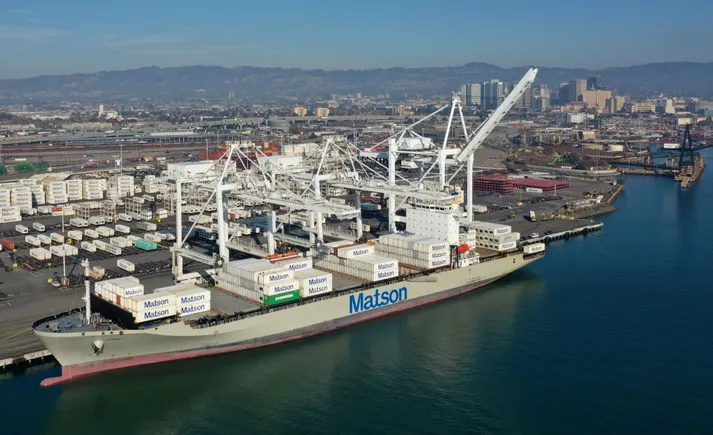
Matson, a prominent player in the Transpacific trade, has signaled that its China services are expected to remain at or near total capacity through the remainder of the peak season. This follows a July that saw demand consistently outpace available vessel space. CEO Matthew Cox confirmed that the surge is primarily fueled by a combination of robust e-commerce demand and a desperate scramble by retailers to mitigate the risks associated with unpredictable trade policies and regional conflicts.
The surge in demand is not an isolated anomaly but rather the culmination of a broader shift in logistics behavior. After a sluggish 2025 characterized by tariff-induced market contractions, the current fiscal year has seen a marked reversal. Matson reported a 15.2% year-over-year increase in container volumes during the second quarter, a stark contrast to the volume declines experienced during the same period last year.
Chronology of a Shifting Season
To understand the current bottleneck, one must look back at the strategic decisions made by shippers during the first half of 2026.
- Q1 2026: Shippers began initial adjustments to their procurement strategies, cautiously watching the expiration dates of various trade agreements and anticipating the impact of broader geopolitical tensions.
- April–May 2026: As rumors of trade policy shifts and the escalating implications of the Iran war on global shipping lanes began to solidify, the industry witnessed a subtle but clear pivot toward aggressive inventory buildup.
- June 2026: The frontloading phenomenon reached a fever pitch. Major U.S. ports—including Long Beach, Los Angeles, and the Port of New York and New Jersey—reported double-digit year-over-year volume growth. This was largely driven by a fear of missing the window of opportunity before temporary tariff measures—specifically the 10% global tariff—expired on July 24.
- July 2026: Matson and other carriers reported that they were operating at full capacity. Shippers, desperate to avoid being “flat-footed,” began booking space months in advance, effectively pulling forward demand that would typically have been spread across the third and fourth quarters.
- August 2026 (Present): The market has settled into a state of sustained high pressure. While some carriers are beginning to look toward the end of the year, the immediate reality remains one of limited space and elevated freight rates.
Supporting Data: The Port Perspective
The aggregate data from U.S. port authorities provides a clear window into the magnitude of this cargo surge. The data confirms that the "peak season" has been fundamentally disrupted by external macro-economic forces.
- Port of Long Beach: June cargo volumes climbed 10.6% year-over-year. Port officials have noted that the urgency stems from a desire to clear goods through customs and into distribution centers well before potential future disruptions materialize.
- Port of Los Angeles: Reporting a 12% year-over-year increase for June, the port has become a focal point for the frontloading strategy. Executive Director Gene Seroka highlighted that the retail community is moving with extreme caution, driven by the inherent uncertainty of trade policy after the expiration of the Section 122 tariffs.
- Port of New York and New Jersey: Following the trend of their West Coast counterparts, this hub reported a 12% volume increase in June. The port authority explicitly linked these figures to an “earlier front-loaded peak shipping season” caused by rapid shifts in federal trade policy.
Official Responses and Strategic Rationale
The sentiment among industry leaders is one of cautious navigation. CEO Matthew Cox of Matson noted that while the third and fourth quarters are expected to remain strong, the fourth quarter will likely reflect a return to traditional seasonality—a move away from the current, artificially elevated demand.
"Customers are acting with a clear objective: they want to get ahead of general rate increases and higher fuel surcharges," Cox explained. The cost of shipping has become a secondary concern for many, with the primary anxiety centered on the availability of slots and the threat of further supply chain interruptions linked to the Iran war.

This perspective is echoed by public sector officials who monitor the pulse of international trade. "Shippers don’t want to be caught flat-footed," stated Noel Hacegaba, Deputy Executive Director at the Port of Long Beach. "They are advancing their shipments in order to have their goods in the U.S. market before any potential disruption."
The consensus among these leaders is that the current behavior is a rational response to an irrational environment. When trade policy changes with little notice and geopolitical volatility threatens the safety of maritime corridors, shippers have little choice but to adopt a "just-in-case" inventory strategy, replacing the "just-in-time" model that dominated the pre-2020 era.
Implications for the Global Supply Chain
The implications of this frontloading trend are profound and multifaceted, affecting everyone from the ocean carrier to the end-consumer.
1. Pressure on Infrastructure
The surge in volumes at major ports creates a cascading effect. When ports see double-digit growth, the stress on drayage providers, warehouse capacity, and rail networks increases exponentially. If ports are consistently at capacity, the risk of congestion increases, which in turn leads to equipment shortages and increased dwell times for containers.

2. Cost Volatility for Retailers
For retailers, the decision to frontload inventory is a financial gamble. While it protects them from potential tariff spikes or port closures, it also ties up significant capital in inventory and necessitates increased expenditure on warehousing and storage. Smaller retailers, who may lack the liquidity or the scale to book space months in advance, face the risk of being priced out of the market entirely by larger corporations with greater purchasing power.
3. A Shift in Seasonal Norms
The industry is grappling with the possibility that the "peak season" as a concept is being fundamentally rewritten. If geopolitical uncertainty remains the primary driver of logistics, then traditional forecasting models based on historical holiday shopping patterns will become increasingly obsolete. Instead, logistics planning will become a function of political forecasting, requiring companies to hire trade experts and geopolitical analysts as integral members of their supply chain teams.
4. The Resilience Test
Ultimately, the current situation is a test of resilience for the global supply chain. The infrastructure is proving capable of handling high volumes, but the cost of that resilience is high. The volatility in fuel surcharges and the unpredictability of maritime lane safety—particularly concerning the Iran conflict—suggest that the supply chain will remain in a state of high alert for the foreseeable future.
As we look toward the remainder of 2026, the industry remains in a precarious position. While Matson and other carriers expect a robust, albeit more traditional, fourth quarter, the reality is that the margin for error has vanished. For the foreseeable future, the "new normal" in global shipping will be characterized by a relentless focus on securing capacity, managing inventory buffers, and reacting with lightning speed to the shifting tides of international trade policy. The era of predictable, low-cost global logistics has been superseded by an era of strategic, high-stakes supply chain management.