In a decisive move that marks its most significant expansion in the air cargo sector in over a decade, Japan Airlines (JAL) has dramatically ramped up its transcontinental freighter operations. By leveraging a complex network of long-term charters with major international carriers, the Tokyo-based airline is positioning itself as a primary logistical artery for the global artificial intelligence (AI) infrastructure boom.
The strategic shift is a direct response to the insatiable demand for high-value logistics—specifically for the movement of semiconductor manufacturing equipment, advanced servers, and complex digital hardware. As hyperscalers in North America scramble to build out data centers and AI training facilities, JAL has transformed its business model to ensure that these critical components move seamlessly across the Pacific.
The Chronology of a Cargo Renaissance
The current expansion is the culmination of a multi-year effort to rebuild JAL’s cargo footprint, which had been significantly curtailed following the airline’s 2010 bankruptcy reorganization.
The 2010 Retrenchment
For over a decade, JAL focused almost exclusively on passenger travel, relying on the "belly cargo" capacity of its standard passenger jets to manage logistics. While this served the airline well during periods of moderate demand, the limitations became glaringly obvious as global supply chains became increasingly digitized and time-sensitive. Standard passenger aircraft simply lacked the payload volume required to transport massive semiconductor manufacturing units or server racks.
The February 2024 Re-entry
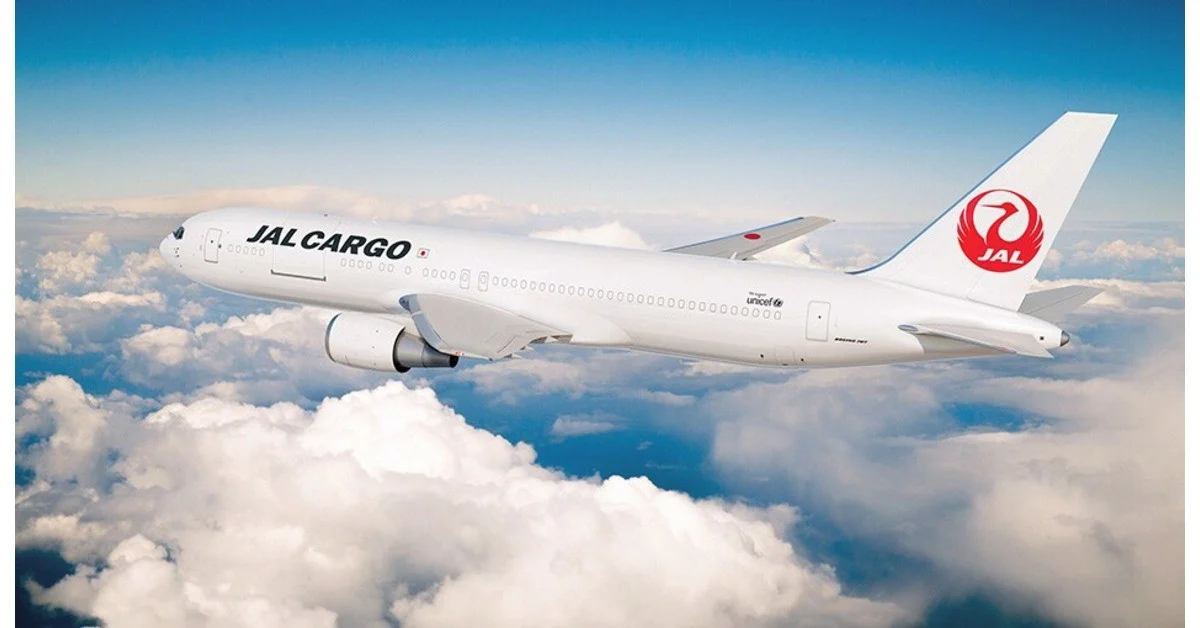
In February 2024, JAL signaled its official return to the freighter market by deploying three Boeing 767-300 converted freighters. While these aircraft were a vital first step, they were largely confined to intra-Asia routes, serving regional demand. It quickly became clear, however, that the regional strategy was insufficient to address the intercontinental "AI gold rush."
The 2035 Vision
In March, JAL formalized a long-term strategic plan aimed at 2035. The roadmap explicitly calls for the integration of large-scale freighter operations to bridge the gap between Asia, North America, and Europe. Recognizing that the company could not achieve this scale through in-house fleet acquisition alone in the short term, JAL turned to a "partnership-first" strategy, formalizing charter agreements with three industry titans: Atlas Air, Kalitta Air, and Cargolux.
Strategic Partnerships: A Global Network
JAL’s current cargo network is a masterclass in collaborative logistics. By offloading the operational burden of high-capacity aircraft to specialized carriers, JAL maintains a light-asset model while commanding massive shipping capacity.
The Trans-Pacific and European Corridors
- The Chicago Gateway: Kalitta Air has become a cornerstone of JAL’s North American strategy, operating Boeing 747-400 freighters six times weekly between Tokyo Narita and Chicago. This route serves as a critical bridge for electronics and industrial machinery flowing into the U.S. Midwest. Kalitta replaced Western Global Airlines on this route, signaling JAL’s intent to prioritize high-capacity, reliable 747 service.
- The European Connection: JAL has tapped Cargolux to manage its European reach, with two Boeing 747-400 flights weekly linking Narita to Luxembourg. This corridor is essential for the distribution of high-value pharmaceuticals and specialized electronic components.
- The Los Angeles Hub: Atlas Air operates two weekly flights between Narita and Los Angeles International Airport (LAX). These flights are essential for maintaining the rapid transit of time-sensitive tech shipments arriving at the U.S. West Coast.
The Nippon Express Dedicated Network
Perhaps the most innovative aspect of JAL’s expansion is the dedicated network established for Nippon Express Group. This service, utilizing Atlas Air capacity, is designed specifically for the AI and semiconductor ecosystem. It follows a unique, circular routing: Los Angeles to Narita, then to Taipei and Singapore, before returning to Narita and eventually back to Los Angeles.
This specific route was curated to address a major market failure: the shortage of large-capacity cargo jets operating within the Asian tech manufacturing corridor. With the 747’s 100-ton capacity, this service provides a specialized logistics capability that smaller, regional freighter operations cannot match.
Supporting Data: The Economics of the AI Boom
The urgency behind JAL’s aggressive expansion is rooted in the unprecedented growth of the semiconductor sector. According to recent market analysis by Frost & Sullivan and FedEx, the Asia-Pacific region is experiencing a massive surge in the production of AI-related hardware.
The "Back-and-Forth" Supply Chain
Modern semiconductor manufacturing is not a linear process. Components are often shipped between Taiwan, Japan, Singapore, and South Korea for various stages of fabrication, testing, and assembly before final systems are integrated in North America. This "back-and-forth" logistics model is highly lucrative but requires extreme reliability and significant lift capacity.
High-Margin Logistics
For JAL, the pivot to AI-related cargo is a move toward higher margins. Standard e-commerce cargo—which fueled much of the airline’s earlier post-bankruptcy recovery—is often volume-heavy but lower-margin. In contrast, semiconductor manufacturing equipment and server components are classified as "high-value/critical-path" cargo. Logistics providers are currently racing to capture this market because these shipments are less price-sensitive and prioritize speed, reliability, and security over the lowest possible shipping rate.
Official Responses and Strategic Rationale
Japan Airlines has framed this move as a necessary evolution of its business portfolio. In its recent press releases, the carrier emphasized that it is not merely transporting goods; it is acting as a "global connectivity provider" for the industries that define the 21st-century economy.
Industry analysts note that JAL’s decision to outsource to experienced freighter operators like Atlas and Kalitta allows the airline to scale capacity in months rather than years. Procuring, modifying, and certifying new freighters is a multi-year capital expenditure; by chartering, JAL gains immediate access to the "Queen of the Skies"—the Boeing 747—which remains the gold standard for heavy, outsized, and high-density cargo.
Nippon Express has also praised the collaboration, noting that the capacity provided by the JAL-chartered 747s is a "unique and highly valued capability." The logistics giant indicated that as the AI infrastructure buildout continues, the current one-flight-per-week frequency on the dedicated circular route will likely be subject to expansion.
Future Implications: The Road to 2035
The implications of JAL’s strategic pivot extend far beyond the airline itself. It signals a broader shift in the aviation industry, where legacy passenger carriers are increasingly recognizing that the "belly cargo" model is insufficient for the demands of the modern, AI-driven global economy.
Challenges and Risks
While the outlook is optimistic, JAL faces significant hurdles. The reliance on third-party carriers introduces a layer of operational complexity. Should the AI boom hit a supply-side bottleneck or if global trade policies fluctuate, JAL’s long-term charter commitments could become liabilities. Furthermore, the volatility of fuel prices and the ongoing global pilot shortage pose persistent risks to the reliability of these international freighter networks.
The Competitive Landscape
JAL is currently racing against other major international carriers, including All Nippon Airways (ANA) and various global integrators, to secure dominance in the high-value tech cargo lane. The success of the current initiative will likely determine whether JAL continues to rely on chartered capacity or eventually moves to acquire its own fleet of large-scale freighters by the 2035 horizon.
Conclusion
Japan Airlines’ re-entry into the heavy-freight market is a calculated bet on the endurance of the AI and semiconductor revolution. By weaving together a sophisticated network of charter agreements and dedicated routes, the company has successfully transitioned from a regional passenger-focused airline to a central player in the global technology supply chain. As the world continues to integrate AI into every facet of commerce and industry, JAL’s flight paths will remain essential veins, carrying the hardware that makes the digital future possible.