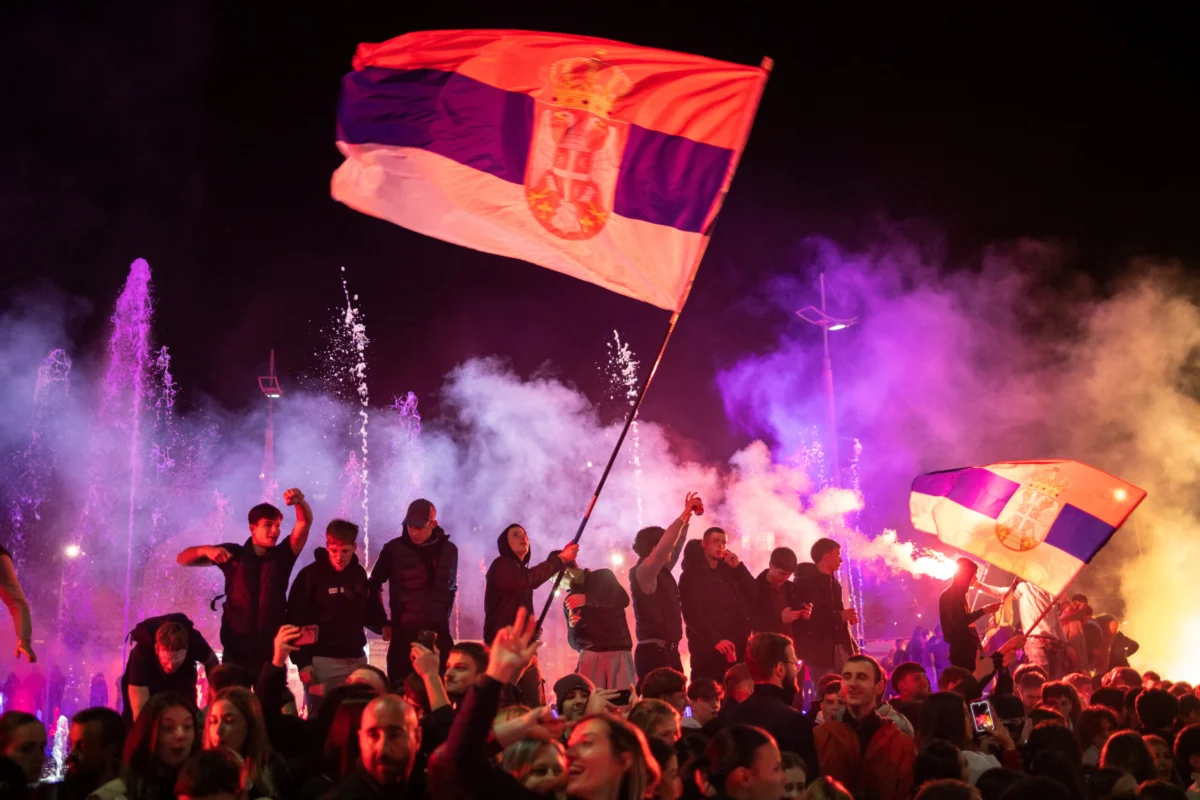
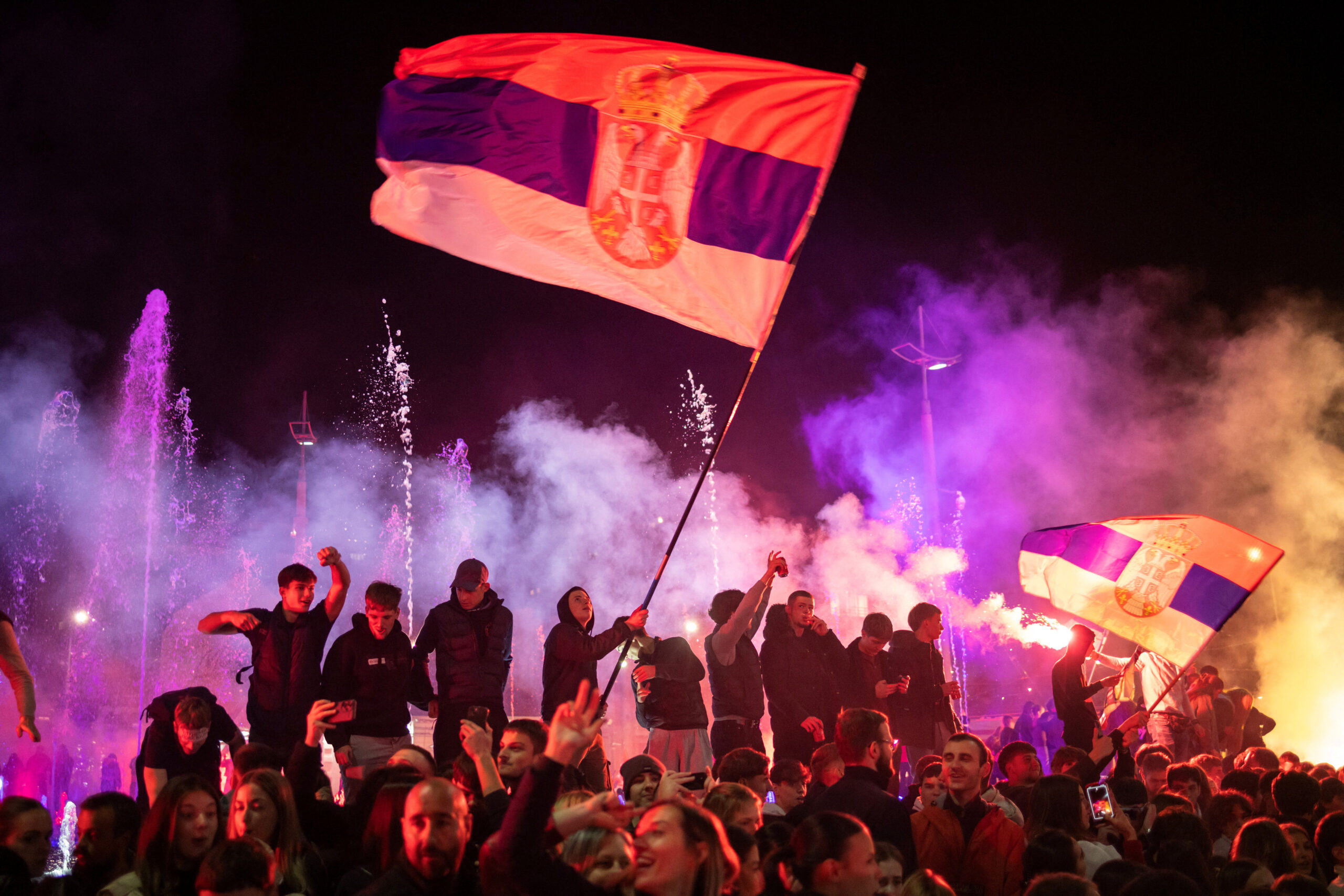
In a political earthquake that has reverberated from the Balkans to the halls of Brussels and Washington, Serbia’s long-standing political status quo was dismantled on Sunday. In a snap parliamentary election that many anticipated would cement the grip of President Aleksandar Vučić and his Serbian Progressive Party (SNS), a coalition of student-led activists delivered a stunning, decisive victory. The result marks the end of a dominant era that began in 2014, signaling a potential pivot for the nation’s domestic governance and its complex foreign policy orientation.
Main Facts: The End of an Era
The "Student List," a grassroots coalition born from years of street protests, successfully mobilized a broad swath of the electorate, including rural voters previously neglected by traditional opposition parties. Their platform—rooted in anti-corruption, judicial independence, and the restoration of democratic norms—effectively dismantled the political machinery that had sustained Vučić’s leadership for over a decade.
Despite a media environment heavily tilted in favor of the incumbent, the election was characterized by high voter turnout and, contrary to widespread fears of systemic fraud, a remarkably smooth, orderly process. Vučić’s concession speech, delivered shortly after the results became clear, was uncharacteristically brief and signaled an acceptance of the transition, temporarily quelling concerns of post-election instability.
A Chronology of Change
The seeds of this victory were sown long before the ballot boxes opened. The path to this outcome can be traced through several pivotal moments:
- 2023–2024 (The Awakening): Persistent, peaceful student-led demonstrations began to gain momentum, evolving from isolated grievances against local corruption into a national movement demanding a fundamental change in how Serbia is governed.
- Summer 2026: The political landscape shifted as the "Student List" began to coalesce, organizing a formal political vehicle to challenge the SNS dominance.
- The Campaign Period: While the incumbent government relied on traditional state-media narratives, the student movement utilized grassroots organizing to reach disaffected demographics.
- October 2026 (Election Day): Millions of Serbs waited in hours-long lines to vote, resulting in an outcome that stunned political analysts and effectively ended the SNS majority in parliament.
- The Immediate Aftermath: The focus has now shifted to the complex process of government formation, as the student-led victors navigate the challenges of transitioning from protest leaders to policymakers.
Supporting Data and Economic Realities
The new government inherits a country at a critical economic crossroads. Serbia’s growth model, heavily reliant on infrastructure and manufacturing investments from China, the Gulf, and the European Union, had begun to show signs of stagnation under the weight of political uncertainty and perceived systemic corruption.
According to data from the Atlantic Council, Serbia has served as a central hub for China’s regional strategy, receiving approximately €10.3 billion of the €32 billion in Chinese investment directed at the Western Balkans between 2009 and 2021. The student-led administration has signaled a commitment to transparency, vowing to subject all foreign-backed projects to rigorous domestic regulatory scrutiny. This shift could redefine how Serbia negotiates future lex specialis—or special law—agreements, which have historically bypassed standard public procurement procedures.

Official Responses and International Outlook
The international community has responded with cautious optimism, viewing the peaceful transfer of power as a necessary precondition for renewed regional stability.
Brussels’ Stance
The European Union was quick to offer a path forward. Marta Kos, the EU Enlargement Commissioner, noted, "A new chapter can begin for Serbia. The door to the EU is open, and we are ready to move forward together." European Commission President Ursula von der Leyen and Council President António Costa have emphasized their readiness to support reforms centered on media freedom, the rule of law, and the fight against corruption. However, Brussels has tempered this excitement with the reality of accession requirements, specifically noting that the new government must address the normalization of relations with Kosovo and align more closely with the EU’s Common Foreign and Security Policy (CFSP).
Washington’s Perspective
In the United States, the response has been marked by a focus on institutional accountability. While the executive branch continues to prioritize the US-Serbia strategic dialogue initiated in July, the legislative branch remains watchful. The bipartisan "SRBIJA Act," introduced recently, underscores Congressional concerns regarding democratic backsliding and Serbia’s continued ties with Russia, China, and Iran. The new government’s ability to ensure a transparent, stable transition will be critical in shaping the tone of future bilateral relations.

Implications: A New Trajectory for Serbia
Governing Challenges and Domestic Reform
The most immediate challenge for the Student List is the transformation of protest-driven energy into effective governance. Jörn Fleck, senior director of the Atlantic Council’s Europe Center, highlights that the "real work only starts now." The victors must build a functional coalition and a legislative hierarchy—structures they previously avoided. Their domestic agenda will focus on reversing "state capture," a task that will inevitably face resistance from entrenched interests within the judiciary, media, and state-owned enterprises.
Foreign Policy: A Delicate Balance
Despite the electoral shift, Serbia’s foreign policy is unlikely to undergo an overnight revolution. As noted by Atlantic Council expert Olivia Olson, the student-led government has indicated that it intends to maintain current positions on key issues, such as the refusal to impose sanctions on Russia. This stance is rooted in historical domestic sentiment rather than partisan affiliation.
However, the shift toward democratic transparency may indirectly alter Serbia’s external relations. By prioritizing rule-of-law reforms, the government may naturally distance itself from models of "strongman politics" that have historically defined its regional maneuvers. The challenge will be maintaining the country’s "strategic ambiguity"—the ability to balance relationships with Washington, Brussels, Moscow, and Beijing—without sacrificing the democratic progress promised to their constituents.

The Kosovo Question and EU Accession
Perhaps the most significant hurdle remains the "emotional third rail" of Serbian politics: Kosovo. The Student List has, to date, reaffirmed the status of Kosovo as part of Serbia. This creates an immediate friction point with the EU’s accession requirements. As Lisa Homel, associate director at the Atlantic Council, points out, the election is not an "EU accession fast-track." While the movement’s focus on anti-corruption aligns with EU "fundamentals" chapters, the lack of a clear, articulated vision for Kosovo and the stalled Belgrade-Pristina dialogue remain major obstacles.
Conclusion: A Window of Possibility
The victory of the Student List is, at its core, a testament to the resilience of civil society in the Balkans. It is a rejection of a style of governance that had, for many, become synonymous with stagnation and corruption. While the road ahead is fraught with the complexities of coalition-building, geopolitical balancing, and the Herculean task of institutional reform, the outcome has undeniably opened a new space for democratic possibility in the region.
As the new government takes shape, the world will be watching to see if this energy can be sustained. If the student-led movement can successfully transition from the streets to the halls of power, they may not only transform Serbia but also provide a new blueprint for democratic renewal across the wider Balkan region. For now, the sentiment in Belgrade is one of cautious hope—a belief that, after a long, difficult chapter, the classroom of democracy is finally back in session.