By Newsroom Staff
As Tropical Storm Isaias gains momentum in the Gulf of Mexico, the National Hurricane Center (NHC) has issued urgent warnings for residents along the northern Gulf Coast. Forecasters predict the system will undergo rapid intensification, potentially reaching hurricane status by Thursday. As the storm charts a course toward the northern Gulf, the intersection of meteorological uncertainty and infrastructure preparedness has moved to the forefront of regional concern.
For families and emergency responders alike, the coming days represent a critical window for mobilization. Proactive preparation—ranging from the fortification of communication networks to the solidification of personal safety plans—is the primary defense against the unpredictable nature of tropical weather.
The Meteorological Outlook: A Rapidly Evolving Threat
The NHC’s latest bulletins indicate that Tropical Storm Isaias is currently undergoing environmental conditions conducive to strengthening. As it pivots northward, the storm is expected to track toward the coastline spanning from Louisiana to the Florida Panhandle.
While the exact path and final intensity remain subject to change, the meteorological consensus points to a significant risk of life-threatening wind speeds and storm surges. Coastal communities are being urged to treat the current uncertainty not as a reason for complacency, but as a mandate for heightened vigilance. The NHC emphasizes that the window for final preparations is narrowing, and residents in the projected path should monitor local news channels and official alerts with extreme diligence.
T-Mobile’s Proactive Network Hardening
In the telecommunications sector, the focus has shifted to maintaining network integrity under extreme conditions. T-Mobile has announced a comprehensive, multi-layered preparedness strategy designed to safeguard its network performance while supporting the communities it serves.
Harnessing Artificial Intelligence for Network Resiliency
At the core of the company’s defense strategy is the integration of advanced network technologies. T-Mobile is currently utilizing its Self-Organizing Network (SON) capabilities, which allow the network to automatically adjust to changing traffic patterns and environmental stressors. This technology is critical during natural disasters, as it facilitates a dynamic response to load shifts when traditional infrastructure is compromised.
Furthermore, the deployment of AI-powered "Dynamic CX" allows T-Mobile’s engineering teams to anticipate network bottlenecks before they occur. By analyzing real-time data, the system can dynamically adjust capacity in specific sectors, ensuring that bandwidth remains available for both the public and emergency responders during peak congestion.
Logistics and Field Support
Beyond software solutions, the company is executing a massive physical logistics operation. Teams are currently engaged in "topping off" generators at cell sites across the Gulf Coast, ensuring that critical nodes remain powered even if the regional power grid fails.
The company is also positioning a fleet of mobile network assets, including Satellite Cell on Light Trucks (SatCOLTs) and aerial drone technology. These tools serve as the "first responders" of the digital world, capable of restoring connectivity in areas where permanent infrastructure has been rendered inoperable. Additionally, community support trucks and trailers are being staged to provide on-the-ground assistance, including charging stations and Wi-Fi access for those impacted by the storm.
Prioritizing Public Safety: T-Priority and Emergency Coordination
Connectivity is arguably the most vital resource during a disaster. Recognizing this, T-Mobile has formalized its partnership with public safety agencies to identify critical communication needs.
The T-Priority Initiative
For eligible first responders and government agencies, the company is providing 30 days of "T-Priority" at no additional cost. This service is a game-changer for emergency operations, as it grants prioritized connectivity on T-Mobile’s network during periods of extreme congestion.
This service can be activated via a secondary SIM or eSIM on a compatible, unlocked device, or through the use of company-provided loaner hardware. A standout feature of this offering is the integration of satellite connectivity, which provides a failsafe option for first responders in remote or severely damaged areas where traditional cellular towers are unreachable.

Collaborative Emergency Management
T-Mobile’s strategy is not siloed. The company is working in direct coordination with emergency management partners across the Gulf Coast. By identifying "priority locations"—such as shelters, hospitals, and command centers—the company can tailor its deployment of mobile assets to where they are most needed. This collaborative approach ensures that the digital backbone of the region remains intact, allowing for the coordination of rescue and recovery efforts.
Preparing Your Household: A Practical Guide to Digital Survival
While utility companies and government agencies manage the macro-level response, individual preparation remains the cornerstone of community resilience. T-Mobile experts recommend a structured approach to "storm-proofing" technology.
The Tech Readiness Checklist
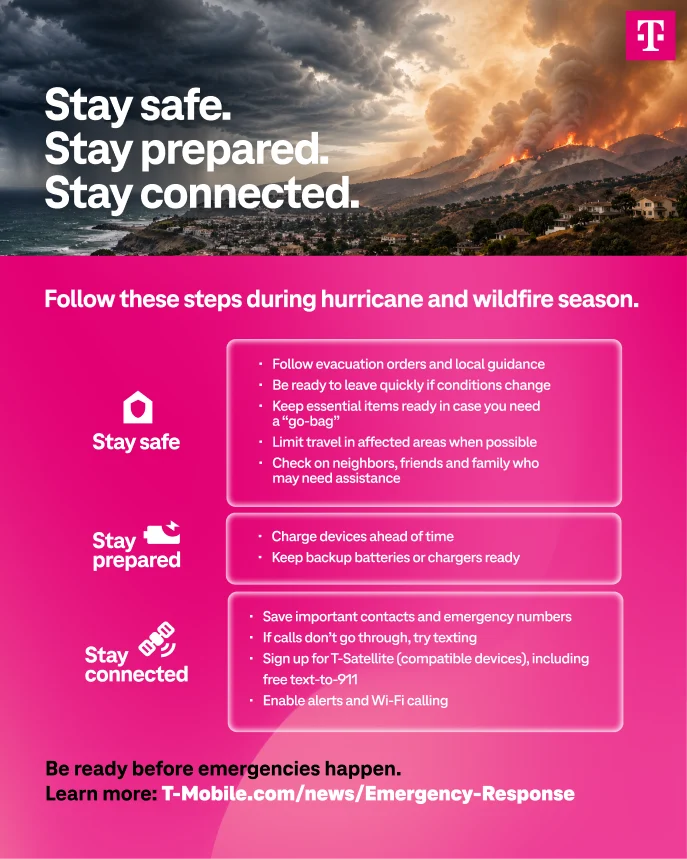
- Power Management: Charge all mobile devices, tablets, and portable power banks to 100% capacity before the storm makes landfall.
- Offline Access: Download essential documents, maps, and emergency contact lists directly to your device. Relying on cloud-based information is risky if mobile data is throttled or interrupted.
- Emergency Alerts: Ensure that Wireless Emergency Alerts (WEA) are enabled on your smartphone. These alerts are pushed to your device by local authorities and do not require a data subscription to receive.
- Physical Protection: Use waterproof cases or seal electronics in heavy-duty plastic bags to prevent damage from water ingress.
The Human Element: Crafting a Robust Family Emergency Plan
Technology is merely a tool; the effectiveness of a response is dictated by the plan that governs it. The most common pitfall in emergency preparedness is the "assumption of proximity"—the belief that family members will be together when a disaster strikes.
Establishing Communication Protocols
Families should designate an out-of-area contact. During major storms, local cellular networks often experience high traffic volume, making short-distance calls difficult. However, long-distance calls can sometimes bypass local congestion. By designating a single contact person who lives in a different region, family members can check in with that individual to share their status, thereby consolidating the information flow.
Defining Meeting Points and Evacuation Routes
A comprehensive plan must account for the "what ifs":
- Meeting Points: Identify a primary and secondary meeting location. One should be near the home, and one should be outside of the immediate storm impact zone.
- Special Considerations: Does your plan account for the specific needs of elderly family members, children, or individuals with mobility challenges?
- Pet Logistics: Remember that many public shelters have specific rules regarding pets. Identify pet-friendly evacuation centers or boarding facilities well in advance.
T-Mobile offers a "Family Emergency Plan" template, which can be downloaded via their digital resources. Completing this document as a family exercise is a vital step in reducing panic during the high-stress environment of a hurricane.
Implications for Long-Term Regional Resilience
The approach taken by T-Mobile in the face of Tropical Storm Isaias highlights a broader trend in the utility sector: the transition from "reactive" to "predictive" maintenance and emergency response. By leveraging AI, satellite integration, and public-private partnerships, the industry is creating a more resilient framework that can withstand the increasing frequency and intensity of extreme weather events.
However, the success of these measures is ultimately tethered to public compliance. The effectiveness of a high-tech network is diminished if the end-user does not follow the evacuation guidance provided by local authorities. As the storm approaches, the synergy between advanced technology and human preparation will be tested.
For those in the Gulf Coast region, the message is clear: The technology is ready, the resources are staged, and the protocols are in place. The final, and perhaps most important, piece of the puzzle is your own preparation.
For ongoing updates regarding T-Mobile’s network status and response efforts, residents are encouraged to visit the official Emergency Response hub and follow @TMobileNews on X and Instagram. As the situation develops, staying informed through verified sources is the best way to ensure the safety of your family and community.
Stay Safe, Stay Prepared, Stay Connected
As we wait for the latest trajectory updates from the National Hurricane Center, take the time to review your emergency kits, confirm your communication plans, and prioritize the safety of those around you. The impact of a hurricane is measured not just in wind speeds, but in the preparedness of the people in its path.
###