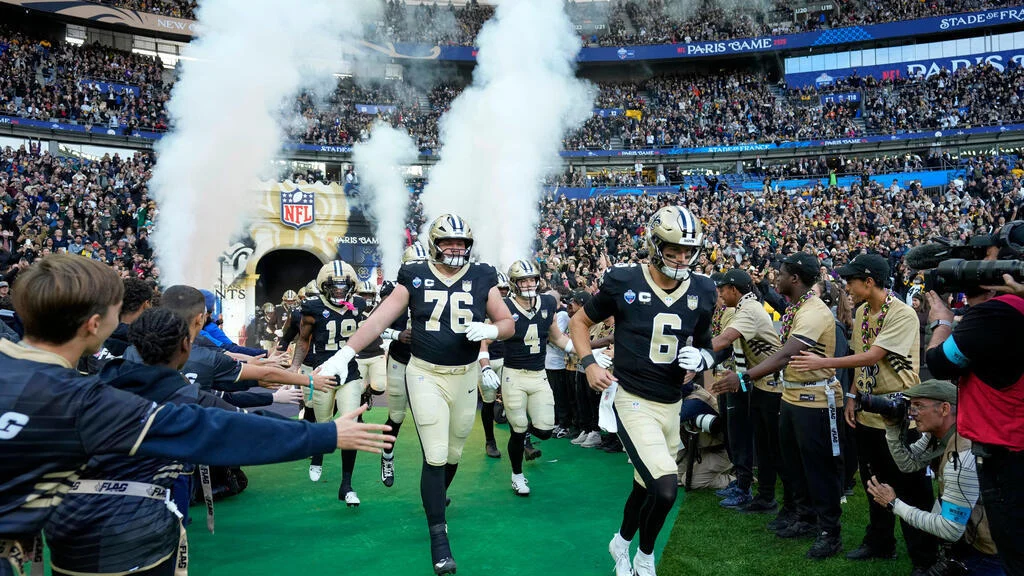
The NFL’s global expansion reached a significant milestone this past Sunday as the Pittsburgh Steelers faced the New Orleans Saints at the Stade de France. In the league’s first-ever regular-season game hosted in Paris, the Steelers secured a hard-fought 16-10 victory. However, the historic athletic achievement was played out against a backdrop of intense geopolitical tension, as France grappled with massive, nationwide demonstrations that had gripped the country just 24 hours prior.
The Main Event: A Tactical Battle in Saint-Denis
The game itself, a defensive struggle that kept the capacity crowd engaged until the final whistle, served as a microcosm of the NFL’s aggressive international growth strategy. While the New Orleans Saints were technically the "home" team for this neutral-site matchup, the atmosphere within the Stade de France felt decidedly split. Pittsburgh’s notoriously dedicated fan base traveled in droves, creating a sea of black and gold that neutralized any potential home-field advantage the Saints might have hoped to leverage.
The game saw both offenses struggle to find a rhythm, with the Steelers ultimately capitalizing on key defensive stops and a disciplined ground game. For Saints linebacker Kaden Elliss, the experience was bittersweet. "It kind of felt 50/50," Elliss noted during the post-game press conference. "This is such a fun atmosphere. Maybe not feeling like the true home team, it was a very special atmosphere, one I wish we could have gotten a win in."
The spectacle was bolstered by a halftime show featuring Nigerian superstar Burna Boy and French singer Yseult, bridging the gap between American gridiron culture and the local French aesthetic. Earlier in the day, the stadium—a venue synonymous with the 2024 Paris Olympics and the pinnacle of French rugby and football—provided a polished stage, showing no signs of the turmoil that had unfolded in the streets of the capital only a day earlier.
Chronology of a High-Stakes Weekend
The logistics of hosting an NFL game in a city undergoing significant civil unrest presented a unique set of challenges for league organizers.
- Saturday, October 23: Massive protests erupted across France. According to the French interior ministry, 410,000 demonstrators took to the streets nationwide, though organizers claimed the figure was closer to 800,000. The demonstrations, focused on rising living costs and systemic inequality, necessitated a massive police presence. In Paris, the unrest was concentrated on the southeastern fringes of the city, forcing the cancellation of several NFL-sanctioned fan events and pre-game activations.
- Sunday Morning, October 24: As the sun broke through the clouds, replacing the gloomy rain of the previous day, the atmosphere in Saint-Denis—located roughly 10 kilometers north of the city center—remained calm. Security perimeters were maintained, but the intense police presence seen on Saturday was absent from the immediate vicinity of the stadium.
- Sunday Afternoon (13:30 GMT): Kickoff occurred in front of a packed stadium. Prior to the game, the crowd was treated to appearances by French sports icons Antoine Dupont and Teddy Riner, signaling the NFL’s commitment to integrating local cultural prestige into their overseas events.
- Post-Game: Following the 16-10 result, both coaching staffs praised the hospitality of their hosts, effectively compartmentalizing the political climate to focus on the success of the sporting spectacle.
The Dichotomy of the Fan Experience
For the thousands of fans who traveled to Paris, the weekend was a study in contrasts. While the international media focused on the demonstrations, many visitors found themselves insulated from the friction.
"We didn’t notice much yesterday," said Lukas Baldridge, a 38-year-old Steelers fan who traveled from the United States. "We came in, went to a bar, got some drinks, got dinner, went home, didn’t see any protesting. Streets were closed. Most shops were closed. That felt unusual maybe, but I don’t know enough about Paris to know what is normal and what’s not normal."
This sentiment was echoed by James Brown, a 51-year-old Saints supporter. For these fans, the primary concern was the game, and for many, the Stade de France—a fortress of international sport—felt like an entirely different world from the Porte d’Italie, where the largest protests began. The juxtaposition of the "Peaky Blinders"-style suits worn by arriving Steelers players and the somber reality of the French protests highlighted the surreal nature of hosting a multibillion-dollar American entertainment product during a period of national social upheaval.
Official Responses and Security Considerations
The NFL had made it clear in the lead-up to the event that player and fan safety remained the paramount priority. Steelers quarterback Aaron Rodgers had publicly addressed the possibility of cancellation, noting that the league was prepared to pull the plug if conditions were deemed unsafe.
However, once the decision was made to proceed, the league collaborated closely with French authorities. Saints coach Kellen Moore acknowledged the delicate balance required to pull off such an event: "I would like to start by saying how much we appreciate everyone who, in the country of France, Paris, Versailles, helped make this event happen. I thought it was a really great event, really great game today."
The French government, having mobilized tens of thousands of police to manage the weekend’s protests, appeared to have successfully prevented the unrest from spilling over into the high-profile sporting event. The Stade de France, accustomed to hosting high-stakes events under international scrutiny, functioned as an effective buffer zone, allowing the NFL to complete its first Paris entry without the threat of physical interruption.
Implications for the NFL’s Global Strategy
The successful execution of the Paris game, despite the civil unrest, suggests that the NFL’s commitment to international expansion is deeper than ever. The league is currently prioritizing the "International Series" as a core growth pillar, targeting major European markets like London, Munich, and now Paris.
Risks and Resilience
The events of the weekend provide a case study in the risks of global expansion. Organizing an event of this magnitude requires not only logistical precision but also a high degree of political agility. The NFL’s ability to proceed despite the protests indicates a high level of confidence in local security protocols. However, it also raises questions about how the league will manage future international fixtures in regions experiencing political volatility.
Economic and Cultural Impact
Economically, the game was a win for the city of Paris, drawing thousands of international tourists and showcasing the Stade de France to a massive American television audience. Culturally, the integration of French stars like Antoine Dupont underscores the NFL’s strategy of "localization"—trying to make the sport feel native to the host city rather than just an American import.
Future Outlook
Looking ahead, the NFL is expected to continue its push into Europe. Whether this game leads to a permanent franchise in Europe or a more expanded regular-season schedule remains to be seen. What is clear, however, is that the league views these games as essential to its brand identity. By navigating the challenges of the Paris weekend, the NFL has demonstrated that it is willing to plant its flag on foreign soil, even when the ground beneath that flag is shifting.
As the players boarded their flights back to the United States and the French populace returned to the rhythm of their daily lives, the 16-10 result in Saint-Denis stood as a testament to the NFL’s resilience. For the fans who were there, the game will be remembered for the defensive grit of the Steelers and the historic, albeit tense, atmosphere of Paris—a city that proved it could play host to the world’s most popular sport, even during its own moments of national soul-searching.