In the heart of Thailand’s agricultural belt, a quiet but profound shift is taking place. In the Nakhon Sawan province, where the horizon has historically been marred by the acrid, grey haze of burning rice straw, a new narrative is being written. This shift is centered on a partnership between global agricultural giant CNH and local farmers, aiming to replace an age-old, environmentally damaging practice with modern, regenerative mechanization.
The latest installment of CNH’s "A Sustainable Year" series chronicles this transformation, highlighting the successful deployment of New Holland machinery to help farmers transition away from open-field burning. By turning a disposal challenge into a soil-enriching resource, this initiative is setting a blueprint for sustainable agriculture across Southeast Asia.
Main Facts: The New Holland Pilot in Nakhon Sawan
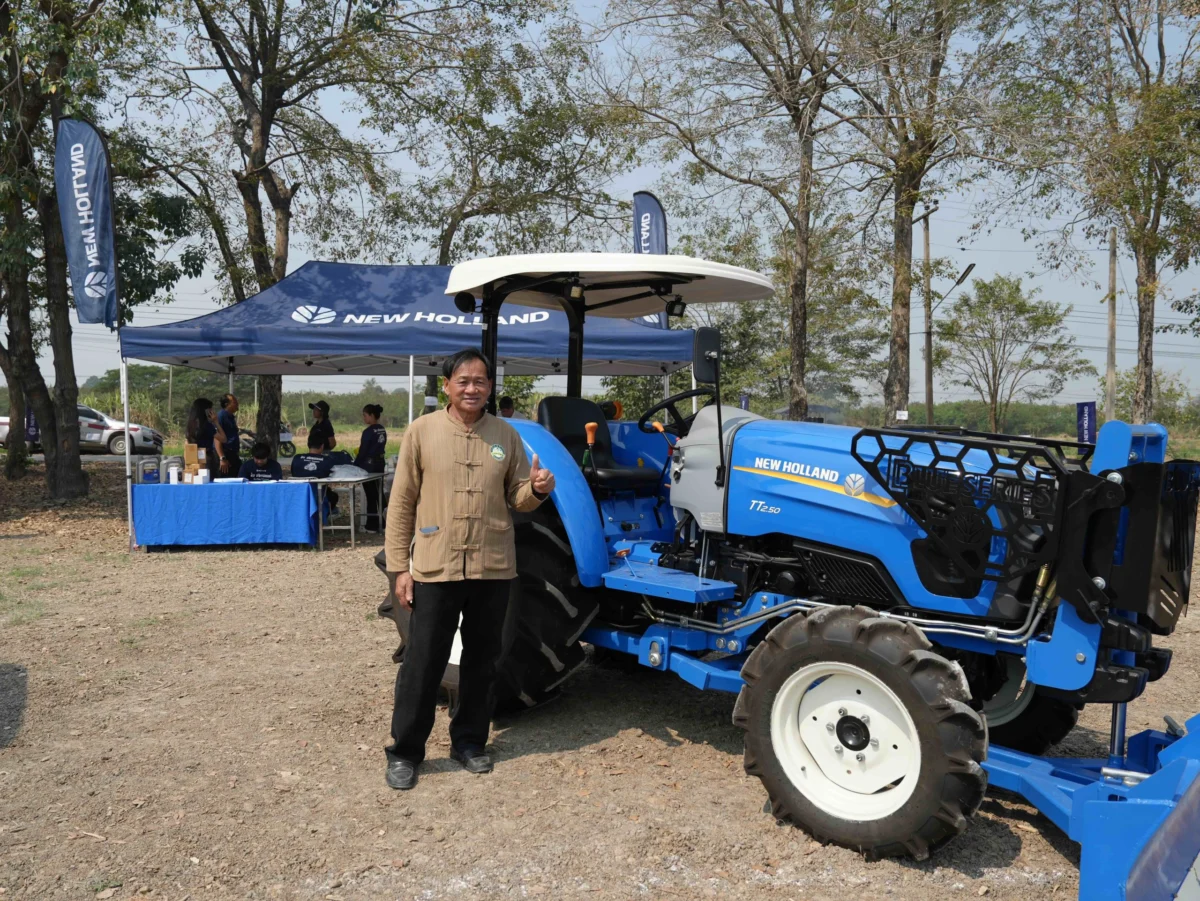
At the center of this initiative is Pichai Tosa, an established rice and mung bean farmer who serves as the president of a local rice production group. For years, like many of his peers, Tosa relied on the traditional method of clearing his fields post-harvest: fire. However, the 2026 harvest marked a departure from this status quo.
Utilizing a New Holland TT3.50 tractor equipped with a heavy-duty mulcher, Tosa conducted a controlled trial to manage his rice straw. Instead of setting the residue ablaze, the equipment chopped the straw into fine particles, allowing it to be either retained as surface cover or incorporated directly back into the soil.

The trial serves as a tangible demonstration of CNH’s "customer-first" philosophy. Rather than imposing complex, high-cost technologies, CNH focused on appropriate mechanization that fits the economic and physical realities of small-to-medium-scale farmers. By providing the tools to chop residue, the initiative helps farmers prepare their land for the next planting cycle while simultaneously boosting soil organic matter—a stark contrast to the nutrient depletion caused by fire.
Chronology: A Multi-Year Transition
The journey toward ending stubble burning is not an overnight task; it is a methodical process of education, demonstration, and adoption.
- Pre-2026: Farmers in central Thailand faced mounting pressure from environmental regulations and declining soil health. Annual burning remained the "fastest" way to clear land, despite the long-term ecological cost.
- Early 2026: CNH engaged with local stakeholders in Nakhon Sawan to identify the specific barriers preventing the abandonment of burning. The primary obstacles identified were a lack of access to affordable, effective machinery and a need for technical training.
- The 2026 Harvest: The pilot program commenced. CNH introduced the New Holland TT3.50 tractor and mulcher technology directly to Tosa’s farm. The focus was on field-level application: demonstrating that straw management could be efficient, cost-effective, and beneficial to yield.
- Post-Harvest 2026: Initial feedback from the pilot confirmed that the soil was easier to prepare for the subsequent mung bean crop. The success of this trial has now become a foundational case study for CNH’s regional outreach programs, providing a roadmap for other farming cooperatives in the province.
Supporting Data: The Cost of Burning vs. The Value of Soil
The necessity of this shift is underscored by staggering environmental statistics. In the plains of central Thailand alone, an estimated 4.8 million tons of rice straw are burned every year. This practice is a significant contributor to regional air pollution, frequently causing the "haze" that impacts public health in cities far beyond the agricultural zones.
Environmental Impact
- Greenhouse Gas Emissions: Open burning releases vast quantities of carbon dioxide, methane, and particulate matter (PM2.5) into the atmosphere.
- Microbial Damage: The intense heat generated at the soil surface kills essential beneficial microorganisms, bacteria, and fungi that are vital for plant growth.
- Carbon Loss: Burning effectively strips the soil of organic carbon. Over time, this leads to soil compaction, reduced water retention, and an increased reliance on synthetic fertilizers, creating a cycle of degradation that forces farmers to spend more to produce less.
The Economic Opportunity
By retaining the straw, farmers like Tosa are essentially "recycling" nutrients. Rice straw is rich in silica, potassium, and nitrogen. When mulched into the soil, it decomposes, acting as a natural fertilizer. This not only saves on input costs but also increases the soil’s resilience against drought—an increasingly critical factor in the face of erratic climate patterns.

Official Responses and Strategic Vision
The transition is being spearheaded by a mix of technological investment and local knowledge sharing. Mark Brinn, Managing Director for Southeast Asia and Japan at CNH, emphasizes that the initiative is about more than just selling tractors; it is about providing holistic agricultural solutions.
"Farmers need solutions that work in their fields and respond to the economic and environmental realities of their businesses," Brinn stated. "This trial shows how our equipment, practical training, and local partnerships can help turn crop residue from a disposal challenge into a useful agricultural resource. It is the kind of customer-focused innovation that supports more productive and resilient farming."
Pichai Tosa, representing the voice of the farming community, echoes this sentiment with a focus on the generational shift in mindset. "Farmers simply did not have the knowledge that the practice was harmful to the environment," Tosa noted. "But nowadays, new technologies and innovations have come in, giving us better options. We are now seeing that we can improve our land while protecting our air."
Implications: A Model for Sustainable Agriculture
The success in Thailand is not an isolated experiment. It draws on a broader strategic framework CNH has refined through its "Sustainable Environment Solution" program in India. In that region, CNH successfully combined mechanized baling with intensive farmer training and public field demonstrations to prove that crop residue has market value—as fuel, animal bedding, or organic compost.

The Future of Residue Management
The implications for the agricultural industry are three-fold:
- Circular Farming: The move toward mulching and baling demonstrates a transition from a linear, extractive model of farming to a circular, regenerative one. By keeping organic matter in the field, the industry can reduce its carbon footprint.
- Mechanization as an Enabler: Technology is the bridge between traditional practices and modern sustainability goals. When equipment is matched to the specific needs of the local crop and soil type, it empowers farmers to be both profitable and stewards of the land.
- The Power of Partnerships: CNH’s approach proves that corporate entities can act as catalysts for change by leveraging local relationships. By working with established community leaders like Tosa, CNH ensures that its solutions are culturally integrated and technically sound.
Beyond the Horizon
As CNH continues to scale these initiatives, the goal is to standardize sustainable residue management across its global operations. The "Stop Stubble Burning" movement is rapidly gaining momentum, backed by data that shows that sustainability is not a luxury for the wealthy, but an economic necessity for the global farmer.
For the rice farmers of Nakhon Sawan, the future looks clearer—both in the literal sense of cleaner air and the figurative sense of more stable, productive futures. As the industry moves toward 2030, the ability of companies like CNH to replicate this model will determine the pace at which global agriculture can transition toward true environmental sustainability.
To learn more about this initiative and see how CNH is working to redefine the role of the farmer in the 21st century, visit the full report, “From burning stubble to building healthier soil,” available at CNH Industrial Publications.