Every year, a staggering one billion tires reach the end of their road across the globe. For the automotive industry, these black, rubberized rings represent the pinnacle of engineering—designed to withstand extreme heat, friction, and thousands of miles of asphalt. Yet, when they "retire," they become one of the most stubborn environmental headaches of the modern age. If left to languish in landfills, they pose significant ecological threats, from leaching toxic chemicals into groundwater to serving as breeding grounds for disease-carrying mosquitoes. Even worse, piles of discarded tires are notorious fire hazards, capable of burning for months once ignited.
However, a quiet revolution is taking place in the world of industrial waste management. While scientists have not yet cracked the code to recycle old tires back into new, road-ready tires at a massive, commercially viable scale, the industry has mastered the art of the "second life." Through advanced processing and stringent legislative frameworks, these discarded tires are being transformed into everything from high-performance athletic tracks to life-improving livestock bedding.
The Regulatory Framework: Driving Circularity Through IPR
The shift toward a circular tire economy is not merely a result of corporate altruism; it is being driven by robust legislative mandates. In Canada, specifically within the province of Ontario, the government has implemented a model known as Individual Producer Responsibility (IPR).
Unlike the more common Extended Producer Responsibility (EPR) models, where producers might pool their resources into a collective fund, IPR holds individual manufacturers accountable for the entire lifecycle of the tires they put on the market. Under these strict requirements, producers are legally obligated to track the tires they sell by weight, ensuring that every unit is collected, processed, and repurposed. This creates an auditable "paper trail"—or more accurately, a digital ledger—that prevents tires from disappearing into the black market or illegal dumping grounds.
To manage this complex logistical requirement, the non-profit organization eTracks was established. Serving as the operational backbone for Ontario’s IPR laws, eTracks coordinates a vast network of 5,500 collection sites, including auto dealerships, repair shops, and specialized tire depots. By leveraging its proprietary eSRP (e-Sustainable Recovery Platform), the organization digitally verifies the journey of approximately 13 million tires annually, tracking them from the moment they are pulled off a vehicle to their final destination at a processing facility.

The Anatomy of Transformation: A Chronology of Recovery
The journey of a retired tire from a heap of waste to a functional product is a feat of industrial engineering. When a tire arrives at a facility like Evolve Recycling—the processing arm of industry leader Northwest Rubber—it enters a multi-stage refinement process.
1. Separation and Shredding
The process begins with "de-beading," where the thick steel wires that provide the tire’s structural integrity are pulled out. The remaining carcass is then fed into massive industrial shredders. These machines utilize high-torque grinders to tear the rubber into increasingly smaller pieces.
2. Purification
Once the rubber is shredded, it must be cleaned. Because tires contain steel, nylon, and synthetic fibers, these materials must be removed to ensure the final product is pure rubber. Powerful magnetic separators are deployed to catch any stray steel, while sophisticated air-suction systems (aspiration) are used to pull away the lighter, non-rubber textile fibers and debris.
3. Crumbing and Sizing
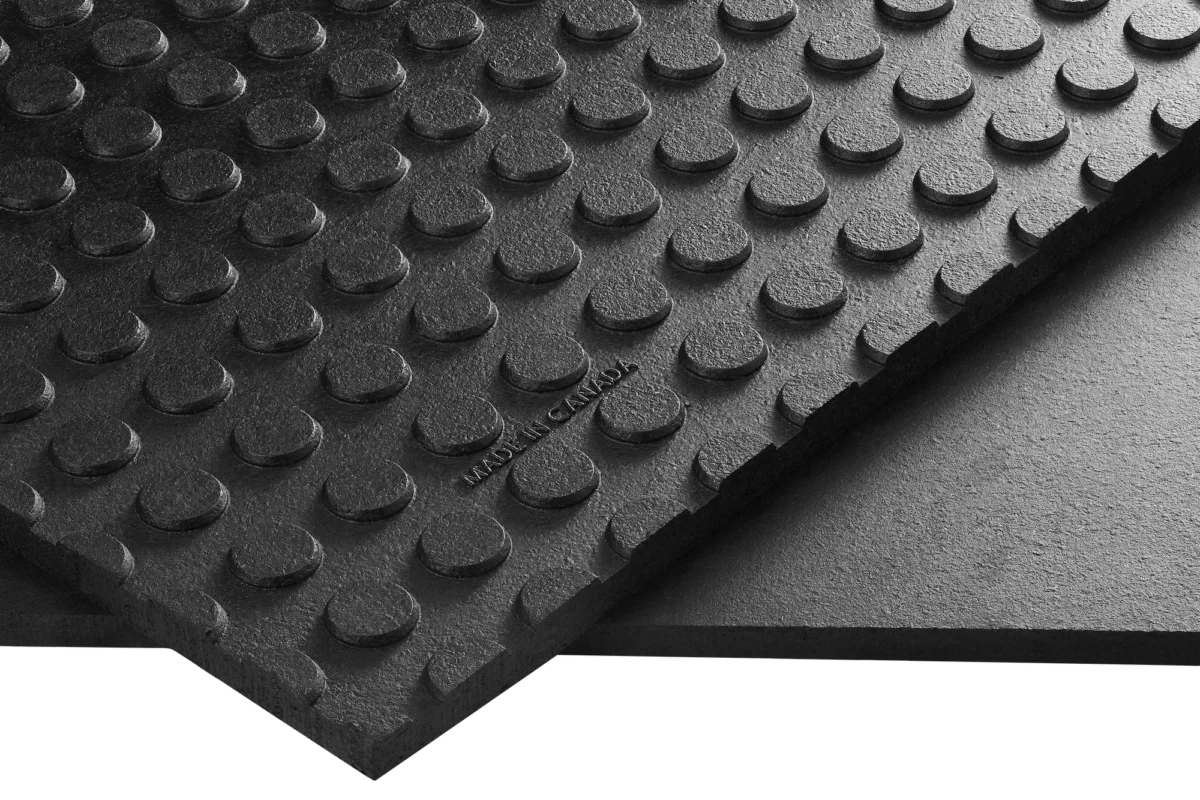
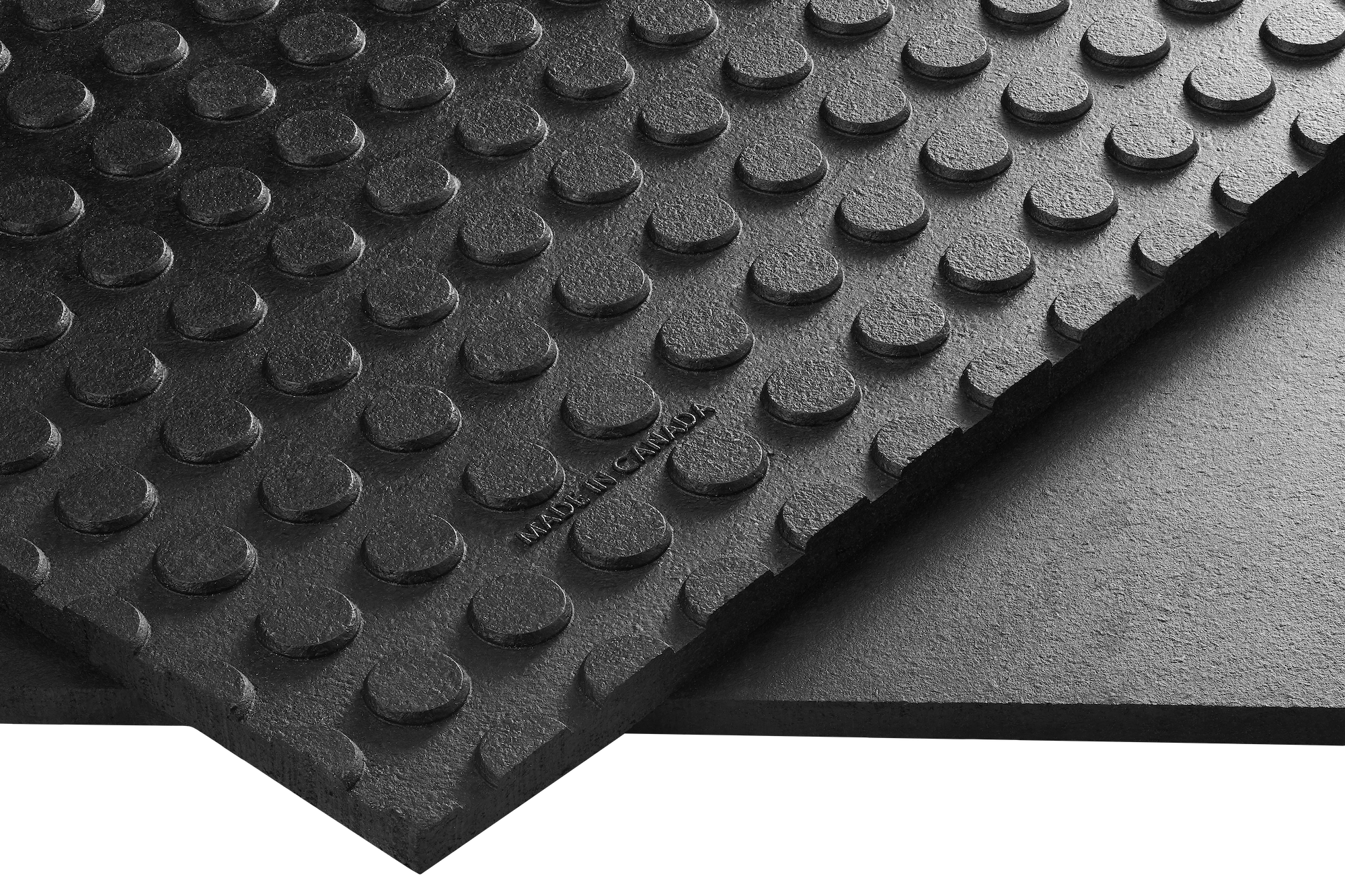
The remaining rubber is processed through secondary and tertiary grinders, transforming it into "crumb rubber." These are uniform, granular pellets. The size of the crumb is crucial; for instance, coarse granules might be used for heavy-duty construction, while finer, dust-like particles are necessary for molded goods like mats and flooring.
4. Re-vulcanization and Molding
The final step involves binding the crumb rubber. Manufacturers like Northwest Rubber combine these pellets with specialized bonding agents and other additives, then feed them into massive heated presses. Under intense heat and pressure, the crumb rubber is fused into new, durable shapes.
Supporting Data: The Impact of Recycled Rubber
The utility of recycled rubber extends far beyond simple aesthetics. Data indicates that when these materials are integrated into agricultural and industrial environments, they provide measurable benefits to both humans and animals.
For instance, the Animat line of mats, produced by Northwest Rubber, has become a standard in the livestock industry. Scientific studies have shown that replacing hard, unforgiving concrete barn floors with rubber matting significantly improves animal welfare. For dairy cows, the softer, more ergonomic surface reduces the incidence of joint injuries and lameness. Crucially, research published in the Journal of Dairy Science suggests that increased cow comfort directly correlates to higher milk production, effectively turning a waste product into a tool for agricultural productivity.
The sheer volume of material diverted from landfills is also significant. In its nearly 60-year history, Northwest Rubber has diverted over 160 million tires from the waste stream. This is not just a matter of cleaning up the landscape; it is a vital step in reducing the carbon footprint of manufacturing. By utilizing recycled rubber, companies can bypass the need for virgin, petroleum-based rubber, which requires energy-intensive extraction and processing.
Official Perspectives: Closing the Loop
The experts behind this movement are quick to point out that while progress is being made, the industry is still evolving. Melissa Carlaw, VP of communications and sustainability for eTracks, emphasizes that the industry must be careful with its definitions of "recycling."
"A tire isn’t truly recycled just because it’s been shredded," Carlaw explains. "It has to become part of something useful again." This distinction is the bedrock of the eSRP platform. By ensuring that every ton of crumb rubber is sold into a legitimate manufacturing application, eTracks ensures that the circular economy remains a reality, not just a marketing term.

However, challenges remain. David Pruim, CFO of Northwest Rubber, acknowledges that while the industry is excellent at giving a tire its "second life," a "third life" remains elusive. "It could be done," Pruim says, referring to the potential for recycling rubber mats back into raw material at the end of their service life. "We just don’t have another mechanism in the market to recover those used mats, clean them, and grind them up. It’s more of a logistical challenge, frankly, than anything else."
Implications for the Future
The current state of tire recycling serves as a microcosm for the broader challenges of the global circular economy. As legislation like Ontario’s IPR model gains traction elsewhere, the focus will likely shift from simple diversion to true product stewardship.
The implications of this shift are profound:
- Economic Opportunity: As the demand for sustainable building materials grows, the market for recycled rubber products—from gym flooring to soundproofing for urban construction—is expected to expand.
- Environmental Protection: By scaling these recovery systems, governments can mitigate the risks of tire fires and groundwater contamination, effectively turning an environmental liability into a resource.
- Design for Disassembly: The next frontier in manufacturing will be "designing for circularity." This means manufacturers will need to create products that are easier to deconstruct, ensuring that a rubber mat made today can be easily processed into a new material in 20 years.
While the "highway to hockey rink" transition is a success story of modern recycling, it is clear that the journey is far from over. Organizations like eTracks and Northwest Rubber have proven that with the right combination of regulatory oversight and industrial innovation, we can transform the discarded remnants of our mobile society into the foundations of a more sustainable future. The tires that once carried us across the continent are now supporting the barns that feed us, the gyms that keep us healthy, and the rinks that define our culture—a testament to the value of giving every product a second chance.