By Editorial Staff
October 1, 2026
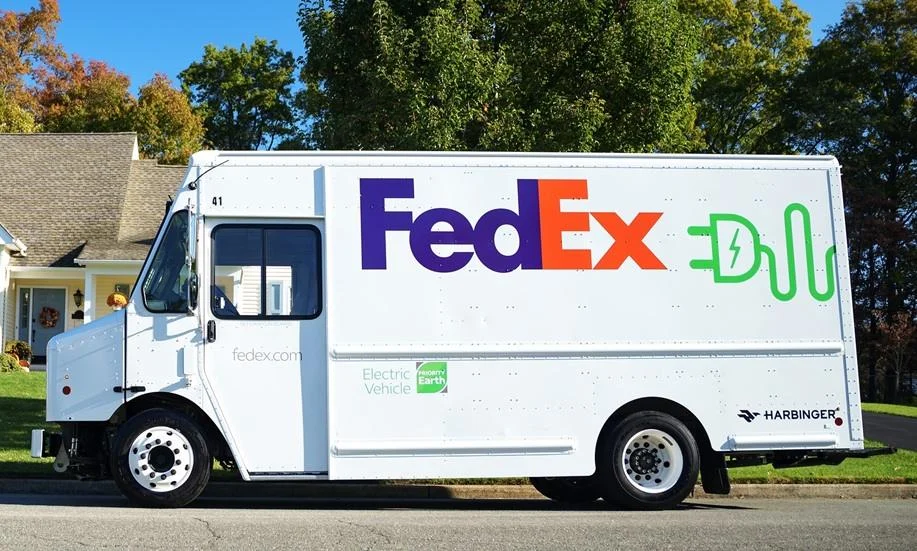
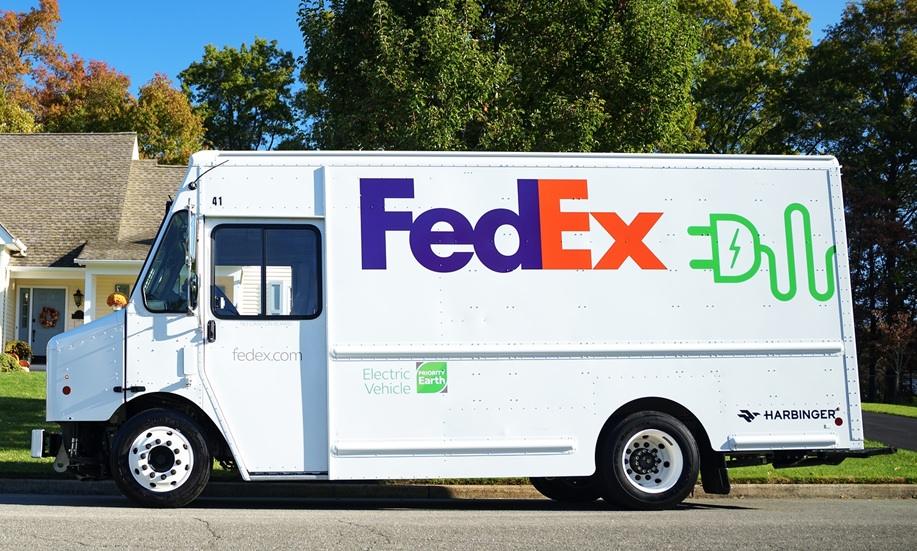
In a move that signals a seismic shift in the logistics industry, global delivery powerhouse FedEx has officially placed a binding order for 2,000 all-electric commercial trucks from Harbinger, an innovative California-based manufacturer. Valued at over $300 million, the agreement represents one of the largest single commitments to medium- and heavy-duty electric vehicle (EV) procurement in history.
This deal serves as a cornerstone of FedEx’s broader strategy to achieve carbon-neutral operations by 2040. By integrating these high-efficiency electric vehicles into its North American pickup and delivery fleet, the company is moving beyond pilot programs and into full-scale industrial electrification.
The Strategic Core: A $300 Million Commitment to Zero-Emissions
The deal, finalized in late September 2026, requires Harbinger to deliver the 2,000 vehicles by the end of 2027. These trucks are not merely "green" alternatives; they are engineered to replace conventional internal combustion engine (ICE) vehicles that have served as the backbone of FedEx’s last-mile logistics for decades.
Harbinger, founded in 2021, has rapidly ascended the ranks of the automotive sector by focusing on a proprietary, vertically integrated chassis platform. Unlike many competitors that retrofit existing designs, Harbinger builds its vehicle systems—including battery packs, motors, and power electronics—in-house within the United States. This strategic decision allows the company to maintain strict quality control while achieving a price point that reaches acquisition parity with traditional diesel and gasoline-powered trucks.
For FedEx, the financial rationale is clear: the company is looking to hedge against volatile fuel prices while simultaneously meeting the rigorous ESG (Environmental, Social, and Governance) targets mandated by its board and requested by its stakeholders.
Chronology of a Partnership: From Pilot to Production
The relationship between FedEx and Harbinger did not materialize overnight. It is the culmination of several years of collaborative testing and financial alignment.
- 2021: Harbinger is founded in California, with a specific mission to modernize the medium-duty commercial chassis.
- November 2025: The partnership takes its first formal step when FedEx places an initial purchase order for 53 Harbinger electric vehicles to test in real-world urban environments.
- Late 2025/Early 2026: Alongside the initial vehicle purchase, FedEx participates as a co-lead investor in Harbinger’s $160 million Series C funding round. This move essentially signaled to the market that FedEx was not just a customer, but a strategic partner invested in Harbinger’s long-term success.
- October 1, 2026: The parties announce the definitive $300 million order for 2,000 units, moving the partnership from the testing phase to mass-scale fleet deployment.
This timeline highlights a deliberate, data-driven approach by FedEx, moving from small-scale validation to significant capital allocation only after the technology proved its reliability in the field.
The Economics of Electrification: Why Harbinger?
The primary hurdle for fleet electrification has historically been the "green premium"—the higher upfront cost of EVs compared to their fossil-fuel counterparts. Harbinger has managed to dismantle this barrier through its stripped-chassis design.
Operational Cost Reductions
Harbinger’s data suggests that its electric trucks offer significant savings for large-scale operators. The manufacturer estimates that each unit can reduce fuel costs by approximately $20,000 annually per vehicle. When scaled across the 2,000-unit order, the economic impact is profound:
- Annual Fuel Savings: ~$40 million.
- 20-Year Lifecycle Savings: ~$800 million.
Environmental Impact
Beyond the ledger, the environmental benefits are equally substantial. By transitioning these 2,000 vehicles to an electric drivetrain, FedEx expects to avoid more than 1.7 million tons of CO2 emissions over the vehicles’ operational lifespan. This is a vital metric for a company that has publicly pledged to achieve carbon neutrality by 2040, a goal that requires a total transition of its global parcel pickup and delivery fleet to zero-emission vehicles.
Official Perspectives: Aligning Vision with Execution
The View from Harbinger
John Harris, Co-Founder and CEO of Harbinger, views the deal as a vindication of the company’s business model. "FedEx is demonstrating that the business case for incorporating electric vehicles into real-world fleet operations at scale makes sense," Harris stated. He emphasized that the previous pilot program provided FedEx with the tangible data necessary to justify such a massive investment. "Our previous work together gave FedEx firsthand experience with the performance and economic advantages Harbinger vehicles can deliver."

The View from FedEx
Vinay D’Souza, Senior Vice President of Global Assets and Infrastructure at FedEx, underscored the necessity of this shift in the context of a rapidly changing industry. "The transportation industry is undergoing a fundamental transformation, and electrification is set to play a pivotal role in the future of commercial fleets," D’Souza remarked. He noted that the partnership is not just about environmental compliance but about competitive advantage: "This order helps us build a more modern, efficient, and intelligent fleet that meets the evolving needs of our customers, our team members, and our global operations."
Industry Implications: A New Era for Commercial Transport
The FedEx-Harbinger deal sends a ripple effect through the commercial vehicle market. As one of the world’s largest logistics entities, FedEx’s choices serve as a bellwether for the entire shipping sector.
1. Scaling the Supply Chain
The logistics sector has been plagued by supply chain bottlenecks for vehicle components. By supporting a US-based manufacturer like Harbinger, FedEx is helping to foster a domestic industrial ecosystem for EV production. This reduces dependence on long-haul international shipping for parts and creates high-skilled jobs in the U.S. manufacturing sector.
2. The Pressure on Competitors
Traditional automotive giants, who have dominated the commercial van and truck market for decades, now face intensified pressure. Companies like Ford, General Motors, and Stellantis must accelerate their own electrification efforts to compete with nimble, purpose-built EV manufacturers like Harbinger. The "acquisition parity" achieved by Harbinger effectively forces incumbent manufacturers to reconsider their pricing strategies and design philosophies.
3. Setting the Standard for ESG Reporting
For institutional investors, the FedEx-Harbinger deal serves as a model for how corporations can move from abstract sustainability goals to concrete, measurable capital expenditure. It highlights that ESG is no longer a peripheral corporate social responsibility (CSR) exercise; it is becoming a core component of operational efficiency and risk management.
4. Infrastructure and Grid Readiness
While the vehicle acquisition is a major win, the successful deployment of 2,000 EVs will require a commensurate investment in charging infrastructure. FedEx will likely need to continue partnering with utility providers and green energy infrastructure firms to ensure that its depots can handle the increased load. This project will serve as a massive "stress test" for the North American power grid’s ability to support high-density, commercial-scale electric logistics.

Conclusion
The $300 million order between FedEx and Harbinger is more than just a purchase agreement; it is a declaration of intent. As the 2040 carbon-neutral deadline looms, logistics firms are under immense pressure to prove that their operations can remain profitable while shedding their dependence on fossil fuels.
By betting on Harbinger, FedEx is choosing a path of technical innovation and domestic manufacturing, betting that the future of last-mile delivery is electric, intelligent, and cost-efficient. If the 2,000-vehicle fleet performs as projected, it will likely trigger a new wave of similar orders across the logistics sector, effectively accelerating the electrification of the global transport infrastructure by several years.
The road ahead is complex—involving energy storage challenges, grid upgrades, and ongoing maintenance—but with this landmark deal, the direction of the travel is clear. The era of the electric delivery truck has officially arrived.