In the heart of India, a silent revolution is brewing—one that seeks to turn the country’s most persistent environmental headaches into the very walls that shelter its citizens. As agricultural fields across the nation are cleared post-harvest, they traditionally become the sites of massive, polluting bonfires. Simultaneously, the persistent scourge of non-recyclable plastic clogs landfills and waterways. Now, researchers at the Indian Institute of Technology (IIT) Jodhpur are bridging these two crises, transforming agricultural residue and plastic waste into innovative, sustainable construction materials.
This breakthrough, reported by the Times of India, marks a significant departure from traditional, energy-intensive building practices. By developing "Bio Bricks" and "Agro-Plastic Blocks," the team led by Professor Priyabrata Rautray is not merely proposing a recycling initiative; they are reimagining the foundational elements of rural infrastructure.
The Core Innovation: Two Paths to Sustainability
The technology introduced by IIT Jodhpur rests on two distinct, yet complementary, pillars of material science. Both aim to eliminate the carbon-heavy reliance on traditional kiln-fired clay bricks, which are a major contributor to industrial air pollution and deforestation in developing economies.
1. Bio Bricks: The Kiln-Free Alternative
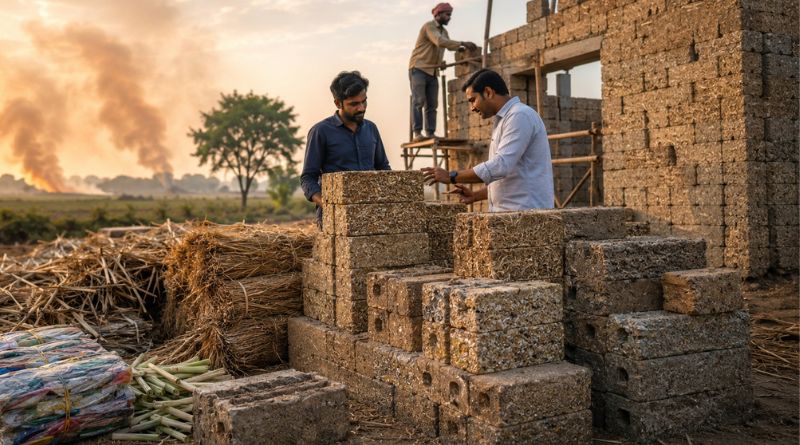
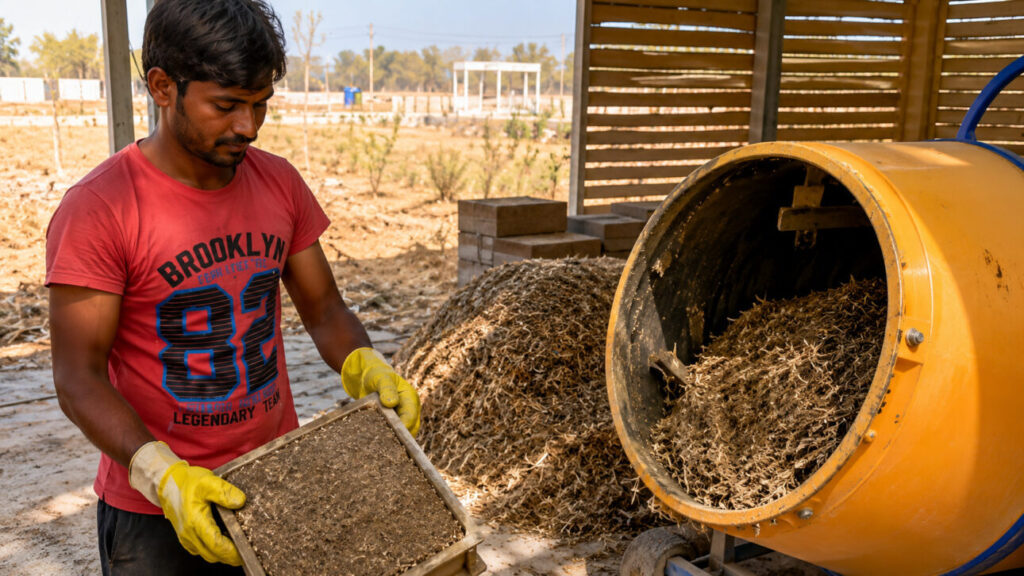
Bio Bricks are crafted primarily from agricultural waste, including rice straw, wheat straw, and sugarcane bagasse. In many parts of rural India, these materials are considered "post-harvest burdens." Farmers often resort to burning these leftovers to clear fields quickly for the next planting season, a practice that sends thick plumes of toxic smoke into the atmosphere, causing severe air quality degradation in nearby urban centers.
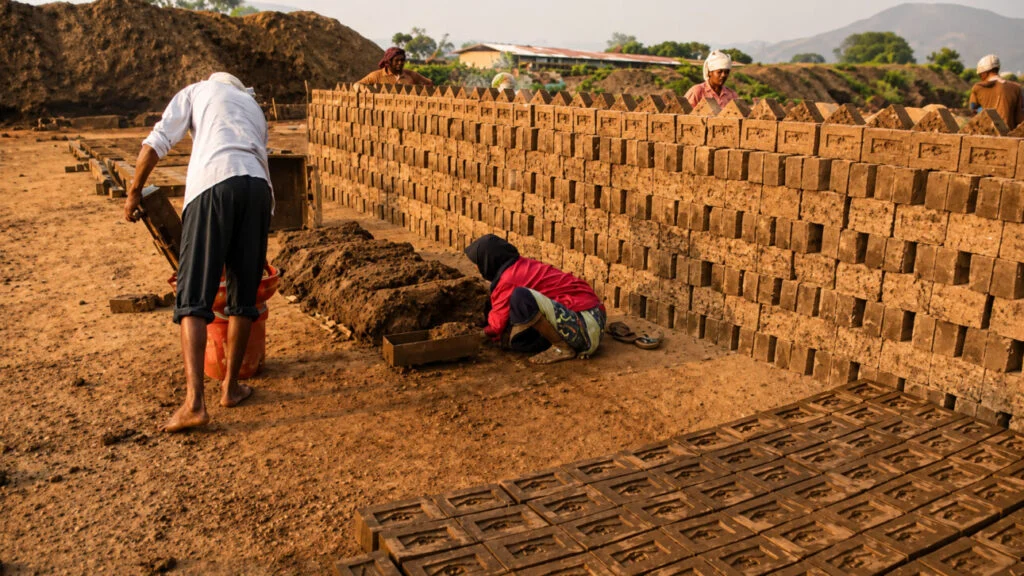
By repurposing this biomass, the Bio Brick process bypasses the kiln entirely. Traditional brick manufacturing requires firing clay at extremely high temperatures, a process that consumes vast amounts of coal and releases substantial carbon emissions. The IIT Jodhpur methodology relies on natural or low-energy binding techniques, turning raw organic waste into a structural unit that is not only eco-friendly but inherently linked to the local agricultural cycle.
2. Agro-Plastic Blocks: Harnessing the "Unrecyclable"
If Bio Bricks address organic waste, the Agro-Plastic Blocks tackle the synthetic crisis. These blocks are created by blending agricultural fibers with non-recyclable plastic waste. Through a process of controlled heating and high-pressure compression, the plastic acts as a binder, creating a composite material that is remarkably durable.
The significance of this development cannot be overstated. Non-recyclable plastic—often thin films, multilayered packaging, or contaminated waste—is notoriously difficult to process via conventional recycling streams. By locking this material into a solid, functional block, researchers have found a way to sequester plastic in a useful, long-term application, preventing it from ending up in landfills or oceans.
A Chronology of Progress: From Lab to Campus
The journey of these materials from a theoretical framework to physical prototypes represents years of interdisciplinary research at IIT Jodhpur.
- Initial Research Phase: The project began with a rigorous analysis of local waste streams. Researchers categorized the types of crop residue and plastic waste most prevalent in the Jodhpur region and surrounding agricultural belts.
- Material Characterization: The team conducted extensive testing on the structural integrity, load-bearing capacity, and thermal conductivity of various mixtures of straw and plastic.
- Prototyping: Recognizing that laboratory success does not always translate to real-world durability, the team moved to develop full-scale prototypes on the IIT Jodhpur campus. These structures served as "living labs," allowing researchers to monitor how the bricks perform under the harsh, fluctuating temperatures of the Thar Desert.
- Public Unveiling: Following successful structural tests, the technology was presented to the public through the Times of India, gaining national attention for its potential to reshape the rural housing landscape.
Supporting Data and Technical Advantages
The shift toward these materials is supported by a growing body of evidence regarding their performance compared to standard masonry.
Thermal Comfort: The Hidden Benefit
One of the most compelling advantages of these bricks is their superior thermal insulation. Unlike concrete or kiln-fired bricks, which absorb and retain heat, the composite nature of Bio Bricks and Agro-Plastic Blocks provides natural thermal resistance. This is a critical factor for rural housing in India, where temperatures can swing wildly. A house built with these materials stays cooler in the blistering heat of summer and retains warmth during the winter, effectively reducing the energy needs of the household.
Environmental Impact Metrics
The environmental benefits are twofold:
- Reduction in Carbon Footprint: By eliminating the kiln-firing process, the CO2 emissions associated with brick manufacturing are slashed.
- Waste Diversion: Every house built with these bricks represents several tons of agricultural waste that were not burned and a significant quantity of plastic that was not dumped.
Official Responses and Academic Outlook
The academic community has lauded the project for its holistic approach to engineering. Professor Priyabrata Rautray, the lead investigator, has emphasized that the goal is not just to create a "green" product, but a "localized" one.
"The objective is to empower the rural economy," the team noted in early reports. By sourcing materials from the immediate vicinity—the farmer’s own field—the cost of transportation is minimized. Furthermore, the simplicity of the manufacturing process suggests that these bricks could eventually be produced in micro-factories at the village level, creating new avenues for employment and economic growth within rural sectors.
While the technology is currently in the prototype stage, industry experts and government agencies are watching closely. The scalability of the project will depend on establishing standardized production protocols and ensuring that these materials meet national building code safety requirements.
Implications for the Future: A Paradigm Shift
The implications of the IIT Jodhpur project extend far beyond the construction site. It represents a fundamental shift in how society views "waste."
Addressing the Urban-Rural Divide
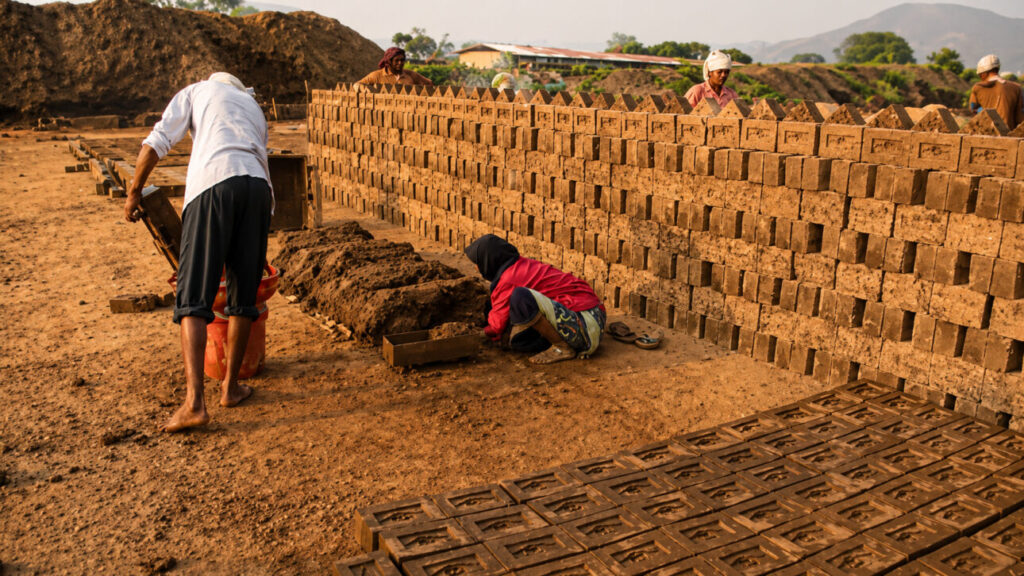
The smoke from agricultural burning is a national health crisis, disproportionately affecting both rural farmers and the residents of smog-choked cities like New Delhi. By turning straw into a valuable commodity, the market creates a financial incentive for farmers to sell their waste to brick manufacturers rather than setting it on fire. This economic shift could be the most effective mechanism for solving the air pollution crisis.
Affordable Housing
The housing deficit in rural India remains a significant hurdle for development. Traditional construction is becoming increasingly expensive due to the rising costs of conventional materials like cement and steel. Bio-based construction offers a path to lower the cost of entry for families seeking to build or expand their homes. By utilizing materials that are locally abundant and virtually free, the barrier to decent, high-quality housing is significantly lowered.
A Model for Global Application
The genius of the IIT Jodhpur model lies in its universality. Every agricultural nation faces the same duality of problems: the disposal of crop residue and the management of plastic waste. If the Bio Brick and Agro-Plastic Block technologies can be refined and scaled within the Indian context, they provide a blueprint for other nations in the Global South. From the rice paddies of Southeast Asia to the wheat fields of Africa, the ability to turn "nothing" into "something" is a scalable solution to global sustainability.
Conclusion: Turning Problems into Foundations
India’s venture into straw-based and plastic-composite construction is a testament to the power of creative engineering. It is an acknowledgment that the solutions to our most pressing environmental problems often lie in plain sight, hidden within the very waste we discard.
As the team at IIT Jodhpur continues to refine their methods and expand the scope of their prototypes, they are proving that the future of architecture may not be found in high-tech, expensive materials, but in the intelligent, circular reuse of the resources we already possess. By replacing the kiln with the field and the landfill with the factory, India is building more than just homes—it is building a cleaner, more resilient future. The transition from waste to walls is not just an architectural upgrade; it is a profound change in the way we sustain our civilization.