VIENNA, AUSTRIA – The grand stage of the Eurovision Song Contest, traditionally a beacon of unity through music, found itself embroiled in geopolitical controversy as Israel’s representative faced vocal protests during a semi-final performance. The incident, which saw audience members disrupt the show with chants and banners, underscored the deep divisions and moral quandaries surrounding Israel’s participation amidst the ongoing conflict in Gaza. Noam Bettan, the Israeli competitor, expressed surprise and a "bit of a shock" at the intensity of the demonstrations, as reported by the BBC.
The protests served as a stark reminder that even in an event ostensibly dedicated to art and cultural exchange, the powerful currents of international politics and humanitarian concerns can no longer be contained backstage. The disruption highlights a growing global sentiment that calls for accountability and recognition of the human cost of conflict, even as cultural institutions strive to maintain a stance of neutrality.
A Performer’s Unsettling Experience: Noam Bettan’s Shock on Stage
The Moment of Disruption
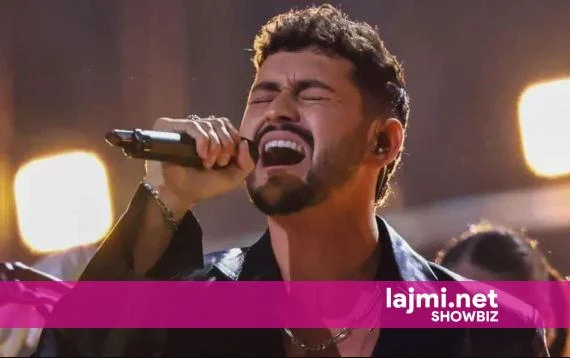
The Wiener Stadthalle in Vienna, typically a venue for enthusiastic applause and celebratory cheers, witnessed a different kind of audience reaction during Israel’s semi-final entry. As Noam Bettan took to the stage, performing her chosen song, a segment of the audience initiated a series of vocal protests. Chants of "stop genocide" erupted, piercing through the musical performance and creating an audible dissonance that clashed with the festive atmosphere. These shouts were not isolated; they were accompanied by visible signs of dissent. Several audience members, including one prominently displaying "Free Palestine" on their chest, began to leave the arena in protest.
The immediate impact was palpable. The broadcast, though attempting to filter out the most disruptive sounds, could not entirely mask the undercurrent of discontent. For those present, the juxtaposition of Bettan’s performance with the politically charged chants created an uncomfortable tension, transforming a moment of artistic expression into a platform for urgent political messaging. The departure of audience members, though a minority, was a deliberate act of disengagement, signaling a refusal to passively accept Israel’s presence in the contest without acknowledgment of the wider conflict.
Bettan’s Reaction and Reflection
The immediate aftermath saw Noam Bettan reflecting on the unsettling experience. Speaking to the BBC, Bettan, whose age was cited as 28, admitted to being caught off guard despite prior awareness of potential backlash. "I was aware," she stated. "I heard that there were whistles and everything else, and there was a moment, like, a ‘wow’ effect, you know? A bit of a shock."
This candid admission reveals the psychological toll such protests can take on an artist. While performers are often prepared for critical reception or even boos, the direct politicization of their performance, especially on a global stage, can be deeply unsettling. Bettan’s "wow effect" and "shock" underscore the unexpected nature of the direct confrontation. For many artists, the stage is a sanctuary for expression, a space where they hope to connect with an audience through their craft. To have that space invaded by geopolitical tensions, however justified in the eyes of protesters, fundamentally alters the artistic experience. It forces the performer to grapple not only with their art but also with the weight of international events beyond their control, potentially shifting the focus from musical merit to political proxy. Bettan’s youthful age further highlights the intense pressure placed upon her as a cultural representative in a highly charged environment.
Chronology of Controversy: Israel and Eurovision Amidst Conflict
The Genesis of the Dispute (Late 2023 – Early 2024)
The seeds of the current Eurovision controversy were sown in the grim aftermath of the October 7th, 2023, attacks in Israel, perpetrated by Hamas. These attacks, which resulted in significant loss of life, triggered a robust military response from Israel in the Gaza Strip. The subsequent Israeli military operation, aimed at dismantling Hamas and ensuring national security, led to a devastating humanitarian crisis in Gaza, characterized by widespread destruction, displacement, and a mounting civilian death toll.
Almost immediately, the international community became deeply divided over the conflict. As the scale of the humanitarian crisis in Gaza became apparent, calls began to emerge from various quarters for Israel’s exclusion from international cultural and sporting events. Comparisons were quickly drawn to the precedent set by the European Broadcasting Union (EBU), the organizer of Eurovision, in its decision to ban Russia from the contest following its full-scale invasion of Ukraine in February 2022. Critics argued that if the EBU maintained a stance against aggression and human rights violations, then Israel’s actions in Gaza warranted similar scrutiny and potential exclusion. The EBU, however, consistently maintained that Eurovision is a non-political event and that Israel’s public broadcaster, Kan, had fulfilled all necessary participation requirements, thereby resisting initial calls for exclusion.
Escalating Tensions and Calls for Boycott
As the conflict in Gaza intensified through late 2023 and into early 2024, so too did the pressure on the EBU and participating national broadcasters. A diverse coalition of artists, musicians, cultural figures, and human rights activists began to vocally advocate for Israel’s removal or, failing that, a widespread boycott of the event. Petitions circulated widely online, garnering tens of thousands of signatures, urging national broadcasters to withdraw their participation if Israel remained.
These calls often emphasized the perceived double standard of allowing Israel to compete while Russia was banned. Protesters argued that allowing Israel to participate amounted to tacit approval of its military actions or, at the very least, an indifference to the suffering in Gaza. They highlighted the power of cultural boycotts as a form of non-violent protest, aiming to pressure governments and raise international awareness. The intense public and artistic pressure placed an unprecedented burden on national public broadcasters, forcing them to weigh their commitment to Eurovision’s non-political ethos against the moral and ethical concerns of their domestic audiences and creative communities.
National Broadcasters Take a Stand
The mounting pressure eventually led to tangible consequences, with several national public broadcasters announcing their withdrawal from the 2024 Eurovision Song Contest. This marked a significant development, as the event became the smallest in terms of participating nations since 2003, reflecting the widespread discomfort and ethical dilemmas posed by Israel’s presence.
Five countries officially declared their boycott: Spain, the Netherlands, Ireland, Iceland, and Slovenia. Each cited reasons directly or indirectly linked to the Gaza conflict.
The Irish broadcaster, RTÉ, issued a statement explaining its decision, asserting that Ireland’s involvement in the contest was "unreasonable given the terrible loss of lives in Gaza." This statement underscored a direct link between the humanitarian crisis and the broadcaster’s moral responsibility, prioritizing human suffering over participation in a cultural event.
Similarly, the Dutch broadcaster, Avrotros, announced its withdrawal, stating that its participation was "incompatible with the public values that are essential for us." While slightly more generalized, this statement also pointed to a fundamental conflict between the event’s context and the core ethical principles upheld by the public broadcaster. It implied that continuing to participate would compromise their integrity and the trust of their audience.
These decisions, while impacting the overall size and competitive landscape of Eurovision, sent a powerful message. They demonstrated that for some nations, the principle of separating politics from culture had reached a breaking point, and that silence or passive participation was no longer an acceptable option in the face of a severe humanitarian crisis. The boycotts served as a significant act of cultural diplomacy, intended to exert pressure and highlight the severity of the situation in Gaza on a global stage.
Supporting Data and Context: The Political Undercurrents of a Cultural Event
Historical Precedent: Politics in Eurovision
Despite the EBU’s steadfast insistence on maintaining Eurovision as a strictly non-political event, its history is replete with instances where geopolitical realities have subtly (and sometimes overtly) influenced the contest. Eurovision has frequently served as an unofficial barometer of European geopolitical shifts, reflecting alliances, tensions, and cultural identities.
For decades, voting patterns have often revealed regional blocs, with neighboring countries frequently exchanging high points, leading to accusations of "bloc voting" that transcend purely musical merit. More direct political statements have also surfaced. Ukraine’s entries, particularly "1944" by Jamala in 2016 (addressing the forced deportation of Crimean Tatars by the Soviet Union) and "Stefania" by Kalush Orchestra in 2022 (a powerful anthem of hope amidst invasion), resonated deeply with geopolitical events. Though often framed artistically, their political undertones were undeniable. The participation of countries like Armenia and Azerbaijan has frequently been fraught with tension, leading to subtle protests or controversies related to their ongoing conflict.
The EBU has, at times, intervened, for example, by banning specific flags or political messages from the audience. However, the current situation with Israel is different in its scale and the intensity of the humanitarian crisis underpinning the protests, pushing the EBU’s "non-political" stance to its absolute limits. The exclusion of Russia after its invasion of Ukraine set a powerful precedent, making it increasingly difficult for the EBU to argue for the complete separation of culture and politics when a major conflict involving a participating nation is at play. This historical context illustrates that while the EBU attempts to uphold neutrality, Eurovision remains an inherently public and therefore, at times, political platform.
The Humanitarian Crisis in Gaza
The backdrop to the Eurovision protests is the dire humanitarian situation in the Gaza Strip. Following the October 7th attacks, Israel launched extensive military operations aimed at dismantling Hamas infrastructure and capabilities. These operations have led to unprecedented levels of destruction across Gaza, a densely populated enclave. According to reports from the United Nations and various international aid organizations, the conflict has resulted in tens of thousands of Palestinian casualties, including a significant number of women and children.
The vast majority of Gaza’s 2.3 million residents have been displaced, many multiple times, seeking refuge in overcrowded shelters or makeshift camps. The infrastructure of Gaza, including hospitals, schools, and residential buildings, has suffered catastrophic damage. Access to essential resources such as food, water, medicine, and electricity has been severely restricted, leading to widespread famine warnings and a collapse of healthcare services. International bodies, including the International Court of Justice (ICJ), have initiated proceedings regarding allegations of genocide, and numerous human rights organizations have condemned the scale of civilian harm and the humanitarian catastrophe. It is this profound and ongoing suffering that fuels the protests seen at Eurovision, with demonstrators using the term "genocide" to articulate their deep concern and outrage over the situation, irrespective of the legal determination of the term.
The EBU’s Position and Challenges
The European Broadcasting Union (EBU), as the organizer of the Eurovision Song Contest, has found itself in an unenviable position, attempting to navigate a deeply polarized global environment while adhering to its stated principle of political neutrality. The EBU has consistently reiterated that Eurovision is "an apolitical music event" and that its role is to ensure "fair competition" and "celebrate music."
However, this stance has been met with increasing skepticism and criticism. The EBU’s decision to allow Israel to participate, contrasting with its swift exclusion of Russia, has been widely perceived by critics as inconsistent and hypocritical. The organization has argued that Israel’s public broadcaster, Kan, is a legitimate EBU member and has adhered to all rules, unlike Russian broadcasters which were suspended for systemic breaches of public service media values.
The challenges for the EBU are multifaceted. Firstly, maintaining neutrality becomes increasingly difficult when the political situation is so acute and involves significant loss of life, compelling a moral response from many. Secondly, the EBU risks alienating a significant portion of its audience and member broadcasters who believe that certain political contexts cannot be ignored. Thirdly, the ongoing protests and boycotts damage the image of Eurovision as a unifying and celebratory event, potentially impacting its future viability and broad appeal. The EBU is thus caught between upholding its long-standing rules and responding to the evolving ethical demands of a globalized, politically aware audience, a tightrope walk that grows ever more precarious.
Official Responses: Defending Participation and Critiquing Boycotts
Israel’s Defense of its Presence
From Israel’s perspective, its participation in Eurovision is a matter of cultural right and a symbol of its place within the European cultural sphere, despite being geographically outside Europe. The Israeli public broadcaster, Kan, has been unequivocal in its condemnation of the boycotts and calls for exclusion. Kan has characterized these actions as a "cultural boycott" that "damages freedom of creation and freedom of expression."
This argument posits that cultural events like Eurovision should serve as bridges, not barriers, between nations, even during times of conflict. To exclude a country based on its government’s actions, in this view, is to punish its artists and citizens, and to stifle artistic freedom. Kan and its supporters argue that isolating Israel culturally only exacerbates tensions and undermines the very principles of exchange and dialogue that cultural events are supposed to foster. They contend that the contest’s rules are clear: it is a competition for public broadcasters, not governments, and Israel’s broadcaster has met all criteria. The implication is that singling out Israel, while other nations with their own geopolitical controversies participate, smacks of discriminatory treatment. This defense seeks to depoliticize the artistic act itself, arguing for its inherent value independent of state actions.
Bettan’s Message of Unity and Hope
Noam Bettan, beyond her initial shock, has articulated a message that seeks to transcend the political divisions and reaffirm the core values of Eurovision. Her comments regarding the boycotting broadcasters reveal a perspective rooted in empathy for her fellow artists and a belief in the power of music. "It’s bad for them," she remarked, referring to the countries that withdrew. "They are missing out on this wonderful experience. So I am full of hope that next year they can sing and spread their light."
This statement serves as a powerful counter-narrative to the protests and boycotts. Bettan frames the withdrawal not as a political victory for the boycotters, but as a personal loss for the artists and broadcasters involved, depriving them of a "wonderful experience." Her hope for their return "to sing and spread their light" underscores a vision of Eurovision as a platform for positive energy, unity, and artistic expression, rather than a battleground for political grievances. This perspective aligns with the EBU’s stated aim of promoting music and cultural exchange, suggesting that the true spirit of Eurovision is undermined when political considerations overshadow artistic participation. Bettan’s message is an appeal to the unifying power of music, hoping to refocus attention on the shared joy and creativity that the contest is intended to celebrate, even amidst the darkest of geopolitical shadows.
Implications: The Future of Eurovision and Cultural Diplomacy
Impact on Eurovision’s Image and Future
The 2024 Eurovision Song Contest, marked by protests, boycotts, and heightened political tensions, has undoubtedly left an indelible mark on the event’s image and raises significant questions about its future trajectory. For an event that prides itself on being "non-political" and a celebration of diversity and unity, the visible discord threatens to undermine its core identity.
The boycotts by five national broadcasters, resulting in the smallest contest in over two decades, signal a growing discomfort among member states with the EBU’s stance. This could set a dangerous precedent, potentially leading to further withdrawals in future years if similar geopolitical controversies arise. The EBU’s perceived inconsistency in applying its rules – excluding Russia but not Israel – has damaged its credibility in the eyes of many, making it harder to enforce its "no politics" rule going forward. Eurovision’s brand, once synonymous with whimsical pop and cultural exchange, risks becoming increasingly associated with political contention, potentially deterring future host cities, sponsors, and even participating artists who wish to avoid such controversy. The financial and reputational risks for the EBU are substantial, as a politicized Eurovision may struggle to maintain its broad appeal and commercial viability.
The Role of Cultural Events in Geopolitics
The events surrounding Israel’s participation in Eurovision have amplified a broader debate about the role of cultural events in geopolitics. Can, or should, culture truly be separated from politics in an interconnected world? The protests argue vehemently that it cannot. For many, cultural events are not merely entertainment but reflections of global society and platforms where moral statements can and should be made. To participate uncritically, they contend, is to normalize or ignore severe human rights issues.
Conversely, others argue that maintaining cultural bridges, even during conflict, is crucial for future dialogue and understanding. Excluding nations from cultural events, they believe, can lead to further isolation and reduce avenues for soft diplomacy. This tension highlights the complex challenge faced by artists, organizers, and institutions: how to navigate the imperative for artistic freedom and expression while acknowledging the moral imperative felt by many to speak out against injustice. The Eurovision saga demonstrates that cultural events, whether intentionally or not, often become significant stages for political expression, reflecting and influencing global narratives far beyond the realm of art.
The Challenge of Neutrality
The ongoing controversy poses a profound challenge to the very concept of neutrality for international cultural organizations like the EBU. While the ideal of an apolitical space for art is appealing, the reality of global politics makes it increasingly difficult to sustain. When conflicts involve severe humanitarian crises, the demand for moral clarity often overrides the desire for artistic detachment.
The EBU’s efforts to remain neutral have inadvertently placed it in a position where it is criticized by both sides: by those who demand stronger action against perceived injustice, and by those who defend the right to participate free from political interference. This predicament underscores the difficulty of enforcing a "no politics" rule in a world where everything, it seems, is political. Host cities and organizers are also placed in an invidious position, tasked with ensuring security and a smooth event while managing public dissent. The Eurovision experience of 2024 serves as a potent case study, illustrating that in an era of heightened global awareness and instant communication, cultural events are no longer immune to the powerful currents of international politics, and the challenge of maintaining genuine neutrality may prove to be an increasingly unattainable ideal.