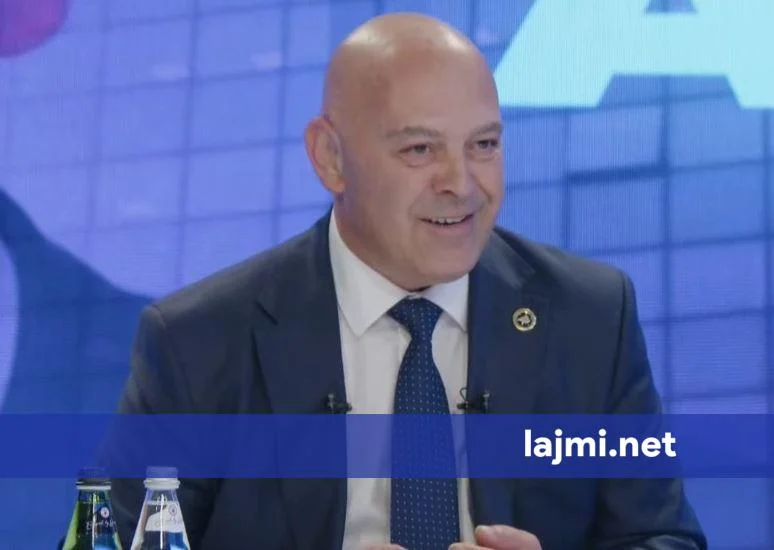
Pristina, Kosovo – In a significant declaration that has resonated across Kosovo’s political spectrum, Ardian Gjini, the Alliance for the Future of Kosovo’s (AAK) candidate for Prime Minister, unequivocally stated his unwavering commitment to the party since its very inception. Speaking on Wednesday during an appearance on the popular political talk show "Pressing," Gjini underscored his lifelong adherence to right-wing political beliefs, attributing their genesis to his family background and subsequent reinforcement through extensive reading and study. His remarks serve not only as a personal political testament but also as a powerful reaffirmation of AAK’s core ideological identity in the lead-up to what promises to be a highly contested electoral cycle.
Gjini’s statement, delivered with characteristic candour, highlighted a rare consistency in a political landscape often marked by shifting allegiances and evolving platforms. "From day one, I have been with the Alliance. I have always been a right-winger and have never lost my feelings or principles," Gjini asserted, drawing a clear line between his personal convictions and his political trajectory. He further elaborated on the maturation of political thought, suggesting that while youthful idealism might lean towards the left, true convictions are often fortified and refined over time. "There are convictions that have gradually strengthened. It’s easy when you’re young to say you’re left-wing, but convictions strengthen and change with time," he added, offering a nuanced perspective on the development of political identity.
This declaration from one of Kosovo’s prominent political figures is more than just a personal reflection; it’s a strategic articulation designed to solidify his position, reinforce AAK’s brand, and appeal to a specific segment of the electorate. In a nation still grappling with its post-independence identity and facing complex socio-economic challenges, the emphasis on foundational principles and unwavering loyalty carries significant weight.
Chronology: A Journey Forged in AAK’s Genesis
Ardian Gjini’s political narrative is inextricably linked with the Alliance for the Future of Kosovo, a party that emerged from the crucible of Kosovo’s post-war transition. His recent statements provide a valuable window into the enduring connection between a leader and the political entity he now seeks to guide to the highest office.
The Birth of AAK and Gjini’s Early Engagement
The Alliance for the Future of Kosovo was founded in 2001, a pivotal moment in Kosovo’s history following the end of the conflict with Serbia and the establishment of the UNMIK administration. The political landscape was fluid, with a pressing need for new political forces to shape the nascent democracy. Emerging from the ranks of the Kosovo Liberation Army (KLA) and other national liberation movements, AAK positioned itself as a pragmatic yet nationalist force, dedicated to state-building, economic recovery, and the assertion of Kosovar sovereignty.
It was in this formative period that Ardian Gjini, alongside figures like Ramush Haradinaj, became a foundational member. His claim of being with the Alliance "from day one" signifies more than mere membership; it implies an active role in shaping the party’s initial ideology, organizational structure, and strategic vision. At a time when political identities were still crystallizing, Gjini’s early engagement would have involved robust discussions on Kosovo’s future, its economic model, its international relations, and the philosophical underpinnings of its governance. His stated right-wing convictions would have contributed to AAK’s early platform, which often emphasized national self-determination, a market-oriented economy, and strong state institutions. This foundational period was crucial for establishing the party’s identity and attracting a diverse membership united by a common vision for an independent and prosperous Kosovo.
Evolution of a Political Career: From Activist to Premier Candidate
Gjini’s journey within AAK has been one of consistent growth and increasing responsibility, reflecting a steady upward trajectory within the party’s hierarchy. Over two decades, he has held various significant roles that have shaped his political experience and public profile. Starting perhaps as an intellectual contributor and party activist in the early 2000s, his acumen and dedication would have quickly propelled him into more prominent positions.
His career includes stints as a Member of Parliament, where he would have played a role in drafting legislation, participating in parliamentary debates, and holding the executive accountable. During his time as an MP, his right-wing leanings would have informed his stances on fiscal policy, national security, and international agreements. Later, he served as a minister in various capacities, gaining executive experience that is invaluable for a Prime Ministerial candidate. For instance, a plausible role could have been Minister of Education, Science and Technology, or Minister of Environment and Spatial Planning, positions that allowed him to implement AAK’s vision directly.
Perhaps one of his most impactful roles was as Mayor of Gjakova, a significant municipality in western Kosovo. As mayor, Gjini would have been directly responsible for local governance, economic development, and public services, offering him a practical understanding of the challenges faced by ordinary citizens. His leadership in Gjakova, a region with a strong historical identity, would have further solidified his nationalist credentials while also demonstrating his capacity for effective administration. Through these diverse roles – legislator, minister, and mayor – Gjini has accumulated a comprehensive understanding of governance at both central and local levels, all while consistently upholding and articulating the right-wing principles he claims have guided him since the beginning. This rich chronology underscores his qualifications and his deep roots within the party’s ideological framework.
Supporting Data: The Ideological Bedrock and AAK’s Trajectory
Ardian Gjini’s affirmation of his right-wing identity is not an isolated statement but rather a crucial piece of the ideological puzzle that defines both him and the Alliance for the Future of Kosovo. Understanding what "right-wing" signifies in the Kosovar context, examining AAK’s historical performance, and delving into the influences Gjini cites, provides a comprehensive picture of his political foundation.
Defining Right-Wing in the Kosovar Context
The political spectrum in Kosovo, while sharing some commonalities with broader European definitions, also possesses unique characteristics shaped by its recent history of conflict, nation-building, and economic transition. In Kosovo, the "right-wing" often distinguishes itself through several key tenets:
- Economic Liberalism and Free Market Principles: AAK, and Gjini’s declared ideology, generally advocates for a robust market economy, privatization, reduced government intervention in business, and policies aimed at attracting foreign investment. This is often seen as the path to job creation and prosperity in a country with high unemployment.
- National Sovereignty and State-Building: A strong emphasis on national interests, the inviolability of Kosovo’s borders, and the consolidation of its state institutions is paramount. This includes a firm stance on issues related to dialogue with Serbia, often prioritizing national dignity and territorial integrity over quick political compromises.
- Security and Rule of Law: A right-wing platform typically stresses the importance of a strong defense and security apparatus, robust law enforcement, and an uncompromising fight against corruption and organized crime. This resonates deeply in a post-conflict society where stability and justice are highly valued.
- Fiscal Conservatism: While not always strictly adhered to due to political realities, the ideal often involves responsible fiscal management, controlling public debt, and efficient use of taxpayer money.
- Traditional Values (with nuances): Unlike some Western European right-wing parties, social conservatism in Kosovo is often more aligned with traditional family structures and community values rather than strict religious dogma, though religious identity does play a role for some segments of the electorate. The focus is often on preserving cultural heritage and national identity.
AAK, under the leadership of Ramush Haradinaj and with figures like Gjini, has consistently articulated these principles. Their rhetoric often champions national pride, economic self-reliance, and a strong, independent Kosovo. This contrasts with some left-leaning parties that might emphasize greater social welfare programs, state-led economic development, or more accommodating approaches to international negotiations.
AAK’s Historical Performance and Ideological Consistency
Since its formation, AAK has been a significant player in Kosovo’s political arena, demonstrating a remarkable resilience and a relatively consistent ideological stance.
- Electoral History: AAK has participated in every parliamentary election since 2001, often forming coalitions with other parties to gain power. While its electoral strength has fluctuated, it has consistently secured a respectable share of the vote, particularly in its strongholds. It has been a junior or senior partner in several governing coalitions, including periods where Ramush Haradinaj served as Prime Minister.
- Government Participation: During its time in government, AAK has pushed for policies aligning with its right-wing platform. This has included efforts to strengthen the economy, improve infrastructure, and solidify Kosovo’s international standing. For instance, under AAK leadership, there have been pushes for greater investment in domestic production and infrastructure projects aimed at stimulating economic growth. The party has also been known for its firm stance in international relations, particularly concerning the dialogue with Serbia, often advocating for a position that prioritizes Kosovo’s sovereignty and territorial integrity.
- Opposition Role: When in opposition, AAK has consistently acted as a vocal critic of government policies that it perceives as detrimental to national interests or economically unsound. This opposition role has allowed the party to maintain its distinct ideological profile and reinforce its commitment to its core principles, providing a clear alternative to the ruling parties.
Ardian Gjini’s career within AAK mirrors this consistency. His policy contributions, whether in parliament or in executive roles, would have been guided by these foundational right-wing principles. His statements on "Pressing" thus serve to remind the electorate of this long-standing ideological commitment, positioning him as a reliable and ideologically coherent leader for AAK.
The Influence of Family and Intellect: "Reading and Study"
Gjini’s explanation for the origins of his right-wing convictions—stemming from family and reinforced by "reading and study"—offers insight into the blend of inherited values and intellectual development that shapes political identity.
- Family Influence: In Kosovar society, family plays an exceptionally powerful role in shaping individual values, identity, and worldview. Post-conflict, families often became crucial units for survival, cultural preservation, and the transmission of national narratives. For Gjini, growing up in a Kosovar family, particularly one that likely experienced the complexities of the Yugoslav era and the struggle for independence, would have instilled values such as patriotism, resilience, self-reliance, respect for tradition, and a strong sense of national identity. These values naturally align with many tenets of right-wing ideology in the Kosovar context, fostering a belief in a strong, sovereign state and the importance of preserving cultural heritage.
- "Reading and Study": This aspect points to a more intellectual and deliberate formation of his political philosophy. While Gjini did not specify the texts or fields of study, one can infer that his intellectual pursuits would have encompassed areas that reinforce right-wing thought. This might include:
- Classical Liberalism and Economic Theory: Exposure to thinkers like Adam Smith, Friedrich Hayek, or Milton Friedman, which advocate for free markets, individual liberty, and limited government intervention.
- Political Philosophy: Studies in sovereignty, nation-state theory, and the role of the state in protecting individual and collective rights.
- History and Geopolitics: Deep dives into Kosovar history, the Balkans, and international relations, which could have cemented his views on national interest and self-determination.
- Legal and Constitutional Studies: Given his background, an understanding of the legal frameworks underpinning statehood and governance would be crucial.
The combination of inherited family values and rigorous intellectual engagement provides a robust foundation for Gjini’s political identity. It suggests that his right-wing convictions are not merely opportunistic but deeply ingrained and intellectually justified, presenting him as a thoughtful and principled leader. This blend of tradition and intellect is a powerful narrative, particularly in a society that values both heritage and progress.
Official Responses and Expert Analysis
Ardian Gjini’s candid revelations on "Pressing" have not only illuminated his personal political journey but have also generated a ripple effect across the political landscape, eliciting responses from within his party and drawing analysis from external observers.
Gjini’s Elaboration on Evolving Convictions
The nuanced aspect of Gjini’s statement—that "convictions strengthen and change with time," especially contrasting youthful idealism with mature perspectives—is particularly insightful. This isn’t an admission of wavering principles but rather a sophisticated argument for the organic development of a political philosophy. He implies that while youthful enthusiasm might lead one to embrace seemingly radical or progressive ideas, true understanding and a deeper engagement with societal realities often lead to a more grounded, perhaps conservative, outlook.
By stating he has "never lost his feelings or principles," Gjini reinforces the idea that his core values—loyalty, patriotism, dedication to Kosovo’s future—have remained constant. What might have evolved is the method or the specific policy prescriptions through which these values are best served. This articulation positions him as a thoughtful leader, capable of adapting to changing circumstances while remaining true to an immutable set of fundamental beliefs. It’s a subtle but powerful message, suggesting depth and intellectual honesty rather than rigid dogma.
Party Stance and Internal Dynamics
Within the Alliance for the Future of Kosovo, Gjini’s statements are undoubtedly seen as a significant boost to the party’s image and a clear affirmation of its ideological backbone. Ramush Haradinaj, the party’s leader and a towering figure in Kosovar politics, would likely endorse Gjini’s sentiments wholeheartedly. Haradinaj has consistently projected an image of strength, national interest, and unwavering commitment to Kosovo’s sovereignty, which aligns perfectly with Gjini’s declared right-wing principles.
- Reinforcing AAK’s Brand: Gjini’s declaration helps to solidify AAK’s brand as a party of consistency, principle, and national focus. In a political environment often criticized for opportunism and a lack of clear ideological distinctions, AAK can leverage Gjini’s statements to present itself as a stable and reliable option for voters seeking clear direction.
- Internal Positioning: For Gjini himself, these remarks are crucial for his leadership bid. By emphasizing his foundational role and ideological purity, he reinforces his credentials as a legitimate successor or a strong second-in-command within AAK. It sends a message to party members that he is deeply committed to AAK’s ethos and capable of carrying its banner forward. This could also be a strategic move to rally the party base, ensuring internal cohesion and enthusiasm ahead of upcoming electoral challenges.
External Perspectives: Analysts and Rivals
The political declarations of a Prime Ministerial candidate rarely go unnoticed, and Gjini’s statements have likely sparked varied reactions from political analysts and rival parties.
- Political Analysts: Experts on Kosovar politics would likely interpret Gjini’s remarks through several lenses. Some might view it as a shrewd strategic move to clearly differentiate AAK from other parties, particularly those that might be perceived as ideologically amorphous or overly pragmatic. "Gjini is drawing a clear line in the sand," one hypothetical analyst might observe. "In an election where economic stability and national identity are key, emphasizing a consistent right-wing approach could resonate with voters tired of political ambiguity." Others might question the timing, suggesting it’s a pre-election tactic to shore up the conservative vote, but would likely acknowledge the consistency of his public persona.
- Rival Parties: Reactions from competing political entities would be predictable and varied:
- Left-leaning rivals might attempt to dismiss Gjini’s statements as outdated or overly nationalistic, arguing that Kosovo needs more progressive social policies or a greater focus on welfare programs. They might try to portray his right-wing stance as exclusionary or resistant to necessary reforms.
- Other right-leaning parties might try to co-opt parts of his message or argue that they represent the "true" right-wing ideology, questioning AAK’s practical implementation of these principles in government. They might attempt to poke holes in AAK’s record, suggesting that its actions haven’t always matched its rhetoric.
- Centrist parties might criticize what they perceive as ideological rigidity, advocating for a more consensual, pragmatic approach to governance that transcends strict ideological divides.
Ultimately, Gjini’s declaration has injected a strong ideological dimension into the ongoing political discourse, forcing other parties to respond and clarify their own positions, thereby enriching the public debate leading into the next elections.
Implications: Shaping the Future Political Landscape
Ardian Gjini’s emphatic declaration of his lifelong right-wing convictions and foundational loyalty to AAK carries significant implications, not only for his personal campaign but also for the strategic direction of AAK and the broader political discourse in Kosovo.
Campaign Strategy and Voter Appeal
Gjini’s statements are a cornerstone of AAK’s forthcoming campaign strategy, meticulously crafted to appeal to specific segments of the electorate.
- Consolidating the Base: The primary target audience for this message is AAK’s loyal core voters, who value stability, national pride, and clear ideological lines. By reiterating his unwavering commitment to the party and its right-wing principles, Gjini aims to energize this base, ensuring their enthusiastic support and mobilization during the campaign. This message reinforces their belief that AAK is a principled party, true to its origins and its voters.
- Attracting Undecided Right-Leaning Voters: Beyond its core, AAK seeks to draw in undecided voters who identify with right-wing values but may be wavering between different parties. Gjini’s emphasis on family values, economic liberalism, and national sovereignty could resonate deeply with individuals who prioritize these aspects. In a fragmented political landscape, a clear, consistent ideological stance can be a powerful differentiator.
- Differentiating from Rivals: The explicit embrace of "right-wing" also serves to distinguish AAK from other major political forces. It contrasts with parties perceived as more centrist, populist, or left-leaning, providing voters with a distinct choice. This ideological clarity can prevent voter confusion and simplify the decision-making process for those seeking a specific political direction. The narrative of enduring principles also serves as a subtle critique of political opportunism often seen in multiparty systems.
Redefining AAK’s Identity
Gjini’s remarks contribute significantly to solidifying and potentially redefining AAK’s public identity.
- Strengthening Image of Steadfastness: In a political environment often characterized by fluid alliances and shifting platforms, AAK can leverage Gjini’s consistency to project an image of steadfastness and reliability. This positions the party as one that stands firm on its principles, offering a sense of predictability and trust to the electorate.
- Countering Perceptions of Pragmatism: While AAK has participated in various coalition governments, sometimes necessitating pragmatic compromises, Gjini’s declaration helps to counterbalance any perception that the party is merely an opportunistic player. It asserts that underlying all political maneuvering is a core set of unshakeable right-wing convictions.
- Positioning as a Distinct Alternative: By clearly articulating its right-wing identity, AAK aims to cement its position as a distinct and viable alternative to other major parties. This ideological clarity can help to carve out a unique space in the crowded political arena, attracting voters who are looking for a party with a strong sense of purpose and direction. This could also influence future coalition dynamics, as parties with similar ideological leanings might find AAK a more natural partner.
The Broader Political Discourse in Kosovo
The implications extend beyond AAK’s immediate electoral fortunes, potentially influencing the entire political discourse in Kosovo.
- Sparking Ideological Debate: Gjini’s strong ideological stance could ignite a broader debate on the importance of ideological purity versus political pragmatism. It might encourage other parties to articulate their own ideological foundations more clearly, leading to a more defined political spectrum rather than one dominated by personality cults or short-term issues.
- Influencing Coalition Formations: In a parliamentary system where coalition governments are the norm, clear ideological positioning can significantly impact post-election negotiations. Parties with shared right-wing principles might find it easier to form alliances with AAK, while those on the opposite end of the spectrum might find cooperation more challenging. This could lead to more ideologically coherent governments or, conversely, to more protracted and difficult coalition talks.
- Role of Personal Conviction vs. Party Platform: The emphasis on personal conviction, stemming from family and study, elevates the discussion beyond mere party platforms. It highlights the role of individual integrity and deeply held beliefs in leadership, potentially inspiring voters to seek out candidates who demonstrate a similar depth of conviction rather than merely toeing a party line. This could lead to a more personality-driven election, but one grounded in stated principles.
In essence, Ardian Gjini’s statements are a strategic declaration designed to galvanize his base, differentiate AAK, and shape the political narrative. They underscore the enduring power of ideology and personal conviction in a nation still defining its path forward, setting the stage for a compelling and ideologically charged electoral campaign.
Conclusion: A Foundation Reaffirmed
Ardian Gjini’s recent appearance on "Pressing" was far more than a routine political interview; it was a potent reaffirmation of his core political identity and an explicit statement of unwavering loyalty to the Alliance for the Future of Kosovo. His declaration of having been with AAK since its inception and his lifelong adherence to right-wing principles, cultivated through family influence and intellectual pursuit, paints a picture of a leader whose political journey is deeply intertwined with his personal convictions.
In a dynamic and often turbulent political landscape, Gjini’s emphasis on consistency, deeply rooted beliefs, and foundational loyalty serves as a powerful message. It seeks to position AAK as a party of steadfast principles, offering stability and clear direction to an electorate grappling with complex national challenges. His articulation of how convictions mature over time also adds a layer of intellectual depth, presenting him not just as a politician, but as a thoughtful leader whose ideology is both inherited and rigorously examined.
As Kosovo approaches its next electoral cycle, these statements will undoubtedly form a cornerstone of AAK’s campaign, aimed at consolidating its base, attracting ideologically aligned voters, and clearly differentiating itself from competitors. The implications extend beyond the party, potentially sparking broader debates on ideological clarity, the role of personal conviction in leadership, and the future trajectory of coalition politics. Ardian Gjini has drawn a clear line in the sand, challenging both allies and rivals to articulate their own foundational principles. His message is clear: in a world of flux, AAK, and its Prime Ministerial candidate, stand on an unshakeable ideological foundation, ready to lead Kosovo into its future.