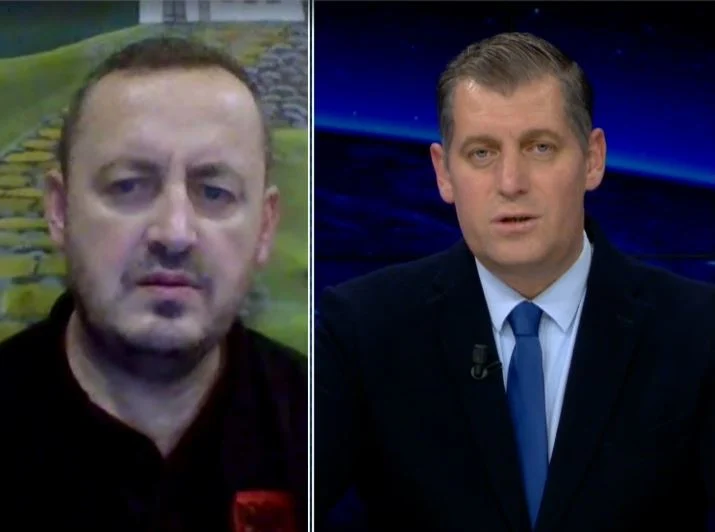
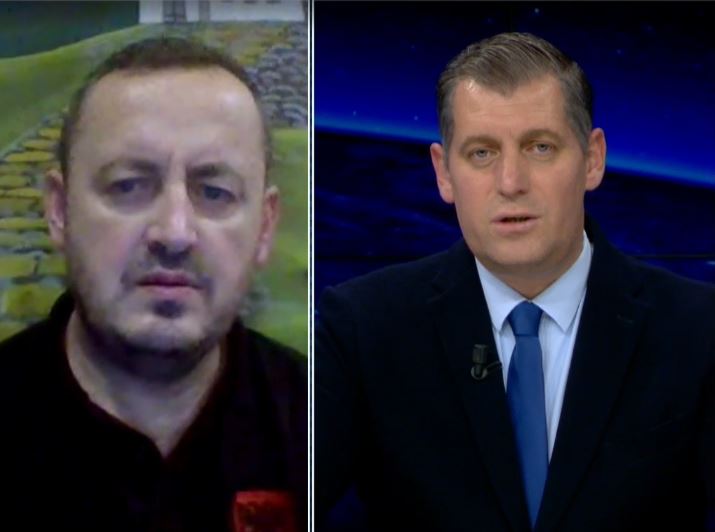
Tirana, Albania – October 24, 2026 – A major political storm has erupted in Albania following explosive accusations by prominent journalist Fatos Mahmutaj, who claims that masked individuals participating in a recent anti-government protest were armed with Molotov cocktails directly from the headquarters of the Democratic Party (PD). The allegations, made during an interview on ABC News’ "Breaking News" program, have sent shockwaves across the political landscape, painting the main opposition party as the instigator and source of the violence that marred the capital city.
The protest, which had initially gathered peacefully to voice discontent over various government policies, rapidly devolved into chaos and clashes, particularly in the vicinity of the Democratic Party’s central offices. Mahmutaj’s statements, delivered with a strong conviction, directly implicated the PD leadership in orchestrating the unrest, describing the incident as the "last arsenal" of what he termed Sali Berisha’s "revolution." This accusation not only raises serious questions about the nature of political dissent in Albania but also carries profound implications for the rule of law, public safety, and the future of the nation’s fragile democracy. The journalist’s call for civil lawsuits against those identified as perpetrators underscores the gravity of the situation, demanding accountability for the damages and disruption inflicted upon Tirana.
The Core Allegations: Mahmutaj’s Explosive Claims
During his late-night interview on October 24, 2026, Fatos Mahmutaj, a seasoned political commentator known for his often-provocative insights, did not mince words when discussing the day’s events. Speaking to "Breaking News" on ABC News, Mahmutaj delivered a damning indictment of the Democratic Party, directly attributing the violence to actions allegedly originating from within its ranks and premises.
A Dire Warning Realized
Mahmutaj asserted that the masked individuals involved in the violent segments of the protest were not merely opportunistic agitators but were, in fact, equipped with incendiary devices from the PD headquarters. "From the PD, they were armed with Molotovs, and they returned to where they started," he stated emphatically. This claim suggests a premeditated act, moving beyond spontaneous escalation to an organized distribution of weapons. Mahmutaj highlighted that the events unfolded precisely as had been "warned by the PD," implying that the party’s rhetoric had foreshadowed such an outcome.
His core message was unambiguous: "We saw who was the source of violence and chaos in Tirana." This direct accusation positions the Democratic Party not as a victim or a mere participant in a protest gone awry, but as the principal architect of the disorder. The financial and social costs of the unrest, Mahmutaj argued, should be borne by those responsible. "Compensation should be charged to them," he insisted, advocating for a clear path to accountability for property damage and public disruption.
The "Last Arsenal" of Berisha’s Revolution
Mahmutaj further elaborated on the political significance of the alleged arming, framing it within the context of the Democratic Party’s ongoing struggle and the leadership of Sali Berisha. "Today, in their support, the PD brought out its last arsenal, it threw its revolutionaries onto the ground," he declared, suggesting that the party had deployed its most extreme elements in a desperate attempt to achieve its objectives.
This characterization of the masked individuals as "revolutionaries" under the PD’s command implies a strategic deployment rather than a rogue element. Mahmutaj viewed this as a critical turning point for the opposition. "This was the maximum of Berisha’s revolution. This was its end, when that group of looters was identified, this was the last arsenal that Sali Berisha possessed." The journalist’s tone suggested that this alleged tactic represented a desperate, final gambit that, instead of strengthening the opposition, had exposed its most controversial methods and potentially marked its decline.
Crucially, Mahmutaj stressed that the perpetrators were not anonymous. "These are all identified," he claimed, a statement that immediately places pressure on law enforcement and judicial bodies to act. He concluded his segment with a direct call for legal recourse: "A civil lawsuit must be filed against these people." This call signals a move beyond political condemnation to concrete legal action, aiming to hold individuals and, by extension, the party accountable in the courts.
A Chronology of Confrontation: The October 24th Protest
The events of October 24, 2026, unfolded against a backdrop of simmering political discontent and heightened rhetoric, culminating in scenes of urban unrest that have deeply troubled Albanian society.
Pre-Protest Build-Up
For weeks leading up to October 24, the political atmosphere in Albania had been increasingly charged. The Democratic Party, along with other opposition factions, had been vocal critics of the ruling Socialist Party’s government, citing widespread corruption, economic stagnation, and a perceived erosion of democratic institutions. A specific point of contention had been a recently passed legislative package related to public-private partnerships, which the opposition claimed favored government-affiliated businesses and lacked transparency.
Calls for a major protest were issued days in advance, with opposition leaders, including prominent figures from the Democratic Party, urging citizens to take to the streets for a "peaceful and resolute" demonstration against what they termed "the corrupt regime." Social media campaigns amplified these calls, promising a large turnout that would send an "unmistakable message" to the government. Law enforcement agencies, anticipating a significant crowd, had already announced heightened security measures around key government buildings and major boulevards in Tirana.
The Day of Disorder
The protest began mid-morning, with thousands of citizens gathering in Skanderbeg Square, the heart of Tirana. Initially, the demonstration proceeded peacefully. Speakers from various opposition parties addressed the crowd, reiterating their grievances and demanding the government’s resignation. The atmosphere, though charged, remained orderly, with families and students among the participants.
However, by early afternoon, as the protest route approached the main boulevard and the vicinity of the Democratic Party headquarters, a noticeable shift occurred. A smaller, distinct group of individuals, many with their faces obscured by scarves or masks, began to emerge from the periphery of the main crowd. These individuals, distinct from the broader peaceful protesters, started to engage in provocative actions, including throwing smoke bombs and isolated objects towards police cordons.
It was during this critical juncture that eyewitnesses and later, journalist Fatos Mahmutaj, alleged the direct involvement of the PD headquarters. According to Mahmutaj and several unconfirmed reports, masked figures were seen entering and exiting the PD building, with some observed to be handling suspicious packages. Shortly thereafter, the situation escalated dramatically. Molotov cocktails were reportedly deployed, targeting police vehicles and public infrastructure. Flames erupted in several locations, adding to the thick smoke and confusion. Clashes between this masked group and riot police intensified, turning parts of the city center into a battleground. Police responded with tear gas and water cannons, attempting to disperse the violent elements and protect both property and the peaceful protesters caught in the fray. Reports indicated minor injuries among both protesters and police officers, primarily from thrown objects and tear gas exposure.
Post-Protest Fallout
By late afternoon, police managed to regain control, pushing back the violent factions and gradually dispersing the remaining crowds. The aftermath revealed a scene of significant damage: charred patches on asphalt, broken windows, overturned bins, and the lingering smell of smoke and tear gas. The immediate fallout was characterized by a torrent of condemnations from government officials, who swiftly denounced the violence and called for a thorough investigation.
The Democratic Party, while condemning the police’s use of force and expressing solidarity with the "peaceful" protesters, largely distanced itself from the violent acts, attributing them to provocateurs or individuals acting independently. However, Mahmutaj’s allegations fundamentally challenged this narrative, shifting the focus from external instigators to internal orchestration. Cleanup crews immediately began working to restore order to the damaged areas, while political commentators and citizens alike grappled with the implications of what had transpired, questioning the true nature of the day’s events and the responsibility for the escalating unrest.
Supporting Data and Expert Perspectives
The gravity of Fatos Mahmutaj’s accusations necessitated a deeper examination, drawing on various sources and expert analyses to either corroborate or refute the claims. While a full, independent investigation is pending, preliminary reports and expert opinions have begun to surface, adding layers of complexity to the unfolding narrative.
Eyewitness Accounts and Police Reports
Following the October 24th protest, several anonymous eyewitnesses came forward, their accounts partially aligning with Mahmutaj’s assertions. A vendor operating near the PD headquarters, speaking on condition of anonymity, reported seeing "young men, some with their faces covered, entering and exiting the building frequently in the hours leading up to the clashes." While unable to confirm the nature of packages exchanged, the vendor noted unusual activity. Another resident living opposite the PD building claimed to have observed "small groups gathering outside the party’s entrance, appearing to coordinate before joining the main protest stream." These accounts, while circumstantial, contribute to a pattern that supports the idea of an organized element operating in proximity to the PD.
Preliminary police reports, though not officially released in full detail, indicated the recovery of several unignited Molotov cocktails and components (bottles, rags, flammable liquid residue) from the protest area, particularly concentrated near the PD headquarters and along the routes taken by the most violent factions. Forensic analysis is reportedly underway to trace the origin of these materials. Furthermore, police sources, speaking off the record, mentioned that surveillance footage from municipal cameras and private establishments in the vicinity of the PD building is being meticulously reviewed. While no definitive public statement has been made, the existence of such footage could be crucial in either substantiating or disproving Mahmutaj’s specific claim of arming from within the party premises.
Security Analyst Views
Security analysts have weighed in on the unprecedented nature of the allegations. Dr. Erion Basha, a leading expert on internal security and political violence at the Albanian Institute for Security Studies, noted that "if proven true, these allegations represent a dangerous escalation in political protest tactics, moving beyond spontaneous anger to calculated, almost paramilitary-style, engagement." Dr. Basha highlighted that the use of Molotov cocktails indicates a deliberate intent to cause damage and instill fear, a significant departure from traditional forms of peaceful dissent.
He also analyzed the tactics observed during the protest, suggesting a clear distinction between the mass of legitimate protesters and the smaller, organized groups. "The rapid shift from peaceful assembly to targeted violence, coupled with the appearance of masked individuals, points towards pre-planning and coordination," Dr. Basha explained. He suggested that such groups often serve to delegitimize broader protests, but if linked to a political party, it raises serious questions about the party’s commitment to democratic processes. "The idea of a political party actively arming individuals, even with improvised incendiary devices, strikes at the very heart of democratic norms and potentially crosses into criminal territory," he concluded.
Historical Context of Political Unrest
Albania has a history marked by intense political rivalry and, at times, volatile public demonstrations. Past protests have occasionally spiraled into violence, often attributed to political polarization and a lack of constructive dialogue. The infamous events of 1997, where civil unrest led to widespread anarchy, serve as a stark reminder of the fragility of order in the face of deep political divisions. More recently, protests against government corruption or electoral irregularities have seen clashes with police, but rarely has there been a direct accusation of a major political party actively supplying weapons to protesters from its headquarters.
This incident, if substantiated, would mark a significant and troubling departure from even the most contentious episodes of Albania’s recent political past. It would imply a deliberate strategy of escalation, blurring the lines between political opposition and criminal enterprise. Historically, accusations of "provocateurs" have been common from both sides of the political spectrum during protests, but Mahmutaj’s claims are distinct in their specificity and direct implication of a party’s physical infrastructure as a source of violence. This context underscores the potential severity of the October 24th events and the need for a thorough, unbiased investigation to prevent further erosion of public trust and democratic stability.
Official Responses and Political Repercussions
The aftermath of Fatos Mahmutaj’s allegations triggered a cascade of official responses, each reflecting the deep political chasm within Albania. The accusations have not only intensified the rhetoric between the government and opposition but have also drawn scrutiny from civil society and international observers.
Democratic Party’s Vehement Denial
The Democratic Party, caught in the crosshairs of Mahmutaj’s explosive claims, reacted with swift and vehement denials. High-ranking PD officials, including former Prime Minister Sali Berisha (who still wields significant influence within the party) and the current party leader (if different), immediately condemned the journalist’s statements as a "vicious smear campaign orchestrated by the government" designed to delegitimize the opposition.
In a press conference held hours after Mahmutaj’s interview, a PD spokesperson dismissed the accusations as "baseless fabrications, a desperate attempt by the Socialist Party and its media proxies to deflect attention from the real issues of corruption and misgovernance that brought thousands of citizens to the streets." The party asserted that the protest was overwhelmingly peaceful and that any acts of violence were the work of "government provocateurs" strategically deployed to discredit the legitimate opposition. "Our headquarters is a symbol of democracy, not a warehouse for weapons," stated a visibly agitated PD official. "These are McCarthyite tactics designed to criminalize political dissent and silence the voice of the people." The PD also threatened legal action against Mahmutaj and ABC News for defamation, signaling their intent to fight the allegations on multiple fronts. They reiterated their calls for an independent investigation into police brutality during the protest, shifting blame back onto state forces.
Government and Ruling Party Reactions
Conversely, the ruling Socialist Party and government officials quickly seized upon Mahmutaj’s allegations, presenting them as definitive proof of the opposition’s destructive intentions. Prime Minister Edi Rama, speaking to the media, condemned the violence and subtly reinforced Mahmutaj’s narrative. "The chaos we witnessed today was not spontaneous. It was premeditated, and the sources of that premeditation are becoming increasingly clear," Rama stated, without directly naming the PD but leaving little doubt as to his implication.
The Minister of Interior, Bledi Çuçi, announced that a full investigation into the protest violence had been launched, promising transparency and swift justice. "No one is above the law. Those who instigate violence, those who arm individuals to cause destruction, will face the full force of justice," Çuçi declared, echoing Mahmutaj’s call for accountability. Government-aligned media outlets extensively covered Mahmutaj’s interview, often presenting his claims as established facts, further polarizing public opinion. The Socialist Party’s parliamentary group issued a statement demanding that the judiciary act decisively on the "evidence presented by the journalist," transforming the media accusation into a political demand for legal action.
Civil Society and International Observer Statements
Civil society organizations in Albania expressed deep concern over the escalating political rhetoric and the use of violence. The Albanian Helsinki Committee called for calm from all political actors and urged for a transparent and impartial investigation into both the violence and the allegations made by Mahmutaj. "The integrity of democratic processes hinges on peaceful dissent and a firm rejection of any form of political violence," read their statement, emphasizing the need for evidence-based conclusions rather than partisan accusations.
International observers, including representatives from the European Union delegation and the U.S. Embassy in Tirana, issued cautious statements, calling on all parties to exercise restraint and uphold democratic principles. While refraining from commenting directly on the specific allegations, they underscored the importance of ensuring the right to peaceful protest while condemning any acts of violence. "We urge a thorough and impartial investigation into the events of October 24th, and call on political leaders to engage in constructive dialogue to de-escalate tensions," stated a spokesperson for the EU delegation, highlighting the need for accountability and rule of law to maintain Albania’s European integration trajectory. The international community’s measured response indicates a desire for stability but also a watchful eye on the unfolding political drama.
Implications for Albania’s Political Future
The events of October 24, 2026, and the subsequent accusations by Fatos Mahmutaj, carry far-reaching implications for Albania’s political future, threatening to further destabilize an already volatile landscape and erode fundamental democratic norms.
Erosion of Public Trust and Democratic Norms
Perhaps the most significant consequence of these allegations is the potential for a deeper erosion of public trust in political parties and democratic institutions. If the accusations against the Democratic Party are proven true, it would fundamentally undermine the credibility of the opposition as a constructive force in a democratic system. Citizens, already cynical about political motives, might view all protests with suspicion, fearing that legitimate grievances could be exploited for violent ends. This erosion of trust can lead to widespread apathy, disengagement from political processes, and a dangerous acceptance of violence as a political tool.
Furthermore, the normalization of violence in protests, whether by state actors or political parties, sets a dangerous precedent. It blurs the lines between legitimate dissent and criminal behavior, making it harder for genuine grassroots movements to gain public support without being tarred by association. The political culture could shift towards confrontation over consensus, making governance and opposition more difficult and divisive.
Legal and Judicial Challenges
Mahmutaj’s call for civil lawsuits and the government’s pledge for a thorough investigation highlight the formidable legal and judicial challenges ahead. Prosecuting cases of political violence, especially when a major party is implicated, is inherently complex. The judiciary will face immense pressure from both political sides, risking accusations of bias regardless of the outcome. Ensuring a truly independent and impartial investigation, free from political interference, will be crucial for the legitimacy of the justice system.
The identification and prosecution of the "masked individuals" and those who allegedly armed them will require robust evidence, including forensic analysis, surveillance footage, and reliable witness testimonies. The proposed civil lawsuits for damages could also set a precedent, potentially holding political parties directly liable for the actions of individuals associated with their protests. The legal battles are likely to be protracted, consuming significant public resources and keeping the political temperature high for months, if not years.
Reshaping the Opposition Landscape
The accusations could dramatically reshape the opposition landscape in Albania. If the Democratic Party is found culpable, its reputation would suffer a severe blow, potentially leading to internal divisions, leadership challenges, and a decline in popular support. Such a scenario could weaken the main opposition bloc, creating a vacuum that might be filled by new political formations or further fragmenting the existing opposition.
Conversely, if the PD successfully refutes the allegations and proves they were victims of a smear campaign, it could emerge stronger, rallying its base and presenting itself as a target of government repression. However, the shadow of the accusations itself will likely persist, impacting the party’s ability to form alliances and effectively challenge the ruling majority. The incident also puts a spotlight on the rhetoric and tactics employed by opposition leaders, forcing a re-evaluation of how dissent is expressed and organized in Albania.
Call for Accountability and Reconciliation
Ultimately, the events of October 24th serve as a critical juncture for Albanian democracy. There is an urgent need for accountability for all acts of violence, regardless of their source. Independent institutions, particularly the judiciary and law enforcement, must be allowed to conduct their work without political pressure. Beyond legal proceedings, there is a broader imperative for political reconciliation. Leaders from across the spectrum must commit to de-escalating rhetoric, fostering constructive dialogue, and upholding democratic values. Failure to do so risks plunging Albania into deeper political instability, jeopardizing its aspirations for European integration and the long-term well-being of its citizens.
Conclusion
The allegations made by journalist Fatos Mahmutaj regarding the Democratic Party’s alleged role in arming protesters with Molotov cocktails represent a critical moment in Albania’s tumultuous political history. The claims, if substantiated, point to a dangerous escalation of political confrontation, threatening to undermine public trust, democratic norms, and the rule of law. As investigations proceed and political rhetoric continues to flare, the nation stands at a crossroads. The ability of Albania’s institutions to conduct a fair and impartial inquiry, coupled with the willingness of its political actors to prioritize national stability over partisan gain, will determine the trajectory of its democratic future and its path towards European integration. The events of October 24, 2026, will undoubtedly be remembered as a stark reminder of the fragile balance between protest and peace, and the profound responsibility of political leadership in a democratic society.