In an era where the efficacy of life-saving medicines is inextricably linked to the precision of the global supply chain, DHL is doubling down on its infrastructure. The logistics giant is actively expanding its "Health Logistics Cold Chain Network," a sophisticated web of dedicated healthcare corridors designed to meet the rigorous demands of pharmaceutical manufacturers, biotech firms, and healthcare providers. By integrating specialized temperature-controlled infrastructure with high-frequency flight routes, DHL is positioning itself as the backbone of global pharmaceutical distribution.
Main Facts: Strengthening the Cold Chain Infrastructure
At its core, the DHL Health Logistics Cold Chain Network is an ecosystem of dedicated transport routes and specialized facilities built specifically for sensitive goods. This includes the transport of pharmaceuticals, biologics, vaccines, and clinical trial materials—products that often lose their viability if subjected to even minor temperature fluctuations.
The network operates as a cohesive unit, ensuring that from the moment a product leaves a manufacturing plant to the moment it arrives at its destination, it remains within a strict, compliant thermal environment. According to DHL Freight spokesperson Laura Lehnen, these corridors are a direct response to the escalating demand for reliable connectivity between major healthcare markets.
The logistical backbone of these operations is largely provided by DHL’s Boeing 777 freighter fleet. These aircraft are not merely cargo haulers; they are technologically advanced platforms equipped with three distinct compartments, each capable of maintaining dedicated temperature settings. This allows for the simultaneous transport of diverse medical products that may require varying thermal profiles, ensuring that a batch of vaccines and a pallet of temperature-sensitive biologic medication can share a flight while maintaining their individual integrity.
Chronology of Expansion and Recent Milestones
The evolution of DHL’s healthcare footprint has been marked by a series of strategic launches and infrastructure investments aimed at tightening the gap between major global hubs.
- Early 2025 (Strategic Route Launch): DHL Group officially launched the Brussels (BRU) to Cincinnati (CVG) route. This corridor serves as a critical artery for transatlantic healthcare trade, connecting the European pharmaceutical heartland with one of DHL’s primary North American gateways.
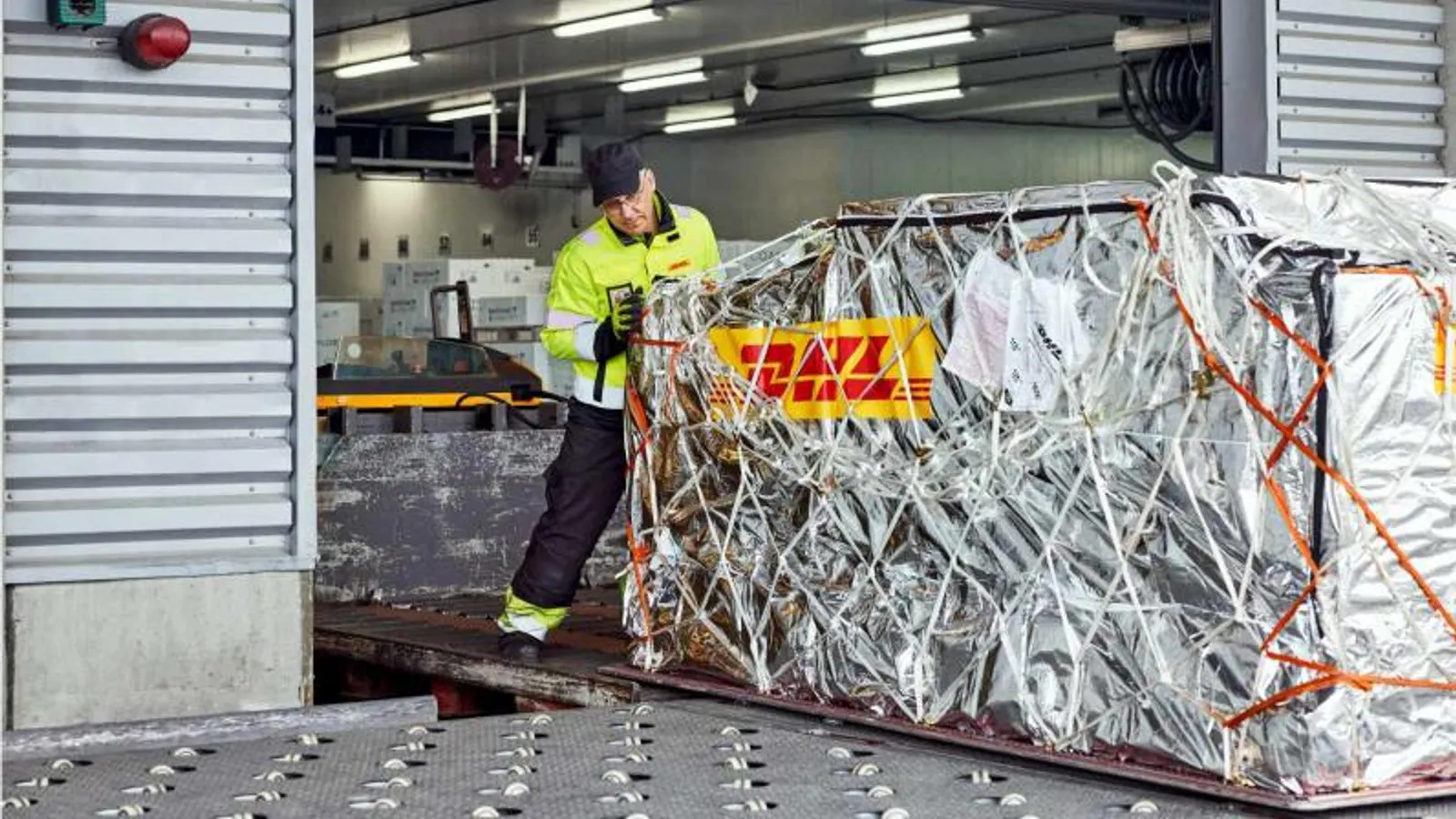
- Ongoing (Cincinnati Gateway Enhancements): The Cincinnati/Northern Kentucky International Airport (CVG) hub has become the epicenter of DHL’s US healthcare operations. Beyond existing temperature-controlled storage and Good Distribution Practice (GDP)-compliant facilities, the company is layering in new technology to mitigate the risks posed by extreme weather.
- The 2027 Roadmap: Looking ahead, DHL has set a firm timeline for the completion of a new airside facility at CVG. This facility will provide temperature-controlled storage for Unit Load Devices (ULDs) in close proximity to the aircraft, minimizing the "tarmac time" where goods are most vulnerable to ambient temperature shifts.
- Off-Airport Development: Concurrent with airside investments, DHL is constructing an off-airport facility that will house advanced ULD build-up and break-down capabilities alongside expanded pallet storage, creating a seamless end-to-end processing environment.
Supporting Data and Market Dynamics
The logistics industry is currently witnessing a massive pivot toward the Asia-Pacific region, a trend that is clearly reflected in DHL’s capacity allocation. While the company maintains a global focus, the current demand signals are heavily weighted toward inbound shipments to Asia.
"We are seeing stronger demand from pharmaceutical manufacturing hubs in North America and Europe to Asia," Lehnen noted. Consequently, a significant portion of the available air freight capacity within the network is currently prioritized for these specific trade flows.
However, the architecture of the network is designed for agility. Because the infrastructure is built to be bi-directional, DHL retains the flexibility to pivot capacity as customer demand evolves and manufacturing patterns shift. This adaptability is critical in an industry where product launches, clinical trial phases, and regional disease outbreaks can cause sudden, dramatic spikes in logistics requirements.
Furthermore, the scale of investment at the CVG hub—including the deployment of five specialized temperature-controlled dollies—highlights a move toward "zero-exposure" logistics. By ensuring that goods are shielded even during the transition from aircraft to climate-controlled warehouse, DHL is attempting to set a new gold standard for cold chain compliance.
Official Responses and Strategic Vision
The expansion of the cold chain network is not merely an operational update; it is a strategic pillar of DHL’s broader corporate vision. In discussions regarding the expansion, DHL leadership has emphasized the concept of "healthcare corridors." These are not just routes; they are predefined, tested, and validated paths that minimize risk through consistent handling processes.
"DHL can support both directions of trade as customer demand evolves and manufacturing and distribution patterns continue to develop," says Lehnen. This sentiment reflects the company’s intent to act as a partner to pharmaceutical firms rather than a mere service provider. By investing in GDP-compliant facilities in Indianapolis—a secondary, yet vital, healthcare node in the US—DHL is creating a redundant and robust safety net for its clients.
The focus on "near-future" deployments, such as the temperature-controlled dollies, underscores an acute awareness of climate volatility. As global temperatures rise and extreme weather events become more frequent, the logistics industry is under pressure to prove that its "cold chain" can withstand external environmental stressors.
Implications for the Global Supply Chain
The broader implications of DHL’s expansion are significant, affecting how pharmaceutical companies plan their global distribution strategies and how competitors respond to the market.
1. Competitive Pressure
The healthcare logistics space is becoming increasingly crowded and specialized. FedEx, a primary competitor, has responded with similar vigor. The launch of FedEx’s dedicated life sciences suite and the establishment of the Dublin-to-Indianapolis route represent a direct challenge to DHL’s dominance in the sector. This competitive "arms race" is ultimately beneficial for the healthcare industry, as it forces logistics providers to constantly upgrade their technology, security, and compliance standards.
2. The Rise of "High-Touch" Logistics
The nature of the goods being transported is changing. As the industry moves away from small-molecule chemical drugs toward biologics, cell and gene therapies, and complex vaccines, the margin for error is shrinking to zero. These products require not just cold storage, but active monitoring, real-time tracking, and specialized handling. DHL’s focus on ULD-level climate control is a direct response to the shift toward these "high-touch" products.
3. Risk Mitigation and Resilience
The reliance on hubs like CVG and Brussels indicates a shift toward centralized, high-efficiency logistics nodes. By concentrating resources in these "gateways," DHL can ensure a higher level of oversight. However, this also highlights a dependency on specific infrastructure. The ongoing investments—particularly the 2027 airside facilities—suggest that the industry is moving toward a model where "in-transit" is treated with the same environmental rigor as "in-storage."
4. Future-Proofing for Pharma
For pharmaceutical companies, the existence of these dedicated corridors provides a level of predictability that is essential for long-term planning. Companies can now rely on established, validated lanes for their most sensitive products, reducing the need for costly, individual validation studies for every shipment. This efficiency allows firms to focus more on R&D and less on the complexities of thermal regulation.
Conclusion
DHL’s commitment to its Health Logistics Cold Chain Network is a definitive signal that the logistics industry is no longer just moving goods; it is protecting human health. Through the strategic deployment of Boeing 777 freighter capacity, the expansion of its CVG gateway, and a forward-looking investment in ground-handling technology, the company is creating a resilient framework for the next generation of medical products.
As the industry continues to navigate the complexities of global trade and the increasing sensitivity of pharmaceutical payloads, the battle for the "cold chain" will likely intensify. With players like DHL and FedEx racing to build the most sophisticated, compliant, and reliable infrastructure, the clear winners will be the patients who rely on the timely, safe, and effective delivery of the world’s most critical medicines. The expansion of these healthcare corridors is not just a triumph of logistics—it is an essential evolution in the global healthcare architecture.