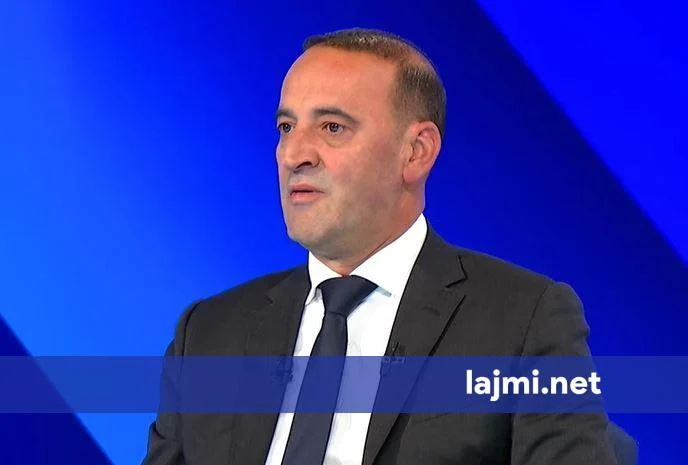
Pristina, Kosovo – A powerful political storm is brewing in Kosovo as Daut Haradinaj, a prominent member of the Alliance for the Future of Kosovo (AAK) Presidency and brother to former Prime Minister Ramush Haradinaj, has launched a blistering attack on the current government led by Prime Minister Albin Kurti. Haradinaj’s criticism centers on the government’s perceived inaction and even "aggression" towards the former leaders of the Kosovo Liberation Army (KLA) currently facing war crimes charges at the Kosovo Specialist Chambers (KSC) in The Hague. In a highly charged statement, Haradinaj claimed the Kurti administration has, at times, been "more aggressive than Serbia" in its approach to these deeply sensitive trials, igniting a fierce debate about national identity, justice, and political accountability.
Main Facts: A Stinging Indictment of Government Conduct
Speaking on Klan Kosova’s "Rubikon" program, Daut Haradinaj did not mince words, directly accusing the Kurti government of a severe dereliction of duty and a stance that, he argued, inadvertently aids those who seek to tarnish the KLA’s legacy. The core of his accusation revolves around the government’s alleged passivity and, in some instances, active measures that he believes undermine the defense and public standing of the former KLA commanders, often referred to as the "KLA foursome" – Hashim Thaçi, Kadri Veseli, Rexhep Selimi, and Jakup Krasniqi. These figures, revered by many Kosovars as heroes of their liberation struggle, are currently detained in The Hague, awaiting trial on charges of war crimes and crimes against humanity.
Haradinaj’s most incendiary claim pointed to an alleged incident where the Serbian Foreign Minister purportedly thanked a Kosovan official at the United Nations Security Council. While not naming the individual directly, Haradinaj implicated a minister who "was Minister of Foreign Affairs and is now Minister of Justice," a description that points to Albulena Haxhiu, who has served as Justice Minister under Kurti. He linked this alleged incident, and the broader government approach, to Prime Minister Kurti’s "same mentality," suggesting a consistent pattern of behavior detrimental to the national cause.
"What is worse than the Serbian Foreign Minister thanking [a Kosovan official] at the Security Council?" Haradinaj questioned rhetorically. "What more do we need to see? I am not speaking with names because they are irrelevant; it is the minister of the institution. A minister who held primary responsibility, who was Foreign Minister and is now Minister of Justice, but Mr. Kurti has the same mentality," Haradinaj asserted, underscoring his belief that the government’s overall posture is problematic.
Furthermore, Haradinaj lambasted the current administration for having taken "no action" over the past six years to support the former KLA leaders. This claim highlights a deep rift within Kosovo’s political spectrum regarding how the state should engage with the KSC proceedings and protect the historical narrative of its independence struggle.
Chronology: The Road to The Hague and the Growing Political Divide
The saga of the KLA leaders facing international justice is a complex narrative spanning decades, deeply intertwined with Kosovo’s path to statehood and its post-war reconciliation efforts.
2015: The Establishment of the KSC and SPO
The Kosovo Specialist Chambers (KSC) and Specialist Prosecutor’s Office (SPO) were established in 2015 by the Assembly of Kosovo, following intense international pressure, particularly from the European Union and the United States. The KSC operates under Kosovan law but is staffed by international judges and prosecutors and is located in The Hague, Netherlands. Its mandate is to investigate and prosecute crimes allegedly committed by members of the KLA between January 1998 and December 2000, arising from a 2010 Council of Europe report by Dick Marty, which detailed allegations of war crimes and organ trafficking. The establishment of this court was highly controversial in Kosovo, with many viewing it as an affront to national sovereignty and an attempt to rewrite the history of the KLA’s liberation war.
2020: Arrests and Indictments
The most significant developments occurred in 2020. In June, the SPO filed a ten-count indictment against Hashim Thaçi, then President of Kosovo, and Kadri Veseli, former Speaker of Parliament and head of the Democratic Party of Kosovo (PDK). The indictment accused them of a range of crimes against humanity and war crimes, including murder, torture, unlawful detention, and persecution. In November 2020, both Thaçi and Veseli resigned from their respective positions and were transferred to The Hague. Rexhep Selimi, a prominent Vetëvendosje MP, and Jakup Krasniqi, former Speaker of the Assembly and KLA spokesperson, were also arrested and transferred to The Hague around the same time, facing similar charges. Their arrests sent shockwaves through Kosovo, triggering protests and renewed debate about the KLA’s legacy.
Ongoing Trials and Political Fallout
Since their transfer, the pre-trial phase and eventually the main trial proceedings have been ongoing, marked by delays, legal complexities, and intense scrutiny. The trials represent a critical juncture for Kosovo, testing its commitment to the rule of law while simultaneously challenging its foundational narrative of a just liberation war.
Daut Haradinaj’s recent comments in early 2024 come at a time when the trials are well underway, and public sentiment in Kosovo remains deeply divided. While some acknowledge the need for accountability, a significant portion of the population, particularly KLA veterans and their supporters, view the trials as politically motivated and unjust, aimed at criminalizing their struggle for freedom.
Supporting Data: The KSC, Public Sentiment, and Political Dynamics
The Kosovo Specialist Chambers operates under a unique legal framework. While officially a Kosovan institution, its extraterritorial location and international staffing were deemed necessary to protect witnesses and ensure judicial independence, given the sensitive nature of the cases and allegations of witness intimidation in previous domestic trials. This hybrid nature, however, has been a constant source of contention, with critics arguing it undermines Kosovo’s sovereignty and creates a two-tiered justice system.
The "Yellow House" Allegations: The foundation of the KSC can be traced back to the "Yellow House" allegations from the Dick Marty report, which accused certain KLA members of illicit organ trafficking during and after the war. While the KSC’s mandate extends beyond these specific allegations to a broader range of war crimes and crimes against humanity, the initial controversy deeply polarized public opinion and fueled skepticism about the court’s impartiality.
Public and Veteran Support: Surveys and public discourse consistently reveal strong support for the KLA and its former leaders among a significant portion of the Kosovar population. Veterans’ associations, in particular, have been vocal in their condemnation of the KSC, organizing protests and advocating for the release of the accused. They often frame the KLA’s actions as a legitimate defense against Serbian aggression and ethnic cleansing, arguing that singling out KLA members for prosecution distorts the historical context of the conflict.
Political Divisions: Haradinaj’s AAK party, led by his brother Ramush Haradinaj (himself acquitted of war crimes charges by the ICTY), has consistently positioned itself as a staunch defender of the KLA’s legacy and a critic of the KSC. This stance often puts them at odds with the current Vetëvendosje-led government, which, while also acknowledging the KLA’s role in liberation, generally adopts a more pragmatic approach to international obligations and the rule of law. The accusation of "six years of inaction" from Haradinaj is a direct attack on the Kurti government’s longevity and its handling of this highly sensitive issue. The reference to the "Minister of Foreign Affairs and now Minister of Justice" (Albulena Haxhiu) is particularly pointed. Haxhiu, a key figure in Vetëvendosje, has been a vocal proponent of strengthening the rule of law and combating corruption, but her role in relation to the KSC has come under scrutiny from the opposition.
Official Responses: Navigating a Minefield of Expectations
The Kurti government finds itself in a precarious position, attempting to balance international legal obligations with profound domestic political sensitivities.
Government’s Stance on KSC: Officially, the Kurti government has maintained that it respects the mandate of the Kosovo Specialist Chambers as an institution established by the Assembly of Kosovo. Prime Minister Kurti and his officials often reiterate their commitment to the rule of law and international justice. However, they also frequently emphasize the KLA’s just war and its pivotal role in Kosovo’s liberation, attempting to walk a tightrope between upholding the court’s legitimacy and defending the national narrative. They have generally refrained from directly interfering with the court’s proceedings or making public statements that could be construed as political pressure.
Response to Haradinaj’s Accusations: While specific, immediate responses to Daut Haradinaj’s latest claims were not detailed in the original article, the Kurti government typically responds to such political attacks by reaffirming its commitment to state institutions and rejecting accusations of working against national interests. They often frame their actions as upholding the integrity of the state and its international standing. Any suggestion of being "more aggressive than Serbia" would likely be vehemently denied as baseless and inflammatory political rhetoric designed to score points with the veteran community and opposition.
The government’s argument often centers on the idea that Kosovo, as a sovereign state, must demonstrate its commitment to justice and accountability to secure its international standing and further its Euro-Atlantic integration aspirations. They might argue that any perceived "inaction" is, in fact, an adherence to the principle of judicial independence, preventing political interference in legal processes.
KSC’s Independence: The KSC and SPO have consistently asserted their independence and commitment to impartially investigating and prosecuting crimes, regardless of the defendants’ political or military status. They operate under a strict code of conduct designed to shield them from political pressure, whether domestic or international.
Implications: Deepening Divides and Identity Challenges
Daut Haradinaj’s accusations carry significant implications for Kosovo’s political landscape, national unity, and international image.
Deepening Political Divisions: The exchange underscores the profound ideological chasm between the AAK and Vetëvendosje, particularly on issues touching the KLA’s legacy. Such strong rhetoric can further polarize public opinion, making political consensus on critical national issues increasingly difficult to achieve. It mobilizes the veteran community and provides ammunition for the opposition, potentially impacting future electoral cycles.
Challenge to National Narrative and Identity: The trials in The Hague inherently challenge Kosovo’s national narrative of an unblemished liberation struggle. While the KLA’s overall mission is widely regarded as legitimate, the allegations against individual commanders force a painful confrontation with the complexities of war. Haradinaj’s critique suggests that the government’s perceived inaction or "aggression" fails to adequately defend this narrative, potentially leaving it vulnerable to external interpretations that could undermine Kosovo’s historical truth.
Impact on Kosovo’s International Image: How Kosovo’s government handles the KSC proceedings is closely watched by international partners. A perception of political interference or a failure to cooperate could damage Kosovo’s reputation, affecting its aspirations for EU membership, visa liberalization, and strengthened ties with allies. Conversely, accusations of being "more aggressive than Serbia" risk alienating segments of the Kosovar diaspora and veteran community, who see themselves as defenders of national honor.
Rule of Law and Reconciliation: The debate also touches upon the fundamental principles of the rule of law and national reconciliation. While accountability for war crimes is crucial for justice and long-term peace, the process itself can be deeply divisive, particularly when it involves figures revered as national heroes. The government’s challenge is to uphold justice without alienating a significant portion of its citizenry or undermining the legitimate struggle for independence. The delicate balance between ensuring justice for victims and defending the KLA’s historical role remains one of Kosovo’s most significant post-conflict challenges.
Future of KLA Legacy: Ultimately, the outcome of the KSC trials and the government’s stance will shape the future interpretation of the KLA’s legacy. Will the KLA continue to be viewed solely through the lens of a heroic liberation force, or will its history be nuanced by acknowledgments of individual wrongdoings? Haradinaj’s intervention is a powerful reminder that for many, the integrity of the KLA’s narrative is paramount, and any perceived deviation from its staunch defense is seen as a betrayal of national values and the sacrifices made for independence.
The accusations leveled by Daut Haradinaj against the Kurti government are more than just political skirmishes; they represent a deep-seated tension within Kosovar society about history, justice, and the very identity of the young nation. As the KSC trials continue, the government will face ongoing pressure to navigate this complex terrain, balancing international obligations with the fierce loyalty many Kosovars feel towards their liberation heroes. The debate promises to remain a defining feature of Kosovo’s political discourse for the foreseeable future.