
By Phil Neuffer
Published May 13, 2026
In a development that has sent ripples of relief through the global logistics and retail sectors, the U.S. Customs and Border Protection (CBP) has officially begun the distribution of massive tariff refunds. The rollout, facilitated by the newly minted Consolidated Administration and Processing of Entries (CAPE) portal, marks a turning point in one of the most complex financial remediations in the history of U.S. trade law.
As of mid-May 2026, the agency has validated and processed over 8 million individual entries. These entries were subject to duties that were invalidated by a landmark Supreme Court ruling earlier this year, which curtailed the executive branch’s authority to impose specific tariffs under emergency powers.
The Genesis of the Refund: A Legal Pivot
The current situation traces back to the Supreme Court’s definitive decision to strike down a series of tariffs enacted under the International Emergency Economic Powers Act (IEEPA). The Court ruled that the administration’s application of these tariffs exceeded the scope of legislative intent, effectively declaring the collected duties unconstitutional.
Following the ruling, the logistical burden fell squarely on the CBP to calculate, verify, and return approximately $166 billion in collected duties. The scale of this task was unprecedented, prompting the rapid development of the CAPE portal, which debuted on April 20, 2026. Despite concerns that the system would buckle under the weight of massive filing volumes, early performance metrics suggest the portal is operating with unexpected efficiency, successfully reconciling historical entry data with refund eligibility requirements.
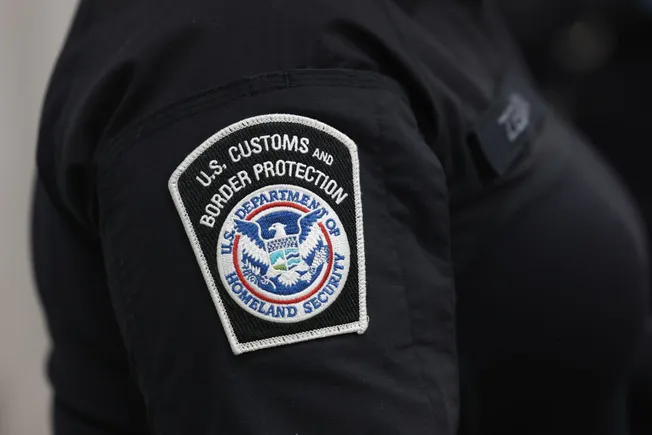
Chronology of the Refund Rollout
The path to repayment has been anything but linear. The timeline of the "Great Tariff Refund" can be viewed in four distinct phases:
- The Legal Catalyst (Early 2026): The Supreme Court issues its ruling, invalidating the tariffs and creating a massive fiscal liability for the U.S. government.
- Infrastructure Development (Q1 2026): CBP shifts from standard administrative functions to building the CAPE portal—a high-stakes digital platform designed to handle the complex, high-volume data requests associated with millions of entries.
- The Launch (April 20, 2026): The portal goes live, initially focusing on non-liquidated entries to stress-test the system and ensure data integrity.
- The Payout Phase (May 2026–Present): The system begins automated processing and direct deposits for verified claimants, including major industry players and smaller enterprises alike.
Supporting Data: Who Is Benefiting?
The breadth of the refund program spans the entire spectrum of the American economy. While the headlines are dominated by automotive giants and multi-national corporations, the impact on mid-market businesses is equally significant.
- Corporate Titans: Automotive leaders are among the largest beneficiaries. Ford Motor Co. has signaled expectations for a $1.3 billion refund, while General Motors is forecasting a $500 million recovery. These figures represent significant capital injections that companies are already incorporating into their annual financial planning and R&D budgets.
- The Mid-Market and SMBs: The success of the portal is perhaps best illustrated by the experience of smaller entities. Companies like Oshkosh and Basic Fun have confirmed receipt of funds. Sarah Wells, founder of Sarah Wells Bags, noted in a public social media update that she had successfully received her first refund payment this week, serving as a bellwether for the thousands of smaller firms currently navigating the portal.
However, the $166 billion figure remains a daunting total. With 8 million entries processed, the agency has cleared a massive hurdle, but the "long tail" of the backlog—specifically entries that have already reached final liquidation—remains a bottleneck. The CBP has signaled that while they are developing the technical capability to address these older, more complex entries, they are not yet fully capable of processing them at scale.
Official Responses and Operational Challenges
The CBP’s rapid deployment of CAPE has been largely lauded, though officials remain cautious. The agency is under immense pressure to prevent fraud while accelerating payments. Because the refund process requires granular verification of entry data, the potential for clerical errors—or malicious attempts to inflate refund claims—is high.
Industry experts emphasize that the speed of the portal is only half the battle. "The firms that ultimately win this market are not going to be the cheapest spreadsheet uploaders," notes Pete Mento, director of global trade advisory services at Baker Tilly. Mento warns that the complexity of "tariff stacking" and "entry reconstruction" means that companies cannot simply view this as a passive refund request. It requires a deep understanding of audit defense and operational controls.

For many firms, the primary challenge has shifted from "Will we get the money?" to "How do we prove our calculations are audit-proof?"
Strategic Implications for the Supply Chain
The return of these funds is not merely a bookkeeping correction; it is a catalyst for broader supply chain behavior.
1. Capital Reinvestment
For many manufacturers, the refund acts as an unplanned windfall. Instead of being used to cover interest-bearing debt, these funds are being earmarked for supply chain diversification. With the uncertainty of the past few years, companies are using the liquidity to secure secondary suppliers and invest in regionalized manufacturing, reducing reliance on the very routes that led to the original tariff exposure.
2. The Rise of "Trade Advisory" as a Core Competency
The complexity of the CAPE portal has highlighted a gap in internal corporate expertise. Many firms are finding that their internal logistics teams are ill-equipped to handle the nuances of sophisticated customs litigation. As a result, there has been a surge in demand for specialized trade advisory services. Compliance is no longer just a legal box to check—it is now a direct driver of corporate liquidity.
3. Lingering Uncertainty in Customs Policy
While the Supreme Court ruling and the CAPE rollout provide clarity for the specific tariffs in question, the episode has left the trade community skittish. Importers are increasingly wary of "emergency power" tariffs. The uncertainty surrounding how future administrations might use IEEPA to circumvent traditional trade negotiations has led many firms to adopt a "hedging" strategy, where they maintain higher inventory buffers to mitigate the risk of sudden, unexpected tariff shocks.

Conclusion: A New Era of Customs Accountability
The rollout of the CAPE portal represents a rare moment where government administrative capacity has met an enormous public demand with relative grace. While 8 million entries represent a significant victory for the CBP and the businesses it serves, the journey is far from over.
As the agency continues to refine its systems to tackle finally liquidated entries, the private sector is learning that the price of doing business in a volatile global market involves more than just freight costs—it requires the ability to engage with the legal and administrative machinery of the state. For now, the checks are hitting bank accounts, the economy is seeing a fresh injection of capital, and the supply chain is one step closer to moving past one of the most turbulent chapters in recent trade history.