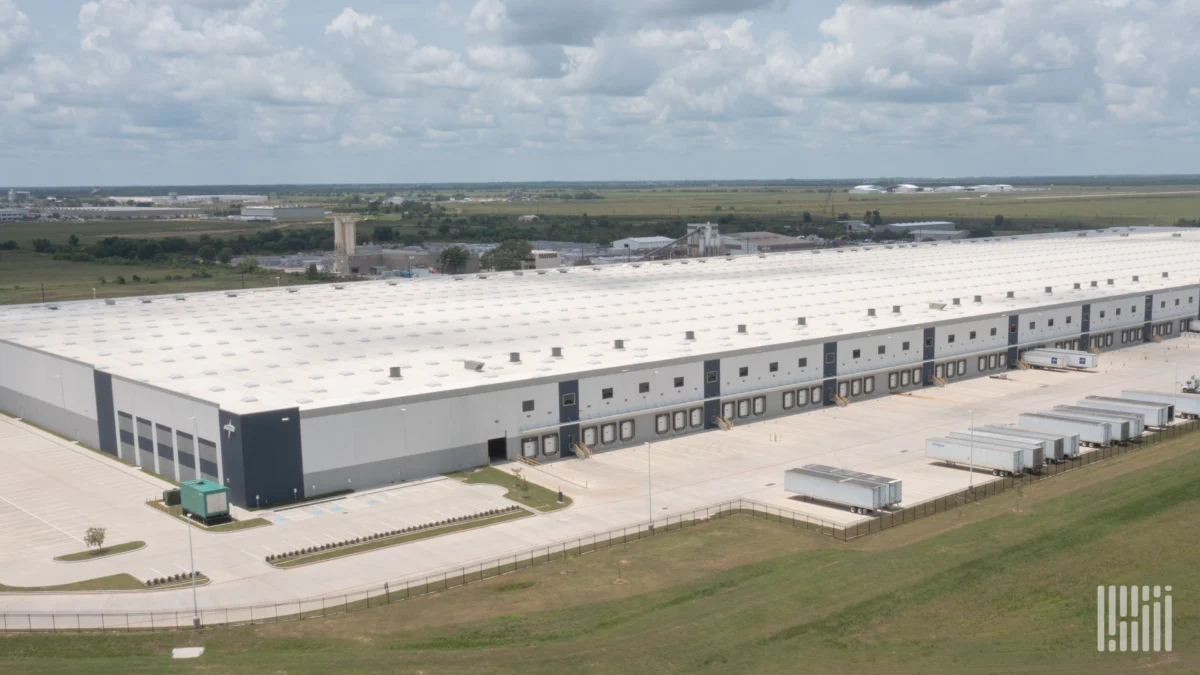
For years, the narrative surrounding American manufacturing has been dominated by a singular, seductive headline: the "reshoring boom." Analysts, politicians, and media outlets have pointed to billions of dollars in capital expenditure as evidence that the era of globalized production is ending, replaced by a domestic renaissance. However, for the trucking and logistics industry—the literal engine of this transition—the reality is far more nuanced. While the numbers suggest progress, they often mask a fragmented, uneven landscape that requires a surgical approach to navigate.
Main Facts: The Disconnect Between Investment and Freight
The primary disconnect in the current reshoring narrative lies in the definition of "manufacturing growth." According to a recent analysis by IoT Analytics, which tracks construction data from the U.S. Census Bureau, it is premature to characterize current trends as a broad-based reshoring boom.
When you strip away the massive capital investments in computer and electronic products—specifically semiconductor fabrication plants that consume significant construction resources but generate relatively low ongoing outbound trucking volume—the growth picture changes. Manufacturing construction spending, excluding these high-tech electronics, rose by approximately 5.6% in nominal terms between February 2025 and March 2026. Once adjusted for the 3.3% annual inflation rate, the real growth settles at a modest 2.3%.
Furthermore, manufacturing employment has actually declined by 1% since the implementation of broad-based tariffs, with only marginal upticks in the most recent datasets. For carriers, the takeaway is clear: there is no across-the-board manufacturing surge creating a rising tide for every boat. Instead, there is a specialized, sectoral recovery that requires carriers to be highly selective about where they position their assets.
Chronology of a Shifting Landscape
The evolution of U.S. manufacturing over the last 24 months has been defined by three distinct phases:
- 2024 (The Sentiment Gap): The Kearney Reshoring Index showed that while domestic production share improved modestly compared to 2023, it remained well below the thresholds required to signal a true structural shift. During this period, the industry remained largely speculative.
- 2025 (The Tariff Pivot): As tariffs intensified, the Institute for Supply Management (ISM) reported in December 2025 that 64% of surveyed companies had no intention of reshoring. However, this period marked the beginning of "near-shoring" and regional investment by companies seeking to mitigate supply chain volatility.
- 2026–Present (The Operational Reality): We are now in the phase where facilities announced in the mid-2020s are either breaking ground or entering production ramps. This has created a "first-mover" advantage for carriers who identified these specific corridors early.
Supporting Data: Why "Reshoring" Is Not Uniform
The data confirms that the reshoring phenomenon is not a singular event but a collection of disparate trends.
The Semiconductor Paradox
The CHIPS Act has fueled 23 major projects across 15 states, with TSMC’s Arizona facility alone representing $165 billion in planned capital expenditure. While this is the loudest story in the media, it is the least relevant to the average regional carrier. Semiconductor fabs are capital-intensive but low-freight-volume operations. Their inputs are specialized, and their outputs are high-value, small-footprint items often moved by air or specialized courier, not dry van.
The Real Freight Drivers
In contrast, four sectors are currently generating sustainable, actionable truckload freight:
- Pharmaceuticals: Driven by massive domestic pledges (e.g., Eli Lilly’s $27 billion investment).
- Food and Beverage: Sustained by regional processing needs that cannot be offshored.
- Flatbed-Adjacent Construction: Fueled by $1.3 trillion in energy utility and infrastructure spending projected through 2030.
- Automotive Supply Chains: Benefiting from the transition to regionalized powertrain and component production.
Official Perspectives and Industry Insights
The consensus among logistics experts is that the "routing guide" is no longer a static document. In the current environment, the carriers winning the most stable, high-margin freight are those who engage with shippers before the facility is fully operational.
Industry analysts at C.H. Robinson have noted that freight markets are increasingly sensitive to seasonal and regional capacity tightening, particularly in the Southeast. Shippers in the food and beverage sector are actively looking for reliable, regional partners to replace the instability of the spot market. They are not looking for national carriers to handle short, intra-state transfers; they are looking for fleet managers with three to fifteen trucks who can provide the consistency and personal accountability that large, national brokerages cannot guarantee.
Implications for the Carrier: How to Prosper
For the carrier, the implication is that "reshoring" is a prospecting tool, not a market condition. To capture this freight, carriers must shift their strategy:
1. The Geographical Audit
Carriers should cross-reference their operating radius (typically a 300-mile loop) with the Reshoring Initiative’s database (reshorenow.org). By identifying facilities currently under construction or in their first year of operation, carriers can contact logistics managers at a time when routing guides are still being negotiated.
2. Compliance as a Moat
In the pharmaceutical sector, the barrier to entry—temperature control, chain-of-custody, and rigorous compliance—is a competitive advantage. Carriers who invest in these certifications create a "moat" around their business, insulating themselves from the price wars that define the dry van spot market.
3. The Construction-Phase Advantage
For flatbed operators, the construction of these new plants is, in itself, a massive freight opportunity. Before a factory produces a single unit, it requires thousands of loads of steel, precast concrete, and heavy equipment. By establishing relationships with the regional fabricators and material suppliers feeding these megaprojects, carriers can secure consistent, time-certain freight for the duration of the construction lifecycle.
4. Avoiding the "Headline Trap"
The most critical takeaway for the fleet owner is to ignore the national media headlines that focus on AI and high-tech manufacturing. If your business model relies on dry van or flatbed freight, your target is not the high-tech chip factory; it is the regional food co-packer, the automotive Tier 2 supplier, or the pharmaceutical packaging plant.
Conclusion: The Strategy for 2027 and Beyond
The reshoring of the American economy is not a monolithic wave, but rather a series of localized ripples. For the carrier, success will not be found by chasing the national trend, but by mapping the regional industrial landscape.
The carriers who will thrive in 2027 and 2028 are the ones doing the work today: identifying the logistics managers at new, regional facilities; understanding the specific equipment and compliance needs of those shippers; and building direct, personal relationships before the competition even realizes a new lane has opened. The freight is there—moving between the dairy processing plants in the Midwest, the automotive suppliers in the South, and the pharmaceutical hubs emerging across the country. It is waiting for the carrier who is bold enough to stop looking at the spot board and start looking at the map.