This article is not an argument for or against autonomous trucks. It is not a speculative forecast of the freight market in 2035, nor is it an endorsement of any technology company’s safety record or business model. Rather, it is a critical inquiry into the operational, safety, and infrastructure questions that the logistics industry—carriers, drivers, regulators, first responders, and the public—deserves honest answers to before the scale of autonomous deployment outpaces the systems designed to manage it.
The Reality of the "Driverless" Corridor
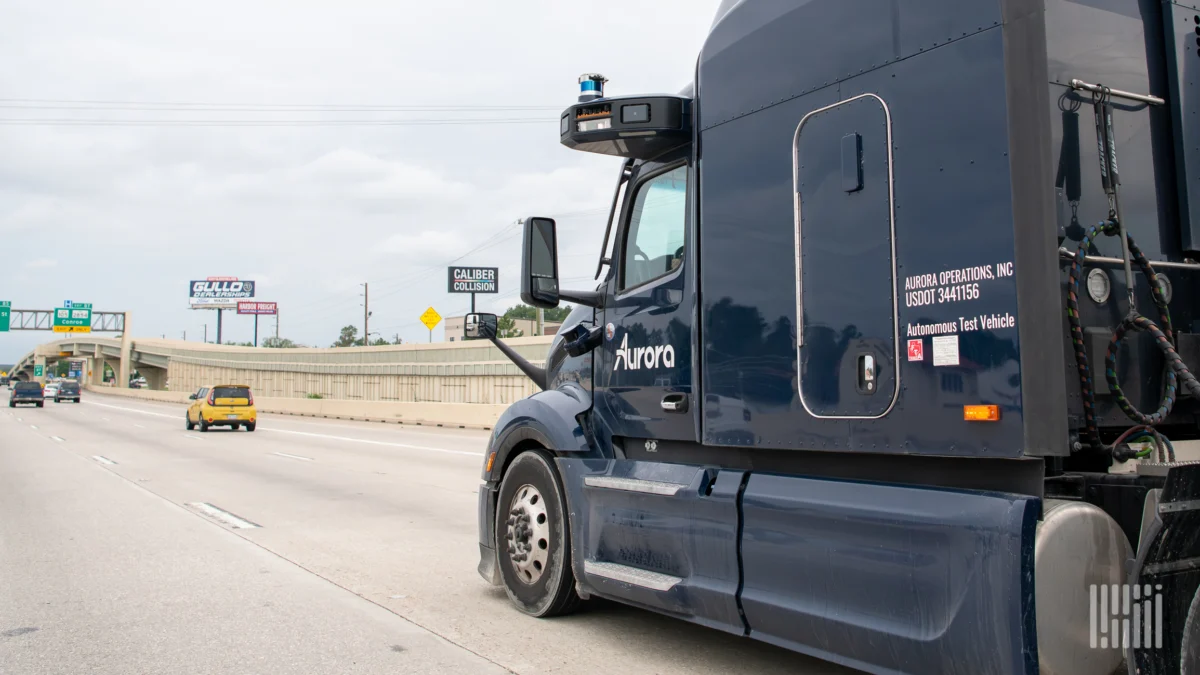
The era of the autonomous Class 8 semi-truck is no longer a concept confined to laboratory test tracks or investor slide decks. It is an operational reality. Aurora Innovation is currently running driverless Class 8 trucks commercially between Dallas and Houston, while Kodiak Robotics is actively operating in the Permian Basin.
These companies have moved beyond the "pilot program" phase. They have logged significant commercial miles, published safety data, and announced aggressive scaling plans that aim to put hundreds of trucks on the road by the end of 2026, with thousands more to follow. This is not a press release; it is the integration of high-stakes, 80,000-pound machines into the nation’s public infrastructure. Consequently, the people who have spent their careers behind the wheel—those who understand the nuances of moving freight safely across the continent—deserve to have this conversation on their terms, rather than the terms dictated by venture-backed corporate messaging.
The Hidden Value of the Professional Driver
To understand the risk of removing the human, one must first identify what the human actually does. The conversation surrounding autonomous technology often centers on "steering and braking," but professional driving is far more than an algorithmic sequence of longitudinal and lateral control.
An experienced driver possesses a sensory awareness that no current sensor suite fully replicates. They hear the specific "thrum" of a tire losing pressure before the tire pressure monitoring system (TPMS) registers a drop. They feel the subtle pull of a brake caliper before the alignment is measurably off. They smell the ozone of an electrical component beginning to fail before it triggers a fault code.
More importantly, they possess "contextual awareness." When a driver notices a passenger car drifting in an adjacent lane, they recognize—long before an algorithm processes the trajectory—that the driver is likely distracted or asleep. This is not intuition; it is a lifetime of accumulated pattern recognition. It is the ability to interpret the behavior of other motorists, the state of the vehicle, and the condition of the road as a single, integrated environment. When the cab is empty, this layer of experiential safety disappears. The industry has yet to prove that it has deliberately engineered a replacement for this human "early warning system."
The Maintenance Vacuum: A Scaling Nightmare
In a conventional trucking model, the driver is the primary maintenance technician. If something goes wrong, they assess the situation, manage the vehicle, and communicate the nature of the failure. In an autonomous world, this architecture collapses.
Sensor calibration is a prime example. Lidar, radar, and camera arrays are sensitive. Road grime, insects, and moisture can degrade a sensor’s field of vision, causing the vehicle to make decisions based on a distorted reality. In a conventional truck, a driver notices this degradation and compensates or stops. In an autonomous truck, if the software is unaware that the "eyes" are dirty, the truck continues to operate at highway speeds with impaired perception.
Furthermore, software updates present a systemic risk. Aurora, for instance, pushed four major releases in a short window during 2025. Each update changes the vehicle’s operational behavior. At scale, the validation process for these updates is incredibly complex. If a bug is introduced, it doesn’t just affect one truck—it potentially affects an entire fleet.
Finally, there is the issue of redundant systems. Backup braking, steering, and power systems are designed to engage if the primary fails. However, in a conventional truck, a driver discovers the backup is failing because the primary has already failed. If the backup system fails silently, there is no way to know until a catastrophe occurs. Testing these systems requires specialized technicians and hub facilities that simply do not exist in the necessary quantity to support a national network.
The 2:00 AM Breakdown: A Crisis of Protocol
Consider the following scenario: A driverless truck is traversing a remote corridor at 2:00 AM. A tire blows out. The truck executes a perfect controlled stop on the shoulder. It is now a stationary, 80,000-pound obstacle in the dark.
The operations center is alerted, and a support vehicle is dispatched. But what happens in the 45-minute window before that vehicle arrives? Who places the reflective triangles? Who warns approaching traffic? If the truck sits in a blind curve, it becomes a high-speed collision risk.
This is not a hypothetical fear. In late 2025, a power outage in San Francisco saw 1,500 Waymo vehicles stall, overwhelming the city’s 911 dispatch and forcing first responders to treat robotaxis as "default roadside assistance." If a fleet of autonomous trucks were to suffer a similar software-related failure on a rural interstate, the consequences would be far more severe. The Governors Highway Safety Association (GHSA) has begun training first responders on how to handle these vehicles, but the necessity of such a program confirms that the technology has outpaced the safety infrastructure.
Data at Scale vs. Data in a Bubble
Companies like Aurora and Gatik point to their "zero-incident" records as proof of concept. These numbers are accurate within their current context: controlled Sun Belt corridors, favorable weather, and limited route complexity.
However, looking at the performance of the Waymo robotaxi fleet offers a sobering look at what happens when autonomy scales. Between 2021 and 2025, Waymo reported over 1,400 incidents to the NHTSA, resulting in injuries and fatalities. While these vehicles are improving, the data suggests that safety is significantly more complex at scale than it is in a controlled pilot. We have yet to see what happens when 20,000 trucks encounter "edge cases"—black ice, construction zones, or erratic human behavior—in regions where the system hasn’t been specifically "mapped" to perfection.
A Call for Accountability
The professional driver community and small carriers must demand more than corporate press releases. The following requirements are essential for the safe integration of autonomous freight:
- Independent Safety Audits: Self-reported data is insufficient. We need third-party, peer-reviewed verification of safety metrics that include "out-of-domain" scenarios and edge-case performance.
- Clear Roadside Liability: Regulatory bodies must define the legal and physical obligations for autonomous vehicles that break down on public roads. Who is liable, and what are the mandatory protocols for securing the scene?
- National Infrastructure Investment: The companies profiting from autonomous deployment must fund the training and equipment for rural law enforcement and fire departments. This cannot be a tax-funded burden on local municipalities.
- Technician Pipelines: The industry must acknowledge the looming shortage of high-tech maintenance personnel and invest in the educational infrastructure to fill it before the trucks are operational at a scale that necessitates it.
The Path Forward
The near-term reality is that autonomous trucks are, for now, limited to hub-to-hub long-haul runs. They are not yet navigating the complexities of loading docks, customer relations, or the "last mile." The human driver remains the most critical, adaptable, and intelligent component of the supply chain.
The professional skills that autonomous systems cannot replicate—dock interaction, nuanced judgment in ambiguous conditions, and physical troubleshooting—are the skills that will define the most defensible freight for human drivers over the next decade.
We are not at a crossroads where the human is being replaced; we are at a crossroads where the industry is attempting to automate a system that is fundamentally human-centric. The questions raised here are not an attempt to stop progress, but an attempt to ensure that progress does not come at the expense of the people who have spent their lives building the supply chain that keeps this country running. They have earned the right to ask these questions. It is time for the industry to answer them.