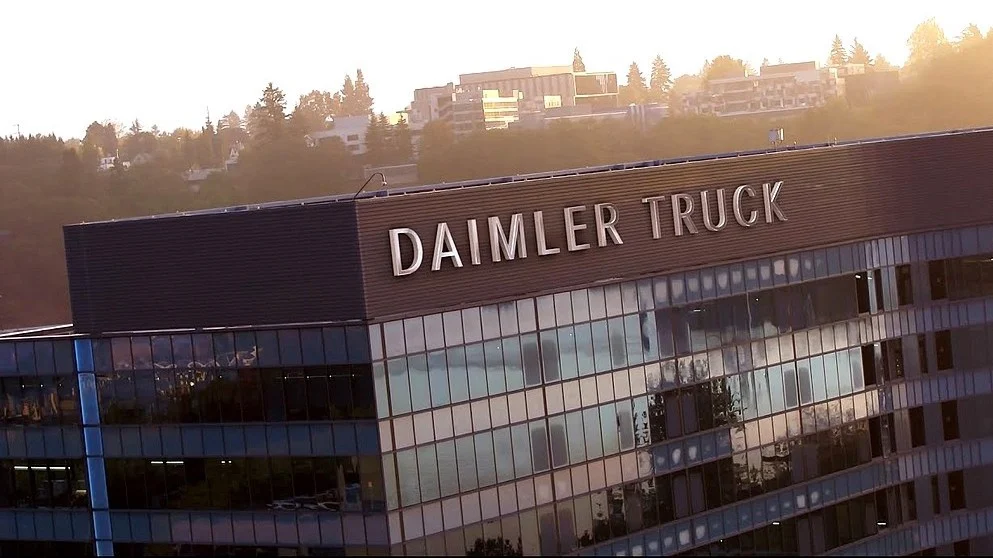
PORTLAND, Ore. — Daimler Truck North America (DTNA), the titan of the commercial trucking industry and a cornerstone of the global transportation sector, finds itself embroiled in a significant legal battle that has peeled back the curtain on internal financial vulnerabilities. The company, known for manufacturing industry-leading brands such as Freightliner, Western Star, and Thomas Built Buses, has filed a high-stakes civil lawsuit alleging that a former long-term employee orchestrated an elaborate, multi-year embezzlement scheme that siphoned millions of dollars from corporate coffers.
The lawsuit, filed on October 12, 2026, in Washington County Circuit Court, paints a picture of systemic exploitation. It alleges that Terry S. Watson, a veteran employee within the company’s Portland-based test fleet operations, leveraged his position to embezzle nearly $3.8 million. Daimler is now seeking a total of $6.6 million in damages, a figure that includes potential interest, legal fees, and the substantial punitive costs associated with an investigation into five years of allegedly fraudulent activity.
The Scope of the Allegations: A Life Funded by the Fleet
According to court filings and secondary reports, the scope of the alleged fraud was both brazen and remarkably broad. Terry Watson, who managed test fleet operations from 2016 until his termination in November 2025, is accused of turning the company’s operational budget into a personal slush fund.
The complaint outlines a lifestyle subsidized by the manufacturer, characterized by personal expenditures that spanned the globe. Investigators allege that Watson utilized corporate credit cards and systematically falsified expense reports to cover costs ranging from the mundane to the extravagant. The list of alleged personal expenditures includes:
- Global Travel: Luxurious vacations to European destinations, Las Vegas, and family-oriented trips to Legoland.
- Residential Upgrades: Construction and professional landscaping services performed at the couple’s Hillsboro, Oregon, residence, with contractors allegedly instructed to bill these costs directly to Daimler.
- Daily Living: Routine household services, child care costs, and even frequent Uber Eats restaurant deliveries charged to corporate accounts.
- Fuel Fraud: The unauthorized use of company-issued fuel cards for personal vehicles and private transportation needs.
The lawsuit also names Krystal Watson, Terry’s wife, as a defendant. She is accused of active participation in the scheme, allegedly utilizing corporate credit cards for personal shopping and providing her husband with receipts intended to bolster the legitimacy of his falsified expense reports.
A Chronology of Concealment
The timeline of this alleged operation spans nearly a decade, suggesting a significant failure in the company’s internal monitoring mechanisms.
2016: The Beginning of the Tenure
Terry Watson began his role in the Daimler test fleet operations in 2016. It was during this period, according to the lawsuit, that the financial improprieties began. For nearly ten years, Watson occupied a position of trust, overseeing the fleet—a critical component of Daimler’s research and development arm.
2016–2025: The Five-Year Fraud
While the total duration of his employment was longer, the lawsuit specifically focuses on a five-year period of intense financial exploitation. During this time, the couple allegedly mastered the art of "creative accounting," bypassing corporate oversight by mislabeling personal expenses as legitimate business costs. The scheme relied on a combination of digital manipulation and the exploitation of contractor relationships, where external vendors were allegedly coached to misidentify the location and nature of services provided.
November 2025: The Discovery
The end of the scheme arrived in late 2025. According to company reports, Daimler Truck North America’s internal audit teams discovered "suspicious financial activity." Following a swift internal investigation, the company terminated Watson’s employment. The discovery triggered a deeper forensic audit, which eventually led to the civil litigation filed in October 2026.
October 2026: Legal Action
The formal filing of case No. 26CV57242 in Washington County marked the transition from internal inquiry to a public legal battle. By seeking $6.6 million—a sum significantly higher than the initial $3.8 million embezzled—Daimler is signaling its intent to hold the Watsons accountable for the full breadth of the financial and operational disruption caused by their actions.
Analyzing the Financial Impact and Internal Controls
The disparity between the $3.8 million in stolen funds and the $6.6 million in requested damages reflects the multifaceted nature of corporate loss. Beyond the direct theft, companies often incur substantial "hidden" costs, including:
- Forensic Auditing: The cost of hiring external investigators and auditors to trace five years of transactions.
- Operational Disruption: The time spent by internal departments—legal, HR, and accounting—to investigate the breach rather than focusing on core business objectives.
- Regulatory and Compliance Risk: In an industry governed by strict financial reporting standards, internal fraud can trigger regulatory scrutiny, potentially impacting the company’s reputation with shareholders and partners.
The case raises uncomfortable questions about how a major global corporation, which prides itself on the engineering precision of its autonomous and diesel-electric trucks, could allow such significant financial leakage to persist undetected for years. In the world of logistics and manufacturing, internal controls—the policies designed to prevent and detect fraud—are typically rigorous. The fact that an employee was able to disguise landscaping and Legoland trips as business expenses suggests a lapse in the oversight of expense approval workflows.
Corporate Response and Industry Implications
Daimler Truck North America has remained relatively guarded as the litigation proceeds. While the company has confirmed the termination of the employee and the filing of the lawsuit, it has not provided a detailed statement regarding how it plans to overhaul its internal financial policies.
For the broader freight and logistics industry, this case serves as a cautionary tale. As firms push toward the "Future of Freight"—incorporating advanced software, autonomous driving, and complex supply chain technologies—the complexity of their financial operations grows accordingly. This complexity can often mask illicit activities if the culture of oversight does not keep pace with the culture of innovation.
"Why it matters," as noted in internal briefings, is not just about the money; it is about the integrity of corporate governance. As Daimler continues to lead in areas like electric trucks and autonomous vehicle development, stakeholders are likely to demand increased transparency regarding how the company manages its assets and monitors the individuals tasked with their stewardship.
The Legal Road Ahead
The case, currently pending in Oregon, is expected to delve deep into the mechanics of corporate expense reporting. Defense attorneys for the Watsons will likely scrutinize the internal controls that Daimler had in place, perhaps arguing that the company’s own negligence in oversight enabled the alleged actions. Conversely, Daimler’s legal team will focus on the evidence of deception—the falsified reports, the direction of contractors, and the personal nature of the charges.
As the industry prepares for upcoming events like the Brokerage Compliance Symposium and the Future of Freight Festival in Chattanooga, the conversation around fraud, carrier liability, and internal compliance is expected to take center stage. For Daimler, the focus will remain on the courtroom in Washington County, where the resolution of this case will set a precedent for how the company handles internal malfeasance moving forward.
Conclusion
The allegations against Terry and Krystal Watson serve as a stark reminder that in the corporate world, the greatest threats are often those that occur from within. While Daimler Truck North America continues to define the cutting edge of the trucking industry, the $6.6 million lawsuit underscores the fundamental necessity of vigilant financial governance. Whether this case results in a settlement or proceeds to a trial, it will undoubtedly influence how the manufacturing giant—and its peers—approach the oversight of corporate funds in an era of rapid technological and operational evolution.
As of late 2026, the case remains open, and both the company and the public await further developments as the legal process moves toward discovery and, eventually, a potential trial. For now, the "test fleet" at Daimler is under the microscope, not for its engineering, but for its accounting.