
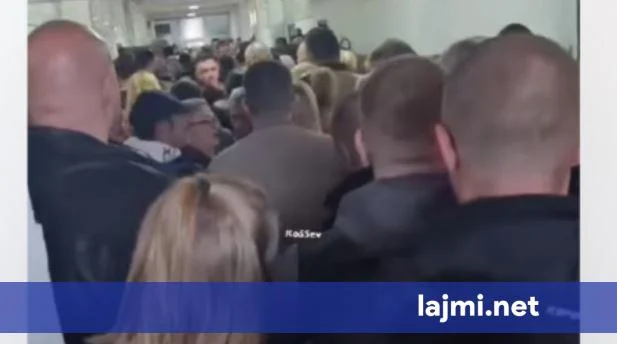
RAŠKA, Serbia – Parliamentary elections in Serbia on December 17, 2023, were marred by significant logistical challenges and concerning incidents at a polling station in Raška, a town near the administrative boundary with Kosovo. The presence of a substantial number of voters from Kosovo, who travelled to Serbia to exercise their franchise, led to severe overcrowding, extended queues, and reports of physical altercations. The chaotic scene culminated in two women losing consciousness, highlighting the human cost of poorly managed electoral processes and the deeply sensitive political context surrounding the participation of Kosovo Serbs in Serbian elections.
The incident in Raška quickly garnered attention, with local media and observers reporting a "blockade" at the polling station. The sheer volume of voters, coupled with inadequate facilities, created an untenable situation, casting a shadow over the democratic process and reigniting debates about the status of Kosovo Serbs and their electoral rights.
Main Facts: Overwhelmed Polling Station and Voter Distress
The primary facts emerging from Raška paint a picture of an electoral process pushed to its limits. A polling station designated for voters from Kosovo, situated in the Serbian town of Raška, became severely congested. According to reports from the independent Kosovo-Serb media outlet KoSSev, which was cited by Gazeta Express, election observers confirmed the formation of "exceptionally long queues." The unprecedented influx of voters quickly overwhelmed the existing infrastructure and organizational capacities.
The most alarming incidents reported were the fainting of two women who were attempting to cast their votes. While the precise causes of their collapse were not immediately detailed, the unofficial information from KoSSev pointed to the "large flow of voters and the limited capacities of the polling stations to accommodate all citizens" as the primary factors contributing to the extended waiting times. These conditions, characterized by prolonged standing in crowded spaces, likely led to exhaustion, stress, and potentially other health complications for vulnerable individuals.
Further compounding the disarray, there were also reports of pushing and shoving among voters. Such incidents underscore the frustration and desperation that can arise in severely congested environments, particularly when citizens are compelled to wait for hours to fulfill their civic duty. The situation in Raška was not merely a logistical inconvenience; it represented a breakdown in the orderly conduct of elections, with direct consequences for the health and safety of participants.
Chronology of the Incident: A Day of Disorder
The events in Raška unfolded throughout the election day, progressively deteriorating as voter turnout swelled.
Early Morning (Opening of Polls): The polling station in Raška, like others across Serbia, opened at 7:00 AM. Initially, the process might have appeared orderly, but the specific designation of this location for voters from Kosovo likely meant that queues began forming even before the official opening, as individuals travelled from various parts of Kosovo.
Mid-Morning to Afternoon: As the day progressed, the trickle of voters transformed into a steady stream, and then an overwhelming torrent. Reports suggest that the logistical arrangements, which likely involved the transportation of voters from Kosovo by bus or other organized means, contributed to peak periods of arrival, further straining the polling station’s capacity. The queues, initially long, became "exceptionally long," snaking around the premises and extending into public areas. Voters, many of whom had travelled considerable distances, were forced to endure hours of waiting.
Afternoon Peaks and Crisis Point: It was during the peak afternoon hours, when the volume of voters reached its zenith, that the situation escalated into a crisis. The limited space inside the polling station, coupled with the sheer number of people attempting to enter and vote, created a dangerous bottleneck. The pushing and shoving reported by observers likely occurred during these congested periods, as individuals grew increasingly impatient and uncomfortable.
Reports of Fainting: The most critical incidents, the fainting of two women, were reported as they were attempting to enter or were already within the crowded polling area. While the exact timing is not specified, such events typically occur after prolonged exposure to stressful, crowded, and potentially hot or poorly ventilated conditions. The immediate response to these medical emergencies would have added further disruption to an already chaotic scene, potentially requiring intervention from medical personnel or even a temporary halt to voting.
Late Afternoon/Evening: Despite the disruptions, voting likely continued until the polls closed at 8:00 PM, albeit under severely challenging conditions. The long queues and slow processing meant that many voters were likely still waiting as closing time approached, potentially necessitating extensions for those already in line, as is common practice in such circumstances. The incident served as a stark reminder of the complexities inherent in conducting elections for a diaspora or ethnically distinct population, particularly in politically charged environments.
Supporting Data and Background: The Complexities of Kosovo Serbs Voting in Serbia
The chaotic scenes in Raška are not isolated incidents but rather symptoms of a deeply entrenched and politically sensitive practice: the participation of Kosovo Serbs in Serbian parliamentary and presidential elections. This arrangement is a direct consequence of Serbia’s refusal to recognize Kosovo’s independence and its continued assertion of sovereignty over its former province.
Historical Context of Voting Arrangements:
Historically, Serbs residing in Kosovo were able to vote in Serbian elections within Kosovo itself, with the organization often facilitated by the Organization for Security and Co-operation in Europe (OSCE). This arrangement, seen as a pragmatic solution to allow citizens to exercise their rights while navigating the unresolved status of Kosovo, largely functioned without major logistical breakdowns for many years. However, this practice was halted by the Kosovo authorities ahead of the April 2022 Serbian elections. Pristina argued that such an arrangement within its territory would violate its sovereignty and constitutional order, asserting that any such electoral activity would need to be conducted according to Kosovo’s laws and institutions.
The Shift to Voting in Serbia:
Following Kosovo’s decision to prevent Serbian elections from being held on its territory, Serbia moved polling stations for Kosovo Serbs to municipalities in central Serbia bordering Kosovo. These municipalities include Raška, Kuršumlija, Vranje, and Tutin. This shift necessitated that voters from Kosovo physically travel across the administrative boundary line into Serbia to cast their ballots. This change significantly increased the logistical burden on voters, many of whom live in remote Serb-majority enclaves within Kosovo.
Logistical Challenges and Organized Transport:
The move of polling stations to Serbia introduced a new layer of logistical complexity. Voters often rely on organized transportation, typically buses arranged by local Serbian political parties or community leaders, to reach these polling stations. This often involves long journeys, particularly for those coming from southern Kosovo or more isolated areas. The coordinated arrival of multiple buses at a single polling station, such as the one in Raška, can quickly lead to an unmanageable surge in voter numbers, as witnessed in this instance. The limited number of polling stations designated for Kosovo Serbs in border municipalities means that each location must process a disproportionately high volume of voters.
Demographics of Voters:
The voters participating in these elections are predominantly ethnic Serbs residing in Kosovo, who hold Serbian citizenship and wish to exercise their right to vote in Serbian national elections. Their participation is often viewed not just as a civic duty but also as a symbolic affirmation of their ties to Serbia and their rejection of Kosovo’s independent status. This strong motivation contributes to high turnout among this demographic, further exacerbating logistical challenges when facilities are inadequate. The elderly, those with disabilities, and families with young children are particularly vulnerable in such crowded and stressful environments.
Lack of International Oversight:
Unlike previous elections where the OSCE played a facilitative role in organizing voting for Kosovo Serbs, the current arrangement in Serbia operates without such direct international oversight within Kosovo. While international observers may monitor the overall Serbian election process, the specific logistical challenges faced by Kosovo Serbs travelling to vote in Serbia often receive less focused attention, contributing to a lack of accountability for the conditions witnessed in Raška.
Previous Incidents and Warning Signs:
While the fainting incidents in Raška were particularly alarming, reports of long queues, disorganization, and voter frustration among Kosovo Serbs travelling to vote in Serbia have surfaced in previous elections since the change in voting locations. These prior occurrences should have served as warnings, indicating the need for better planning, increased polling station capacity, and improved crowd management strategies. The failure to address these systemic issues suggests either an oversight or an underestimation of the scale of voter participation.
Official Responses: Silence and Divergent Narratives
The immediate official responses to the specific incidents in Raška were largely absent or generalized, reflecting the broader political impasse between Belgrade and Pristina regarding the status of Kosovo and its Serb population.
Serbian Authorities:
While Serbian election officials or government representatives might have issued general statements regarding the smooth conduct of elections across the country, there was no specific, publicly acknowledged apology or immediate explanation regarding the chaos, pushing, or fainting incidents in Raška. Any internal response would likely focus on the high turnout as a sign of democratic engagement, possibly downplaying the logistical failures or attributing them to unforeseen circumstances. Belgrade consistently maintains that Serbs in Kosovo are citizens of Serbia and have an undeniable right to vote in Serbian elections, framing any obstacle to this right as a violation. They would likely emphasize the effort made to accommodate these voters, rather than the shortcomings of the accommodation itself. A more direct official response, if it were to occur, would likely promise an investigation into the logistical failures and an improvement in future arrangements, particularly given the potential for negative international perception.
Kosovo Authorities:
From Pristina’s perspective, the incidents in Raška serve to underscore their arguments against allowing Serbian elections to be held within Kosovo’s territory. Kosovo officials have consistently argued that allowing Serbia to organize elections on Kosovo soil without Pristina’s consent undermines Kosovo’s sovereignty. They might interpret the chaos in Raška as a consequence of Serbia’s unilateral actions and its continued refusal to integrate the Serb community fully into Kosovo’s institutional framework. Kosovo’s government would likely emphasize that if Serbian citizens residing in Kosovo wish to vote, it should be done through a mechanism agreed upon by both states, potentially involving mail-in ballots or other internationally supervised methods that respect Kosovo’s sovereignty. They might also point to the incidents as an example of Serbia’s disregard for the welfare of its own citizens when political objectives are at play.
International Community/Observers:
International election observation missions, such as those from the OSCE or the European Union, typically monitor the overall integrity of the electoral process. While their reports might note logistical issues or irregularities, specific incidents like those in Raška are sometimes categorized as operational challenges rather than systemic failures of the broader election, unless they are widespread. However, such incidents contribute to the overall assessment of an election’s fairness and efficiency. The international community often urges both Belgrade and Pristina to find pragmatic solutions for the voting rights of Kosovo Serbs, ideally through dialogue and mutual agreement, to avoid such chaotic scenes and to ensure that democratic rights are exercised in a dignified manner. The lack of an agreed-upon mechanism remains a point of concern for international actors invested in the normalization of relations.
Implications: Beyond the Polling Station
The events in Raška carry significant implications, extending far beyond the immediate logistical failures at a single polling station. They touch upon the core of the Serbia-Kosovo dispute, the human rights of citizens, and the credibility of democratic processes.
Political Implications for Serbia:
For Serbia, the high turnout of Kosovo Serbs, despite the difficulties, might be presented as a reaffirmation of their allegiance and a political victory, reinforcing Belgrade’s narrative of continued connection to its Serb population in Kosovo. However, the chaotic scenes and reports of voter distress could also draw criticism internally and internationally, raising questions about the competence of election authorities and the commitment to ensuring a smooth, dignified voting process for all citizens. If not adequately addressed, such incidents could fuel accusations of negligence or even exploitation of a politically vulnerable population for electoral gains.
Political Implications for Kosovo:
The incidents in Raška strengthen Kosovo’s argument against allowing Serbia to conduct elections on its territory. Pristina can use these events to highlight the potential for disorder and the difficulties in managing such processes when sovereignty is not respected. It also reinforces the narrative that Serbia’s actions often lead to complications and hardships for the Serb community in Kosovo, rather than genuinely serving their interests. The events may further harden Pristina’s stance against any future proposals for Serbian elections within Kosovo, unless they are fully integrated into Kosovo’s legal framework.
Implications for the Serbia-Kosovo Dialogue:
The Raška incident underscores the urgent need for a comprehensive and mutually acceptable agreement on the electoral participation of Kosovo Serbs in Serbian elections. The current ad-hoc arrangement, requiring arduous travel, is unsustainable and prone to generating both human suffering and political friction. The events could serve as a renewed impetus for EU-facilitated dialogue to address this issue, potentially exploring options such as absentee voting, mail-in ballots, or special arrangements supervised by neutral international bodies that respect the sovereignty of both parties. Failure to find a permanent solution will inevitably lead to recurring problems and continued tension.
Humanitarian and Social Implications:
The most immediate and concerning implications are humanitarian. The fainting of two women, coupled with reports of pushing and prolonged waiting, speaks to the potential health and safety risks inherent in poorly managed mass gatherings. For many Kosovo Serbs, exercising their right to vote involves significant personal sacrifice – time away from work, travel expenses, and exposure to uncomfortable and potentially dangerous conditions. Such experiences can lead to voter disenfranchisement in the long run, discouraging participation due to fear of hardship. It also highlights the broader vulnerability of communities caught in protracted political disputes, where even basic civic rights become a struggle to exercise.
Credibility of Democratic Processes:
The scenes of chaos and distress diminish the credibility of the democratic process itself. Elections should be accessible, orderly, and respectful of every voter’s dignity. When logistical failures lead to such extreme conditions, it erodes public trust in the institutions responsible for upholding democratic norms. For citizens who have already faced significant challenges due to their geopolitical status, such experiences can be particularly demoralizing, fostering a sense of being overlooked or exploited.
In conclusion, the chaotic scenes at the Raška polling station during Serbia’s parliamentary elections serve as a stark reminder of the intricate and often volatile intersection of politics, logistics, and human rights in the Western Balkans. While the immediate focus was on the discomfort and distress of individual voters, the underlying issues point to deeper structural problems in the Serbia-Kosovo relationship. Addressing these challenges requires not only improved electoral organization but, more importantly, a renewed commitment from both Belgrade and Pristina, facilitated by the international community, to find sustainable, dignified, and mutually respectful solutions for all citizens affected by their ongoing dispute. Without such a resolution, similar incidents of chaos and human suffering are likely to recur.


