The rhythm of modern life has undergone a seismic shift. For the demographic cohort aged 18 to 30, the traditional "9-to-5" structure—and the corresponding home-delivery expectations that accompany it—has become an artifact of a bygone era. New research from InPost UK has formally identified this demographic as the "Always Out Generation," a group whose fluid lifestyles, defined by work, study, and social mobility, are increasingly at odds with the logistical constraints of conventional parcel delivery.
As ecommerce continues to dominate the retail landscape, a fundamental friction has emerged: while shopping has become digitized and instantaneous, the physical act of receiving goods remains tethered to a rigid, often inconvenient, delivery model.
The Anatomy of the Always Out Generation
The "Always Out Generation" is not merely a label; it is a statistical reality. According to InPost’s data, nearly half of all 18–30-year-olds are physically absent from their homes during standard business hours at least four days a week. This absence is not a matter of choice, but a requirement of their modern existence.
Work commitments serve as the primary driver for this displacement, accounting for 44% of time spent away from the home. However, the data reveals a multifaceted life beyond the office. Errands and shopping (32%), social engagements (30%), and academic pursuits (30%) ensure that this generation is in a state of near-constant motion.
The result is a logistical bottleneck. Because retailers and logistics providers have historically optimized their operations around the assumption that someone will be at home to receive a package, the modern consumer is being forced to adapt their life to the courier’s schedule, rather than the other way around.
The Cost of Inflexibility: A Chronology of Missed Connections
The disconnect between delivery services and consumer reality is manifesting in tangible, often frustrating, consequences for younger shoppers. The trajectory of a typical "missed delivery" event for a member of this demographic often follows a pattern of disruption:
- The Anticipation Phase: A purchase is made, and the consumer is provided with a broad, often unhelpful delivery window.
- The Sacrifice Phase: To ensure receipt, 43% of surveyed 18–30-year-olds admit to staying home specifically to wait for a package, effectively tethering themselves to their property at the expense of their personal or professional time.
- The Conflict Phase: Despite these efforts, 41% have missed a delivery in the past year alone. For many, this leads to a secondary crisis: 31% have had to rearrange their existing plans—canceling gym sessions, delaying meetings, or rescheduling social events—simply to secure their items.
- The Outsourcing Phase: In an attempt to mitigate the failure of the delivery system, 29% of younger shoppers rely on the goodwill of neighbors, friends, or family members to act as proxies.
- The Resolution Phase: When all else fails, 28% are forced to collect their parcels from remote sorting offices or depots, often days after the original delivery date, further extending the "time-to-consumer" lag.
This cycle of disruption highlights a systemic failure in the current retail supply chain. Convenience, in the current delivery model, is a misnomer; it is only convenient if the consumer happens to be stationary.
Supporting Data: What Consumers Really Want
The research provides a clear roadmap for what the next iteration of delivery must look like. It is no longer sufficient to offer "home delivery" as the default; retailers must pivot toward an ecosystem of choice.
The data indicates that 71% of 18–30-year-olds are adamant that delivery and return services must conform to their lifestyle, rather than demanding the consumer conform to the service. The specific requirements for this shift include:
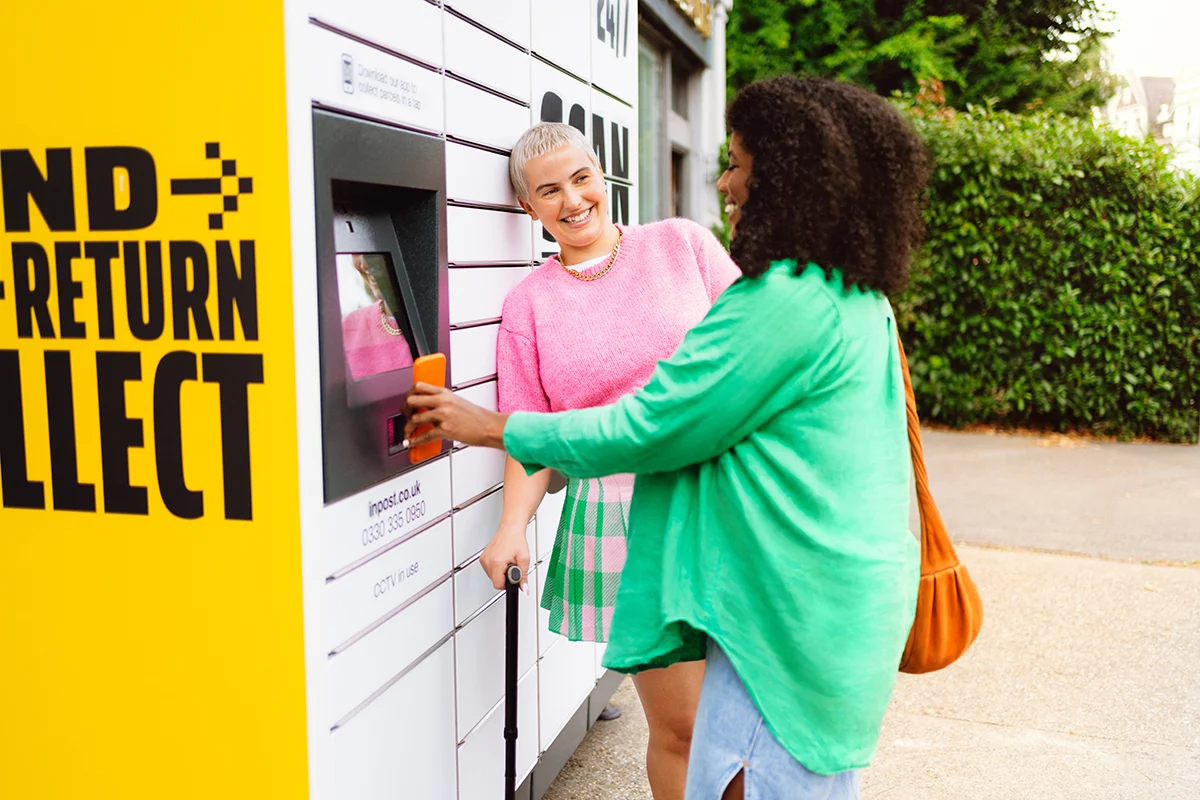
- 24/7 Accessibility: 61% of respondents identified round-the-clock access as the single most significant factor that would improve their experience. This suggests a move toward automated, locker-based systems that function independent of human staffing hours.
- Hyper-Local Convenience: 54% of consumers want options that are located in immediate proximity to their homes.
- The Empowerment of Choice: Consumers are accustomed to selecting their own payment methods, browsing habits, and delivery speeds. Applying this same autonomy to the location of delivery is the next logical step in the maturity of ecommerce.
The Retailer’s Dilemma: Case Study of Superdry
While some retailers may fear that diversifying delivery options adds complexity or cost, the experience of the British fashion giant Superdry suggests otherwise.
When Superdry introduced InPost lockers as an alternative to traditional home delivery, the results were transformative. At one point, when the locker service was offered as the sole free delivery option, uptake reached 49%. Even with the current landscape, where Superdry offers a variety of free options—including free home delivery and free click-and-collect—the locker service remains a high-demand preference.
The operational benefits for the retailer are equally compelling. Superdry reported a 19% reduction in total delivery costs by migrating volume toward lockers. Perhaps more importantly, from a customer relationship management perspective, those utilizing lockers were four times less likely to contact customer support regarding their order status. By removing the "Where is my parcel?" query—which typically stems from missed home deliveries—retailers can redirect resources from costly support overheads toward growth and customer experience improvements.
Official Perspectives: Redefining the Industry Standard
Michael Rouse, CEO International at InPost UK, argues that the industry is at an inflection point. For Rouse, the goal is to dismantle the archaic expectation that the "front door" is the only legitimate final destination for a parcel.
"Home delivery can only be convenient when being at home is convenient," Rouse notes. "For a generation moving between work, study, errands, and social lives, that increasingly isn’t the reality. Consumer expectations have moved on. People expect services to fit around their lives and delivery should be no different."
Rouse emphasizes that the future of logistics is not about favoring one method over another, but about providing a robust menu of options that empower the consumer. "The next step for our industry is to make that choice a standard part of the online shopping experience. That is the direction InPost is driving—building the network, technology, and retailer partnerships that give consumers greater control."
Implications: The Future of Ecommerce Logistics
The rise of the "Always Out Generation" serves as a catalyst for a broader transformation in logistics. As we look toward the future, several implications become clear:
1. The Death of the "One-Size-Fits-All" Delivery
The era of the standard courier van attempting to deliver to a vacant house is drawing to a close. Future-proof retailers will move toward a "delivery agnostic" model, where the consumer selects the end-point based on their daily calendar—be it a locker on the way to work, a shop near a friend’s house, or a secure drop-box in their apartment lobby.
2. Operational Efficiency Through Autonomy
For logistics firms, the "last mile" is notoriously the most expensive. By incentivizing the use of lockers and out-of-home points, firms can achieve higher "first-time delivery" success rates. This efficiency reduces fuel consumption, vehicle wear, and the carbon footprint associated with repeated delivery attempts—aligning with broader ESG (Environmental, Social, and Governance) goals.
3. Strengthening Customer Loyalty
As demonstrated by the Superdry case, when a brand removes the friction of a missed delivery, they build deeper trust. A customer who knows their parcel will be waiting for them at their convenience, rather than being left in a precarious location or returned to a depot, is a customer more likely to return to that brand.
4. The Integration of Technology
To succeed, this shift requires sophisticated API integrations at the checkout level. Retailers must be able to show real-time availability of locker banks and collection points, ensuring that the promise made at checkout is one that can be fulfilled with 100% reliability.
Conclusion: Fitting the Parcel to the Person
The "Always Out Generation" is not a temporary anomaly; they are the standard-bearers of a future where time is the most valuable currency. By acknowledging that the traditional 9-to-5 home delivery model is failing, retailers and logistics providers have an opportunity to innovate.
The shift toward a more flexible, choice-driven delivery landscape is inevitable. As Michael Rouse concludes, the future of the industry will be defined by the ability to make the parcel fit around the person, rather than expecting the person to rearrange their life around the parcel. For the brands that embrace this shift, the reward will be a more loyal customer base, reduced operational costs, and a seamless shopping experience that finally reflects the pace of modern life.