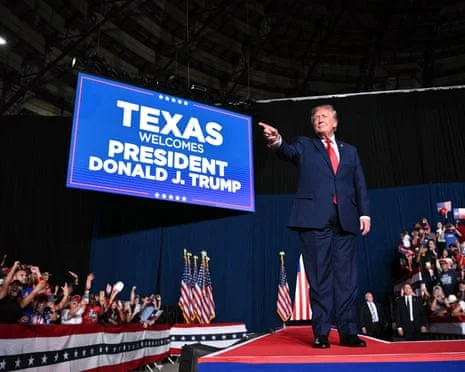
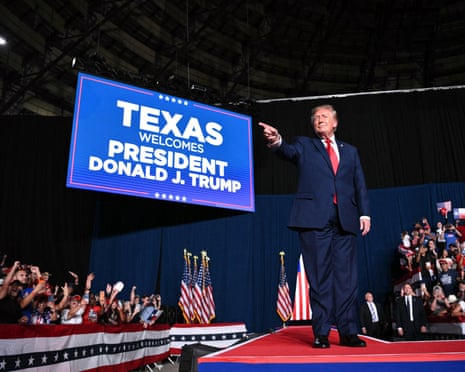
SAN ANTONIO, TEXAS – The political landscape in the United States grew increasingly volatile this week as Donald Trump’s latest midterm campaign rally in San Antonio, Texas, became the site of multiple disruptions, physical confrontations, and fresh outbursts of rhetoric that have further polarized an already fractured electorate.
The event at the Freeman Coliseum, intended to consolidate support for Republican Senate candidate Ken Paxton, instead became a focal point for the mounting frustrations of the 2026 election cycle. With inflation soaring and a protracted military conflict in Iran casting a long shadow over the administration’s economic narrative, the President’s visit served as a stark reminder of the high stakes currently facing both parties.

A Rally Marred by Dissent
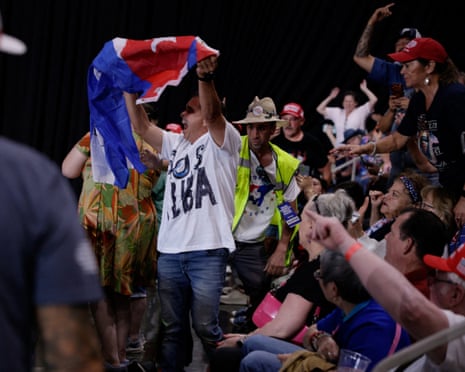
The atmosphere inside the Freeman Coliseum was electric but brittle. Throughout the duration of the President’s speech, security personnel were forced to remove protesters at least six times. The interruptions, while not entirely uncommon for rallies of this magnitude, were particularly aggressive.
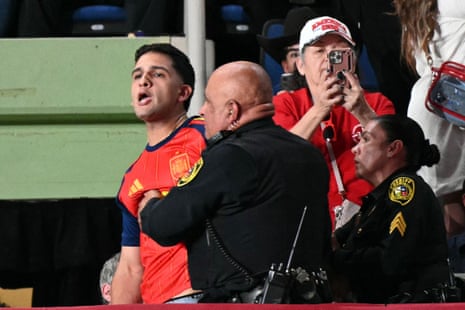
Television footage captured a disturbing scene as a protester, wearing a Spanish national team soccer jersey, was being escorted from the arena. As the individual neared the exit, an older attendee lunged at them, resulting in a violent physical altercation. The incident, which was broadcast live to a national audience, has reignited the national debate over political violence and the heated rhetoric currently permeating campaign events.
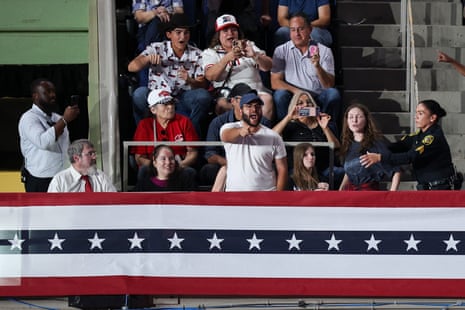
Trump, unfazed by the departures or the scuffles, reverted to a familiar script. "You know, many of these protesters are paid," he told the crowd, repeating a baseless claim he has utilized for over a decade. "These are paid protesters. They’re paid by enemies of our nation. Now, I’m telling you, they pay them for this."
The "Vegan" Narrative and Faltering Logic
The interruptions appeared to cause a momentary lapse in the President’s focus, leading him into a bizarre, rambling digression about James Talarico, the Democratic challenger currently polling ahead of the Trump-backed Ken Paxton.
Trump repeated an unverified and derogatory narrative, claiming that Talarico is a "fake" vegan who secretly eats meat and vomits afterward. In an odd twist, the President confessed to his own confusion regarding the pronunciation of the word "vegan," admitting he had been calling it "vaygan."
"My wife told me, ‘Sir, do me a favor. You have to do me just a little bit of a favor. It’s not vaygan; it’s vegan,’" Trump recounted. However, the anecdote quickly became muddled, as he shifted from attributing the correction to his wife to suggesting it was a man who had corrected him moments later. "I don’t know about that stuff. I’m not into it," he concluded. "I like steak."
Chronology of an Escalating Campaign
The rally in San Antonio was just one piece of a frantic day in American politics. The day began with a series of high-stakes developments that underscored the instability of the current administration:
- Early Morning: News broke of a federal lawsuit filed by the Democratic National Committee (DNC) against the Trump administration, alleging the illegal use of $12 million in taxpayer funds for pro-Trump "propaganda" ads.
- Mid-Morning: Internal documents obtained by the non-profit Democracy Forward revealed that the Department of Homeland Security’s Immigration and Customs Enforcement (ICE) branch had been conducting undercover probes into non-profit groups involved in voter registration.
- Afternoon: Reports surfaced of leaked audio featuring Ken Paxton at a Washington DC fundraiser, where he openly admitted that the Iran war and skyrocketing energy costs were "the biggest problem" for his campaign, directly contradicting the administration’s economic messaging.
- Evening: President Trump touched down in San Antonio, fresh off a social media diatribe against Congressman Henry Cuellar, whom he branded "ungrateful" for not defecting to the Republican Party following a presidential pardon.
Economic Disconnect: The $21 Trillion Question
A significant portion of the tension stems from the widening gap between the administration’s rhetoric and the lived reality of American voters. During his speech, Trump claimed to have secured $21 trillion in foreign direct investment in the United States since returning to office last year.
Economists and independent observers have been quick to point out the lack of evidence for this figure. According to data from the Bureau of Economic Analysis, total foreign direct investment in the US for 2025 was approximately $232 billion—a far cry from the trillions cited by the President. Analysts suggest that the administration is likely conflating vague, non-binding bilateral trade pledges with actual capital investment.
Furthermore, the President’s claims regarding the funding of military bonuses have faced scrutiny. Trump has repeatedly stated that tariff revenues—which currently total about $236 billion for 2026—are being used to fund $1,776 bonuses for service members and proposed $5,000 checks for all US adults. However, reports from the Associated Press and other outlets have confirmed that the military bonuses were actually drawn from existing, congressionally approved housing supplements, not from new tariff revenue.
Official Responses and Legal Battles
The DNC’s lawsuit represents a significant escalation in the battle over government resources. The complaint, filed in the US District Court for the District of Columbia, argues that the administration is in "blatant violation" of the statutory ban on using appropriated funds for "publicity or propaganda."
"President Trump personally directed this illegal activity," the complaint asserts. "The White House office crafted the partisan campaign. The Office of Management and Budget shifted $20 million to pay for it. And US Customs and Border Protection (CBP) has carried it out."
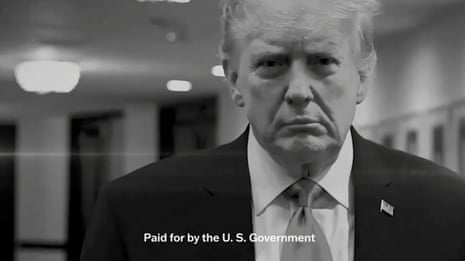
The White House has consistently dismissed these accusations, with communications director Steven Cheung labeling the backlash a "media freakout not rooted in reality." Despite this, the public’s perception appears to be shifting. A Reuters/Ipsos poll released this week found that 86% of Americans—including 80% of Republicans—deem it inappropriate for the government to use taxpayer dollars to air election-year political advertisements.
Implications for the Midterms
As the November 3rd elections approach, the political fallout from the San Antonio rally and the broader administration strategy is becoming clear. The "daylight" between Trump and his own party’s candidates continues to grow. A recent Reuters review found that two-thirds of Republican candidates in competitive races are actively distancing themselves from the President, particularly on the issue of the Iran war and its associated economic fallout.

In Michigan, Republican Senate nominee Mike Rogers recently aired a campaign ad specifically calling for an end to the "tariff war" with Canada, stating, "Canada is not our enemy." Trump’s response—that he interpreted the ad as a sign that Rogers "wanted Canada to make a deal"—demonstrates the friction within the party as candidates try to survive an increasingly difficult electoral environment.
Meanwhile, on the international stage, Secretary of State Marco Rubio’s speech in Athens, Greece, served as a rhetorical counterweight to the chaos at home. By urging Western nations to return to "civilizational roots" and prioritize national power, Rubio attempted to frame the current administration’s isolationist policies as a historic necessity. Yet, the tepid reception in Athens, where even center-right allies expressed discomfort with the administration’s tone, suggests that the "unapologetic pursuit of national power" is struggling to find traction beyond the President’s base.

Conclusion: A Nation at a Crossroads
The events of the past 24 hours—from the physical violence in San Antonio to the legal challenges in Washington and the strategic debates in Athens—paint a picture of a nation grappling with profound instability. Whether the administration’s strategy of aggressive rhetoric and unconventional economic claims will succeed in maintaining the Republican hold on Congress remains the defining question of the 2026 cycle.
As the midterms draw near, the voters are left to navigate a landscape defined by conflicting narratives, where the definition of "truth" has become as contested as the control of the legislative branch itself. With the Organization for Security and Cooperation in Europe (OSCE) being blocked from monitoring the upcoming elections, the transparency of the process itself has become a point of contention, leaving the American public to watch and wait as the final, critical month of the campaign unfolds.