In the modern procurement landscape, the role of the Chief Procurement Officer (CPO) has shifted from a back-office administrative function to a front-line strategic anchor. Yet, even the most seasoned leaders find themselves caught in the gravitational pull of the 24-hour news cycle. When news broke recently that the United States would be levying a fresh set of tariffs on 60 countries, the global business community pivoted instantly into a reactive state.
For the CPO, such headlines often trigger an immediate, high-stress response—a scramble to recalculate landed costs, audit supply chain dependencies, and prepare briefings for the C-suite. However, as industry experts and thought leaders argue, this reflexive approach may be a dangerous distraction. By focusing too heavily on the "noise" of daily political volatility, procurement leaders risk losing sight of the "Great Rewiring"—a fundamental, long-term structural shift in global trade that demands a proactive, rather than reactive, strategy.
The Chronology of Volatility: From Stability to Fragmentation
To understand the current state of procurement, one must look at the timeline of the last decade. For years, the global supply chain was defined by the doctrine of efficiency: just-in-time manufacturing, hyper-globalization, and the pursuit of the lowest possible unit cost.
- The Pre-2020 Era: Characterized by relative stability, where trade barriers were predictable and supply chains were optimized for lean operations.
- The 2020–2022 Disruption: The COVID-19 pandemic shattered the myth of the "resilient" lean supply chain, forcing organizations to prioritize availability over cost.
- The 2023–Present "Great Rewiring": We are now in a period of geopolitical fragmentation. Recent tariff announcements—ranging from specific sectoral duties to broad-based protectionist policies—are not isolated incidents. They are symptoms of a systemic move toward regionalization, near-shoring, and "friend-shoring."
The recent news regarding US tariffs is merely the latest chapter in this ongoing saga. While it creates immediate friction, the underlying trend remains constant: the global architecture that delivered decades of prosperity is being systematically rebuilt.
Understanding the "Great Rewiring": Insights from the Front Lines
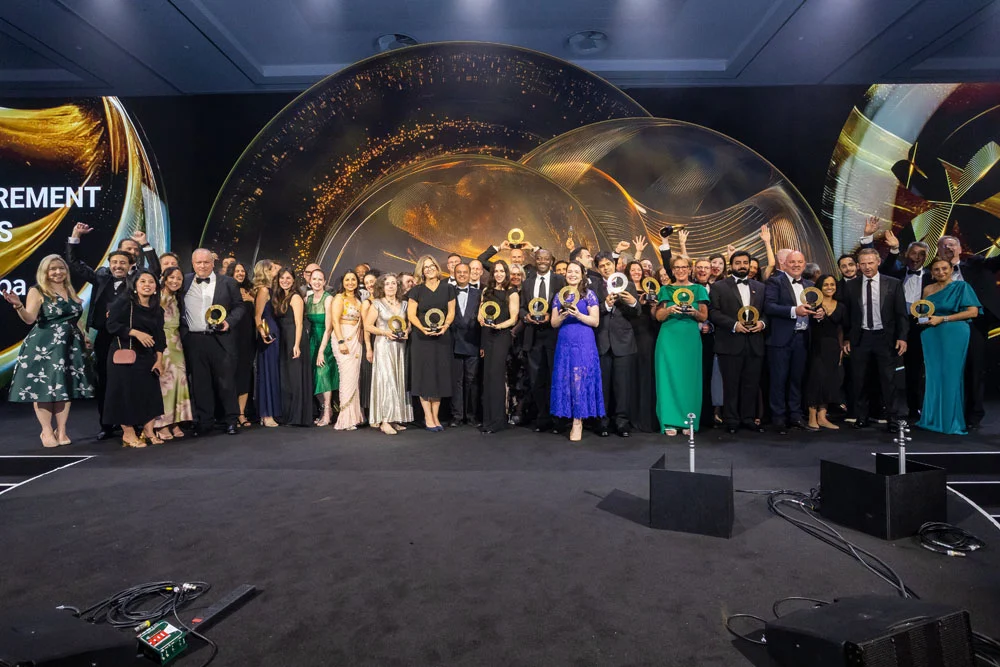
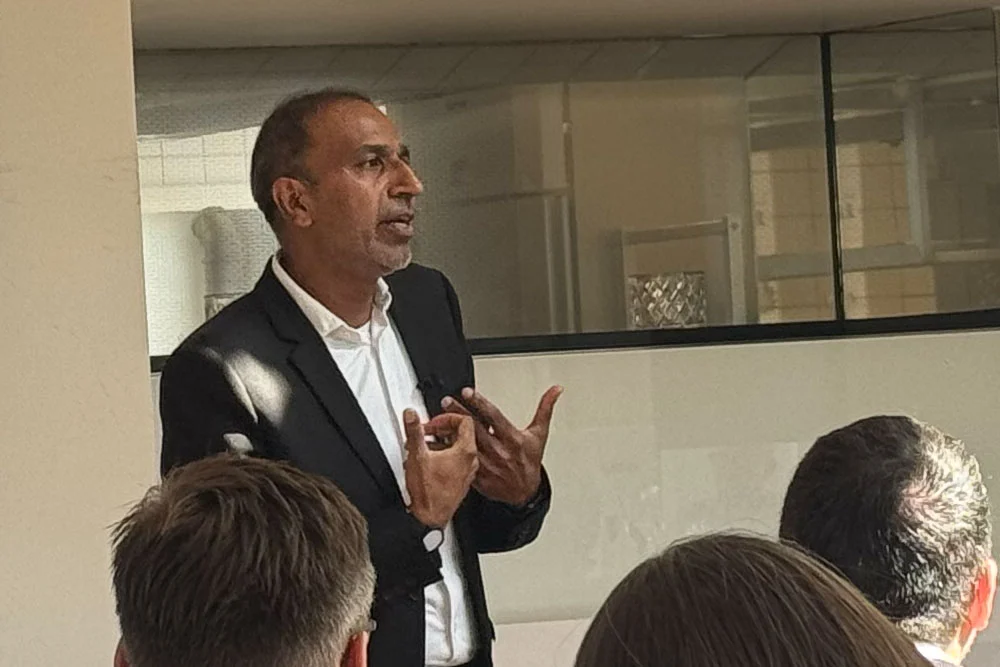
During a recent industry gathering at the Ovation event, economist Sony Kapoor provided a sobering but clarifying perspective on the current environment. Speaking to a group of CPOs, Kapoor challenged the prevailing culture of "obsessive monitoring."
"The daily high-frequency obsessive monitoring of the news flow, particularly coming from the other side of the Atlantic, is so depressing that we’ve lost track of the big picture," Kapoor noted.
For the CPO, the temptation to react to every tweet, policy brief, or tariff announcement is high. However, Kapoor suggests that these individual events are often "micro-relevant" but "not macro-significant." The real change—the "Great Rewiring"—is not happening through a few dramatic headlines. Instead, it is being driven by millions of small, individual decisions: a company choosing to diversify its supplier base in Southeast Asia, a firm investing in local automation to reduce reliance on long-haul logistics, or a procurement team re-negotiating terms to account for currency volatility.
Supporting Data: The Cost of Reactive Fatigue
The psychological and operational toll of reactive management cannot be overstated. When procurement teams exist in a state of "dread-response," the quality of strategic decision-making diminishes.
Recent pulse surveys conducted by Procurement Leaders indicate a clear divergence in how top-tier organizations are handling this.
- Reactive Organizations: Report higher levels of employee burnout, increased administrative costs due to constant re-forecasting, and a diminished ability to execute long-term sustainability and digital transformation goals.
- Proactive Organizations: Those who view tariff announcements as "background noise" tend to focus on building "structural resilience." These firms are not ignoring the tariffs, but they are integrating them into existing models of supplier diversification and risk management, rather than treating them as crises.
The data suggests that the firms thriving in this environment are those that have built robust, decentralized procurement structures capable of absorbing shocks without requiring a total overhaul of the supply chain every time a tariff is announced.
Official Responses and Strategic Shifts
How are global organizations responding to this new reality? The official response from multinational corporations (MNCs) has shifted from lobbying for policy reversals to building internal self-reliance.
1. Diversification as a Hedge
Rather than attempting to forecast which country will be hit by the next round of tariffs, CPOs are increasingly moving toward a "China+N" strategy. This involves maintaining core operations while creating multiple alternative nodes of production. This is not a response to a single tariff, but a long-term architectural change to the supply chain.
2. Digital Transparency
The ability to see the "tier-n" supplier is no longer a luxury; it is a defensive requirement. Companies that have invested in AI-driven supply chain mapping tools are finding that they can predict the impact of tariffs on their bottom line in minutes, not weeks, allowing them to make data-driven decisions that are less prone to emotional panic.
3. Strengthening Supplier Relationships
In a world of protectionism, the most valuable currency is the supplier relationship. CPOs who prioritize long-term partnerships—rather than transactional, price-focused contracts—are finding that suppliers are more willing to share the burden of increased costs or collaborate on alternative sourcing routes.
The Implications: Separating Signal from Noise
The core challenge for the modern CPO is the management of the "tradeoff." As Kapoor highlighted, the decisions a CPO makes today are both affected by unpredictable policy-making and are essential to preserving the stability of the global economy.
The danger is twofold:
- The Trap of Over-Reaction: If a CPO pivots the entire supply chain based on a singular policy announcement, they risk significant capital loss if that policy is later reversed or softened.
- The Trap of Inaction: Conversely, ignoring the shift toward protectionism leaves the organization vulnerable to supply chain collapses or sudden margin compression.
The solution lies in a balanced approach. CPOs must cultivate the ability to "separate the noise from the trend." A tariff announcement is noise; the underlying geopolitical drive for national economic security is the trend.
Conclusion: Building the Resilient Function
As the global trade landscape continues to evolve at an unprecedented pace, the role of the CPO is to serve as the "stabilizing anchor" within their organization. By shifting the focus from the daily volatility of the news cycle to the long-term structural shifts in the global economy, procurement leaders can turn disruption into a competitive advantage.
The goal is not to predict the next headline, but to build a function that is "future-proofed" against the unpredictability of international relations. This involves investing in data, fostering deep-rooted supplier partnerships, and maintaining a steadfast commitment to the long-term strategic goals of the enterprise.
For those who manage to master this balance, the "Great Rewiring" will not be a source of constant dread, but a period of profound transformation—an opportunity to redesign global procurement into a more resilient, transparent, and sustainable engine of growth.
For ongoing insights into the evolving landscape of global procurement and to join the conversation with peers navigating these challenges, stay connected with the Procurement Leaders community. The path forward is complex, but with the right strategic framework, it is one that the modern CPO is uniquely equipped to navigate.