By Max Garland | Supply Chain Dive | Published May 12, 2026
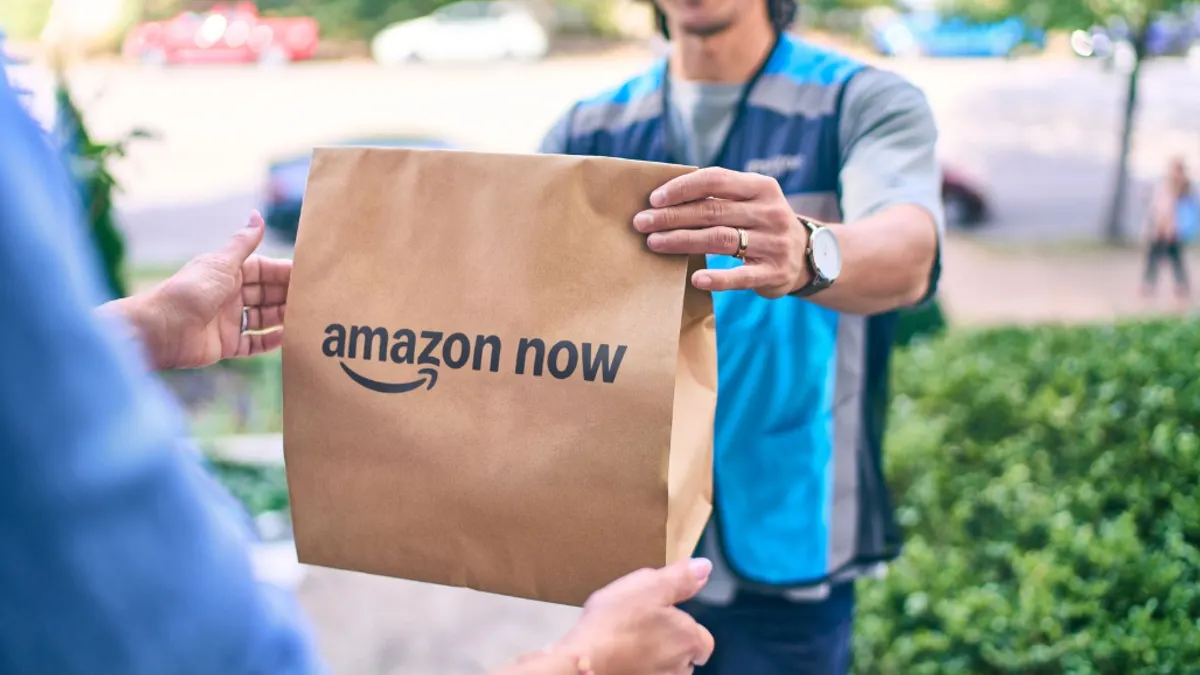
In an era where the "last mile" has become the primary battleground for retail supremacy, Amazon has officially signaled its intent to shrink the delivery window from hours to minutes. Following successful pilot programs in Philadelphia and Seattle, the e-commerce giant announced today that it is aggressively scaling its "Amazon Now" service, a high-velocity fulfillment offering designed to deliver household essentials, groceries, and personal care items in 30 minutes or less.
The strategic initiative aims to reach tens of millions of customers by the end of 2026, marking a significant evolution in Amazon’s logistics infrastructure. By leveraging a network of hyper-local fulfillment centers, the company is attempting to solve the "distance problem" that has historically plagued same-day delivery efforts.
The Strategic Architecture of Hyper-Local Fulfillment
The core of Amazon Now’s operational model is a departure from the massive, regional distribution centers that have long defined the company’s supply chain. Instead, Amazon is utilizing smaller, decentralized fulfillment nodes strategically positioned in dense urban and suburban areas.
"To deliver in minutes, Amazon Now uses a network of smaller locations designed for efficient order fulfillment, strategically placed close to where customers live and work," an Amazon spokesperson stated in the official launch announcement. "This approach prioritizes the safety of employees picking and packing orders, reduces the distance delivery partners need to travel, and enables faster delivery times for customers."
By placing inventory within a few miles of the end-user, Amazon minimizes the transit time, effectively bypassing traditional traffic bottlenecks and long-haul logistics. This localized approach allows the company to offer 24-hour service in most markets, catering to the unpredictable, immediate needs of the modern consumer.
Chronology: From Pilot to National Rollout
The path to today’s announcement has been marked by a period of quiet, intense experimentation. The journey of Amazon Now illustrates the company’s "crawl-walk-run" methodology regarding new logistics technologies:
- Early 2025: Amazon initiates confidential testing of hyper-local fulfillment pods in Philadelphia and Seattle. The goal was to stress-test the inventory management systems and pick-and-pack efficiency within a limited, high-density radius.
- Late 2025: Following positive feedback regarding delivery speeds and order accuracy, Amazon expands the pilot to select high-volume zip codes. Internal metrics begin to validate the economic viability of the model.
- Q1 2026: During the company’s first-quarter earnings call, CEO Andy Jassy hints at the shift in consumer behavior, noting that perishables make up nine of the top 10 most-ordered items for same-day delivery.
- May 2026: The official announcement of a national expansion strategy, with a firm deadline of year-end 2026 to reach tens of millions of residents.
Supporting Data: The Economics of Speed
The expansion of Amazon Now is not merely a service improvement; it is a response to fundamental shifts in consumer shopping habits. According to data shared during the recent Q1 2026 earnings call, the demand for instant gratification is becoming a baseline expectation for e-commerce shoppers.
Pricing Structure
The service employs a tiered pricing model designed to incentivize Prime membership while maintaining profitability:
- Prime Members: A $3.99 flat fee per order, with a surcharge of $1.99 for orders under $15.
- Non-Prime Customers: A $13.99 delivery fee, with a surcharge of $3.99 for orders under $15.
The reliance on high-frequency, low-cost goods—such as household essentials and groceries—is a deliberate move to increase the "stickiness" of the Amazon ecosystem. By embedding itself into the daily grocery and personal care routines of its customers, Amazon significantly raises the switching costs for its user base.

The Broader Landscape: A Competitive Arms Race
Amazon is not operating in a vacuum. The race to achieve near-instant delivery has prompted a flurry of activity from its primary competitors. As Amazon scales its hyper-local network, other retail giants are scrambling to fortify their own fast-shipping capabilities.
Competitive Benchmarks:
- Sam’s Club: Last month, the Walmart-owned retailer launched a one-hour delivery service across more than 600 locations, aiming to capture the "emergency errand" market.
- Dollar General: Continuing its expansion into the digital space, the retailer recently scaled its same-day delivery service, targeting rural and semi-urban demographics that are often underserved by tech-heavy delivery giants.
- General Retail Trends: Data from the last twelve months indicates that retailers who offer same-day delivery see a 20% to 30% increase in repeat customer frequency compared to those who offer only standard two-day shipping.
This movement toward rapid fulfillment represents a fundamental shift in retail logistics. It is no longer enough to offer a massive inventory; retailers must now offer a massive inventory immediately.
Implications for Supply Chain and Labor
The shift toward Amazon Now carries significant implications for the future of the supply chain and the workforce that powers it.
1. Operational Efficiency and Safety
Amazon’s emphasis on the "safety of employees" in smaller locations is a direct response to historical criticisms regarding labor conditions in large-scale warehouses. Smaller, localized facilities may offer a more controlled, manageable environment for workers. However, the pressure to meet a 30-minute delivery window places an immense burden on the "pick-and-pack" process, necessitating high levels of automation and AI-driven inventory placement.
2. Environmental Impact
While the reduction in distance traveled by delivery partners could theoretically lower the carbon footprint per delivery, the reliance on rapid, fragmented shipments poses a challenge to sustainability goals. The logistics industry is closely watching whether Amazon can maintain these speeds while adhering to its "Climate Pledge" and increasing the use of electric delivery vehicles.

3. The Future of Drone Delivery
It is important to note that Amazon Now is operating in parallel with other experiments. The company continues to test drone delivery in Arizona and other select markets. The question for analysts is whether Amazon Now will eventually integrate drone delivery as the "final mile" solution for its hyper-local fulfillment centers, further reducing the reliance on human drivers for the last five minutes of the delivery chain.
Conclusion: The New Baseline
The expansion of Amazon Now is more than just a logistical update; it is a signal that the e-commerce sector has reached a new frontier of competition. By 2026, the threshold for "fast delivery" will have moved from "next-day" to "next-hour."
For the consumer, this represents a new level of convenience. For competitors, it represents a daunting challenge: how to replicate a high-density, hyper-local logistics network without incurring prohibitive capital expenditures. As Amazon pushes forward with this ambitious rollout, the retail industry will be forced to adapt, innovate, or risk being left behind in a market that no longer rewards the slow.
Whether this aggressive strategy will ultimately yield the profit margins Amazon seeks remains to be seen, but one thing is certain: the era of the 30-minute delivery is no longer a futuristic concept—it is the next phase of the retail revolution.