In a major development in the ongoing crackdown on illicit technology transfers, Ting-Wei "Willy" Sun—a key figure described by federal prosecutors as a "fixer"—has pleaded guilty in a Manhattan federal court. His admission of guilt marks a significant milestone in the investigation into a massive, multi-billion-dollar operation designed to circumvent stringent U.S. export controls. By facilitating the movement of high-performance artificial intelligence servers powered by restricted Nvidia chips into China, Sun has provided a rare, behind-the-scenes look at how sophisticated actors attempt to undermine national security protocols.
The guilty plea is part of a broader, high-stakes legal drama involving Super Micro Computer, a tech giant caught in the crosshairs of global trade tensions. As the U.S. government doubles down on its efforts to stifle China’s military and technological advancements, the case against Sun and his co-conspirators serves as a stark reminder of the lengths to which intermediaries will go to bypass the law.
Main Facts: The Anatomy of a High-Tech Heist
The case revolves around a complex logistics scheme that saw roughly $2.5 billion worth of U.S.-manufactured AI technology diverted to unauthorized end-users in China. The servers, which utilize cutting-edge Nvidia processors, are essential for training advanced artificial intelligence models. Due to their immense processing power, the U.S. Department of Commerce has placed strict export restrictions on these chips, fearing their potential application in military modernization and surveillance capabilities.
Sun, along with two other co-defendants, was charged in March with conspiring to violate the Export Control Reform Act. Prosecutors allege that the group operated a clandestine supply chain: they would ship the sensitive hardware to a shell company in Southeast Asia, creating a veneer of legitimacy. Once the equipment arrived, it was transshipped to prohibited customers within China.
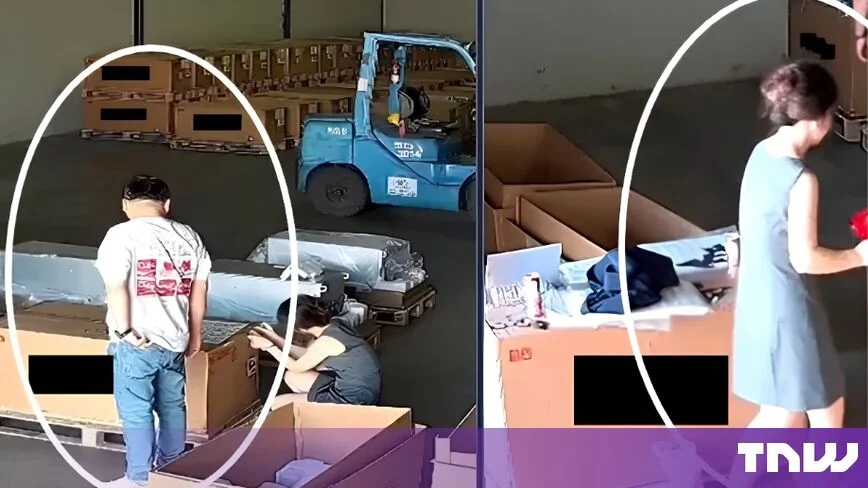
To maintain the charade, the group reportedly engaged in elaborate deceptive practices. According to the indictment, they falsified shipping records and manufacturing documentation to ensure that the technology could pass through international customs checkpoints without triggering an audit. Perhaps most strikingly, the group allegedly created "dummy" servers to deceive inspectors. In one instance, surveillance footage released by the Justice Department appears to show participants utilizing hair dryers to heat and re-apply serial numbers onto equipment, a crude yet desperate attempt to obscure the provenance of the hardware.
Chronology of the Scheme and Investigation
The timeline of the operation reveals a calculated effort to exploit gaps in the global technology supply chain.
- 2022–2023: As U.S. export restrictions on high-end GPUs to China tightened, the conspirators allegedly established a network of brokers and shell entities across Southeast Asia to facilitate the movement of Super Micro-branded servers.
- March 2026: Federal prosecutors unseal an indictment charging Ting-Wei "Willy" Sun, Yih-Shyan "Wally" Liaw, and Ruei-Tsang "Steven" Chang with conspiracy to break export controls.
- August 2026: Super Micro Computer issues a formal statement, asserting that its current senior leadership had no prior knowledge of the scheme and confirming its cooperation with federal investigators.
- October 2026: Ting-Wei "Willy" Sun enters a guilty plea to four counts, including conspiracy to violate export laws, in a Manhattan federal court.
- September 2027: The court schedules the sentencing for Sun, where he faces the possibility of significant prison time.
Supporting Data: The Scale of Illicit Tech Flow
The $2.5 billion figure associated with this case underscores the sheer magnitude of the black-market demand for American AI hardware. While the tech industry is accustomed to seeing billion-dollar valuations, the unauthorized transfer of such critical infrastructure represents a profound failure of oversight.
The severity of the situation is compounded by the frequency of similar incidents. Just last week, U.S. prosecutors charged a California-based individual with orchestrating a separate scheme to smuggle $300 million worth of AI servers to China via his company, Earthmade. These cases are not isolated; they are indicative of a growing trend where sophisticated actors leverage the global distribution networks of major server manufacturers to mask the final destination of restricted goods.
The reliance on Nvidia’s H100 and A100 series chips—the "gold standard" for AI development—makes these servers high-value targets. Because these chips are difficult to manufacture and in extremely high demand, the black-market markup for a diverted server is astronomical, creating a lucrative incentive for "fixers" like Sun to risk federal prosecution.
Official Responses and Legal Maneuvering
The legal response has been swift, though the defense strategies vary significantly among the accused.
The Guilty Plea
Ting-Wei Sun’s decision to plead guilty suggests a cooperation agreement with the Justice Department. By acknowledging his role in the scheme, Sun may be providing investigators with granular details about the internal logistics of the smuggling ring, which could lead to further indictments. His sentencing, set for late 2027, will likely be contingent upon the value of the information he provides to the government.
The Denial of Culpability
Yih-Shyan "Wally" Liaw, a co-founder of Super Micro Computer, has maintained his innocence, entering a plea of not guilty. Liaw’s departure from the board of directors was a necessary move for the company to maintain investor confidence, yet the legal battle ahead for him remains fraught. As a high-level executive, Liaw faces intense scrutiny regarding his oversight responsibilities.
The Corporate Stance
Super Micro Computer has sought to distance itself from the defendants. By emphasizing that the scheme was carried out by rogue individuals or former contractors, the company is attempting to mitigate the risk of massive federal fines and reputational damage. The company’s commitment to cooperating with the Department of Justice is a standard, yet critical, maneuver to avoid being labeled as a corporate participant in the conspiracy.
Implications for the Tech Industry and Global Trade
The fallout from this case extends far beyond the courtroom in Manhattan. It has sent a chilling signal to companies across the technology sector that the Department of Justice is prioritizing the enforcement of export controls as a core pillar of national security.
Heightened Compliance Burdens
Companies that manufacture sensitive hardware are now facing immense pressure to implement "know-your-customer" (KYC) protocols that mirror those of the financial services industry. If manufacturers cannot guarantee the final destination of their products, they risk becoming the primary targets of federal investigations.
The "Cat and Mouse" Game of Export Controls
The use of "dummy" servers and hair-dryer-modified serial numbers highlights the limitations of current tracking technology. As the U.S. government restricts the physical movement of hardware, smugglers are turning to increasingly creative—and often low-tech—methods to bypass high-tech surveillance. This has led to calls for more stringent digital tracking, potentially including the embedding of tamper-proof, hardware-level identifiers that report back to a central registry.
Geopolitical Tensions
At the macro level, these smuggling rings are a manifestation of the "Tech Cold War." China’s desperation to acquire the computing power necessary to maintain parity in AI development has created a shadow market that the U.S. is struggling to contain. Every server successfully smuggled into China represents a minor victory for their domestic AI labs and a strategic blow to U.S. containment policy.
As the case of the $2.5 billion server smuggling ring moves toward its conclusion, it serves as a watershed moment for corporate accountability. The era of loose oversight in the global tech supply chain is coming to a close. For firms like Super Micro, the path forward requires not just technological innovation, but an unyielding commitment to regulatory compliance, lest they find themselves once again in the crosshairs of federal prosecutors.