The awarding of the 2025 Nobel Peace Prize to South African jurist and human rights veteran Navanethem "Navi" Pillay has ignited a firestorm of international controversy, drawing an unprecedented and vitriolic rebuke from United States President Donald Trump. The selection of Pillay, whose decades-long career has been defined by her tenure at the United Nations and her work in international criminal law, has been framed by the White House as a "disgraceful" act of political bias.
The escalating diplomatic fallout coincides with a significant hardening of the US stance toward international legal institutions. On the same day the Nobel Committee’s announcement was made public, Secretary of State Marco Rubio declared that the United States would impose sweeping sanctions on the International Criminal Court (ICC), signaling a new era of confrontation between Washington and the bodies governing international jurisprudence.
A Rant on Truth Social: The President’s Reaction
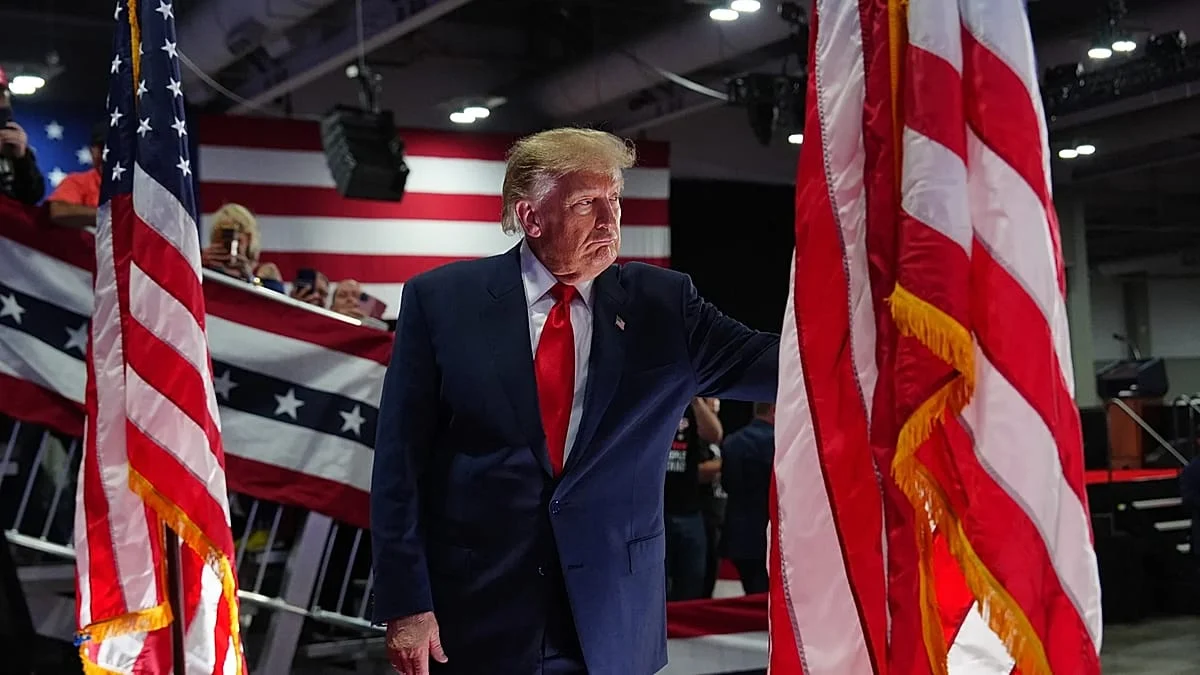
Overnight, President Trump took to his platform, Truth Social, to launch a scathing attack on the Nobel Committee. He labeled the decision to honor Pillay an "indelible stain on Norway," suggesting that the committee had been captured by "radical ideologues."
"I know nothing about this woman, and neither does anyone else! In fact, to the best of my knowledge, no one ever heard of her other than the fact that she, very obviously, hates Israel," Trump wrote. He dismissed Pillay’s extensive legal career as irrelevant, questioning her credentials while simultaneously positioning himself as the rightful recipient of such accolades.
In a move that drew widespread scrutiny from historians and geopolitical analysts, the President asserted that he "should have won 8 Nobel Peace Prizes" for his self-described role in settling eight major global conflicts. He listed these as: Cambodia and Thailand, Kosovo and Serbia, the Democratic Republic of the Congo and Rwanda, Pakistan and India, Israel and Iran, Egypt and Ethiopia, Armenia and Azerbaijan, and Israel and Hamas.
Trump concluded his tirade by declaring that the Nobel Prize has been "forever discredited" and promising to "settle, or win" two more conflicts: those currently raging in Iran and Ukraine. This rhetoric followed a rally in Syracuse, New York, where he had already characterized the announcement as "embarrassing" and a reflection of the "anti-democracy" nature of the United Nations.
The Life and Career of Navi Pillay
To understand the weight of the Nobel Committee’s choice, one must look at the formidable career of Navanethem Pillay. Born in Durban, South Africa, in 1941, Pillay’s early life was marked by the harsh realities of the apartheid regime. She defied systemic oppression to become a pioneering defence attorney, providing legal counsel to anti-apartheid activists and playing a crucial role in securing the rights of political prisoners held on Robben Island.
Her ascent through the international legal system was steady and distinguished:
- 1995–2003: Served as a judge on the International Criminal Tribunal for Rwanda (ICTR), where she played a pivotal role in the landmark Akayesu judgment, which established that rape can constitute an act of genocide.
- 2003–2008: Appointed as a judge on the International Criminal Court (ICC), serving in the Appeals Chamber.
- 2008–2014: Appointed as the UN High Commissioner for Human Rights, where she became known for her uncompromising stance on universal human rights, regardless of the political cost.
- 2025: As chair of the Independent International Commission of Inquiry on the Occupied Palestinian Territory and Israel, Pillay’s reports accused the Israeli state of committing genocide in Gaza—a finding that has made her a lightning rod for criticism from the Trump administration and its allies.
Upon learning of her Nobel win, Pillay maintained a composed, albeit sharp, demeanor. In a subtle nod to the 2024 prize, where Venezuelan opposition leader Maria Corina Machado famously offered her award to the American President, Pillay quipped: "If you clap a little bit more, I may share this prize with Trump."
Chronology of a Diplomatic Collision
The collision between the Nobel Committee and the US Executive branch did not happen in a vacuum. It is the culmination of years of mounting tension between Washington and the international legal order.
- Early 2025: The Independent International Commission of Inquiry, led by Pillay, releases its findings regarding the conflict in Gaza, formally using the term "genocide" to describe the Israeli military campaign.
- October 2025: The Nobel Committee announces Navi Pillay as the recipient of the Peace Prize, citing her "unwavering commitment to the rule of law and the protection of the most vulnerable."
- Friday, October 2025 (Morning): President Trump lashes out at the decision during a campaign rally in Syracuse, NY.
- Friday, October 2025 (Afternoon): US Secretary of State Marco Rubio announces the imposition of sanctions on the ICC, describing the body as a "rogue court."
- Friday Night/Saturday Morning: President Trump publishes his detailed list of "settled wars" on Truth Social, expanding the scope of his criticism to include the United Nations as an institution.
Supporting Data: The Sanctions Regime
The announcement by Secretary Rubio represents a profound escalation in the US strategy to insulate its interests and those of its allies from international legal oversight. The sanctions package is designed to be comprehensive, targeting the ICC’s operational infrastructure.
"We will ban transactions with this rogue court, cutting off their resources and crippling their ability to operate against us," Rubio stated in a televised address. The move includes:
- Asset Freezes: Blocking any assets held by the court or its officials within US jurisdiction.
- Travel Bans: Restricting the movement of ICC personnel, particularly those involved in investigations concerning the US or its strategic partners.
- Financial De-platforming: Prohibiting US financial institutions from processing transactions related to the court, effectively isolating it from the global dollar-based financial system.
Legal experts warn that this approach places the US in direct violation of the Rome Statute principles, though Washington has long maintained that it is not a signatory and therefore not bound by the court’s jurisdiction.
Implications for Global Diplomacy
The dual shock of the Nobel Committee’s choice and the US sanctioning of the ICC suggests a fracturing of the post-WWII liberal order.
The "Politicization" Debate
The US government argues that the ICC and organizations like the UN Commission of Inquiry have become tools of "lawfare," used by political actors to handicap democratic nations. By labeling the ICC "fake" and "politicized," the administration is appealing to a populist base that views international institutions as threats to national sovereignty.
The Human Rights Perspective
Conversely, human rights organizations argue that the US position signals an era of impunity. "When the most powerful nation on earth decides to sanction the arbiters of international justice, it sends a message that the rule of law is optional," said a spokesperson for an international NGO based in Geneva. The choice of Pillay is seen by these groups as an endorsement of the idea that justice must be applied equally, regardless of the accused’s geopolitical standing.
Future of the Nobel Prize
The Nobel Committee now faces a unique challenge. By selecting a figure who is currently the subject of intense geopolitical debate, the committee has reclaimed its role as a moral provocateur, but at the risk of losing the consensus-driven authority it has enjoyed for decades. The backlash from the US President suggests that the Nobel Prize, once seen as a unifying global honor, may increasingly become a focal point of the "culture wars" and the deepening divide between Western powers and the international bodies they helped create.
Conclusion
The coming weeks will likely see a hardening of positions. As the United States begins the process of dismantling the ICC’s operational capabilities, the international community will be forced to choose between supporting a legal framework that is under siege or acquiescing to the new, power-based reality favored by the current US administration.
For Navi Pillay, the Nobel Peace Prize serves as both a culmination of a lifetime of advocacy and the beginning of a final, high-stakes battle for the legitimacy of international human rights law. Whether her work will be remembered as the standard-bearer for a new era of global justice or as the casualty of a shifting geopolitical landscape remains one of the most pressing questions of the current era.