Introduction: A Home Under Fire
In the rugged, olive-groved hills south of Nablus, the village of Qusra has become a flashpoint for the escalating tensions defining the occupied West Bank. For Loui Ridi, a Palestinian-American based in Ohio, his ancestral home has transitioned from a place of sanctuary to a site of profound psychological and physical trauma. Throughout August 2026, Ridi’s family found themselves effectively imprisoned within their own residence, besieged not by a foreign army in the traditional sense, but by groups of Israeli settlers who operated with apparent impunity, often in the presence of, or with the tactical support of, Israeli military forces.
The ordeal of the Ridi family serves as a harrowing microcosm of the broader instability currently plaguing the West Bank. It highlights the shifting dynamics of land control, the blurring lines between settler activity and state military policy, and the precarious existence of Palestinian citizens who find themselves caught in a cycle of intimidation, administrative confinement, and direct violence.
Chronology of the August Siege
The campaign against the Ridi household began in earnest on August 9, 2026. The settlers, utilizing the hilly terrain to their advantage, established a semi-permanent encampment directly outside the Ridi residence.
- August 9–16: Settlers established a tactical presence, using All-Terrain Vehicles (ATVs) to circle the property, creating an atmosphere of constant surveillance and intimidation. The family remained sequestered inside, fearing that any attempt to leave or interact with the occupiers would result in physical escalation.
- August 17: Loui Ridi, having traveled from Ohio to protect his property and support his relatives, arrived at Ben Gurion Airport. In a poignant and high-stakes display of resolve, Ridi spoke to the international press, openly admitting he was “terrified” but steadfast in his intent to reach his home.
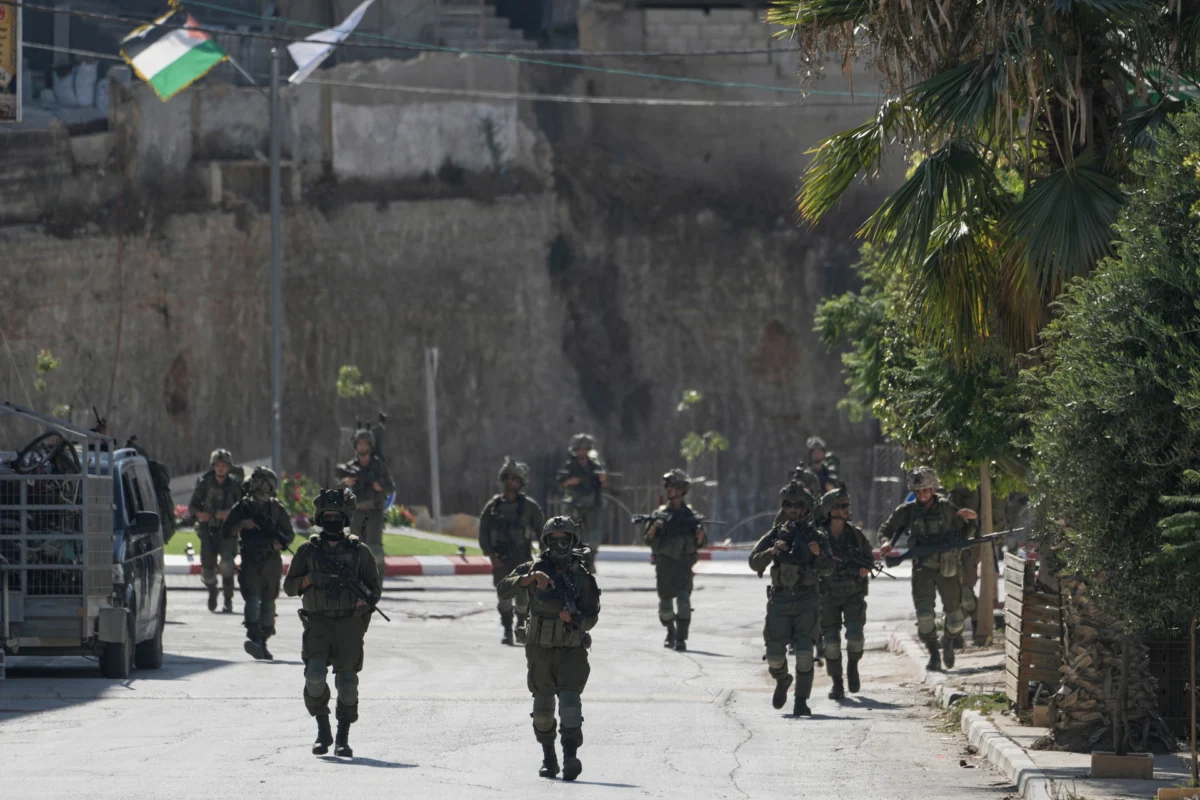
- Late August: Following the withdrawal of the initial encampment, the situation did not normalize. Instead, the mechanism of control shifted from civilian-led siege to state-sanctioned restriction. Israeli military personnel—who had been documented interacting cordially with the settlers—proceeded to install iron gates across the arterial roads leading to the Ridi home and two adjacent properties.
- August 29: The culmination of the month’s tensions occurred when masked settlers launched an overt attack on a nearby home. According to witness testimony provided to international news agencies, the violence was facilitated by the military: soldiers reportedly fired tear gas into the besieged home before detaining the Palestinian residents trapped inside.
The Architecture of Confinement: Supporting Data and Context
The situation in Qusra is not an isolated incident but part of a documented increase in settler-related violence and state-enforced mobility restrictions. Human rights organizations, including B’Tselem and Yesh Din, have noted a significant uptick in “settler-military coordination” over the last two years.
The Dynamics of Mobility
The installation of gates by the Israeli military in late August is a tactic known as “closure.” By gating off specific homes, the military effectively turns a private residence into a de facto detention center. Families living behind these gates cannot commute to work, transport children to school, or access medical services without obtaining explicit, time-consuming permission from the military authorities—a process that is frequently denied or delayed indefinitely.
Settler Violence Statistics
According to data compiled by the United Nations Office for the Coordination of Humanitarian Affairs (OCHA), incidents of settler violence in the Nablus governorate have reached their highest levels since records began in 2006. In the first eight months of 2026 alone, there were over 400 recorded instances of settler-led incursions into Palestinian villages. These range from crop destruction and physical assault to the permanent takeover of agricultural lands, which form the economic backbone of communities like Qusra.
Official Responses and Institutional Silence
The response from the Israeli government and military authorities to the events in Qusra has remained largely consistent with their standard posture regarding West Bank conflicts.
The Military Position
When questioned about the deployment of troops and the installation of gates, the Israel Defense Forces (IDF) typically frame these actions as “security measures” intended to “de-escalate tensions between civilian populations.” Military spokespeople often cite the threat of Palestinian resistance or the need to create “buffer zones” to protect both settler and Palestinian communities. However, the documentation of soldiers “chatting amicably” with settlers while those same settlers are actively engaged in the harassment of Palestinian families creates a massive credibility gap in this official narrative.
The International/Diplomatic Stance
For citizens like Loui Ridi, the involvement of the U.S. government remains a critical, albeit often frustrating, element of the conflict. The U.S. Consulate General in Jerusalem and the State Department have issued broad condemnations of violence in the West Bank, yet there has been a notable lack of targeted sanctions or specific diplomatic pressure regarding the siege of dual-national homes. For many observers, the “diplomatic silence” serves as a green light for the continued expansion of settler infrastructure.
Implications: The Erosion of the Two-State Framework
The siege at Qusra has profound implications for the future of the West Bank. It suggests that the boundary between the settler movement and the state has effectively collapsed, creating a new reality on the ground that renders the possibility of a sovereign Palestinian state increasingly remote.
1. The Normalization of Forcible Displacement
The strategy of encircling homes and restricting movement is a form of “soft transfer.” By making daily life in the West Bank unbearable—through the threat of violence and the removal of basic civil liberties—the underlying intent is to coerce families into abandoning their ancestral lands. Once a family flees, the property is often occupied by settlers or claimed as “state land,” permanently altering the demographic and territorial map of the region.
2. The Failure of International Protection
The fact that a Palestinian-American citizen can be besieged in his own home for weeks without meaningful intervention highlights the impotence of international law in the current West Bank climate. If citizens of Western nations cannot be protected from state-sanctioned intimidation, the prospects for the local Palestinian population, who lack such institutional backing, are dire.
3. The Psychological Toll
Beyond the physical destruction of property and the theft of land, the psychological impact on families in Qusra is profound. The constant, looming threat of the “masked settler” and the feeling of being hunted in one’s own living room have created a generation of Palestinians suffering from chronic PTSD. The normalization of this fear is perhaps the most devastating outcome of the current crisis.
Conclusion: A Future in the Balance
The events of August 2026 in Qusra are a testament to the resilience of families like the Ridies, who choose to remain in their homes despite the mounting cost. However, resolve alone is unlikely to be sufficient against an adversary that wields both the physical force of the military and the ideological zeal of the settler movement.
As the international community continues to observe the slow-motion dismantling of Palestinian life in the West Bank, the case of Qusra stands as a stark warning. Without significant, tangible pressure from global powers to halt the collusion between settlers and state forces, the cycle of sieges, gates, and detentions will likely continue, further cementing an environment where the fundamental human right to live in one’s own home is a luxury that few Palestinians can afford to hold onto.
The question remains: will the international community recognize this pattern for what it is—a systematic campaign of annexation and displacement—or will they continue to treat each individual siege as a localized, temporary dispute? For the families in the hills of Nablus, the answer to that question is a matter of daily survival.