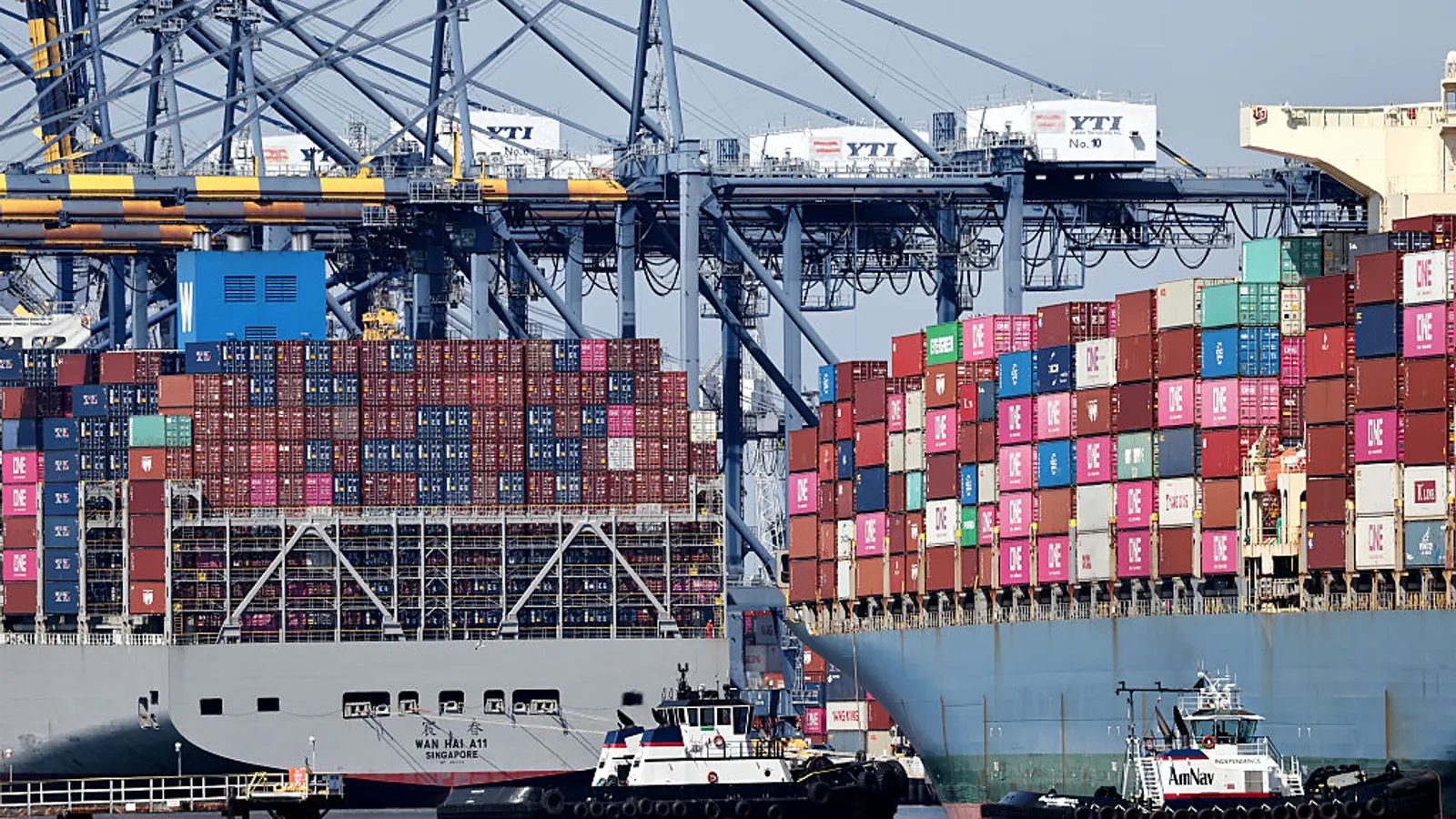
The global container shipping industry is currently navigating a paradoxical crisis. Despite a massive influx of new vessels into the global fleet over the past eighteen months, the supply chain is suffering from a severe capacity crunch. The culprit is not a lack of hardware, but a critical failure in the velocity of the ocean network. According to the October Edge Report from logistics giant C.H. Robinson, approximately 12% of the world’s container vessel capacity is currently rendered inert by port congestion—a staggering figure that marks the highest level of disruption in four years.
For shippers, this means that the "effective" capacity of the global fleet has decoupled from its nominal size. While headlines focus on the delivery of mega-vessels, the reality on the water is one of gridlock, missed connections, and fragmented logistics that are forcing companies to rethink their entire supply chain strategy as the industry enters the final quarter of the year.
Main Facts: A System Under Siege
The current disruption is characterized by a "capacity trap." When ships are unable to dock, discharge, and reload efficiently, they become floating warehouses rather than transport assets. This stagnation creates a ripple effect: as vessels wait for berths, they fall behind schedule, causing "vessel bunching" at subsequent ports of call.
The Geography of Gridlock
The congestion is not uniform. It is heavily concentrated in three key global arteries:
- East Asia: Serving as the world’s manufacturing engine, its major hubs are struggling with the dual impact of seasonal surges and climate-related disruptions.
- Northern Europe: Major transshipment ports are facing labor bottlenecks and infrastructure saturation.
- The Indian Subcontinent: Critical lanes connecting this region to North America are experiencing persistent space constraints, particularly through transshipment hubs like Colombo.
The result is a volatile market where "capacity" is no longer a static metric, but a fluid variable that changes depending on carrier schedules and port efficiency.
Chronology: A Season of Unrelenting Pressure
The path to the current congestion levels has been paved by a series of cascading events throughout 2024.
- Q1-Q2 2024: The industry dealt with the initial shock of Red Sea diversions, which forced carriers to route vessels around the Cape of Good Hope, adding weeks to transit times and straining equipment availability.
- August 2024: A series of typhoons struck East Asian manufacturing hubs, forcing carriers to skip port calls to regain schedule integrity. This move, while necessary for the carriers, left significant volumes of cargo stranded.
- September 2024: As the industry prepared for China’s "Golden Week" (October 1–7), exporters pushed to clear inventories, creating a pre-holiday surge that maxed out available vessel space.
- Early October 2024: The convergence of Golden Week blank sailings (scheduled cancellations) and existing port congestion resulted in the current 12% capacity reduction, creating significant risks for cargo rollovers as factories in China ramped back up.
Supporting Data: The Illusion of Fleet Growth
The shipping industry has seen a record number of new vessels enter the market, a trend intended to lower freight rates and increase supply. However, the Edge Report data provides a stark counter-narrative.
- The 12% Rule: Roughly one in every eight container slots globally is currently "stuck" due to port delays.
- Trans-Pacific Volatility: Capacity adjustments remain the primary tool for carriers, yet these adjustments are creating "unpredictable availability" for North American importers.
- Equipment Imbalance: Congestion at terminals creates a secondary crisis: the inability to reposition empty containers. Containers are sitting in gridlocked yards, unavailable for exporters who need them to move new goods, further exacerbating the equipment shortage.
Official Responses and Carrier Strategies
Carriers are currently engaged in a high-stakes balancing act: trying to recover their schedules while managing the financial reality of lower freight rates on certain routes, such as the Asia-Europe lane.
The "Port Omission" Dilemma
Logistics experts emphasize that there is a profound difference between a blank sailing and a port omission.
- Blank Sailings: These are pre-planned cancellations. They allow shippers to adjust inventory strategies, reroute goods, or hold shipments before they are even loaded.
- Port Omissions: These are "active" disruptions. A carrier decides mid-voyage to skip a port to make up time. For the shipper, this is a worst-case scenario. The cargo is already in transit, and suddenly the vessel is skipping the destination. The cargo must then be offloaded at a different port, wait for a feeder service, or endure a secondary transshipment, leading to massive delays and unexpected costs.
Carrier networks are currently prioritizing speed and schedule reliability over port coverage. While this helps the carrier’s operational efficiency, it shifts the financial and logistical burden directly onto the cargo owner.
Implications: The New Calculus of Supply Chain Management
The current landscape forces a paradigm shift for logistics managers. The "lowest freight rate" can no longer be the sole deciding factor in carrier selection.
1. The Risk of Transshipment
Ports that rely heavily on transshipment—moving cargo from one ship to another—are currently the most vulnerable. Shippers are now being advised to seek direct, point-to-point services whenever possible to avoid the "hub risk" associated with congested terminals.
2. The Return of Cargo Rollovers
As the post-Golden Week rush begins, the scarcity of space is expected to lead to increased cargo rollovers. If a vessel is full and the port is congested, the carrier will prioritize high-yield or "guaranteed space" contracts, often leaving standard freight on the dock. Shippers must now evaluate a carrier’s track record for schedule reliability before signing long-term space agreements.
3. Inventory Strategy Shifts
With vessel capacity effectively locked away in ports, the "just-in-time" model is increasingly being replaced by a "just-in-case" buffer. Companies are moving toward increased safety stocks to hedge against the inherent unpredictability of the ocean network.
4. Visibility as a Currency
The ability to track not just the ship, but the port status, has become a competitive advantage. Shippers are investing in predictive analytics to understand which ports are likely to experience "bunching" and are proactively rerouting cargo to secondary gateways to avoid the bottlenecks at major hubs.
Conclusion: Looking Beyond the Fleet Size
The 12% capacity reduction is a warning sign for the global economy. It demonstrates that in the modern, hyper-connected era, the efficiency of the nodes (the ports) is just as critical as the links (the ships). As we progress through the fourth quarter, the strength of the market will depend on how quickly ports can clear the backlog and whether the global carrier networks can move away from erratic port omissions.
For shippers, the takeaway is clear: the era of assuming that a booked space on a ship equals a timely arrival is over. Managing ocean freight today requires a deep understanding of port congestion, equipment availability, and a willingness to pay a premium for reliability. In a market where 12% of the world’s capacity is essentially missing in action, the winners will be those who prioritize logistics resilience over raw freight costs. As the industry faces the tail-end of 2024, the focus must shift from the size of the fleet to the health of the entire end-to-end network.