In the modern digital landscape, the marketing playbook often feels like a standardized script: allocate a substantial budget to Google Ads, sprinkle in some LinkedIn sponsored content, and ensure Facebook retargeting is running on autopilot. These platforms are the bedrock of contemporary digital strategy, offering a sense of security through granular, real-time attribution metrics. For many CMOs and digital leads, these metrics represent the gold standard of Return on Investment (ROI) reporting.
However, a growing chorus of industry experts is beginning to challenge this obsession with "measurable" platforms. The fundamental question being asked is: Are we optimizing for impact, or are we simply optimizing for what is easiest to track?
The Fallacy of the Middleman: Why Your Attribution Models May Be Lying
The primary issue with the current reliance on dominant ad platforms is a phenomenon known as "attribution bias." When a prospective customer discovers a brand through a niche industry podcast, a word-of-mouth recommendation, or an organic social media discussion, their journey does not end there. Often, they turn to Google to "verify" the brand or locate its URL.
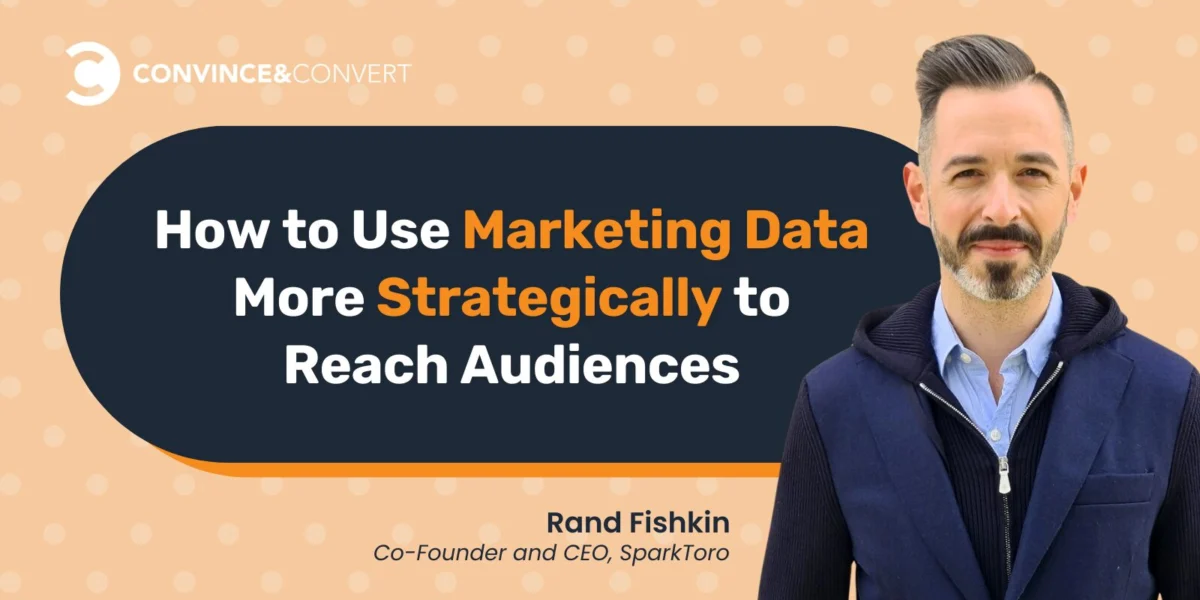
According to Rand Fishkin, founder of SparkToro and a prominent voice in the marketing analytics space, this behavior creates a skewed perception of value. During his appearance on the Data-Driven Decisions podcast, Fishkin argued that Google is frequently miscredited as the source of conversion.
"A ton of what happens in Google is actually a response to something else," Fishkin explained. "People who performed a search query in Google, very rarely was that a spontaneous first-touch thing. It was like, ‘Oh, I heard about this software,’ so I went to Google and searched for it and clicked on it. And of course, the attribution looks like Google drove all the value. No, Google was just the middleman."
This reality suggests that marketers who rely exclusively on platform-provided metrics are essentially looking through a keyhole, ignoring the broader, more complex customer journey that happens in spaces where direct tracking is impossible.
The Chronology of Shift: From Broad Ads to Niche Engagement
The evolution of digital marketing can be viewed in three distinct phases:
- The Wild West (Early 2000s): Marketing was about volume and visibility. If you were on the front page of a search engine, you won.
- The Measurement Era (2010–2020): The rise of sophisticated ad-tech allowed marketers to track the "customer journey" with clinical precision. This led to a consolidation of spend into the "Big Three" (Google, Meta, LinkedIn), as these platforms provided the most robust reporting suites.
- The Discovery Era (Present): As ad costs rise and user trust in traditional ads wanes, the current trend is shifting toward "Zero-Click Marketing." Brands are now realizing that forcing a user to click through to a website to "convert" is an outdated friction point. Instead, they are prioritizing building authority within the communities where their target audience already resides.
This shift is not about abandoning paid media, but rather about reallocating the "bottom 10%" of underperforming ad spend toward high-relevance, community-driven engagement.
Supporting Data: The Case for Audience Intelligence
The core of this new strategy is audience intelligence—understanding where your customers go for information, who they trust, and which platforms they use to solve problems. SparkToro, Fishkin’s tool, is designed to reveal these hidden hubs of influence.
Case Study: The Power of Targeted Influence
Fishkin points to a podcaster who wanted to scale their sponsorship revenue. Instead of buying broad, low-conversion digital ads, they used data to identify influencers in their niche who were active on X (formerly Twitter) and YouTube. By inviting these influencers as guests, the podcaster gained direct access to their highly-relevant audiences. This strategy didn’t just increase downloads; it created a high-value environment that attracted premium sponsors, effectively turning the content strategy into a revenue-generating engine.
Case Study: The "Zero-Click" Success of Chartr
The concept of "Zero-Click Marketing"—coined by SparkToro’s VP of Marketing, Amanda Natividad—is perhaps best illustrated by the data-storytelling firm Chartr. Rather than running ads targeting data professionals, they consistently shared high-value, branded graphics within the Reddit community r/dataisbeautiful.
The team made no aggressive calls to action and didn’t force users to click back to a landing page. By consistently delivering value where the audience lived, they built deep trust and brand recognition. When those community members were ready to invest in data services, Chartr was already the top-of-mind authority. This approach proved to be both more cost-effective and more sustainable than traditional paid-media campaigns.
Official Perspectives: The Role of Data-Informed Strategy
The conversation around data-driven decisions, a central theme in Zontee Hou’s book Data-Driven Personalization, is shifting from "what does the data say" to "what is the data missing?"
Industry leaders are increasingly warning against "data-blindness." If a marketing team relies solely on quantitative data—such as clicks, views, and conversions—they miss the qualitative context of human behavior.
"I’m not saying don’t be data-informed," Fishkin noted, "but I think it pays to be responsible in your recognition of what problems data can solve and what it can’t solve."
Data might tell you where a user clicked, but it cannot tell you why a non-user is frustrated with your interface or why a potential buyer chose a competitor. To bridge this gap, organizations are being encouraged to combine:
- Quantitative Data: Using tools like SparkToro to identify high-potential channels and platforms.
- Qualitative Data: Conducting regular customer interviews and surveys to understand the "why" behind the "what."
Implications for Future Marketing Infrastructure
The implications for businesses are clear: the era of "set it and forget it" digital advertising is waning. To remain competitive, organizations must pivot toward a more holistic, audience-centric approach.
1. The Death of the "Safe Bet"
Relying on Google or LinkedIn ads because they are "measurable" is becoming a competitive disadvantage. If your competitors are capturing your audience’s attention on industry podcasts, niche forums, or newsletters before they even search for your brand on Google, you have already lost the battle for their consideration.
2. Investing in Trust Over Traffic
Zero-click marketing requires a fundamental change in how marketing teams are evaluated. If success is measured only by click-through rates (CTR), then zero-click content will look like a failure. Companies must begin measuring "brand sentiment," "community growth," and "share of voice" in niche channels as primary KPIs.
3. Cross-Functional Collaboration
The separation between "content teams" and "performance teams" is becoming an obstacle. Content teams should be tasked with creating value-dense assets for specific communities, while performance teams should be tasked with measuring the long-term, compounding impact of those efforts—not just the immediate, linear ROI.
Conclusion: A Call to Strategic Action
As we move further into a fragmented digital ecosystem, the brands that thrive will be those that stop treating their audience as a collection of cookies to be tracked and start treating them as a community to be served.
The strategy is simple but requires courage: find out where your audience is already learning, solving problems, and engaging. Meet them there, provide value without strings attached, and let the brand recognition take care of the conversions. As Rand Fishkin aptly concludes, if your current ad spend is producing diminishing returns, it is time to stop optimizing for the "middleman" and start investing in the people who actually define your market.
By diversifying beyond the standard ad platforms and embracing a more nuanced, data-informed approach, marketers can move away from the noise and build the kind of trust that drives long-term, sustainable growth.