By Cristina Ramirez
October 2, 2026
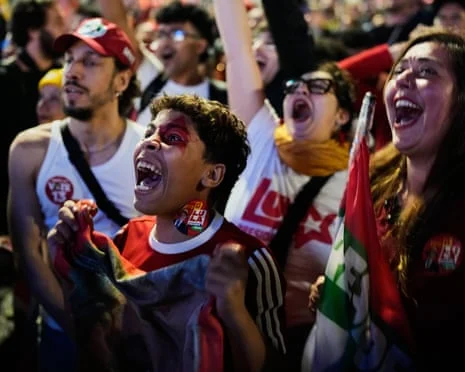
LONDON — When the United States orchestrated the ouster of Venezuelan President Nicolás Maduro earlier this year—a dramatic operation that culminated in his extraction from Caracas and subsequent imprisonment in a New York federal facility—the streets of Caracas and the diaspora hubs of Miami and Madrid erupted in jubilation. For many, the fall of the man who had presided over nearly three decades of economic ruin and political repression signaled a "Year Zero" for Venezuelan democracy.
However, as the dust settles, the initial euphoria has curdled into a cold, pragmatic realization: removing an autocrat is not synonymous with dismantling an authoritarian system. In an ironic twist of geopolitical history, the very power that liberated Venezuela from the grasp of the Chavista regime appears intent on refashioning the nation’s vast energy infrastructure into an American-led enterprise, potentially cementing a new era of kleptocratic influence that leaves the Venezuelan people sidelined once more.
Main Facts: A Post-Maduro Power Vacuum
The post-Maduro landscape is characterized by a paradox. While the regime’s figurehead is gone, the structural apparatus of the state—the military-industrial complex, the pervasive intelligence networks, and the clientelist social systems—remains largely intact.
Current intelligence reports suggest that the U.S. government is moving to stabilize the Venezuelan energy sector not through a transition to civilian-led democratic governance, but through a series of "stabilization contracts." These agreements, largely opaque and managed by a consortium of U.S. and multinational energy giants, are designed to boost oil production to pre-crisis levels. By pouring billions of dollars in foreign direct investment into a state apparatus that has not undergone a fundamental democratic audit, the U.S. is effectively bankrolling the survival of the existing bureaucratic machinery, ensuring that the next "democratic" transition remains favorable to Washington’s energy security interests rather than the will of the Venezuelan electorate.
Chronology of a Managed Transition
To understand how the promise of liberation shifted toward the reality of consolidation, one must look at the timeline of the recent intervention:
- January 2026: Heightened international sanctions combined with localized internal military dissent create a fracture within the Venezuelan high command.
- March 2026: U.S. intelligence agencies identify the precise location of Maduro, launching a covert extraction operation that bypasses traditional diplomatic channels.
- April 2026: Maduro arrives in New York to face long-standing federal charges of narcotics trafficking and racketeering.
- May 2026: The establishment of a "Transitional Security Council" in Caracas. While ostensibly tasked with organizing elections, the council is heavily staffed by figures linked to the previous administration’s industrial wing.
- August 2026: Major oil exploration leases are signed with a consortium of international firms, with the U.S. Department of Energy providing a framework for "secure extraction."
- October 2026: Widespread protests erupt again, not against a dictator, but against the lack of transparency in the privatization of national oil assets.
Supporting Data: The Economics of Control
The economic calculus driving this intervention is stark. Venezuela holds the world’s largest proven oil reserves, and with global markets reeling from energy volatility, the U.S. is prioritizing "supply certainty" over "democratic integrity."
- Production Targets: The U.S.-backed energy consortium aims to raise production from current levels of roughly 800,000 barrels per day (bpd) to 2.5 million bpd by 2028.
- Investment Inflow: Estimated foreign direct investment (FDI) for the next 24 months is projected at $14 billion. Analysts suggest that up to 40% of these funds are earmarked for "security infrastructure," effectively funding the very security forces that suppressed protests during the Maduro era.
- The Debt Trap: Venezuela’s external debt, currently estimated at over $150 billion, is being restructured. Critics argue that the terms of this restructuring grant creditors—largely U.S. financial institutions—veto power over the national budget for the next decade.
Official Responses: A Divided Front
The Washington Perspective
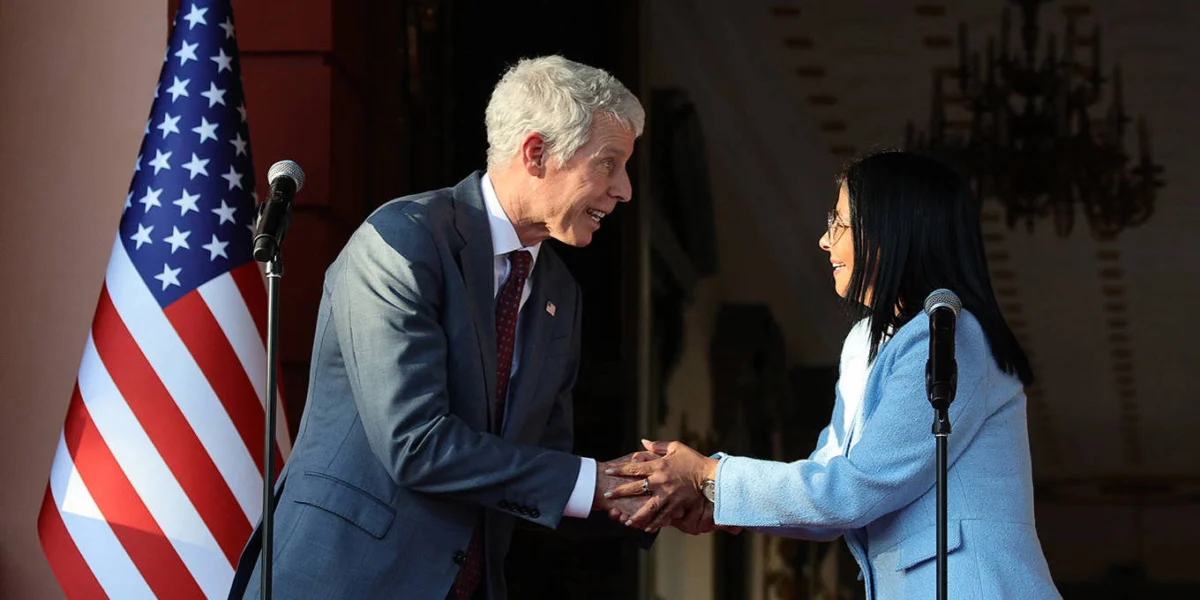
The official U.S. stance, articulated by the State Department, characterizes the current phase as "Stabilization and Reconstruction." An anonymous senior official stated: "We are preventing a total state collapse. By engaging the existing infrastructure, we ensure that the lights stay on and that the transition doesn’t devolve into a civil war that would necessitate an even larger American footprint."
The Venezuelan Opposition
The opposition, however, is deeply fractured. While moderate factions have accepted the U.S. roadmap, grassroots movements—led by labor unions and student organizations—have begun to voice dissent. "We did not trade a dictator for a board of directors," says Maria Elena Rossi, a human rights activist in Caracas. "We wanted a democracy, not a transition from socialism to state-sponsored corporate exploitation."
International Community Reactions
The European Union has remained largely cautious, calling for "independent oversight" of the new energy contracts, while regional neighbors like Brazil and Colombia have expressed alarm at the militarized nature of the "stabilization" efforts, fearing that a new, U.S.-aligned authoritarianism could be just as destabilizing as the last.
Implications: The Return of the Kleptocrat
The most troubling implication of this transition is the normalization of authoritarianism as a viable partner for global capital. By working with the remnants of the Chavista regime to protect oil interests, the U.S. is signaling that stability is a more valuable commodity than the rule of law.
The "Status Quo" Trap
When American presidents and corporate boards have a direct financial stake in the stability of a foreign government, the incentive to push for free and fair elections diminishes. If the Venezuelan military or its bureaucratic successors can guarantee the flow of oil, Washington is likely to turn a blind eye to the erosion of civil liberties. This creates a "status quo trap," where the political system is effectively locked in a state of suspended animation, serving the interests of the elite while maintaining just enough order to satisfy the requirements of international investors.
Long-term Regional Destabilization
Historically, when the U.S. has prioritized resource extraction over genuine democratic development in Latin America, the long-term results have been catastrophic. From the banana republics of the early 20th century to the Cold War interventions of the 1970s, the pattern is consistent: temporary economic gains are eventually followed by massive social unrest, anti-American sentiment, and the inevitable rise of populist figures who weaponize the local population’s resentment against foreign interests.
By failing to dismantle the authoritarian infrastructure and instead choosing to co-opt it, the U.S. may be planting the seeds for a much larger crisis in the coming decade. The Venezuelan people are no longer fighting a single man in a palace; they are now facing a complex web of international capital and local power brokers who have found common ground in the exploitation of their country’s wealth.
As 2026 draws to a close, the question for Venezuela is no longer whether Maduro is in power, but whether the system he built has simply been rebranded for a new set of masters. The ghost of the machine remains, and for now, it is purring with the sound of oil flowing out of the Orinoco Belt, leaving the dream of a democratic, sovereign Venezuela further out of reach than it has been in a generation.